Diwali Celebrations in Germany 2026: A Detailed Breakdown – Days, Rituals and Community Highlights
A detailed, day-by-day breakdown of Diwali 2026 for Hindus in Germany – what each of the five days means, how to observe it around work and school, local sunset times and how to find community events.
A detailed, day-by-day breakdown of Diwali 2026 for Hindus in Germany – what each of the five days means, how to observe it around work and school, local sunset times and how to find community events.
Quick answer: In Germany, Diwali 2026 runs from Dhanteras on Friday 6 November to Bhai Dooj on Tuesday 10 November, with Lakshmi Puja on Sunday 8 November and Govardhan Puja on Monday 9 November (Drik Panchang for Germany). Puja is done after local sunset – around 4:24 PM in Berlin, 4:51 PM in Frankfurt and 4:45 PM in Munich on Diwali evening. The festival is about three weeks later than last year because 2026 has an extra lunar month.
Diwali 2026 in Germany: the week at a glance
| Day | Date | Working day? | Key ritual |
|---|---|---|---|
| Dhanteras | Fri 6 November | Yes | Buy new metal; Dhanvantari and Lakshmi puja; Yama deepam at dusk |
| Narak Chaturdashi | Sun 8 November (before sunrise) | No | Abhyanga snan – oil bath before sunrise |
| Diwali / Lakshmi Puja | Sun 8 November | No | Lakshmi–Ganesh puja in Pradosh Kaal, diyas, sweets |
| Govardhan Puja / Annakut | Mon 9 November | Yes | Annakut food offering to Krishna |
| Bhai Dooj | Tue 10 November | Yes | Tilak and aarti for brothers |
Because the tithis are calculated for German sunrise, Govardhan Puja and Bhai Dooj fall one day earlier in Germany than in India this year (India: 10 and 11 November). Families who follow North Indian custom often also light a few lamps on Saturday 7 November as Choti Diwali – follow your family or temple practice.
Local sunset and the Pradosh Kaal
Lakshmi Puja is done in the Pradosh Kaal after local sunset – confirm the exact muhurat for your city on Drik Panchang. Indian timings should never be converted to German time.
| City | Sunset Fri 6 Nov | Sunset Sun 8 Nov |
|---|---|---|
| Berlin | 4:28 PM | 4:24 PM |
| Frankfurt | 4:54 PM | 4:51 PM |
| Munich | 4:48 PM | 4:45 PM |
Day 1 – Dhanteras (Friday 6 November)
Meaning: Dhanteras honours Lord Dhanvantari, the physician of the gods who emerged from the churning of the ocean holding the pot of amrit, and Goddess Lakshmi. It is the day to welcome health and prosperity into the home.
In Germany: Dhanteras is a working Friday, so keep it simple. Buy a small item of silver, brass or steel – even a new spoon or diya – or a broom, a traditional symbol of sweeping out poverty. After sunset, light a diya facing south at the entrance as Yama deepam, offer a short prayer to Dhanvantari and Lakshmi, and begin the festival week with sweets.
Day 2 – Narak Chaturdashi (early Sunday 8 November)
Meaning: Narak Chaturdashi remembers Lord Krishna, with Satyabhama, destroying the demon Narakasura and freeing his captives. It is a day of inner cleansing.
In Germany: According to Drik Panchang for Germany, the abhyanga snan falls before sunrise on Sunday 8 November, the same day as Lakshmi Puja. Massage the body with sesame oil, apply ubtan if you have it, and bathe before dawn. South Indian families traditionally wear new clothes and enjoy sweets after the bath – a festive start to the main day.
Day 3 – Diwali and Lakshmi Puja (Sunday 8 November)
Meaning: The new-moon night of Kartik celebrates Lord Rama’s return to Ayodhya and the welcome of Goddess Lakshmi into homes lit by lamps.
In Germany: Having Diwali on a Sunday in 2026 is a gift for families in Germany – the whole day is free to clean, cook, decorate and visit the temple. A simple home puja after local sunset:
- Draw a rangoli at the door and place diyas along the threshold and windows.
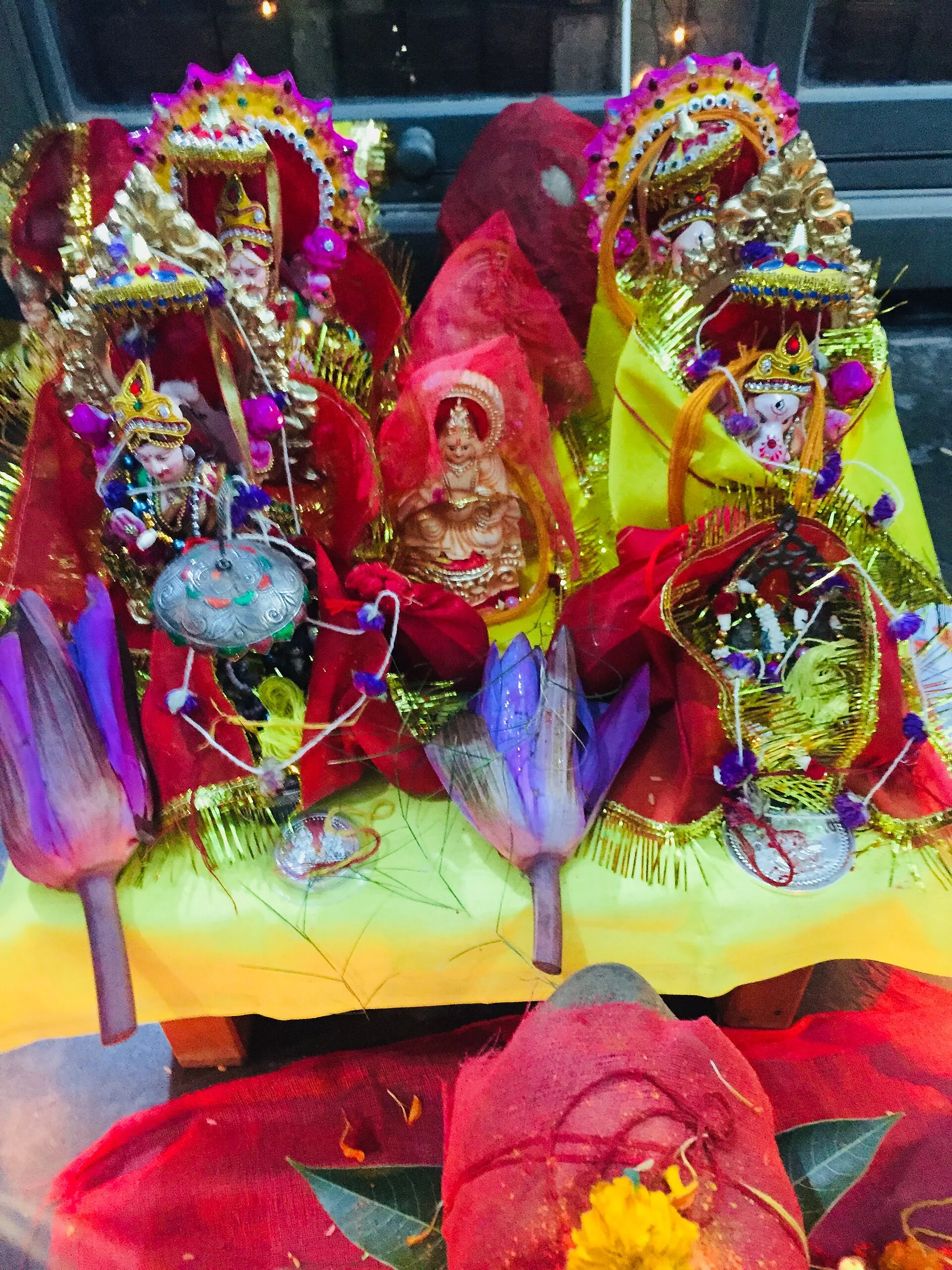
- Set up Lakshmi and Ganesha on a clean cloth with a kalash, rice, flowers, fruit, sweets and coins.
- Begin with Ganesha puja, then Lakshmi puja, chanting “Om Shreem Mahalakshmyai Namah” 108 times if you can.
- Many business families also worship their account books or laptops as part of Lakshmi–Kubera puja.
- Perform aarti together, light the rest of the diyas and share prasad.
Many temples and community groups hold a Lakshmi Puja on the evening itself and larger cultural programmes on the weekends before and after. Check your local temple for its 2026 timings.
Day 4 – Govardhan Puja and Annakut (Monday 9 November)
Meaning: Govardhan Puja recalls Lord Krishna lifting Govardhan Hill to shelter the people of Vraj from Indra’s storms – a lesson in humility and gratitude to nature. Annakut, the “mountain of food”, offers many vegetarian dishes to Krishna. In Gujarati families the day is also the start of the new year, and in Karnataka and Maharashtra it is celebrated as Bali Padyami.
In Germany: On a working Monday, offer a few homemade dishes to Krishna in the evening, or join an Annakut at a temple that holds one. A small mound of food or a cow-dung or clay Govardhan model is a lovely activity for children.
Day 5 – Bhai Dooj (Tuesday 10 November)
Meaning: Bhai Dooj recalls Yamuna welcoming her brother Yama with food and a tilak; Yama blessed all brothers who visit their sisters on this day.
In Germany: Sisters apply tilak, perform a short aarti and offer sweets; brothers give a gift in return. Many siblings in Germany live in different cities or countries, so a video call with a tilak thali on screen keeps the tradition alive. Remember your sibling in India marks it on Wednesday 11 November.
Community highlights across Germany
Diwali in Germany is driven by the community rather than the calendar. Across the country you can expect:
- Temple pujas: Lakshmi Puja, bhajans and prasad at Hindu temples, including the Sri Ganesha Hindu Temple in Berlin-Neukölln.
- Regional galas: Tamil, Telugu, Bengali, Gujarati, Marathi and Punjabi associations host cultural evenings in Berlin, Frankfurt, Munich, Hamburg, Stuttgart, Cologne and other cities.
- Student celebrations: university Indian student associations organise affordable Diwali nights that welcome international and German students.
- Workplace Diwali: many companies with Indian teams now hold sweets-and-lights gatherings.
- Family melas: food stalls, mehndi, rangoli and children’s activities on weekends.
Specific events, venues and prices change every year, so they are not listed here. For 2026 programmes, check your local temple or association.
Diwali puja checklist for Germany
- Lakshmi and Ganesha idols or pictures, a red or yellow cloth, a kalash with water and mango or betel leaves
- Clay diyas, cotton wicks, ghee or sesame oil, matches and camphor
- Kumkum, haldi, rice, flowers, incense, a coconut and fruit
- Sweets such as laddoos, barfi or kaju katli, and coins or a small silver item
- Rangoli colours, or flowers and rice for a flat-friendly design
Indian grocery stores in larger cities stock most of these, but order early – diyas and sweets sell out in the final days.
Practical tips for Diwali in Germany
- Fireworks: consumer fireworks are generally only sold and allowed around New Year’s Eve – celebrate with lamps instead.
- Fire safety: keep diyas in metal or clay holders, away from curtains and smoke detectors, and never leave them unattended.
- Weather: early November is cold and damp; bring warm layers for outdoor diyas and temple visits.
- Children at school: tell teachers about Diwali – many schools welcome a short presentation or sweets for the class.
- Sustainability: reuse clay diyas, choose natural colours and avoid single-use plastic decorations.
Frequently asked questions
What are the five days of Diwali 2026 in Germany?
Dhanteras on Friday 6 November, Narak Chaturdashi oil bath and Diwali / Lakshmi Puja on Sunday 8 November, Govardhan Puja on Monday 9 November and Bhai Dooj on Tuesday 10 November 2026, per Drik Panchang for Germany.
Do I use Indian muhurat times in Germany?
No. Muhurats depend on local sunrise and sunset. Lakshmi Puja is done in the Pradosh Kaal after your local sunset – about 4:24 PM in Berlin, 4:51 PM in Frankfurt and 4:45 PM in Munich on 8 November 2026. Confirm the exact muhurat for your city on Drik Panchang.
Is Govardhan Puja on the same day in Germany and India?
No. In 2026 Govardhan Puja is on Monday 9 November in Germany but Tuesday 10 November in India, and Bhai Dooj is Tuesday 10 November in Germany but Wednesday 11 November in India, because the tithi is calculated for local sunrise.
How do I find Diwali events near me in Germany?
Ask at your nearest Hindu temple, regional Indian association or university Indian student association, follow community social-media groups, and check the cultural calendars of the Embassy of India in Berlin and the Consulates General. Programmes for 2026 are announced in October and early November.
What can I do instead of fireworks?
Consumer fireworks are generally only allowed around New Year’s Eve in Germany. Celebrate with rows of diyas, candles in safe holders, fairy lights, rangoli and lanterns – the lamps are the heart of Deepavali anyway.
Editor’s note (4 October 2026)
This breakdown has been fully updated for 2026 using Drik Panchang dates for Germany and local sunset times. Previous versions listed individual events, venues, prices and attendance numbers that applied only to a past year; these have been removed rather than guessed. Please check with your local temple or association for 2026 programmes and confirm your city’s muhurat on Drik Panchang.
Related guides
You might also like

Gita Jayanti 2026 Prasad Recipes — Tulsi-Honoring Sweets, Krishna's Favourites & December 20 Bhog Plate
Shani Deva Temples Worldwide & Must-Performed Rituals — Complete Devotee's Guide
Maha Shivratri 2026 Vrat Recipes — Sabudana Khichdi, Singhada Halwa, Phalahara Foods Complete Fasting Guide