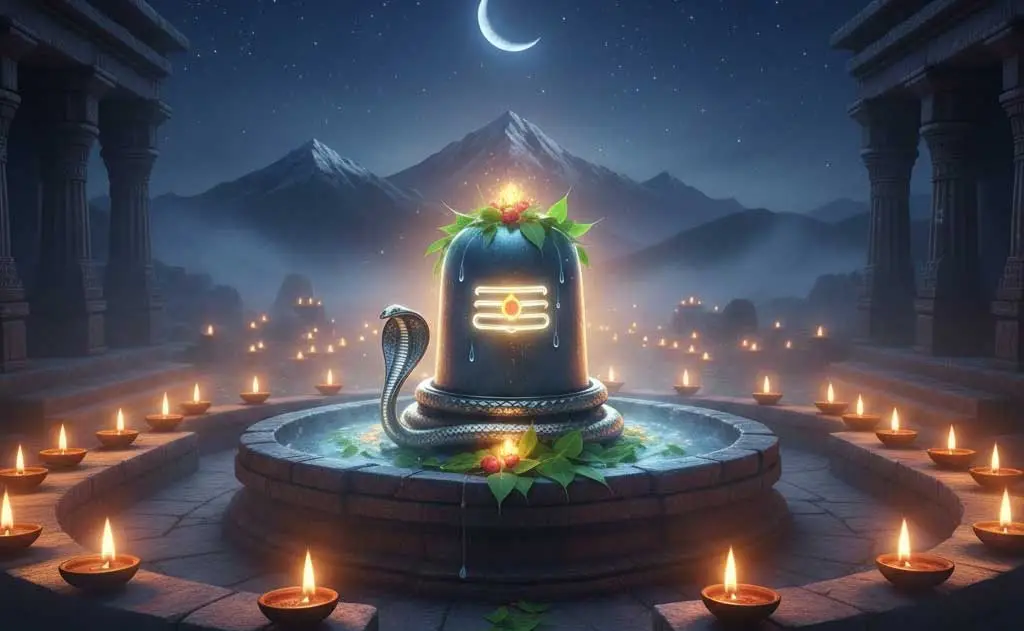
Karthika Pournami Celebrations in Japan 2026: Complete City-Wise Guide to Rituals & Community Celebrations
Karthika Pournami is on Tuesday 24 November 2026 in Japan. Here is its meaning, the Karthika Masam dates for Japan, how to celebrate in a Japanese apartment and how the community gathers city by city.
Karthika Pournami is on Tuesday 24 November 2026 in Japan. Here is its meaning, the Karthika Masam dates for Japan, how to celebrate in a Japanese apartment and how the community gathers city by city.
Quick answer: Karthika Pournami 2026 falls on Tuesday 24 November in Japan (Drik Panchang). It is the full moon of Karthika Masam, which runs from 10 November to 8 December 2026, with Karthika Somavaram Mondays on 16, 23 and 30 November and 7 December. In Japan, Devuthani Ekadashi is Saturday 21 November and Tulsi Vivah Sunday 22 November. Light lamps after local sunset and check exact timings for your city on Drik Panchang. Because 2026 has an extra lunar month, these dates are about three weeks later than last year.
Introduction: the divine festival of lights
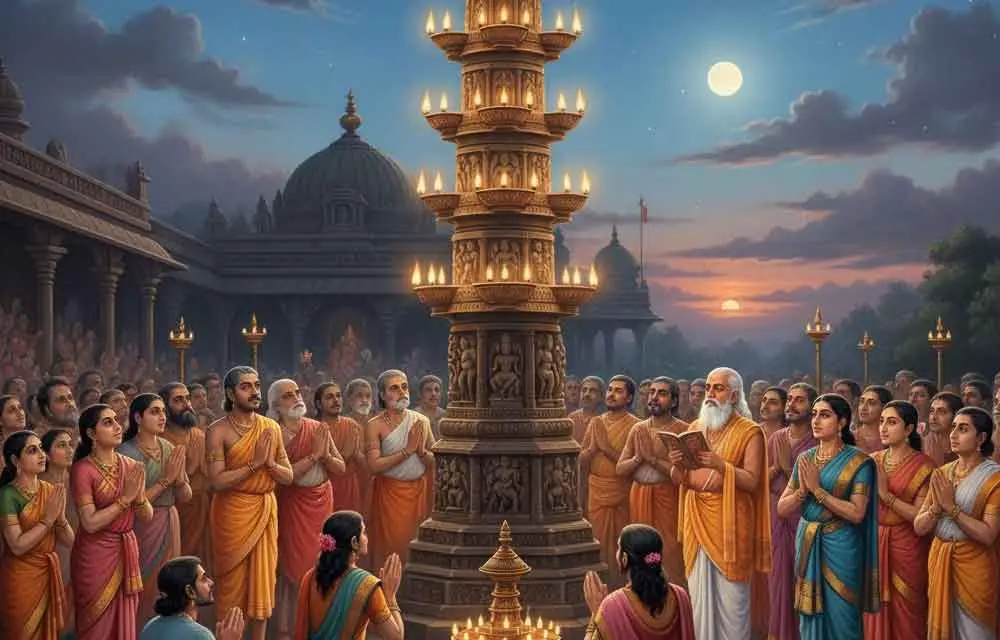
Karthika Pournami – also known as Kartika Purnima, Tripurari Purnima and Dev Deepavali, the gods’ festival of lights – is one of the holiest days of the Hindu calendar. For Hindu residents and expatriates in Japan, it is a connection to cultural heritage, a celebration of divine light and an occasion to gather as a close-knit community. In late November, with autumn leaves at their peak and cool, clear evenings, the full moon and the glow of lamps make a beautiful pairing.
Karthika Masam 2026 dates for Japan
| Observance | 2026 date (Japan) |
|---|---|
| Karthika Masam begins | Tue 10 November |
| Karthika Somavaram (Mondays) | 16, 23, 30 November and 7 December |
| Devuthani (Prabodhini) Ekadashi | Sat 21 November |
| Tulsi Vivah | Sun 22 November |
| Karthika Pournami | Tue 24 November |
| Karthika Amavasya (month ends) | Tue 8 December |
Vaikuntha Chaturdashi falls just before the full moon, and Tamil Karthigai Deepam follows the Krittika nakshatra and can fall on a different day from Pournami – check your community’s 2026 calendar. Note that 24 November is a working Tuesday in Japan, the day after the Labour Thanksgiving holiday on Monday 23 November.
What is Karthika Pournami? Understanding the significance
Karthika Pournami is special because it is sacred to both Lord Shiva and Lord Vishnu – a day when the Shaiva and Vaishnava traditions celebrate together.
Key legends
- Shiva’s victory over Tripurasura: as Tripurantaka, Shiva destroyed the demon’s three celestial cities with a single arrow; the gods celebrated with lamps, giving the day its names Tripurari Purnima and Dev Deepavali.
- Matsya avatar: Vishnu is believed to have taken his first incarnation, as Matsya the fish, on this day.
- Radha–Krishna’s rasa lila: Vaishnavas remember the divine dance of Radha, Krishna and the gopis under the Karthika moon.
- Lord Kartikeya: in parts of South India the day is associated with Kartikeya, Shiva’s son.
Spiritual benefits
Observing the day with devotion is believed to bring spiritual growth, cleanse past karma and draw the blessings of Shiva, Vishnu and Kartikeya. Any act of charity is said to bring merit equal to ten yajnas.
Essential rituals and traditions
- Lighting diyas: light ghee or sesame-oil lamps at dawn and dusk. Telugu families often light a 365-wick lamp on Pournami. Place lamps at the entrance, by the tulasi and at the home altar.
- Holy bath: bathe before sunrise, with a few drops of Ganga jal if available, while chanting mantras.
- Fasting: a complete fast until moonrise, or a partial fast with fruit, milk and water.
- Puja: offer bilva leaves to Shiva and tulasi to Vishnu, with flowers, fruit, coconut and incense. Satyanarayana Vratam is popular among Telugu families.
- Charity and annadanam: share food, support a temple or community kitchen, or donate to a charity in Japan or India.
City-wise Karthika Pournami celebrations across Japan
Japan’s Hindu community is small but close-knit and spread across the major cities. Celebrations are community-driven, held at the few Hindu temples, in rented community halls and in private homes. Programmes and venues change every year, so check with your local community group for 2026.
Tokyo and Greater Kanto
The largest community lives in Tokyo and the surrounding prefectures, especially in Edogawa ward around Nishi-Kasai, home to many Indian IT professionals and families. ISKCON Tokyo holds Vaishnava programmes with kirtan and lamp offerings during Karthika (also called Damodar month in the Vaishnava tradition). In Ibaraki, the community-run Shri Ram Mandir in Bando has held combined Diwali and Kartik Purnima observances with pujas, lamp-lighting and annadanam. Telugu, Tamil and other regional groups in Kanto organise their own lamp-lighting and Satyanarayana pujas, often on the weekend.
Yokohama
Yokohama’s Indian community, one of the oldest in Japan, gathers at community events and in homes; many families also travel into Tokyo for temple programmes.
Osaka, Kobe and Kansai
Kansai has a strong Tamil and Telugu presence and a historic Indian merchant community in Kobe. Community associations and Indian students at universities in Osaka and Kyoto organise Karthigai Deepam, thiruvilakku puja and lamp-lighting evenings.
Nagoya and Chubu
Many Indian engineers work in the automotive and manufacturing industries around Nagoya. Community groups here typically hold weekend Satyanarayana pujas and shared South Indian meals.
Fukuoka, Sapporo and other areas
In smaller communities such as Fukuoka and Sapporo, celebrations are usually held indoors in homes or rented halls. In Hokkaido’s cold, LED lamps and hot payasam are the norm, and many families join temple livestreams from Tokyo or India.
How Hindu communities in Japan adapt
- Community-run events: small groups of professionals in IT, automotive and academia coordinate with temple committees, associations and student groups.
- Eco-friendly practice: reusable brass lamps, LED diyas and minimal packaging.
- Cultural bridges: explaining rituals in English and Japanese and inviting Japanese friends to share prasadam.
- Virtual links: video calls with family in India and online darshan from temples in India.
Celebrating Karthika Pournami at home in Japan
For apartment dwellers (mansion and apato)
- Check your building’s rules – many prohibit open flames on balconies.
- Use LED lotus lamps or electric diya sets, or a small brass lamp on a heat-proof tray indoors.
- Keep flames away from smoke and heat detectors, which are standard in Japanese homes.
- A foldable wooden mandir and a portable puja kit save space.
Morning routine
- Wake before sunrise and bathe with prayers.
- Light the first lamp and chant “Om Namah Shivaya” or the Shiva stotram of your choice.
Evening observance
- After local sunset, light 108 small diyas or LED equivalents – or a 365-wick lamp if you can do so safely.
- Perform aarti with family and offer prasadam.
- Share the moment with relatives in India by video call.
Traditional recipes – Japan-style
- Sweet pongal made with Japanese short-grain rice
- Vada using urad dal from Indian grocery stores
- Payasam with coconut milk
- Panakam, a jaggery and ginger drink
For fasting: fruit, yogurt, nuts and sabudana khichdi, with tapioca pearls found in Asian grocery sections.
Tips for first-time celebrants
- Wear traditional attire such as kurta or saree, or modest clothing.
- Remove shoes and silence phones at the venue.
- Programmes usually last two to three hours and may be in Hindi, Tamil, Telugu and English.
- Non-Indian guests are welcome – organisers are usually happy to explain the rituals.
Spiritual significance for modern life
The diya symbolises knowledge overcoming ignorance, unity in diversity – a value that resonates with Japan’s own culture of harmony – and a steady inner light in a fast-paced life. Whether you light a single LED diya in a Shibuya apartment or join a community puja in Osaka, your devotion bridges cultures. As the full moon rises, may it remind us that light transcends borders. Om Namah Shivaya | Om Namo Narayanaya | Om Saravanabhavaya Namah.
Connect with your local community
- Search “Hindu temple Japan” or “インド寺院” on Google Maps.
- Join regional Indian, Telugu and Tamil community groups on social media.
- Ask at Indian grocery stores and restaurants – they often know about upcoming pujas.
Frequently asked questions
When is Karthika Pournami 2026 in Japan?
Karthika Pournami (Kartika Purnima) falls on Tuesday 24 November 2026 in Japan, according to Drik Panchang. Light the evening lamps after local sunset and check exact timings for your city on Drik Panchang.
Are Devuthani Ekadashi and Tulsi Vivah on different days in Japan?
Yes. In Japan, Devuthani Ekadashi falls on Saturday 21 November and Tulsi Vivah on Sunday 22 November 2026, one day later than in India, because the tithi is calculated for local sunrise.
Can I use LED lamps in my apartment?
Yes. Many Japanese apartments discourage or prohibit open flames, so LED or electric diyas are a perfectly acceptable way to observe the festival. Devotion matters more than the medium.
Where can I buy puja items in Japan?
Indian grocery stores in areas with large Indian communities, such as Nishi-Kasai in Tokyo, stock diyas, wicks, ghee and puja items, and online marketplaces such as Amazon Japan and Rakuten carry many items. Order early in Karthika Masam.
Can Japanese friends join the celebration?
Absolutely. Hindu temples and community gatherings welcome respectful visitors, and sharing prasadam with Japanese neighbours and colleagues is a lovely way to share the festival.
Editor’s note (4 October 2026)
This guide has been fully updated for 2026 using Drik Panchang dates for Japan. Earlier versions included Purnima times, event schedules, attendance numbers, sponsor organisations and several temple listings that we could not verify; these have been removed rather than carried forward. Please check with your local temple or community association for 2026 programmes, and Drik Panchang for exact timings in your city.
Related guides
You might also like

Jyeshtha Masam 2026: Dates, Significance, Festivals, Mantras, and Danas – Complete Guide
Hindu Dharma Worldwide: Complete NRI Diaspora Guide to Festivals, Temples, Mantras & Traditions (USA, UK, Canada, Australia, UAE & Europe — 2026)
Gita Jayanti 2026 Prasad Recipes — Tulsi-Honoring Sweets, Krishna's Favourites & December 20 Bhog Plate