Kedar Gauri Vrat 2026 (Kedara Gowri Nombu): Date, Story of Ardhanareeswara, 21-Knot Thread and Puja
Kedar Gauri Vrat 2026, known in Tamil homes as Kedara Gowri Nombu, falls on Sunday 8 November 2026 in India, the same day as Deepavali Amavasya. Learn the story of Parvati's vrat and Ardhanareeswara as commonly told, the 21-knot nombu thread, the adhirasam naivedyam, a simple puja method and tips for NRI families.
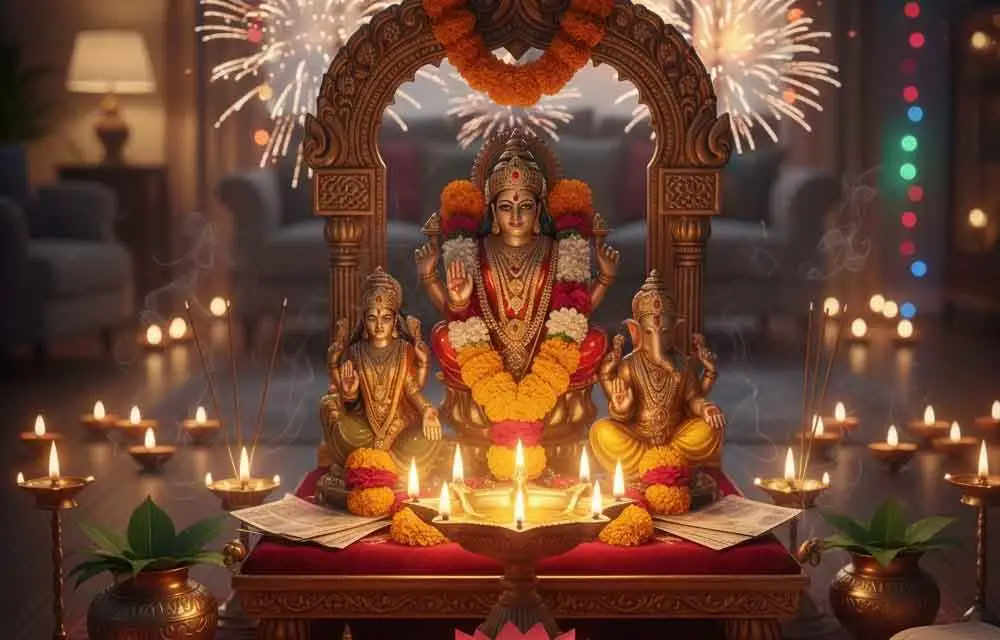
Kedar Gauri Vrat 2026, known in Tamil homes as Kedara Gowri Nombu, falls on Sunday 8 November 2026 in India, the same day as Deepavali Amavasya. Learn the story of Parvati's vrat and Ardhanareeswara as commonly told, the 21-knot nombu thread, the adhirasam naivedyam, a simple puja method and tips for NRI families.
Quick answer: Kedar Gauri Vrat 2026, known in Tamil homes as Kedara Gowri Nombu, falls on Sunday 8 November 2026 in India, per Drik Panchang. It is the same day as Deepavali and Darsha Amavasya. Married women worship Lord Shiva as Kedareswara with Goddess Gowri, tie a sacred 21-knot thread and offer adhirasam, praying for family harmony and well-being.
This guide has been restored at its original hindutone.com address. Dates below are from Drik Panchang for New Delhi. Outside India the date can differ by a day, so check Drik Panchang for your own city.
Kedar Gauri Vrat 2026 date
| Detail (India) | 2026 |
|---|---|
| Kedar Gauri Vrat / Kedara Gowri Nombu | Sunday 8 November 2026 (Drik) |
| Same day | Diwali, Lakshmi Puja and Darsha Amavasya (Drik) |
| Day before | Kali Chaudas / Masik Shivaratri, Saturday 7 November 2026 night (calculated) |
| Next day | Kartika Amavasya, Monday 9 November 2026 (Drik) |
Source: Drik Panchang, New Delhi. The Kali Chaudas date is from the HinduTone calculator; confirm it on Drik Panchang. We do not list muhurat clock times. Some Tamil and Kannada calendars may differ slightly, so follow your panchangam and family elders.
What is Kedara Gowri Nombu?
'Nombu' is the Tamil word for a vrat, a sacred vow often kept with fasting. Kedara Gowri Nombu is kept mainly in Tamil Nadu and Karnataka, and by Tamil and Kannada families across the world. In Tamil homes it is observed on Deepavali Amavasya. The morning begins with the Deepavali oil bath, new clothes and sweets. Later in the day, the women of the house perform the nombu puja.
The vrat is for Lord Shiva as Kedareswara, the Lord of Kedar, together with Goddess Gowri (Parvati). Women keep it for a long and happy married life, for harmony between husband and wife, and for the well-being of the whole family. In many families the nombu is passed down from mother to daughter or daughter-in-law.
The story of Ardhanareeswara, as commonly told
As commonly told, the sage Bhringi was a devoted follower of Lord Shiva. He worshipped only Shiva and would not honour Goddess Parvati. Once, at Kailasa, he went around Shiva alone and did not include Parvati in his worship. Parvati felt hurt. She wished never to be separated from Shiva again.
Parvati then went to earth and performed a strict vrat to Shiva, on the advice of a sage. Many tellings name the sage Gautama. She worshipped Shiva with great devotion over 21 days. Pleased with her, Shiva appeared and gave her the left half of his body. Together they became Ardhanareeswara, the Lord who is half woman. From then on, Shiva and Shakti could not be worshipped apart.
Because Parvati kept this vrat to become one with Shiva, it is called Kedara Gowri Vrat. Some tellings also include later devotees who kept the vrat and were blessed. Details differ between regions and families.
The 21-knot thread and other customs
The number 21 is central to this nombu, recalling Parvati's 21 days of worship. Customs vary, but these are widely followed:
- Nombu kayiru (sacred thread): A yellow thread with 21 knots is placed before the deity. After the puja it is tied on the wrist or upper arm of the women who keep the vrat.
- Kalasam or image: Many families worship a kalasam (sacred pot) decorated as the deity, or an image of Shiva and Parvati. Some families use a small cone of turmeric to represent Gowri.
- Offerings in sets of 21: Many families offer 21 adhirasams, along with betel leaves, areca nuts, bananas and other fruits, often in sets of 21.
- Fasting: Many women fast until the puja is completed and then eat the prasadam.
- Longer observance: Some families keep the vrat for 21 days, ending on Deepavali Amavasya. Most families today keep it for the main day only.
Simple Kedara Gowri Nombu puja steps
Follow your family's own tradition first. A simple outline used in many homes is:
- Clean the puja area and draw a kolam.
- Set up the kalasam or the image of Shiva and Parvati, and decorate it with flowers.
- Place the 21-knot thread, the adhirasams, fruits, betel leaves and areca nuts before the deity.
- Begin with a prayer to Lord Ganesha.
- Worship Shiva as Kedareswara and Goddess Gowri with flowers, incense, a lamp and kumkum. You may chant 'Om Namah Shivaya'.
- Read or listen to the Kedara Gowri vrat story.
- Offer the naivedyam and perform aarti.
- Tie the nombu thread on the wrist or arm, often with the help of an elder.
- Seek the blessings of elders and share the prasadam.
Health note: If you are pregnant, breastfeeding, unwell, diabetic or taking regular medicine, speak to a doctor before fasting. You can keep the puja without a strict fast.
Kedar Gauri Vrat 2026 for NRI families
- Check your local date: The date abroad can differ by a day. Check Drik Panchang for your city. Do not convert India's times.
- Plan for a working day: If the day is busy, do the puja in the evening. A simple, sincere puja is enough.
- Items: Indian grocery stores in many cities sell nombu threads before Deepavali. If you cannot find one, a clean yellow cotton thread with 21 knots, prepared at home, is widely used.
- Adhirasam: It takes some practice to make. If you cannot make it, offer another homemade sweet with devotion.
- Temple visit: Some South Indian temples abroad hold a group nombu puja. Check your temple's own website or notice board.
- Pass it on: Tell your children the story of Ardhanareeswara and what it teaches about respect between partners.
Frequently asked questions
When is Kedar Gauri Vrat 2026?
Kedar Gauri Vrat 2026 is on Sunday 8 November 2026 in India, per Drik Panchang for New Delhi. It is the same day as Diwali, Lakshmi Puja and Darsha Amavasya.
Why is Kedara Gowri Nombu observed?
As commonly told, Goddess Parvati kept this vrat to worship Lord Shiva as Kedareswara. Pleased with her devotion, Shiva gave her the left half of his body, and they became Ardhanareeswara. Women keep the nombu for family harmony, a happy married life and the well-being of their families.
What is the 21-knot nombu thread?
It is a sacred yellow thread, often called the nombu kayiru, with 21 knots. It is placed before the deity during the puja and then tied on the wrist or upper arm. Many families also offer items in sets of 21.
Why is adhirasam made for Kedara Gowri Nombu?
Adhirasam, a sweet made of rice flour and jaggery, is the traditional naivedyam in many Tamil homes. Families often prepare it in a set of 21 along with other offerings. Customs vary, so follow your family's practice.
Is there a puja time for Kedar Gauri Vrat 2026?
We do not give a muhurat clock time. In many homes the puja is done in the afternoon or evening on Amavasya. Check Drik Panchang or your Tamil panchangam for your city, and follow your family elders.
Can I keep the nombu if I live abroad?
Yes. Many Tamil and Kannada families abroad keep the nombu at home. The date abroad can differ by a day, so check Drik Panchang for your city. Do not convert India's times.
Editor's note
Editor's note (6 October 2026): This guide has been restored at its original address after the earlier version was lost. The Kedar Gauri Vrat date is from Drik Panchang for New Delhi. We have not listed muhurat clock times. The story is given as commonly told, and the number of days, items and steps vary between families and regions. Readers outside India should check Drik Panchang for their city.
Related guides
You might also like
Annapurna Jayanti 2026: Date (23 December), Story of Annapurna Devi of Kashi, Puja and Food Donation
Hanuman Jayanti Karnataka 2026: Hanumad Vratha Date (22 December), Vidhi and the 13-Knot Thread
Vaikuntha Ekadashi 2026: Date (20 December), Mukkoti Ekadashi, Uttara Dwara Darshan, Fasting and Parana in India