
Dussehra 2026 in Goa: Dasro Date, Vijay Muhurat for Panaji and Margao, Makharotsav and Temple Traditions
Dussehra, known in Goa as Dasro, falls on Tuesday 20 October 2026. Vijay Muhurat for Panaji and Margao, the Navratri Makharotsav in Goan temples, Seemollanghan and apta leaves, and tips for Goan Hindu families abroad.
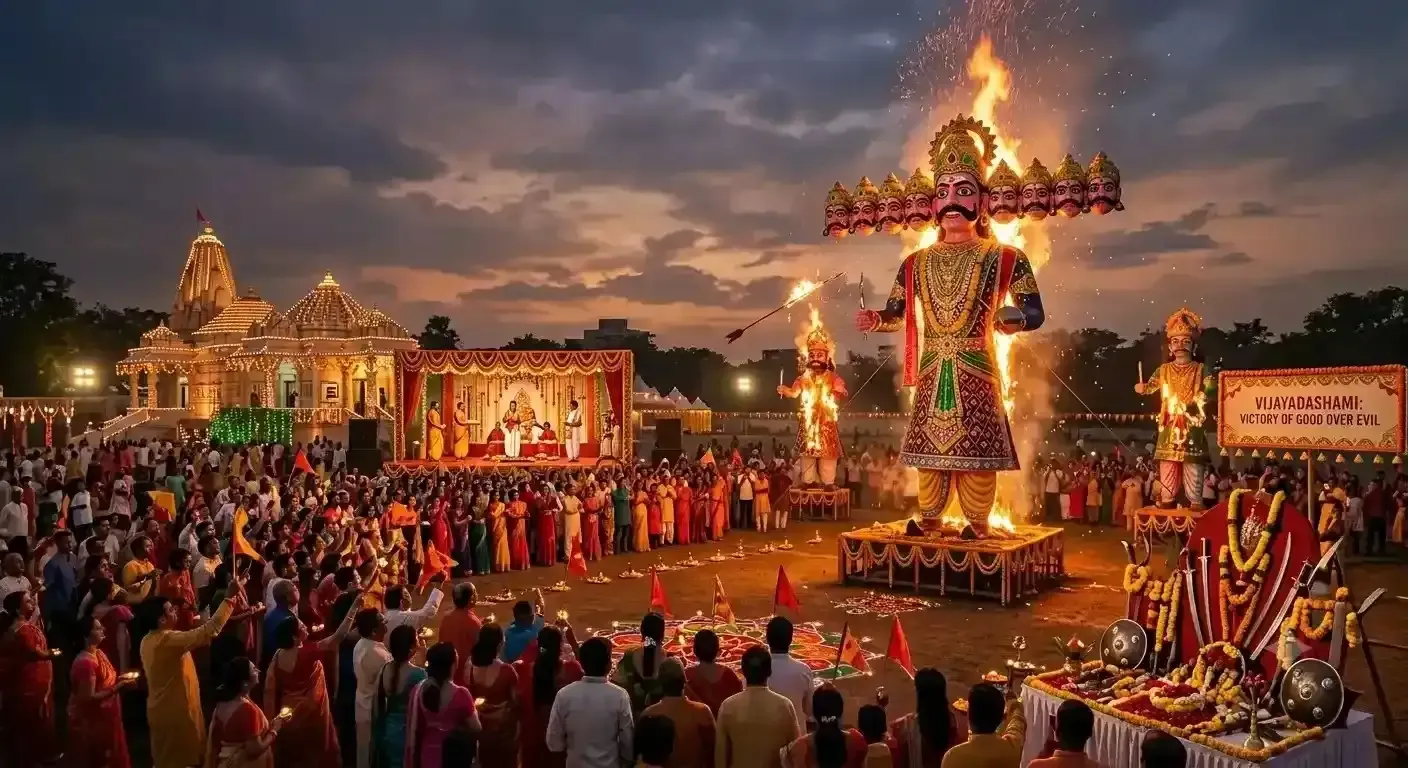
Dussehra, known in Goa as Dasro, falls on Tuesday 20 October 2026. Vijay Muhurat for Panaji and Margao, the Navratri Makharotsav in Goan temples, Seemollanghan and apta leaves, and tips for Goan Hindu families abroad.
Quick answer: Dussehra, called Dasro in Konkani, falls on Tuesday 20 October 2026 in Goa. The Vijay Muhurat is 2:16 to 3:03 PM in Panaji and Margao (Drik Panchang, local time). Navratri begins on Sunday 11 October, and Ashtami and Navami both fall on Monday 19 October 2026.
Goa's Hindu festivals have a character all their own. While much of North India marks Dussehra with giant Ravana effigies, Goan Dasro is centred on the village temple and the family home: nightly Makharotsav during Navratri, worship of tools and vehicles, Seemollanghan processions and the exchange of apta leaves as "gold". This guide covers the 2026 dates and Vijay Muhurat, the customs that make Goan Dasro special, and how Goan families abroad can keep them alive.
Dussehra 2026 key dates (India)
| Observance | Date (2026) |
|---|---|
| Sharad Navratri begins (Ghatasthapana) | Sunday 11 October |
| Durga Ashtami and Maha Navami | Monday 19 October |
| Dussehra / Vijayadashami (Dasro) | Tuesday 20 October |
| Dashami tithi | 12:50 PM IST 20 Oct to 2:11 PM IST 21 Oct |
| Diwali | Sunday 8 November |
Dasro is observed on 20 October because Dashami covers the afternoon of that day. Since Ashtami and Navami share Monday 19 October, Ayudha puja traditions that some families perform on Navami will also fall on that Monday.
Vijay Muhurat 2026 for Goa
Goa is a small state, so the Vijay Muhurat is essentially the same everywhere. Timings for 20 October 2026, from Drik Panchang, in local time:
| City | Vijay Muhurat (20 Oct 2026) |
|---|---|
| Panaji | 2:16 to 3:03 PM |
| Margao | 2:16 to 3:03 PM |
This afternoon window is considered ideal for Shami (Jambhali) puja, Aparajita puja, Seemollanghan and beginning new work or studies.
How Goa celebrates Navratri and Dasro
Navratri in Goan temples: Makharotsav
The most distinctive Goan Navratri custom is the Makharotsav. In many temples, especially those of the Devi and of family deities (kuldevtas), the festival image of the deity is placed in a beautifully decorated frame or swing called a makhar. Each night, accompanied by devotional singing, drums and traditional instruments, the makhar is gently swung or rocked, and devotees gather to watch. The style of decoration and the number of nights vary from temple to temple. Temples around Ponda, home to many of Goa's best-known shrines such as those of Shantadurga, Mangueshi and Mahalasa, draw large crowds during this period. Check each temple's official website or committee for current arrangements and timings.
Ghatasthapana at home
Many Goan Hindu families perform Ghatasthapana on the first day of Navratri, installing a kalash and sowing grains that sprout over the nine days. Lamps are kept lit, and the household follows its own kuldevta traditions, which may include visits to the family temple on particular days of Navratri.
Ayudha puja and vehicle puja
Around Navami and Dasro, families clean and worship tools, implements, books, vehicles and machinery. Fishing communities may decorate their boats, and workshops and shops honour the instruments of their trade. The idea is to give thanks for the tools that sustain one's livelihood.
Seemollanghan and apta leaves
On Dasro, Goan villages often hold a Seemollanghan, the ceremonial crossing of the boundary. In many places the deity's palanquin (palkhi) or a procession of villagers goes to the edge of the village or to a Shami or apta tree, where worship is performed. Afterwards, people exchange apta leaves, called sona (gold), with elders and friends, touching the feet of elders to seek blessings. The custom recalls stories of gold received on Vijayadashami and symbolises sharing prosperity.
Modern touches
Effigy burning was not part of traditional Goan Dasro, but Ravan Dahan events are now held in some towns, often organised by communities from other states. Venues and times are announced locally.
The stories behind Vijayadashami
Goan families tell the same three stories heard across India on this day. Lord Rama defeated Ravana and rescued Sita. Goddess Durga, after nine nights of battle, slew the buffalo-demon Mahishasura, which is why the Navratri worship of the Devi culminates on Dashami. And the Pandavas, at the end of their year in disguise, retrieved their weapons from the Shami tree where they had hidden them, which is why the Shami is worshipped and tools are honoured. In Goa, where the Devi and the kuldevta are at the centre of temple life, the goddess's victory is felt especially strongly during Navratri and Dasro.
What to do on Dasro
- Visit your village or family temple: take part in the Navratri and Dasro rituals of your kuldevta.
- Shami and Aparajita puja: ideally during the Vijay Muhurat of 2:16 to 3:03 PM.
- Worship tools and vehicles: clean them, apply haldi-kumkum, offer flowers and seek blessings for the year ahead.
- Exchange apta leaves: offer sona to elders and friends with good wishes.
- Begin new learning: Vijayadashami is traditionally a good day to start studies, music lessons or a new venture.
- Share a festive meal: many families prepare traditional Goan Hindu dishes for the occasion.
For Goan Hindu families abroad
Goan Hindu families live in the Gulf, the UK, Portugal, Canada and the USA. Kuldevta traditions are strongly tied to the village temple, which can make the festival feel far away. Some ideas:
- Do not convert Goa's Vijay Muhurat into your time zone. Use a panchang for your city or your local temple's calendar.
- Keep a small kalash and lamp for Navratri at home, and do a short daily prayer to your kuldevta.
- Ask relatives in Goa to share a video of the Makharotsav at your family temple, so children can see it.
- On Tuesday 20 October 2026, a working day in most countries, do a simple evening puja of tools, laptops and vehicles.
- If apta leaves are not available, exchange a flower or a sweet with elders and explain the custom of sona to children.
For the meaning of Dussehra and a full puja procedure, see our Dussehra / Vijayadashami 2026 pillar guide.
Frequently asked questions
When is Dussehra (Dasro) 2026 in Goa?
Tuesday 20 October 2026. Navratri begins on Sunday 11 October, and Durga Ashtami and Maha Navami both fall on Monday 19 October 2026 (Drik Panchang, India).
What is the Vijay Muhurat in Goa on Dussehra 2026?
2:16 to 3:03 PM in both Panaji and Margao on 20 October 2026, local time, according to Drik Panchang.
What is Makharotsav?
During Navratri, many Goan temples place the festival image of the deity in an ornate decorated frame or swing called a makhar, and on each night it is gently swung or rocked to music and devotional singing. Arrangements differ from temple to temple.
Why are apta leaves exchanged on Dussehra?
In Konkani and Marathi tradition, apta leaves are called sona (gold) on Dussehra and are exchanged with elders and friends as a symbol of prosperity. The custom is linked to stories of wealth received on Vijayadashami and to Seemollanghan, the ceremonial crossing of the boundary.
Is Ravan Dahan part of Goan Dussehra?
It is not a traditional Goan custom, which centres on temple worship and family rituals, but effigy burning events are now held in some towns. Check local announcements.
Editor's note
Editor's note (5 October 2026): This page has been restored at its original address after the earlier version was lost. Dates and Vijay Muhurat timings are from Drik Panchang for India. Makharotsav and Seemollanghan customs vary between temples and villages, so we describe them in general terms; we have not listed temple schedules or event venues. Check the temple's official website or committee for current timings.
Related guides
You might also like
Dussehra 2026 in Madhya Pradesh: Date, Vijay Muhurat for Bhopal, Indore, Ujjain and Traditions
Dussehra 2026 in Delhi: Date, Vijay Muhurat, Ramlila, Ravan Dahan and Durga Puja
Dussehra 2026 in Ladakh: Date, Vijay Muhurat for Leh and Kargil, and How Vijayadashami Is Marked