
Dussehra 2026 in Ladakh: Date, Vijay Muhurat for Leh and Kargil, and How Vijayadashami Is Marked
Vijayadashami falls on Tuesday 20 October 2026. Vijay Muhurat for Leh (1:56 to 2:41 PM) and Kargil, how Hindu residents, workers and army units in the Union Territory of Ladakh observe Navratri and Dussehra, and practical tips for a late-October visit.
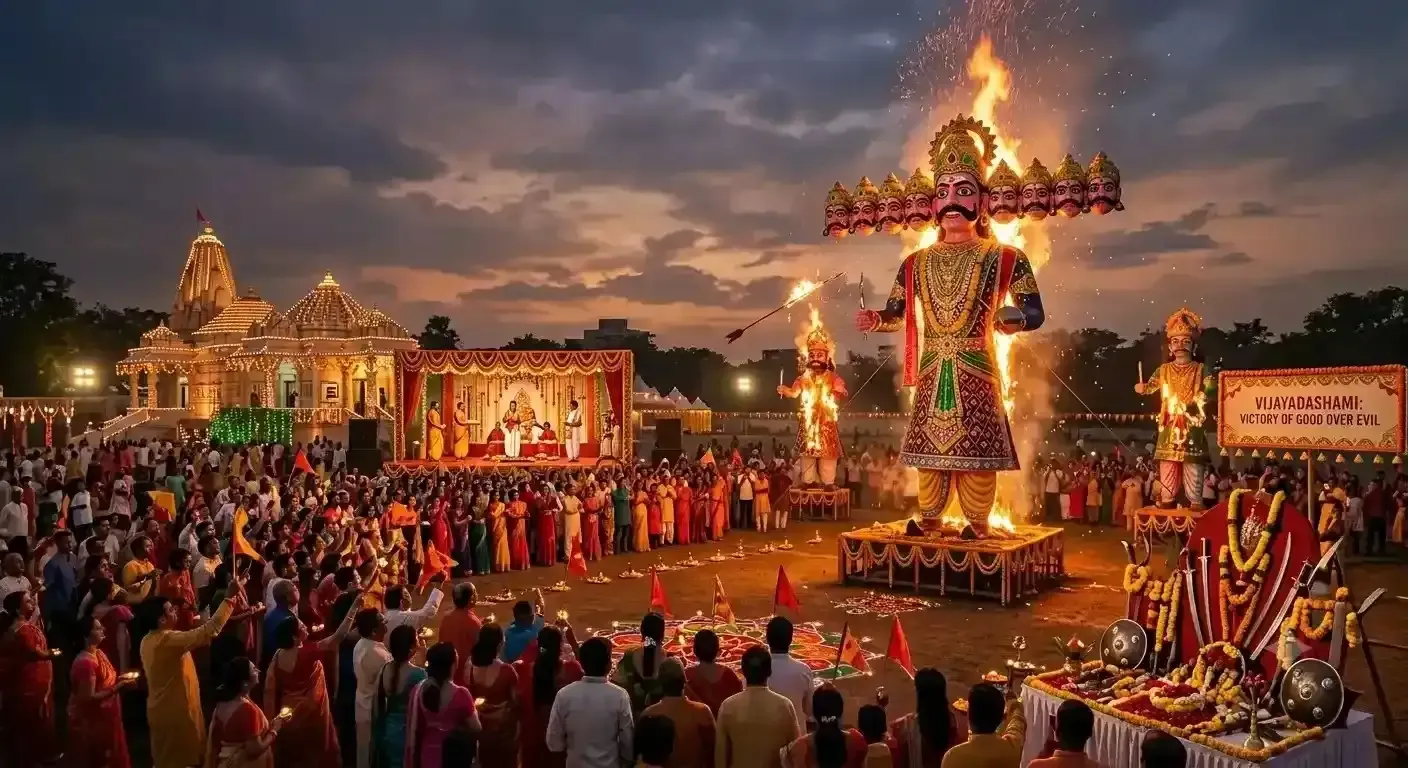
Vijayadashami falls on Tuesday 20 October 2026. Vijay Muhurat for Leh (1:56 to 2:41 PM) and Kargil, how Hindu residents, workers and army units in the Union Territory of Ladakh observe Navratri and Dussehra, and practical tips for a late-October visit.
Quick answer: Dussehra (Vijayadashami) 2026 in Ladakh is on Tuesday 20 October 2026. Vijay Muhurat: Leh 1:56 to 2:41 PM and Kargil 2:01 to 2:46 PM (local time, calculated by the Drik Panchang method). Navratri begins on Sunday 11 October, and Durga Ashtami and Maha Navami fall together on Monday 19 October 2026.
Ladakh is not the first place that comes to mind when people think of Dussehra. The high-altitude Union Territory is best known for its Buddhist monasteries and its Muslim heritage in Kargil, and there is no tradition of giant Ramlila grounds here as there is in Punjab or Uttar Pradesh. Yet Vijayadashami is still marked every year in Leh and Kargil, quietly and with real devotion, by Hindu residents, families posted in government jobs, workers from across India and the many soldiers stationed in the region. This guide gives the 2026 dates, a Vijay Muhurat table for Leh and Kargil, an honest picture of how the festival is observed, and practical points for anyone travelling to Ladakh in late October.
Dussehra 2026 key dates (India)
| Observance | Date (2026) |
|---|---|
| Navratri begins (Ghatasthapana) | Sunday 11 October |
| Durga Ashtami and Maha Navami | Monday 19 October |
| Dussehra / Vijayadashami | Tuesday 20 October |
| Dashami tithi | 12:50 PM IST 20 Oct to 2:11 PM IST 21 Oct |
| Diwali | Sunday 8 November |
Dates are from Drik Panchang for India and apply in Ladakh just as anywhere else in the country. Because Ashtami and Navami share a single day in 2026, families who perform Kanya pujan on either day will do it on Monday 19 October. The Dashami tithi begins shortly after midday on 20 October and covers the afternoon, which is why Vijayadashami is observed on Tuesday 20 October.
Vijay Muhurat 2026 for Leh and Kargil
The Vijay Muhurat is the most auspicious window of Vijayadashami afternoon, traditionally used for Aparajita puja, Shami puja, Shastra puja and for beginning new work or journeys. Timings for Tuesday 20 October 2026, in local time (IST), calculated by the Drik Panchang method:
| City | Vijay Muhurat (20 Oct 2026) |
|---|---|
| Leh | 1:56 to 2:41 PM |
| Kargil | 2:01 to 2:46 PM |
Kargil lies west of Leh, so its window starts a few minutes later. Both windows fall after the Dashami tithi begins at 12:50 PM IST. For other places in Ladakh, such as Nubra or Zanskar, timings will be close to those of the nearest town, but check a panchang set for your location if you need exact times.
Ladakh at a glance: why Dussehra is low-key here
Ladakh became a Union Territory in 2019, when the former state of Jammu and Kashmir was reorganised. Its two historic districts have distinct characters: Leh is predominantly Buddhist, with its gompas, stupas and prayer flags, while Kargil is predominantly Muslim. Hindus make up a small share of the permanent population. Most Hindu households in Ladakh are those of people who have come for work or service: central and UT government staff, teachers, traders, construction and road workers, and the personnel of the armed forces and paramilitary units posted along the region's long frontier.
This shapes how Dussehra is observed. Instead of large public pageants, the festival here is mostly a matter of household puja, small community gatherings and observances within army stations. That is not a lesser way to celebrate. For a family far from home, or a soldier spending Navratri at a remote post, lighting a lamp to the Devi and performing Shastra puja on Vijayadashami can carry deep meaning.
How Navratri and Dussehra are observed in Ladakh
Household puja
Hindu families in Leh and Kargil follow the traditions of their home regions. Some install a kalash and sow barley on Ghatasthapana, keep Navratri fasts and read the Durga Saptashati; others light a lamp before the Devi each evening. Kanya pujan on Ashtami or Navami is common in North Indian households. Fresh supplies can be harder to find at altitude, so many families make do with what is available, which is entirely in keeping with the spirit of the puja.
Shastra puja in army units
Worship of weapons on Vijayadashami, recalling Rama's victory and the Pandavas retrieving their weapons from the Shami tree, has long been part of military tradition in India. Army units across the country, including those stationed in Ladakh, commonly mark the day with Shastra puja, and army stations typically have a mandir or sarva dharma sthal where personnel gather. These are observances within military establishments and are not public events.
Community gatherings and effigies
In some years, residents' groups or units may arrange a small Ravan Dahan or a cultural programme. Such events, where they happen, are organised locally and announced close to the date, and they are modest in scale. Visitors should not expect the ten-night Ramlila culture found in North Indian cities.
What to do on Vijayadashami
- Aparajita and Shami puja: worship the goddess of victory and the Shami tree in the afternoon, ideally during the Vijay Muhurat.
- Shastra puja: clean and worship tools, vehicles, books and laptops. In Ladakh, where every journey depends on a reliable vehicle, many drivers honour their cars and trucks on this day.
- Begin something new: Vijayadashami is one of the most auspicious days of the year for new ventures and studies.
- Seek blessings: call or visit elders and share sweets with neighbours and colleagues.
For the meaning of Dussehra, the stories behind it and a full puja procedure, see our Dussehra / Vijayadashami 2026 pillar guide.
Visiting Ladakh in late October
- Late October is the very end of the tourist season. Many hotels, camps and guesthouses close for winter around this time, so confirm bookings directly.
- It is cold. Days can be bright and pleasant in the sun, but temperatures fall sharply after dark and nights in Leh often go below freezing. Higher passes are colder still.
- Leh sits at roughly 3,500 metres. Rest for at least the first day or two after arriving by air, drink water and avoid heavy exertion. Seek medical advice if you have heart or lung conditions.
- The road routes into Ladakh are high mountain highways that close for winter once snow sets in, and the timing varies each year. Flying into Leh is the more reliable option late in the season; check current road status before planning a drive.
- Rules for visiting certain areas near the borders are set by the Ladakh administration and can change. Check current official guidance before you travel.
- Dress modestly and remove shoes where required at monasteries, temples and mosques. Walk clockwise around stupas and prayer wheels.
For families of soldiers and workers posted in Ladakh
- Do not convert Leh's Vijay Muhurat into another time zone. Relatives abroad should use a panchang for their own city.
- If a family member is serving in Ladakh during Navratri, a video call on Vijayadashami, when connectivity allows, is a simple way to share the puja and blessings.
- Tuesday 20 October 2026 is a working day in most countries. Families abroad can do a short Shastra puja in the evening and join their local mandir's celebration, often held on the nearest weekend.
Frequently asked questions
When is Dussehra 2026 in Ladakh?
Tuesday 20 October 2026. Navratri begins on Sunday 11 October, and Durga Ashtami and Maha Navami are both on Monday 19 October 2026, according to Drik Panchang for India. The dates are the same across India, including Ladakh.
What is the Vijay Muhurat in Leh on Dussehra 2026?
1:56 to 2:41 PM local time (IST) on Tuesday 20 October 2026, calculated by the Drik Panchang method. For Kargil it is 2:01 to 2:46 PM.
Is Dussehra celebrated in Ladakh?
Yes, but on a smaller scale than in the plains. Ladakh's population is mostly Buddhist and Muslim, so Dussehra is observed mainly by Hindu residents, government employees, workers from other states and army personnel stationed in the region, through puja, Shastra puja and community gatherings.
Is Ladakh a state?
No. Ladakh has been a Union Territory since 2019, when the former state of Jammu and Kashmir was reorganised into two Union Territories, Jammu and Kashmir and Ladakh.
How cold is Leh in late October?
Cold. Days are usually crisp and sunny but cool, and nights at Leh's altitude of roughly 3,500 metres often drop below freezing. Pack warm layers, a down jacket, a cap and gloves, and allow time to acclimatise.
Editor's note
Editor's note (5 October 2026): This page has been restored at its original address after the earlier version was lost. Festival dates are from Drik Panchang for India. The Vijay Muhurat times for Leh and Kargil were calculated by the Drik Panchang method from local sunrise and sunset and may differ from other panchangs by a minute or so. We have deliberately not listed specific events, venues or organisers, because Dussehra in Ladakh is observed on a small, local scale and arrangements are announced each year. Weather, road and permit conditions change, so check official sources before you travel, and check any temple's official information for current timings.
Related guides
You might also like
Dussehra 2026 in Nagaland: Date, Vijay Muhurat for Kohima and Dimapur, Durga Puja and Dashain
Dussehra 2026 in Meghalaya: Date, Vijay Muhurat for Shillong, Tura and Jowai, Durga Puja and Dashain
Dussehra 2026 in Uttarakhand: Date, Vijay Muhurat for Dehradun and Haridwar, Almora Dussehra and Kumaoni Ramlila