
Why You Should Not See the Moon on Ganesh Chaturthi: Chandra Darshan, Mithya Dosha and the Remedy
On Bhadrapada Shukla Chaturthi, Hindus avoid looking at the moon. Here is the story of Ganesha and Chandra, how Krishna was falsely accused over the Syamantaka jewel, the remedy shloka, and how the rule works for families abroad.
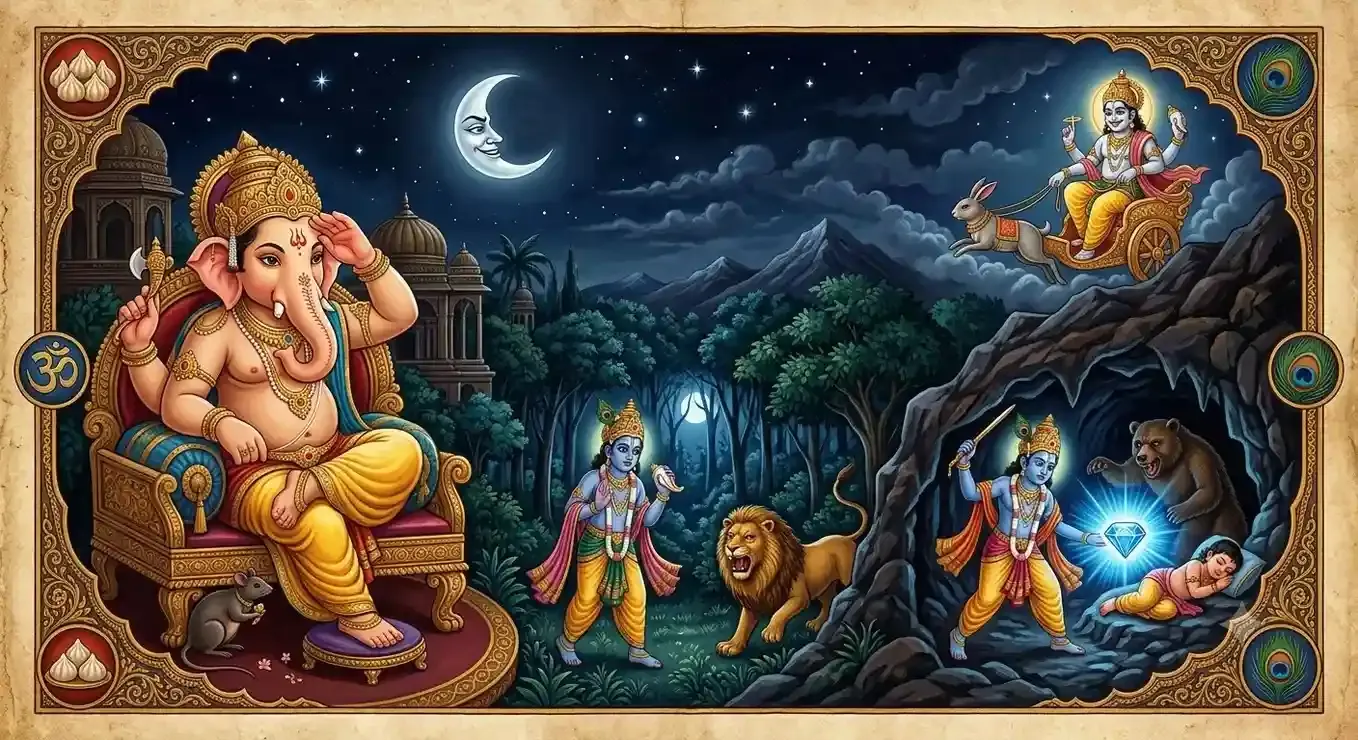
On Bhadrapada Shukla Chaturthi, Hindus avoid looking at the moon. Here is the story of Ganesha and Chandra, how Krishna was falsely accused over the Syamantaka jewel, the remedy shloka, and how the rule works for families abroad.
Quick answer: Hindus avoid looking at the moon on the night of Ganesh Chaturthi (Bhadrapada Shukla Chaturthi) because, according to Puranic legend, Ganesha cursed the moon god Chandra for mocking him. Anyone who sees the moon that night is said to suffer mithya dosha, a false accusation, as Lord Krishna himself did over the Syamantaka jewel. If you see it by accident, the traditional remedy is to hear the Syamantaka story and recite the shloka 'Simhah prasenam avadhit...'. Ganesh Chaturthi 2026 was on Monday 14 September; the next is Saturday 4 September 2027.
This guide, restored at its original hindutone.com address, explains the legend, the rule, the remedy and how families abroad can follow it sensibly.
The legend: Ganesha and Chandra
The story is told in several Puranas and in the katha read during the Vinayaka Chavithi puja, with small differences between versions. In the most widely told form, Ganesha has eaten many of the sweets offered to him by devotees on his birthday. Riding home at night on his mouse, he stumbles when the mouse is startled by a snake. His belly bursts and the sweets spill out; he ties his stomach with the snake and carries on.
Chandra, the moon god, proud of his own beauty, laughs at the sight. Ganesha, insulted, curses him: whoever looks at the moon will meet with disgrace or false accusation. The moon loses its glow, and the gods, alarmed, plead with Ganesha. Softening the curse, Ganesha limits it to a single night, the Chaturthi of Bhadrapada Shukla Paksha. On every other night the moon can be seen freely.
The teaching is simple: pride in appearance invites a fall, and mocking others, even in jest, has consequences. The moon's waxing and waning is sometimes linked with this story in popular retellings.
Krishna and the Syamantaka jewel
The best-known example of mithya dosha is Lord Krishna's. The story appears in the Bhagavata Purana and the Vishnu Purana, and in Telugu homes it forms the second half of the Vinayaka Chavithi katha.
- Satrajit, a Yadava noble, receives the dazzling Syamantaka jewel from the sun god Surya. Krishna suggests it would be better kept by the king, Ugrasena, for the good of the people, but Satrajit refuses.
- Satrajit's brother Prasena wears the jewel on a hunt and is killed by a lion, which carries the jewel away. The lion is in turn killed by Jambavan, the great bear of the Ramayana, who gives the jewel to his child as a plaything.
- When Prasena does not return, people whisper that Krishna killed him for the jewel. In the Vinayaka katha tradition, this happened because Krishna had seen the moon's reflection on Bhadrapada Chaturthi.
- To clear his name, Krishna follows the trail into Jambavan's cave and fights him for many days. Jambavan finally recognises Krishna as his own Lord Rama, returns the jewel and gives his daughter Jambavati in marriage.
- Krishna returns the jewel to Satrajit, who, ashamed, offers it to Krishna along with his daughter Satyabhama.
The story continues with further twists in the Puranas, but this core is what is read at Ganesh Chaturthi. Hearing it is believed to remove the dosha of seeing the moon.
The remedy shloka
The verse traditionally recited if you see the moon on Ganesh Chaturthi summarises the Syamantaka story. It is found in the Puranic tradition and printed in most vrata books:
सिंहः प्रसेनमवधीत्सिंहो जाम्बवता हतः।
सुकुमारक मारोदीस्तव ह्येष स्यमन्तकः॥
Transliteration: Simhah prasenam avadhit, simho jambavata hatah; sukumaraka marodis, tava hyesha syamantakah.
Meaning: 'The lion killed Prasena, and the lion was killed by Jambavan. Do not cry, dear child; this Syamantaka is yours.' These are the words spoken to Jambavan's child, to whom the jewel had been given as a toy.
Recite it with a calm mind, offer a namaskaram to Ganesha, and let the matter rest. The custom is about humility, not anxiety.
The rule in practice
| Day | Moon rule |
|---|---|
| Ganesh Chaturthi (Bhadrapada Shukla Chaturthi) | Avoid looking at the moon while Chaturthi prevails, mainly that evening and night. |
| Vinayaka Chaturthi in other months (Shukla Paksha) | Many devotees also avoid the moon; practice varies. |
| Sankashti Chaturthi (Krishna Paksha, monthly) | The opposite: the fast is broken only after seeing the moon and offering arghya. |
| Karva Chauth (Kartika Krishna Chaturthi) | Married women break their fast after sighting the moon. |
Because the Chaturthi tithi may begin on the previous evening or end during the festival day, panchangs publish a specific window for avoiding moon sighting. Use a panchang calculated for your own city.
Practical tips for families
- On the evening of Ganesh Chaturthi, finish outdoor errands before moonrise, or simply keep your eyes down when stepping out.
- Draw the curtains in rooms where the moon is visible through windows; children find this part fun.
- Read the Vinayaka katha, including the Syamantaka story, as part of the puja. Many families do this in any case, so any accidental sighting is already covered.
- If you are travelling or at an outdoor community event, do not worry. Recite the shloka and carry on.
Notes for NRI families
Abroad, the festival date and moon timings depend on your location. Follow your local temple's calendar or a panchang set for your city. Do not take India's moonrise or tithi times and convert them into your time zone; the moon rises at different local times in different places, so the converted time would be wrong.
This custom is also a good way to teach children the Syamantaka story, one of the most dramatic episodes in Krishna's life. Explain that it is about truth winning over rumour: Krishna did not sit back when accused, but patiently found the evidence that cleared his name.
Frequently asked questions
Is the moon avoided on every Chaturthi?
No. The prohibition applies specifically to Bhadrapada Shukla Chaturthi, the day of Ganesh Chaturthi. On Sankashti Chaturthi, the Krishna Paksha Chaturthi of every month, devotees actually wait to see the moon and offer it arghya before breaking their fast.
What should I do if I see the moon by accident?
Tradition prescribes listening to or reading the Syamantaka Mani story, which is part of the Vinayaka Chavithi katha, and reciting the shloka 'Simhah prasenam avadhit simho jambavata hatah, sukumaraka marodis tava hyesha syamantakah'. Many families also simply pray to Ganesha for forgiveness.
For how long should the moon be avoided?
The rule applies while the Chaturthi tithi prevails on Ganesh Chaturthi, which in practice means the evening and night of the festival day. Local panchangs often print the period to avoid moon sighting for each city.
Does the rule apply to people outside India?
Families who observe the tradition follow it wherever they live, using the festival date and moon timings for their own location, not India's. Ganesh Chaturthi 2027 is on Saturday 4 September in India; check your local temple's calendar for your city.
Is it bad luck to see the moon in a photo or video?
The tradition speaks of seeing the moon directly in the sky. Most elders do not extend it to pictures. The spirit of the custom is mindfulness and humility rather than fear.
Editor's note
Editor's note (5 October 2026): This guide has been restored at its original address after the earlier version was lost. The legend of Ganesha and Chandra exists in several versions; we give the one most commonly told in households. The Syamantaka story follows the Bhagavata and Vishnu Puranas in outline. Dates are from Drik Panchang: Ganesh Chaturthi was Monday 14 September 2026 and will be Saturday 4 September 2027.
Related guides
You might also like
Ganesh Chaturthi Wishes and Quotes: Messages, Shlokas and Captions
Ganesh Chaturthi & Vinayaka Chavithi Wishes for NRIs in the USA
Who Started Public Ganesh Chaturthi? Lokmanya Tilak and the Story of 1893