
Who Started Public Ganesh Chaturthi? Lokmanya Tilak and the Story of 1893
Lokmanya Bal Gangadhar Tilak is credited with turning Ganesh Chaturthi into a public festival in 1893, but the full story includes Pune citizens like Bhau Rangari, the Peshwa legacy and the politics of colonial India. Here is what happened and why it still matters.
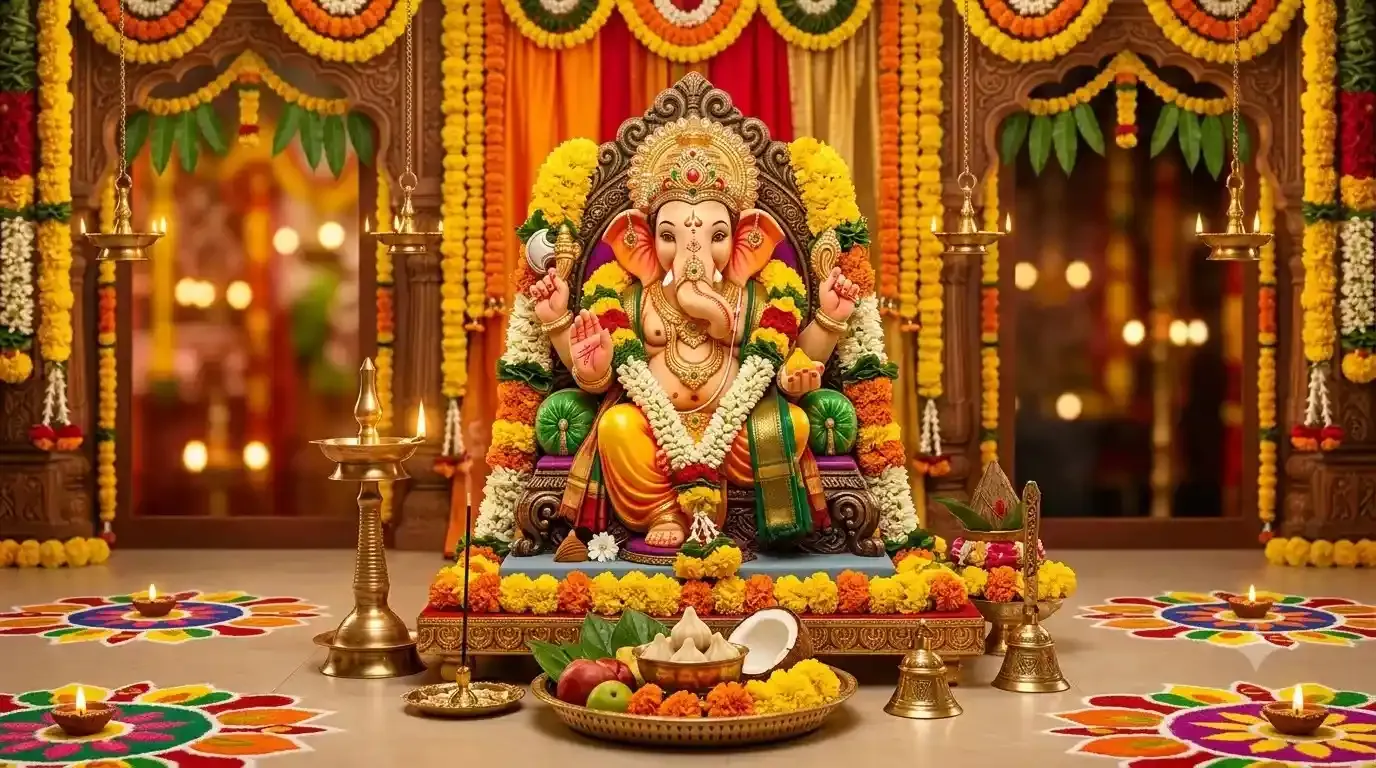
Lokmanya Bal Gangadhar Tilak is credited with turning Ganesh Chaturthi into a public festival in 1893, but the full story includes Pune citizens like Bhau Rangari, the Peshwa legacy and the politics of colonial India. Here is what happened and why it still matters.
Quick answer: Lokmanya Bal Gangadhar Tilak is credited with launching public (Sarvajanik) Ganeshotsav in Pune in 1893, promoting it through his Marathi newspaper Kesari and turning a household festival into a ten-day community event. He was not the only pioneer: Pune residents such as Bhausaheb Rangari set up some of the first public Ganesh installations around 1892 to 1893. Tilak's contribution was to champion the idea, give it a purpose and spread it across Maharashtra and beyond.
Today public Ganeshotsav is so familiar, from Mumbai's towering pandals to community halls across the diaspora, that it is easy to forget it is barely 130 years old in its current form. Its origins tell a story about faith, community and the struggle for India's freedom.
Ganesh Chaturthi before 1893
Ganesh Chaturthi itself is ancient. For centuries it was observed mainly at home: a clay image installed on Bhadrapada Shukla Chaturthi, worshipped for one or more days, and immersed in water. In Maharashtra the festival enjoyed special patronage under the Peshwas of Pune in the 18th century. Ganesha held a central place in their devotion, and celebrations at Shaniwar Wada, their palace in Pune, were grand affairs. After the fall of the Peshwas in 1818, this royal patronage ended, and the festival returned largely to private homes and some temples.
The first public Ganesh installations in Pune
In the early 1890s, several citizens of Pune began installing Ganesha in public spaces for community worship. The names most often mentioned are:
- Bhausaheb Rangari (Bhau Rangari), a Pune resident whose Ganesh mandal is regarded by many as the first public Ganesh installation, usually dated to 1892.
- Krishnajipant Khasgiwale, who, according to accounts, had seen public celebrations in Gwalior and encouraged the idea in Pune.
- Ganpatrao Ghotawadekar, who set up another of the early public mandals.
Exact dates and the order of these early mandals are debated by local historians. What is clear is that the idea of a public Ganesha was taking root among Pune's citizens at this time.
Tilak's role from 1893
Bal Gangadhar Tilak (1856 to 1920), the nationalist leader later called "Lokmanya" (beloved of the people), saw the potential of these community celebrations. In 1893 he praised and promoted public Ganeshotsav in Kesari, his influential Marathi newspaper. He encouraged citizens to install large public images, extend the festival over ten days and end it with a grand collective immersion procession. Tilak himself began installing a public Ganesha in the following years, and the festival spread rapidly from Pune to Mumbai and other towns of Maharashtra.
The ten-day format, ending on Anant Chaturdashi, is closely associated with this period, as are melas (singing troupes), public lectures, debates and patriotic songs performed in front of the Ganesh mandapams.
Why Tilak promoted public Ganeshotsav
Historians identify several overlapping goals.
- Unity across divisions: a public Ganesha belonged to everyone, regardless of caste or class. Ganesha, worshipped by nearly all Hindu communities, was an ideal unifying figure.
- A space for public gathering: the colonial government was wary of political meetings. A religious festival allowed large crowds to gather, hear speeches and share ideas.
- Cultural pride: Tilak believed that reviving shared festivals would build confidence and a sense of national identity.
- Mass participation: unlike elite political associations, festivals reached ordinary people in their own idiom.
Tilak followed a similar approach with the Shivaji festival (Shiv Jayanti), which he promoted from the mid-1890s to celebrate the Maratha king as a national hero.
Controversy and debate
The question "who started it" has been genuinely contested in Pune. Supporters of the Bhau Rangari mandal point to an 1892 installation and argue that their role has been overlooked in favour of Tilak. Others argue that while individuals set up the first mandals, it was Tilak who gave public Ganeshotsav its purpose, format and reach. Both views can be held together: the earliest installations came from the community, and Tilak turned them into a movement.
Historians have also discussed the festival's place in the tense communal atmosphere of the 1890s and its later political uses. These debates are part of its history, and modern celebrations are typically open to people of all backgrounds.
Timeline
| Period | Event |
|---|---|
| Ancient onward | Ganesh Chaturthi observed in homes on Bhadrapada Shukla Chaturthi |
| 18th century | Grand celebrations under the Peshwas in Pune |
| 1818 | End of Peshwa rule; festival largely returns to homes |
| c. 1892 | Bhau Rangari's public Ganesh installation in Pune, often cited as the first |
| 1893 | Tilak promotes Sarvajanik Ganeshotsav through Kesari; public mandals multiply |
| Mid-1890s onward | Ten-day festival with processions, melas and lectures spreads across Maharashtra |
| 20th century | Public mandals grow in Mumbai and across India; the festival spreads with migrants abroad |
How public Ganeshotsav reached the world
As Maharashtrians and other Indians migrated within India and abroad, they carried the public Ganeshotsav model with them. Today community mandals and temples in the USA, UK, Canada, Australia, Singapore, the Gulf and elsewhere follow the same pattern Tilak championed: a shared idol, days of collective worship, cultural programmes and a joyful farewell. For many NRI families, the community mandapam is the closest thing to the neighbourhood festival they grew up with.
What Tilak's idea means today
- Community first: the public Ganesha is a reminder that faith is also a shared, civic experience.
- Inclusion: mandapams that welcome everyone, of every background, honour the original spirit of unity.
- Responsibility: modern concerns such as noise, traffic and water pollution have prompted a shift to clay idols and artificial immersion tanks, extending the same spirit of public good.
- Culture as education: the lectures and songs of Tilak's era survive today as cultural programmes, talks and youth events in mandapams worldwide.
Frequently asked questions
Who started public Ganesh Chaturthi?
Lokmanya Bal Gangadhar Tilak is widely credited with popularising Sarvajanik (public) Ganeshotsav from 1893, using his newspaper Kesari to promote it. Pune citizens including Bhausaheb Rangari, Krishnajipant Khasgiwale and Ganpatrao Ghotawadekar set up some of the earliest public Ganesh installations in Pune around 1892 to 1893, and Tilak championed and spread the idea.
Why did Tilak promote public Ganesh Chaturthi?
Historians generally describe his aims as uniting people across castes and classes, building a shared cultural identity and creating a space for public gatherings, lectures and patriotic songs at a time when the colonial government viewed political assemblies with suspicion.
Was Ganesh Chaturthi celebrated before Tilak?
Yes. Ganesh Chaturthi is an ancient festival celebrated in homes for centuries. The Peshwas of Pune, for whom Ganesha was especially important, celebrated it with grandeur at their court. What changed in the 1890s was the shift from private and court celebration to community-organised public festivals.
What is the Bhau Rangari controversy?
There has been public debate in Pune over whether Bhau Rangari or Tilak should be called the founder of public Ganeshotsav, particularly around the festival's 125th anniversary in the late 2010s. Most accounts agree that Rangari's mandal was among the very first, and that Tilak was the leader who turned it into a widespread movement.
When is Ganesh Chaturthi in 2027?
Ganesh Chaturthi falls on Saturday, 4 September 2027 according to the Indian panchang. In 2026 it was observed on Monday, 14 September, with Anant Chaturdashi on Friday, 25 September.
Editor's note (5 October 2026)
This page restores a lost hindutone.com article, rewritten. The history of public Ganeshotsav is well documented in outline, but the precise dates and order of the earliest Pune mandals, including the claims of the Bhau Rangari mandal, remain debated. We have presented both perspectives. Dates for Ganesh Chaturthi 2026 and 2027 are from the Indian panchang.
Related guides
You might also like
Ganesh Chaturthi Wishes and Quotes: Messages, Shlokas and Captions
Ganesh Chaturthi & Vinayaka Chavithi Wishes for NRIs in the USA
Vinayaka Chavithi 2027 Date: Ganesh Chaturthi on Saturday 4 September 2027