
Vinayaka Vrata Vidhanam: Step-by-Step Vinayaka Chavithi Pooja at Home
A clear, step-by-step guide to the Vinayaka Chavithi vrata as performed in Telugu homes: what to prepare, the order of the sixteen upacharas, the 21-leaf patri pooja, the vrata katha, mangala harati and visarjan, with tips for NRI families.
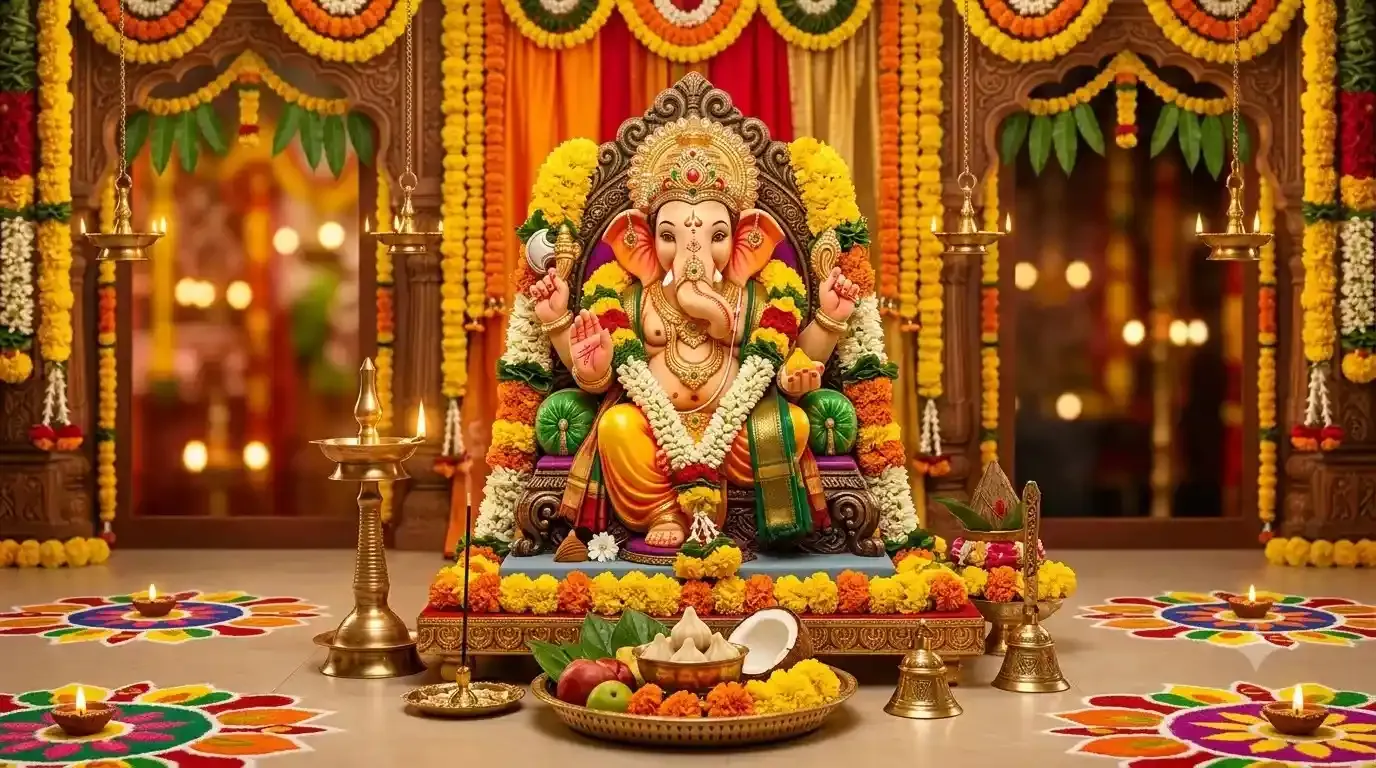
A clear, step-by-step guide to the Vinayaka Chavithi vrata as performed in Telugu homes: what to prepare, the order of the sixteen upacharas, the 21-leaf patri pooja, the vrata katha, mangala harati and visarjan, with tips for NRI families.
Quick answer: Vinayaka vrata vidhanam is the step-by-step procedure for the Vinayaka Chavithi pooja. In order: clean the space and set up a clay Ganesha, do achamanam and sankalpa, invoke Ganesha (prana pratishtha), offer the sixteen upacharas (shodashopachara), worship with 21 kinds of leaves (ekavimshati patra pooja), chant the 108 names, offer naivedyam, read the vrata katha, perform mangala harati, and later do udvasana and visarjan. Vinayaka Chavithi 2027 falls on Saturday, 4 September 2027.
In Telugu homes, the Vinayaka Chavithi pooja is usually performed from a small printed book called the vrata kalpam, which every family seems to own in a slightly different edition. The steps below follow the common structure of those books, explained in plain English so that first-timers and NRI families can follow along. Your family's book or priest may differ in small details. When in doubt, follow your family tradition.
Pooja samagri (what to prepare)
| Item | Notes |
|---|---|
| Clay Ganesha idol | An unbaked clay (mitti) idol is traditional; see our guide to eco-friendly Ganesh idols in the USA |
| Mandapam / peetham | A small wooden plank or stool with a clean cloth; some families build a canopy decorated with fruit |
| Kalasham | A small pot or vessel with water, mango leaves and a coconut |
| Turmeric, kumkum, sandalwood paste | For the turmeric Ganesha (Pasupu Ganapati) and for offerings |
| Akshata | Raw rice mixed with a little turmeric |
| Flowers and garlands | Red flowers are dear to Ganesha |
| Durva grass and 21 patri | The 21 kinds of leaves; durva is essential |
| Yajnopavitam (sacred thread), new cloth | Usually small cotton vastrams sold for the pooja |
| Lamp, ghee or oil, wicks, camphor, incense | For deepam, dhupam and harati |
| Naivedyam | Undrallu, kudumulu, modakam, panakam, vadapappu, fruits, coconut |
| Betel leaves and nuts | For tamboolam |
| Vrata kalpam | The printed pooja book in your language |
Before you begin
- Bathe early and wear clean clothes. Clean the pooja area and decorate with rangoli or muggulu if you can.
- Place the idol facing east or north if possible, on the peetham, with the kalasham beside it.
- Keep the naivedyam covered and ready, and arrange the leaves and flowers in separate plates.
- Make a small turmeric Ganesha (a cone of turmeric paste) on a betel leaf. Many traditions worship this first, to remove obstacles from the pooja itself.
Step 1: Achamanam, dhyanam and sankalpam
Sip water three times from the right palm with the names of Vishnu (Keshava, Narayana, Madhava), the standard purification at the start of any pooja. Then meditate on Ganesha with the well-known shloka:
शुक्लाम्बरधरं विष्णुं शशिवर्णं चतुर्भुजम्। प्रसन्नवदनं ध्यायेत् सर्वविघ्नोपशान्तये॥
Shuklambaradharam Vishnum shashivarnam chaturbhujam, prasanna vadanam dhyayet sarva vighnopashantaye.
Meaning: I meditate on the all-pervading one, dressed in white, bright as the moon, four-armed and smiling, so that all obstacles are removed.
Next comes the sankalpam, a formal statement of intention: who is performing the pooja, where, on which day, and for what purpose. Printed books give a template; abroad, many families simply state their city and country and the date. The purpose is commonly the removal of obstacles and the wellbeing of the family.
Step 2: Kalasha pooja and Pasupu Ganapati pooja
Worship the water in the kalasham, which is then sprinkled over the pooja items and the idol to purify them. Then offer akshata, kumkum and flowers to the turmeric Ganesha, asking for the pooja to be completed without obstacles.
Step 3: Prana pratishtha
Touching the idol's heart with flowers or durva, invite Ganesha's presence into the clay image. From this point the idol is treated as a living guest.
Step 4: Shodashopachara, the sixteen offerings
The heart of the pooja is the offering of sixteen services, as one would honour a beloved guest. Each is offered with its mantra from the book.
| # | Upachara | What you do |
|---|---|---|
| 1 | Dhyanam | Meditate on Ganesha's form |
| 2 | Avahanam | Invite him |
| 3 | Asanam | Offer a seat (akshata or flowers) |
| 4 | Padyam | Offer water to wash the feet |
| 5 | Arghyam | Offer water to the hands |
| 6 | Achamaniyam | Offer water to sip |
| 7 | Snanam | Bath (sprinkle water or panchamritam) |
| 8 | Vastram | Offer cloth |
| 9 | Yajnopavitam | Offer the sacred thread |
| 10 | Gandham | Sandalwood paste |
| 11 | Pushpam | Flowers |
| 12 | Dhupam | Incense |
| 13 | Deepam | Lamp |
| 14 | Naivedyam | Food offering |
| 15 | Tamboolam | Betel leaves and nuts |
| 16 | Nirajanam / Pradakshina-Namaskaram | Harati, circumambulation and prostration |
Different books group the last few slightly differently, and add mantra pushpam. The idea remains the same: complete hospitality for the divine guest.
Step 5: Anga pooja and ekavimshati patra pooja
In anga pooja, each part of Ganesha's form, from his feet to his head, is worshipped with a name, offering akshata or flowers. Then comes the patra pooja: 21 kinds of leaves are offered one by one, each with a name of Ganesha. Durva grass (garika), bilva (maredu), shami (jammi), arka (jilledu) and tulasi are among them; tulasi is traditionally not offered to Ganesha on other days, but is included on Chaturthi in many traditions. For the full list with names, read our Ganesh Chaturthi 21 patri guide.
Step 6: Ashtottara shatanamavali
Chant the 108 names of Ganesha, offering a flower or akshata with each "namah". Children can help by placing the flowers.
Step 7: Naivedyam
Offer the prepared food by sprinkling water around it and chanting the naivedya mantra. Traditional Telugu offerings are undrallu (steamed rice balls), kudumulu, modakam, vadapappu (soaked moong dal) and panakam (jaggery drink). Twenty-one is a favoured number, so some families offer 21 modakams or undrallu. See our guide to Ganesh Chaturthi naivedyam recipes for NRIs.
Step 8: The Vinayaka vrata katha
Everyone sits with akshata in hand and listens to the katha: the story of Gajasura and Shiva, Parvati creating Ganesha from turmeric paste, the elephant head, Ganesha becoming lord of the ganas, the moon's mockery and curse, and Krishna's false accusation over the Syamantaka jewel. At the end, the akshata is placed on the head as a blessing. Our guide to the Syamantaka story explains why this part matters.
Step 9: Mangala harati and prarthana
Perform harati with camphor or a ghee lamp, sing or chant, offer mantra pushpam, do pradakshina and prostrate. Close with a prayer asking forgiveness for any mistakes made in the pooja. A common closing verse:
Vakratunda mahakaya suryakoti samaprabha, nirvighnam kuru me deva sarva karyeshu sarvada.
Meaning: O Lord with the curved trunk and mighty body, brilliant as a million suns, make all my undertakings free of obstacles, always.
Step 10: Udvasana and visarjan
On the day of farewell (the next day, or after 3, 5, 7 or more days), perform a short pooja and harati, then udvasana: a request to Ganesha to return to his abode and come back next year. Gently move the idol. Then immerse it with respect. Abroad, a bucket or tub of water at home is the most common and lawful option; once the clay dissolves, the water and soil can go to your garden. See our Ganesh visarjan mantra guide.
Tips for NRI families
- Order the clay idol and vrata kalpam early; Indian stores and temples abroad often run out in the week before the festival.
- If you cannot find a kalasham coconut, a covered vessel of water with mango or betel leaves is fine.
- Muhurat times published for Indian cities do not apply abroad. Ask your local temple priest for your city.
- If it is a working day, many families do a short pooja in the morning and the full katha in the evening.
- Do not look at the moon on Chaturthi night; keep the Syamantaka shloka handy just in case.
Frequently asked questions
What is Vinayaka vrata vidhanam?
"Vidhanam" means procedure. Vinayaka vrata vidhanam is the traditional order of worship for Vinayaka Chavithi: purification, sankalpa, invoking Ganesha into the clay idol, the sixteen upacharas, the 21-leaf patri pooja, ashtottara namavali, naivedyam, the vrata katha, mangala harati and finally udvasana and visarjan.
Can I do Vinayaka Chavithi pooja without a priest?
Yes. The Vinayaka vrata is very commonly performed by the head of the household using a printed vrata kalpam (pooja book) or a recording. Many NRI families do it themselves. If you need a muhurat for your city, ask your local temple priest.
When is Vinayaka Chavithi in 2027?
Vinayaka Chavithi falls on Saturday, 4 September 2027 according to the Indian panchang. In 2026 it was observed on Monday, 14 September.
What if I cannot find all 21 leaves abroad?
Offer whatever leaves you can find, along with akshata (rice) for any missing ones, while chanting the names. Durva grass is the most important offering to Ganesha and is often available at Indian grocery stores or can be grown at home. Sincerity matters more than completeness.
How long should the idol be kept after the pooja?
Families keep Ganesha for 1, 3, 5, 7 or more days according to custom, and some until Anant Chaturdashi. Udvasana (the formal farewell) is performed before visarjan.
Why should we not see the moon on Vinayaka Chavithi?
The vrata katha says Ganesha cursed the moon for mocking him, so seeing the moon on Bhadrapada Shukla Chaturthi brings false accusations. Listening to the katha and reciting the Syamantaka shloka removes the blemish.
Editor's note (5 October 2026)
This guide restores a lost hindutone.com page, rewritten to follow the common structure of Telugu Vinayaka vrata kalpam books. Procedures vary by family, region and edition, so treat this as an outline and follow your family book or priest for the exact mantras. Dates are from the Indian panchang: Vinayaka Chavithi was Monday, 14 September 2026 and falls on Saturday, 4 September 2027.
Related guides
You might also like
Ganesh Chaturthi & Vinayaka Chavithi Wishes for NRIs in the USA
Vinayaka Chavithi 2027 Date: Ganesh Chaturthi on Saturday 4 September 2027
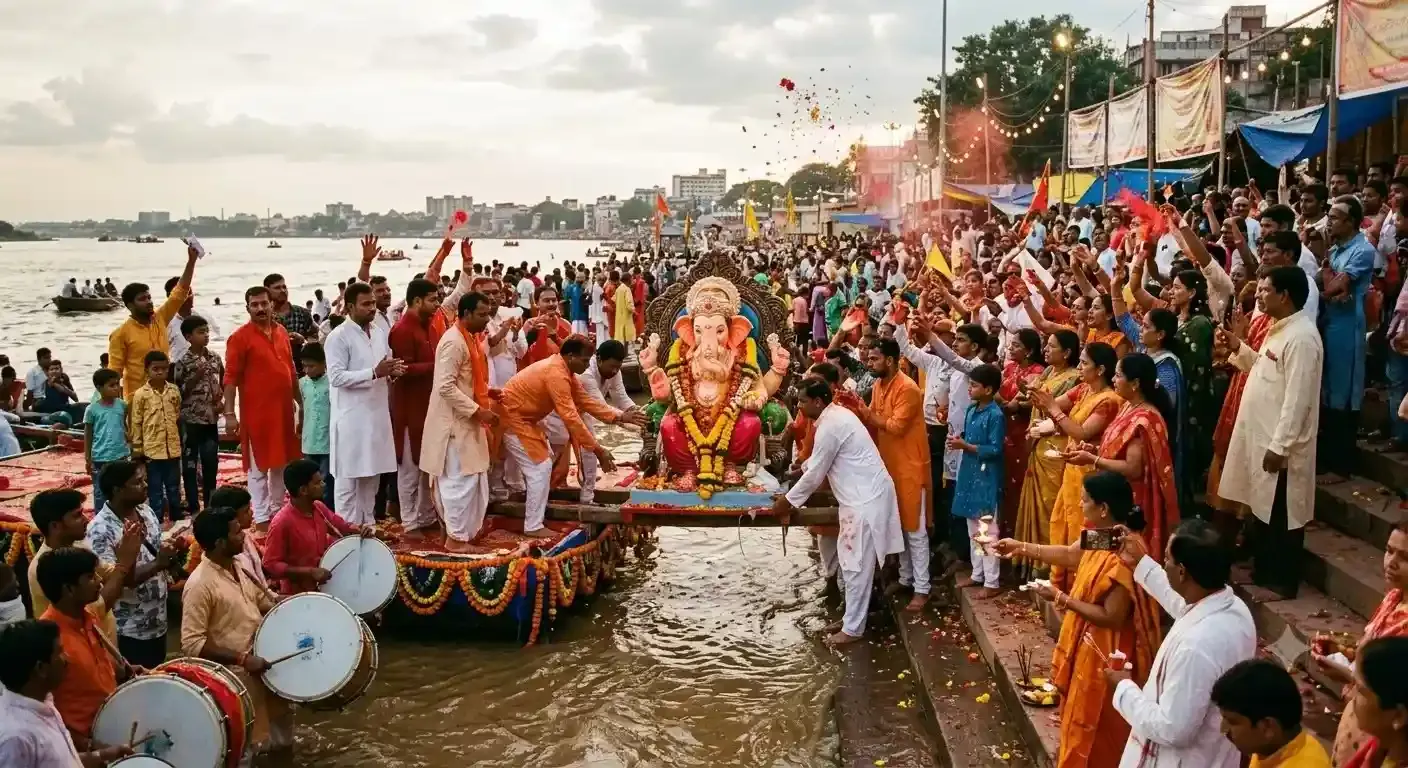
Ganesh Visarjan Mantra: Sanskrit Text, Meaning and Step-by-Step Visarjan Vidhi