
Dussehra 2026 in Jharkhand: Date, Vijay Muhurat for Ranchi, Jamshedpur and Dhanbad, Durga Puja and Dasai
Vijayadashami falls on Tuesday 20 October 2026. Vijay Muhurat timings for Ranchi, Jamshedpur, Dhanbad and Deoghar, Jharkhand's Bengali-influenced Durga Puja, Ravan Dahan in Ranchi, the Dasai traditions of the Santal and other Adivasi communities, and ideas for families abroad.
Vijayadashami falls on Tuesday 20 October 2026. Vijay Muhurat timings for Ranchi, Jamshedpur, Dhanbad and Deoghar, Jharkhand's Bengali-influenced Durga Puja, Ravan Dahan in Ranchi, the Dasai traditions of the Santal and other Adivasi communities, and ideas for families abroad.
Quick answer: Dussehra (Vijayadashami) 2026 in Jharkhand is on Tuesday 20 October 2026. Vijay Muhurat: Ranchi 1:28 to 2:14 PM, Jamshedpur 1:25 to 2:11 PM, Dhanbad 1:24 to 2:10 PM and Deoghar 1:22 to 2:08 PM (local time, calculated by the Drik Panchang method). Navratri begins on Sunday 11 October, and Durga Ashtami and Maha Navami fall together on Monday 19 October 2026.
Jharkhand celebrates the autumn festival in several voices at once. In the cities, Durga Puja dominates, with pandals, the beat of the dhak and evening crowds that owe much to the state's close ties with Bengal. On Vijayadashami evening, effigies of Ravana are burnt in Ranchi and other towns in the North Indian style. And in the villages, Adivasi communities such as the Santal keep their own Dasai traditions of song and dance.
Dussehra 2026 key dates (India)
| Observance | Date (2026) |
|---|---|
| Navratri begins (Ghatasthapana) | Sunday 11 October |
| Durga Ashtami and Maha Navami | Monday 19 October |
| Dussehra / Vijayadashami (Bijoya Dashami) | Tuesday 20 October |
| Dashami tithi | 12:50 PM IST 20 Oct to 2:11 PM IST 21 Oct |
| Diwali | Sunday 8 November |
Dates are from Drik Panchang for India. The Dashami tithi begins shortly after midday on 20 October and covers the afternoon, including the Vijay Muhurat, which is why Vijayadashami is observed on Tuesday 20 October 2026. Durga Puja committees in Jharkhand follow the Bengali panjika for the exact timings of Saptami, Ashtami, Sandhi Puja, Navami and Dashami rituals, so check their own announcements.
Vijay Muhurat 2026 for Jharkhand cities
The Vijay Muhurat is the most auspicious window of Vijayadashami afternoon. It is the traditional time for Shami puja, Aparajita puja, Shastra puja (worship of weapons, tools and vehicles), starting new work or setting out on a journey. Timings for Tuesday 20 October 2026, in local time, calculated by the Drik Panchang method:
| City | Vijay Muhurat (20 Oct 2026) |
|---|---|
| Ranchi | 1:28 to 2:14 PM |
| Jamshedpur | 1:25 to 2:11 PM |
| Dhanbad | 1:24 to 2:10 PM |
| Deoghar | 1:22 to 2:08 PM |
For other towns such as Bokaro, Hazaribagh or Dumka, check a panchang set for that town. All four windows fall after the Dashami tithi begins at 12:50 PM IST.
How Jharkhand celebrates Navratri and Dussehra
Durga Puja: the heart of the festival
For most people in urban Jharkhand, the festival means Durga Puja. Ranchi, Jamshedpur and Dhanbad have large Bengali communities, many of them settled for generations, and their pujas set the tone for the whole season. Pandals rise in neighbourhoods, colonies and industrial townships, and the idol of Durga with Lakshmi, Saraswati, Ganesha and Kartikeya is installed for the main days of the festival.
The days from Shashthi to Dashami follow the familiar Bengali sequence: the unveiling of the goddess, the Kola Bou bathed at dawn on Saptami, Pushpanjali on Ashtami morning, Sandhi Puja at the junction of Ashtami and Navami, and evenings of dhunuchi dance, cultural programmes and food stalls. Pandal hopping late into the night is a family ritual. Each committee sets its own schedule, so check local announcements for 2026.
Bijoya Dashami and immersion
On Dashami, which coincides with Vijayadashami, married women take part in Sindoor Khela, smearing vermilion on the goddess and on one another before she is bid farewell. The idols are then taken in procession for immersion in rivers, ponds or designated tanks. Families exchange Bijoya greetings, touch the feet of elders and share sweets. Immersion arrangements are set by the local authorities and puja committees each year.
Ravan Dahan in Ranchi and other towns
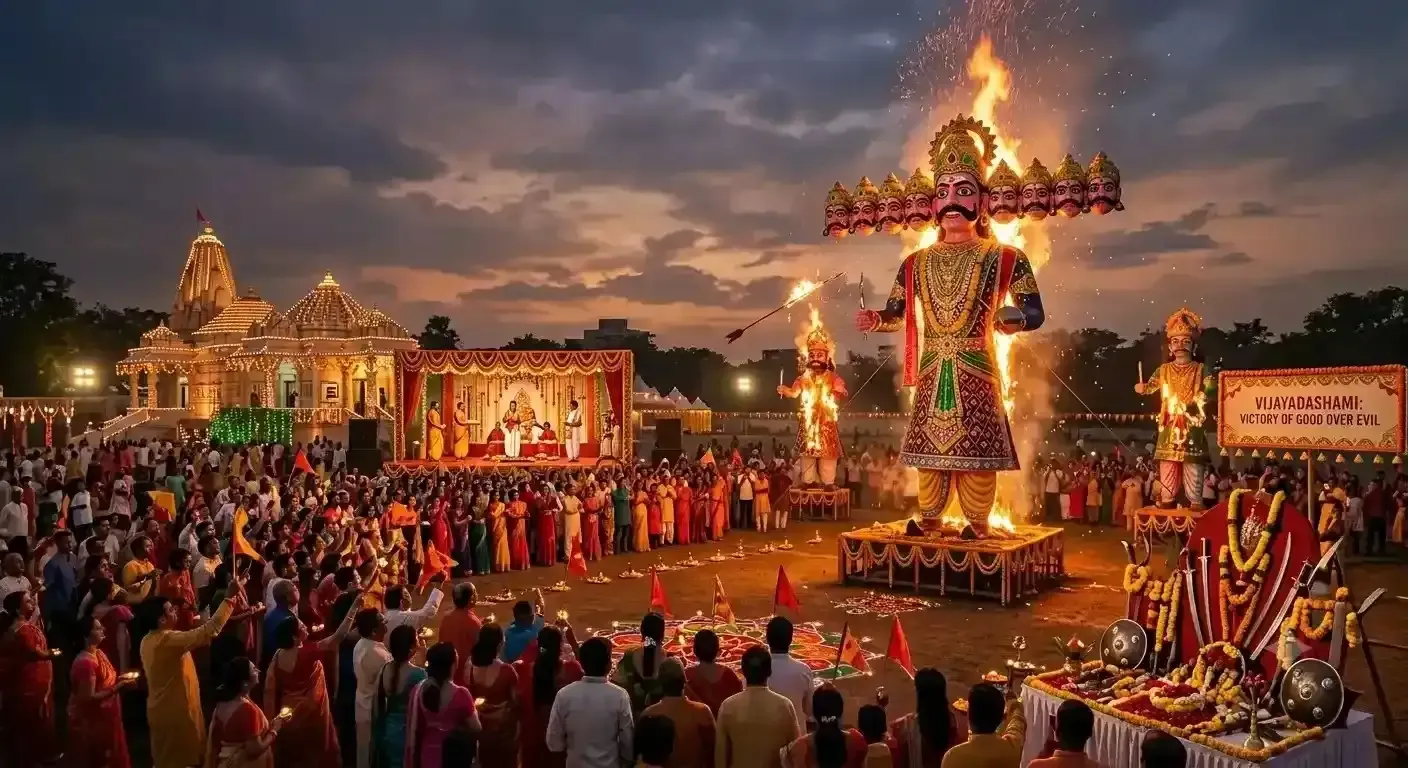
Jharkhand also has a strong tradition of Ravan Dahan, brought and nurtured by North Indian communities in the state. On Vijayadashami evening, tall effigies of Ravana, and in some places Kumbhakarna and Meghnad, are set alight after sunset to mark the victory of Rama over adharma. In Ranchi the main effigy burning is commonly held at large open grounds such as Morabadi, and smaller events take place in Jamshedpur, Dhanbad, Bokaro and other towns. Timings and arrangements are announced locally each year. Stand well back from the effigies, which are packed with firecrackers, and keep children close.
Dasai: Adivasi traditions of the season
Jharkhand is home to many Adivasi communities, including the Santal, Munda, Oraon and Ho, and the autumn festival season carries its own meanings among them. Among the Santal, the season is associated with Dasai (also written Dasae or Dansai), a dance tradition in which groups of men in festive dress, sometimes adorned with feathers, travel from village to village, singing and dancing to traditional instruments. A gourd-resonated instrument known as the bhuang is widely associated with the dance.
Accounts of the origin and meaning of Dasai differ between communities and writers, and the tradition is not simply a version of Durga Puja. If you are visiting rural Jharkhand during the festival, treat these celebrations as living community traditions: ask before taking photographs and follow the guidance of local hosts.
Navratri at home and in temples
Many Hindu families in Jharkhand, especially those with roots in Bihar and Uttar Pradesh, observe Navratri with Ghatasthapana on the first day, a kalash and sown barley, nine days of fasting and Kanya pujan on Ashtami or Navami. In 2026 both fall on Monday 19 October, so Kanya pujan for either tradition is on that day. The Chhinnamasta temple at Rajrappa is one of Jharkhand's best-known shrines of the Goddess and draws devotees during Navratri. Check the temple's official website for current timings.
Baidyanath Dham, Deoghar
No guide to Jharkhand's sacred places is complete without Baidyanath Dham in Deoghar. The temple of Shiva as Vaidyanath, the divine physician, is counted by many traditions among the twelve Jyotirlingas, and tradition also holds it to be a Shakti Peetha where the heart of Sati fell. Its legend connects the lingam with Ravana, who is said to have carried it from Kailash before it came to rest at Deoghar.
The temple's busiest season is the Shravan month, when kanwariyas carry Ganga water from Sultanganj in Bihar, but devotees come throughout the year, and many visitors to Jharkhand during the Puja holidays include a darshan here. Crowds can be very heavy at festival times. Check the temple's official website for current timings and arrangements before travelling.
What to do on Vijayadashami
- Aparajita and Shami puja: worship the goddess of victory and the Shami tree in the afternoon, ideally during the Vijay Muhurat.
- Shastra puja: clean and worship tools, vehicles, account books and laptops.
- Bijoya greetings: visit elders, seek their blessings and share sweets such as rasgulla, sandesh and narkel naru.
- Begin something new: Vijayadashami is one of the most auspicious days of the year for new ventures, purchases and starting studies.
- Ravan Dahan: join the community effigy burning after sunset, a reminder that arrogance and adharma are finally defeated.
For Jharkhand families abroad
- Use a panchang calculated for your own city. Do not convert Ranchi's or Jamshedpur's Vijay Muhurat into your local time zone.
- Tuesday 20 October 2026 is a working day in most countries. Many Bengali associations and mandirs abroad hold Durga Puja on the nearest weekend, so check their announcements.
- Hold Kanya pujan on Monday 19 October, or on the weekend if that is more practical.
- Video-call family at home during Pushpanjali or Sindoor Khela so children can share the moment.
For a wider NRI guide, see Navratri 2026: complete guide for NRI families. For the meaning of Dussehra, the stories behind it and a full puja procedure, see our Dussehra / Vijayadashami 2026 pillar guide.
Frequently asked questions
When is Dussehra 2026 in Jharkhand?
Tuesday 20 October 2026. Navratri begins on Sunday 11 October, and Durga Ashtami and Maha Navami are both on Monday 19 October 2026, according to Drik Panchang for India.
What is the Vijay Muhurat in Ranchi on Dussehra 2026?
1:28 to 2:14 PM in Ranchi on Tuesday 20 October 2026, calculated by the Drik Panchang method. Jamshedpur is 1:25 to 2:11 PM, Dhanbad 1:24 to 2:10 PM and Deoghar 1:22 to 2:08 PM, all local time.
Is Durga Puja or Ravan Dahan bigger in Jharkhand?
Durga Puja is the main form of the festival in most of Jharkhand, especially in Ranchi, Jamshedpur and Dhanbad, reflecting strong Bengali cultural influence. Ravan Dahan is also held on Vijayadashami evening in Ranchi and other towns, so many families enjoy both.
What is the Dasai dance?
Dasai (also written Dasae or Dansai) is a dance tradition of the Santal community associated with the Durga Puja season. Groups of men in festive dress travel between villages, singing and dancing to traditional instruments. Accounts of its origin and meaning vary between communities, so local elders are the best guides.
Is Baidyanath Dham busy during Navratri?
Baidyanath Dham in Deoghar is one of Jharkhand's most famous temples and draws devotees all year, with its biggest crowds during the Shravan month. Check the temple's official website for current timings and arrangements before visiting at any time.
Can I use Ranchi's Vijay Muhurat in the USA or UK?
No. Muhurat windows depend on local sunrise and sunset, so they cannot be converted into another time zone. Use a panchang for your own city or follow your local mandir's calendar.
Editor's note
Editor's note (5 October 2026): This page has been restored at its original address after the earlier version was lost. Dates are from Drik Panchang for India, and the Vijay Muhurat timings are calculated by the Drik Panchang method for each city. We have not listed puja committees, pandal themes, Ravan Dahan times or immersion schedules because these are announced locally each year; please check official sources before you go. Descriptions of Adivasi traditions are general, and practice varies between communities. Temple timings change, so check the temple's official website.
Related guides
You might also like
Dussehra 2026 in Delhi: Date, Vijay Muhurat, Ramlila, Ravan Dahan and Durga Puja
Dussehra 2026 in Nagaland: Date, Vijay Muhurat for Kohima and Dimapur, Durga Puja and Dashain
Dussehra 2026 in Meghalaya: Date, Vijay Muhurat for Shillong, Tura and Jowai, Durga Puja and Dashain