
Dussehra 2026 in Maharashtra: Date, Vijay Muhurat, Seemollanghan, Apta Leaves and Shakti Peethas
Dasara (Vijayadashami) falls on Tuesday 20 October 2026. Vijay Muhurat for Mumbai, Pune, Nagpur and Nashik, Ghatasthapana, Bhondla and Hadga, Seemollanghan and the exchange of Apta leaves as sona, the Shakti Peethas of Maharashtra, Dhammachakra Pravartan Din in Nagpur and tips for families abroad.
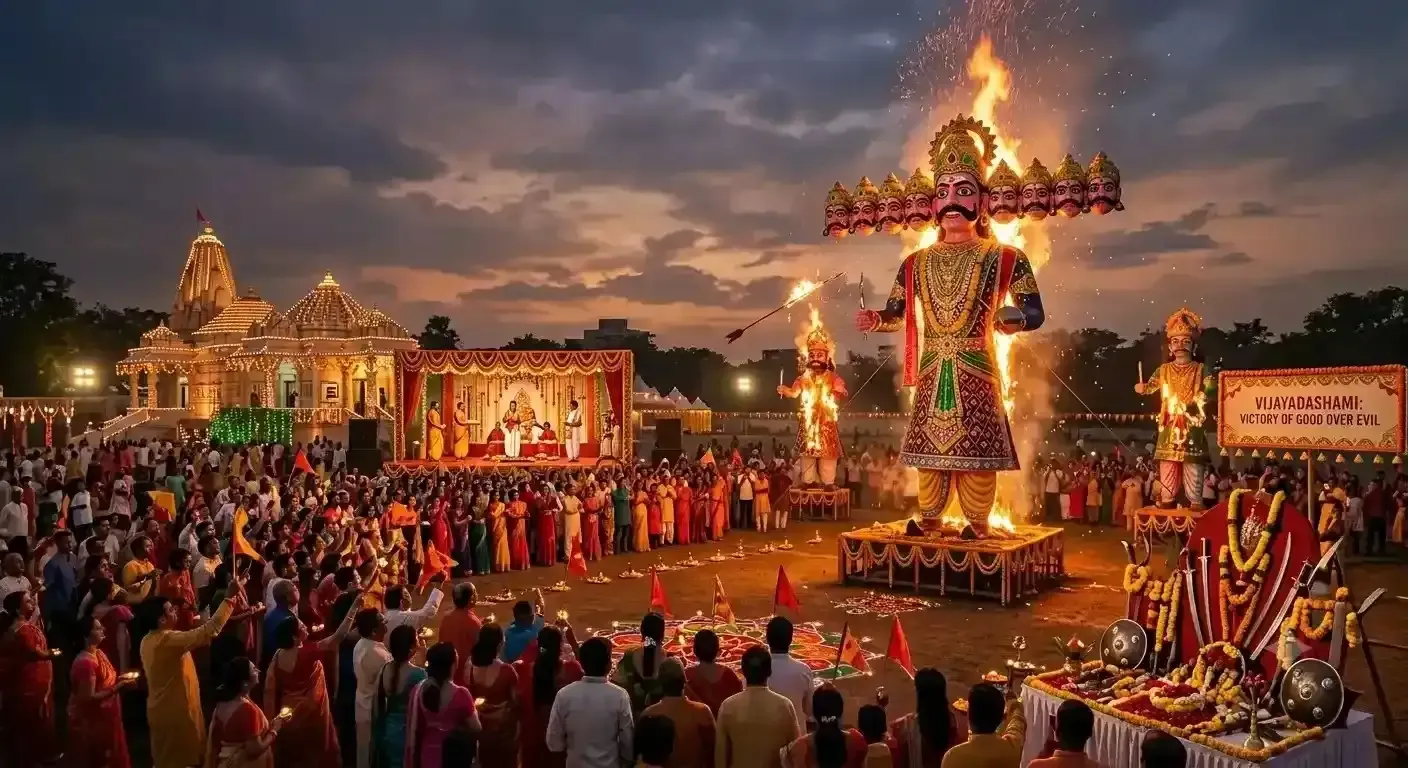
Dasara (Vijayadashami) falls on Tuesday 20 October 2026. Vijay Muhurat for Mumbai, Pune, Nagpur and Nashik, Ghatasthapana, Bhondla and Hadga, Seemollanghan and the exchange of Apta leaves as sona, the Shakti Peethas of Maharashtra, Dhammachakra Pravartan Din in Nagpur and tips for families abroad.
Quick answer: Dasara (Dussehra, Vijayadashami) 2026 in Maharashtra is on Tuesday 20 October 2026. Vijay Muhurat: Mumbai 2:19 to 3:06 PM, Pune 2:15 to 3:02 PM, Nagpur 1:54 to 2:40 PM and Nashik 2:15 to 3:02 PM (local time, calculated by the Drik Panchang method). Ghatasthapana is on Sunday 11 October, and Ashtami and Navami fall together on Monday 19 October 2026.
In Maharashtra, Dasara is one of the sade-teen muhurta, the three and a half most auspicious days of the year, when no special muhurat is needed to begin something new. It is the day for Seemollanghan, for decorating cars and machines, for buying gold or a home, and above all for handing out Apta leaves as sona, gold. Before it come nine nights of Ghatasthapana, Bhondla songs and pilgrimages to the great Devi temples of Tuljapur, Kolhapur, Mahur and Vani. In Nagpur, the day carries a second, historic meaning as Dhammachakra Pravartan Din.
Dasara 2026 key dates (India)
| Observance | Date (2026) |
|---|---|
| Ghatasthapana, Navratri begins | Sunday 11 October |
| Durga Ashtami and Maha Navami | Monday 19 October |
| Dasara / Vijayadashami | Tuesday 20 October |
| Dashami tithi | 12:50 PM IST 20 Oct to 2:11 PM IST 21 Oct |
| Diwali | Sunday 8 November |
Dates are from Drik Panchang for India. The Dashami tithi begins shortly after midday on 20 October and covers the afternoon, including the Vijay Muhurat and the time for Seemollanghan, which is why Dasara is observed on Tuesday 20 October 2026.
Vijay Muhurat 2026 for Maharashtra cities
The Vijay Muhurat is the most auspicious window of Vijayadashami afternoon, the traditional time for Shami and Apta puja, Aparajita puja, Shastra puja and starting new work. Timings for Tuesday 20 October 2026, in local time, calculated by the Drik Panchang method:
| City | Vijay Muhurat (20 Oct 2026) |
|---|---|
| Mumbai | 2:19 to 3:06 PM |
| Pune | 2:15 to 3:02 PM |
| Nagpur | 1:54 to 2:40 PM |
| Nashik | 2:15 to 3:02 PM |
Maharashtra is a wide state, so the window in Nagpur starts about 25 minutes before Mumbai's. For other towns such as Kolhapur, Aurangabad (Chhatrapati Sambhajinagar) or Solapur, check a panchang set for that town.
Navratri in Maharashtra
Ghatasthapana
Navratri begins with Ghatasthapana on the first day. In many Maharashtrian homes, a kalash (ghat) filled with water is placed on a bed of soil sown with grains, the Devi is invoked, and a nandadeep (lamp) is kept burning through the nine days. Many families hang a fresh garland of flowers over the ghat each day. By Dasara the sprouted grains have grown tall, and in some families they are offered to the Devi and worn in caps or hair as a blessing.
Bhondla and Hadga
For girls and young women, Navratri means Bhondla, called Hadga in Marathwada and Vidarbha. An elephant (hatti) is drawn on the ground or a board, girls dance and sing in a circle around it, and each girl brings a khirapat, a snack kept secret until the others guess what it is. The songs are simple, funny and full of family life, and the custom is fondly remembered by generations of Maharashtrian women.
Garba, dandiya and Durga Puja
Mumbai, Pune, Nashik and other cities also host lively garba and dandiya nights, from society compounds to large grounds, reflecting the strong Gujarati presence in the state. Mumbai's Bengali community celebrates Durga Puja in pandals across the city and in Navi Mumbai, with Pushpanjali, dhunuchi dance and Sindoor Khela on Bijoya Dashami. Event dates and venues are announced by organisers each year.
The great Devi temples of Maharashtra
Maharashtra traditionally counts three and a half Shakti Peethas, and all four are major Navratri pilgrimages:
- Tulja Bhavani, Tuljapur: the kuldevata of countless Maharashtrian families, remembered as the goddess revered by Chhatrapati Shivaji Maharaj. Navratri is the temple's greatest festival.
- Mahalakshmi (Ambabai), Kolhapur: the ancient temple of the Goddess as Ambabai, a centre of devotion for all of western Maharashtra, especially busy during Navratri.
- Renuka Devi, Mahur: the hill shrine of Renuka, mother of Parashurama, in Nanded district.
- Saptashrungi, Vani: the goddess of the seven peaks near Nashik, counted as the half Shakti Peetha.
In Mumbai, the Mahalakshmi temple and the Mumba Devi temple are thronged during Navratri. Temples see very heavy crowds at this time, so check each temple's official website for current timings and arrangements before travelling.
Dasara day customs
Seemollanghan and Apta leaves
In the afternoon, people traditionally perform Seemollanghan, crossing the boundary of the village or town as warriors once did before setting out on campaign. They worship the Shami tree and the Apta tree, and bring back Apta leaves. Back home and through the evening, the leaves are exchanged as sona: younger people offer them to elders and touch their feet, and friends greet one another with the wish to remain as close as gold. A popular story connects the custom with Kautsa, the student for whom Kubera is said to have showered gold on these trees.
Ayudha puja and vehicle puja
Dasara is also the day of Shastra or Ayudha puja. Tools, weapons, books and account ledgers are worshipped, and cars, scooters, autorickshaws and trucks are washed, decorated with marigold garlands and given a small puja. Many homes hang a toran of marigolds and mango leaves on the door, and many families draw a figure of Saraswati on a slate and worship it along with books.
Buying gold and new beginnings
Because Dasara is one of the sade-teen muhurta, it is a favourite day in Maharashtra for buying gold, vehicles and homes, signing agreements and starting businesses. Families dress in new clothes, prepare festive dishes such as puran poli or shrikhand, and visit relatives with Apta leaves in hand.
Nagpur: Dhammachakra Pravartan Din at Deekshabhoomi
For Ambedkarite Buddhists, Dasara in Nagpur has a profound meaning. On Vijayadashami, 14 October 1956, Dr B. R. Ambedkar embraced Buddhism at Deekshabhoomi in Nagpur, and a very large number of his followers took the same step with him. The anniversary is observed as Dhammachakra Pravartan Din, and every year large numbers of people from across India travel to Deekshabhoomi, with its great stupa, to pay homage. Visitors to Nagpur around Dasara should expect heavy crowds and follow local arrangements.
For Maharashtrian families abroad
- Use a panchang calculated for your own city. Do not convert Mumbai's or Pune's Vijay Muhurat into your local time zone.
- Tuesday 20 October 2026 is a working day in most countries. Marathi mandals abroad often hold their Dasara gatherings on the nearest weekend, so check their announcements.
- Apta trees are rare outside India. Many families use leaves from a local tree or paper cut-outs for children, keeping the spirit of the sona exchange.
- Do a short vehicle and laptop puja in the evening, and video-call grandparents to seek blessings.
For a wider NRI guide, see Navratri 2026: complete guide for NRI families. For the meaning of Dussehra and a full puja procedure, see our Dussehra / Vijayadashami 2026 pillar guide.
Frequently asked questions
When is Dasara 2026 in Maharashtra?
Tuesday 20 October 2026. Ghatasthapana and Navratri begin on Sunday 11 October, and Durga Ashtami and Maha Navami are both on Monday 19 October 2026, according to Drik Panchang for India.
What is the Vijay Muhurat in Mumbai on Dussehra 2026?
2:19 to 3:06 PM in Mumbai on Tuesday 20 October 2026, calculated by the Drik Panchang method. Pune and Nashik are 2:15 to 3:02 PM and Nagpur 1:54 to 2:40 PM, all local time.
Why are Apta leaves given as gold on Dasara?
Apta leaves are exchanged as sona (gold) on Dasara as a wish for prosperity. A popular story links the custom to the legend of Kautsa, for whom Kubera is said to have rained gold on the Shami and Apta trees, and to the Pandavas recovering their weapons from a Shami tree. People give the leaves to elders and friends with the greeting to keep their bond golden.
What is Seemollanghan?
Seemollanghan means crossing the boundary. On Dasara afternoon, people traditionally walk to the edge of the village or town, worship the Shami or Apta tree there and return with leaves, recalling the old custom of kings and warriors setting out on campaigns after Vijayadashami.
Why is Dussehra important in Nagpur for Buddhists?
On Vijayadashami, 14 October 1956, Dr B. R. Ambedkar embraced Buddhism at Deekshabhoomi in Nagpur along with a very large number of his followers. Ambedkarite Buddhists mark the anniversary as Dhammachakra Pravartan Din, and large numbers gather at Deekshabhoomi around Dasara.
Can I use Mumbai's Vijay Muhurat in the USA or UK?
No. Muhurat windows depend on local sunrise and sunset, so they cannot be converted into another time zone. Use a panchang for your own city or follow your local mandir's calendar.
Editor's note
Editor's note (5 October 2026): This page has been restored at its original address after the earlier version was lost. Dates are from Drik Panchang for India, and the Vijay Muhurat timings are calculated by the Drik Panchang method for each city. We have not listed garba, dandiya or Durga Puja venues, ticket details or event schedules because these are announced by organisers each year; please check official sources before you go. Family customs vary across the regions of Maharashtra. Temple timings change, so check the temple's official website.
Related guides
You might also like
Dussehra 2026 in Delhi: Date, Vijay Muhurat, Ramlila, Ravan Dahan and Durga Puja
Dussehra 2026 in Ladakh: Date, Vijay Muhurat for Leh and Kargil, and How Vijayadashami Is Marked
Dussehra 2026 in Nagaland: Date, Vijay Muhurat for Kohima and Dimapur, Durga Puja and Dashain