
Dashain 2026 in Nepal: Vijaya Dashami Date, Ghatasthapana, Tika, Jamara and Rituals Day by Day
Dashain, Nepal's biggest festival, begins with Ghatasthapana on 11 October 2026 and peaks with Vijaya Dashami tika on Tuesday 20 October. Key days, the meaning of tika and jamara, Kathmandu's Vijay Muhurat and how the Nepali diaspora celebrates.
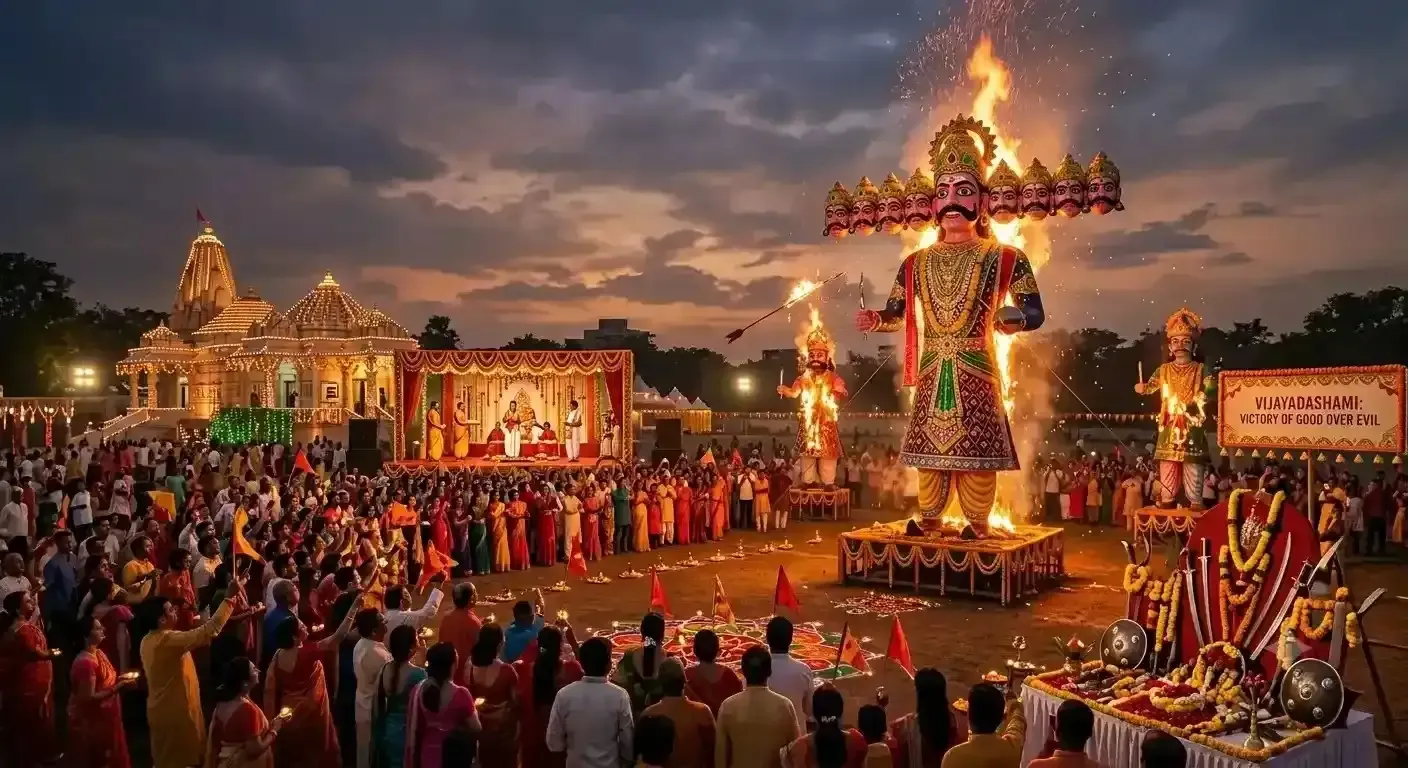
Dashain, Nepal's biggest festival, begins with Ghatasthapana on 11 October 2026 and peaks with Vijaya Dashami tika on Tuesday 20 October. Key days, the meaning of tika and jamara, Kathmandu's Vijay Muhurat and how the Nepali diaspora celebrates.
Quick answer: Dashain 2026 begins with Ghatasthapana on Sunday 11 October 2026. Durga Ashtami and Maha Navami fall on Monday 19 October, and Vijaya Dashami, the main tika day, is Tuesday 20 October 2026 (Drik Panchang, Nepal). Drik Panchang's Vijay Muhurat for Kathmandu is 1:42 to 2:28 PM local time, but families should follow the official tika sait announced in Nepal.
Dashain (Bada Dashain or Vijaya Dashami) is the longest and most important festival in Nepal. For about two weeks, offices and schools close, cities empty as people travel to their ancestral villages, and families gather to worship the goddess Durga and receive tika and blessings from their elders. For the millions of Nepalis working and studying abroad, from the Gulf and Malaysia to the UK, the USA, Australia and India, Dashain is the festival that most strongly means home. Here are the 2026 dates and a day-by-day guide.
Dashain 2026 key dates
| Observance | Date (2026) |
|---|---|
| Ghatasthapana (Navratri begins) | Sunday 11 October |
| Durga Ashtami (Maha Ashtami) | Monday 19 October |
| Maha Navami | Monday 19 October |
| Vijaya Dashami (tika day) | Tuesday 20 October |
| Kathmandu Vijay Muhurat (Drik Panchang) | 1:42 to 2:28 PM local time, 20 October |
Dates above are from Drik Panchang's Nepal calendar. In Nepal, festival dates and the tika sait are officially fixed by the Nepal Panchanga Nirnayak Samiti and the government's holiday calendar; if they differ, follow the official Nepali announcement. In 2026, Ashtami and Navami are listed on the same day, so the rituals of the two days will be close together. Dashain continues after Vijaya Dashami, with families visiting relatives to receive tika until the full moon of Kojagrat Purnima, which closes the festival.
Dashain day by day
Ghatasthapana: sowing the jamara
Dashain starts with Ghatasthapana, the installation of the sacred kalash (a vessel of water representing the goddess) in the home's puja room or dashain ghar. Around it, barley seeds are sown in a bed of sand and soil, and the room is kept dark so the shoots grow pale yellow. The kalash and jamara are worshipped every day of Navratri, often by the eldest male of the household, who may also recite the Durga Saptashati (Chandi Path).
The early days of Navratri
Over the next days, the nine forms of Durga are worshipped. Devotees visit Shakti temples, and in Kathmandu valley shrines such as those of Guhyeshwari, Dakshinkali and other Devi temples are crowded. Kite flying fills the autumn sky, and in villages giant bamboo swings called ping are built for children and adults alike.
Fulpati
On Saptami, the seventh day, comes Fulpati, the bringing of the sacred flowers and leaves. Traditionally, a bundle of sacred plants, banana stalks, jamara and sugar cane, tied with red cloth, was carried from Gorkha to Kathmandu, and the procession and ceremonies at Kathmandu's Durbar Square and Tundikhel remain a highlight of the festival. In homes, Fulpati is brought into the dashain ghar.
Maha Ashtami and Maha Navami
Maha Ashtami is devoted to the fierce forms of the goddess, especially Kali, and the night is known as Kal Ratri. Maha Navami is the last day of Navratri. Traditionally these are days of animal sacrifice at temples and in many homes, and the Taleju Bhawani temple in Kathmandu opens to the public on Navami. Many families today choose vegetarian offerings, such as pumpkins, cucumbers or coconuts, instead. On Navami, people also worship tools, vehicles and weapons (Vishwakarma or Ayudha puja), asking for protection in the year ahead.
Vijaya Dashami: tika and jamara
Vijaya Dashami is the heart of Dashain. After worship of the goddess, elders mix rice grains with yogurt and red vermilion (abir) to make the tika, place it on the foreheads of younger relatives, tuck jamara behind their ears and bless them with prosperity, health and long life, along with a little money called dakshina. Some communities use a white tika instead of red. Families travel from house to house over the following days so that everyone receives tika from every elder.
Food, gifts and family
Dashain is also a festival of feasting. Families prepare meat dishes such as goat curry (often from the Navami offering), along with sel roti, achar, beaten rice and sweets, and vegetarian families make their own festive spreads. New clothes are bought, homes are cleaned and painted, and cards and greetings fill phones. The Nepali greeting is "Bijaya Dashami ko hardik shubhakamana" (heartfelt wishes on Vijaya Dashami).
Dashain for Nepalis abroad
With so many Nepalis living overseas, Dashain is now celebrated in community halls and temples from Doha and Dubai to London, New York, Sydney and Kuala Lumpur. Some practical suggestions:
- Do not convert Kathmandu's tika time into your time zone. Follow your community organisation or local temple, or simply give tika at a convenient auspicious moment on Vijaya Dashami or the days after.
- Sow jamara at home on Ghatasthapana. Barley is available at most health-food stores; keep the pot in a dark cupboard and water lightly.
- Tuesday 20 October 2026 is a working day in most countries. Many families receive tika in the evening and hold a larger gathering on the weekend.
- Video-call elders in Nepal on Vijaya Dashami to receive blessings. Many families also send dakshina to elders back home.
- Teach children the meaning of tika, jamara and the goddess's victory, and include them in sowing and watering the jamara.
For Dashain among Nepali-speaking communities in India, see our guides to Dussehra 2026 in Sikkim and Dussehra 2026 in Uttarakhand. For the wider festival, see our Dussehra / Vijayadashami 2026 pillar guide.
Frequently asked questions
When is Dashain 2026?
Dashain begins with Ghatasthapana (Navratri) on Sunday 11 October 2026. Durga Ashtami and Maha Navami fall on Monday 19 October, and Vijaya Dashami, the main tika day, is Tuesday 20 October 2026, according to Drik Panchang's Nepal calendar.
What time is Dashain tika in 2026?
The official auspicious time (sait) for Vijaya Dashami tika is announced in Nepal by the Nepal Panchanga Nirnayak Samiti. Drik Panchang gives a Vijay Muhurat of 1:42 to 2:28 PM in Kathmandu on 20 October 2026, but follow the official sait announced in Nepal, and families continue to receive tika for several days afterwards.
What is jamara?
Jamara are shoots of barley (sometimes with maize) sown on Ghatasthapana in a dark, sacred corner of the home. By Vijaya Dashami they have grown into pale yellow-green shoots, which elders place behind the ears or on the heads of younger family members along with tika.
Is Dashain the same as Dussehra?
Yes, they are the same autumn festival celebrating the victory of good over evil, especially Goddess Durga's victory over Mahishasura. Nepali tradition emphasises the Devi and the giving of tika and blessings by elders, while North Indian tradition emphasises Lord Rama and Ravan Dahan.
How do Nepalis abroad celebrate Dashain?
Families sow jamara at home, prepare tika, and gather on the weekend nearest to Vijaya Dashami for tika from elders or community leaders. Many also call elders in Nepal by video to receive blessings. Do not convert Nepal's tika time to another time zone; follow local community guidance.
Editor's note
Editor's note (5 October 2026): This page has been restored at its original address after the earlier version was lost. Dates are from Drik Panchang's Nepal calendar and the Kathmandu Vijay Muhurat is from Drik Panchang. The official tika sait and public holidays are announced in Nepal each year and take precedence. We have not given dates for Fulpati or Kojagrat Purnima, which should be checked against the official Nepali calendar.
Related guides
You might also like
Dussehra 2026 in Sikkim: Dashain Date, Vijay Muhurat for Gangtok, Tika, Jamara and Durga Puja
Dussehra 2026 in Nagaland: Date, Vijay Muhurat for Kohima and Dimapur, Durga Puja and Dashain
Dussehra 2026 in Meghalaya: Date, Vijay Muhurat for Shillong, Tura and Jowai, Durga Puja and Dashain