
Dussehra 2026 in Himachal Pradesh: Kullu Dussehra Dates, Vijay Muhurat for Shimla and Kullu, and Traditions
Dussehra 2026 falls on Tuesday 20 October, the day Kullu's week-long International Dussehra begins. Vijay Muhurat for Shimla and Kullu, the story of Raghunath ji, the gathering of village devtas, Lanka Dahan and tips for visitors and Himachali families abroad.
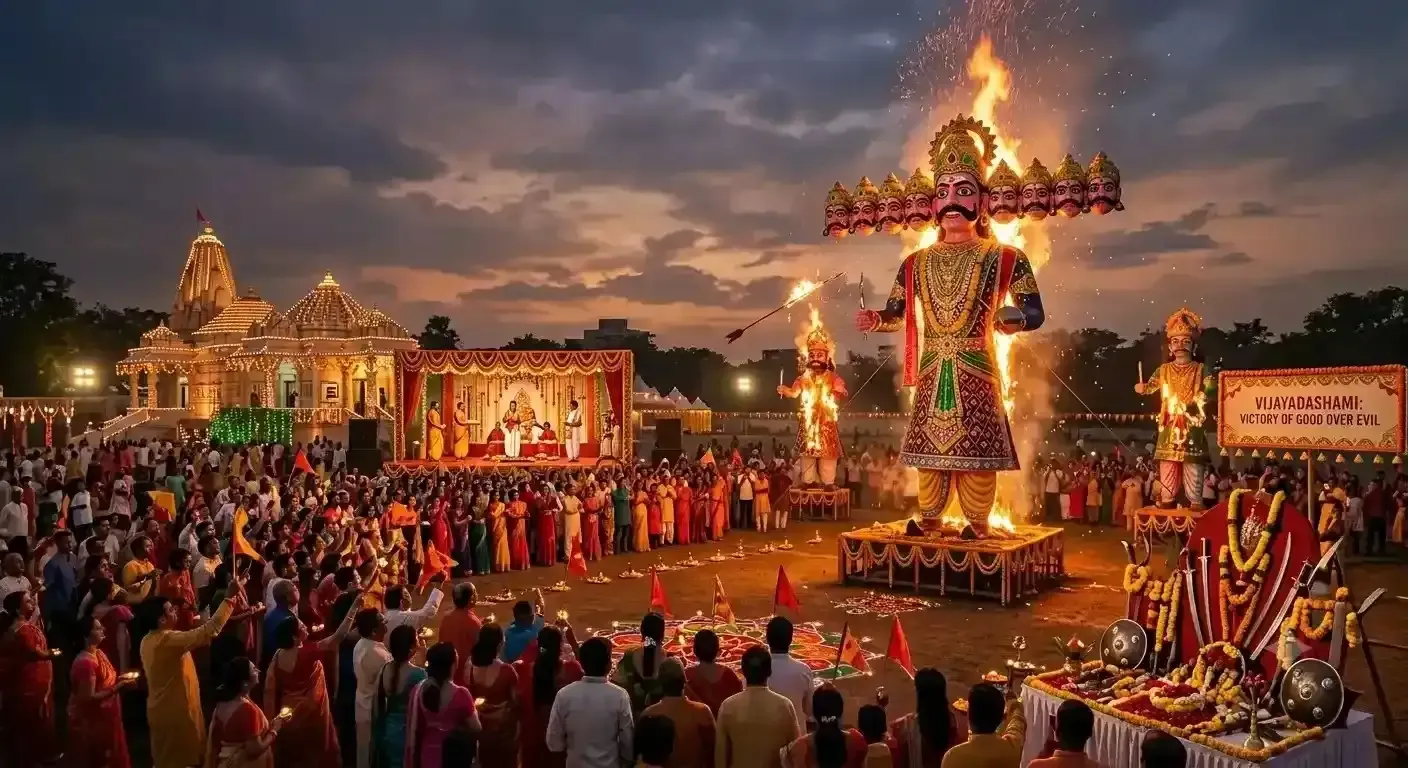
Dussehra 2026 falls on Tuesday 20 October, the day Kullu's week-long International Dussehra begins. Vijay Muhurat for Shimla and Kullu, the story of Raghunath ji, the gathering of village devtas, Lanka Dahan and tips for visitors and Himachali families abroad.
Quick answer: Dussehra (Vijayadashami) 2026 falls on Tuesday 20 October 2026, and that is the day the famous Kullu Dussehra begins. It traditionally lasts seven days. The Vijay Muhurat is 1:58 to 2:44 PM in both Shimla and Kullu (Drik Panchang, local time). Navratri begins on Sunday 11 October, with Ashtami and Navami together on Monday 19 October 2026.
Himachal Pradesh, the Dev Bhoomi or land of the gods, celebrates Dussehra in a way unlike anywhere else in India. In the Kullu valley the festival does not end on Vijayadashami; it begins then. Hundreds of village devtas are carried down from the mountains in decorated palanquins to pay homage to Lord Raghunath, and for a week the Dhalpur ground in Kullu town becomes a vast open-air temple, fair and cultural festival. Elsewhere in the state, from Shimla to Kangra, families mark Navratri at the great Devi temples and Dussehra with Ramlila and Ravan Dahan. Here is everything you need for 2026.
Dussehra 2026 key dates (India)
| Observance | Date (2026) |
|---|---|
| Sharad Navratri begins (Ghatasthapana) | Sunday 11 October |
| Durga Ashtami and Maha Navami | Monday 19 October |
| Dussehra / Vijayadashami; Kullu Dussehra begins | Tuesday 20 October |
| Dashami tithi | 12:50 PM IST 20 Oct to 2:11 PM IST 21 Oct |
| Diwali | Sunday 8 November |
Because Kullu Dussehra traditionally runs for seven days from Vijayadashami, the festival in 2026 is expected to continue until around 26 October. The exact programme, including the final day and Lanka Dahan, is announced officially each year, so check before planning travel.
Vijay Muhurat 2026 for Himachal Pradesh
Timings for 20 October 2026, from Drik Panchang, in local time:
| City | Vijay Muhurat (20 Oct 2026) |
|---|---|
| Shimla | 1:58 to 2:44 PM |
| Kullu | 1:58 to 2:44 PM |
Use this window for Shami puja, Aparajita puja, Shastra puja and starting new ventures. For other towns, such as Dharamshala, Mandi or Chamba, consult a local panchang; the difference will be only a few minutes.
Kullu Dussehra: the festival of the devtas
The story of Raghunath ji
The Kullu tradition is traced to the 17th century and Raja Jagat Singh of Kullu. According to the well-known legend, the king incurred the curse of a Brahmin and fell ill. To be freed of it, he was advised to bring an image of Lord Rama (Raghunath) from Ayodhya, install it in Kullu and dedicate his kingdom to the deity, ruling thereafter as Raghunath's servant. Raghunath ji became the presiding deity of the valley, and the gathering of the local devtas to honour him on Dussehra grew into the festival seen today. The Raghunath temple in Kullu town (Sultanpur) remains the heart of the tradition.
The rath yatra and the gathering of devtas
On the opening day, Lord Raghunath is brought out on a wooden chariot (rath) and pulled by devotees with ropes to the Dhalpur ground, accompanied by the devtas of the valley in their palanquins, with drums, horns and the traditional long trumpets of the hills. Goddess Hadimba of Manali, regarded as the grandmother of the former royal family of Kullu, plays a special role, and her arrival is an important part of the opening. Through the week, the deities are camped around the ground, and villagers come to seek their blessings. Each devta has its own priests, musicians and customs, which makes Kullu Dussehra one of the largest living displays of Himalayan folk religion.
Culture, fair and Kullu Nati
Alongside the religious rituals, the festival hosts a large market for Kullu shawls, caps, woollens and local produce, and evening cultural programmes featuring folk music and the Kullu Nati, a circular group dance. The Himachal government has given the festival the status of International Kullu Dussehra, and cultural troupes from other states and countries often take part.
Lanka Dahan on the final day
There are no towering Ravana effigies in Kullu. On the last day, the rath is taken towards the banks of the Beas, where a Lanka Dahan ritual symbolising the burning of Ravana's Lanka is performed, after which Raghunath ji returns to his temple and the devtas begin their journeys home.
Dussehra elsewhere in Himachal
Outside Kullu, Himachal's Dussehra looks more familiar. Shimla, Solan, Mandi, Kangra and other towns hold Ramlila performances through Navratri and Ravan Dahan on Vijayadashami evening; venues and times are announced locally. Navratri is a major pilgrimage season at the state's famous Shakti shrines, including Naina Devi in Bilaspur district, Chintpurni in Una district, Jwalamukhi and Brajeshwari (Kangra) Devi in Kangra district, and Chamunda Devi near Dharamshala. These temples see very large crowds during the nine nights, so plan early and check official temple information for current arrangements.
Visiting Kullu Dussehra: practical tips
- Book accommodation in Kullu, Bhuntar or Manali well in advance; rooms fill up quickly during the festival week.
- The nearest airport is at Bhuntar, and many visitors come by road from Chandigarh or Delhi. Check road and weather conditions before travelling.
- October days are pleasant, but evenings are cold. Carry warm layers.
- Respect the devtas and their attendants: do not touch palanquins without permission, follow the instructions of priests and remove shoes where asked.
- Ask before photographing rituals and people, and be mindful of crowds during the rath yatra.
For Himachali families abroad
- Do not convert Shimla's Vijay Muhurat into your time zone. Use a panchang for your city or your temple's calendar.
- Tuesday 20 October 2026 is a working day in most countries. Do a short evening puja with Shami or Aparajita prayers, and join the community Dussehra celebration at your local temple on the weekend.
- Follow the Kullu rath yatra through official broadcasts or videos shared by family, and use it to introduce children to the devta tradition of the hills.
- Cook a Himachali festive dish such as siddu or a dham-style meal to share with friends.
For the meaning of Dussehra and a full puja procedure, see our Dussehra / Vijayadashami 2026 pillar guide.
Frequently asked questions
When does Kullu Dussehra 2026 start?
Kullu Dussehra begins on Vijayadashami itself, which is Tuesday 20 October 2026, and traditionally lasts seven days. The official programme is announced by the Himachal Pradesh government and the festival committee, so confirm the exact schedule before travelling.
Is Ravana burned at Kullu Dussehra?
No. Unlike most of North India, Kullu does not burn Ravana effigies. The festival centres on the rath yatra of Lord Raghunath and the gathering of village deities, and it concludes with a Lanka Dahan ritual on the banks of the Beas.
What is the Vijay Muhurat in Shimla on Dussehra 2026?
1:58 to 2:44 PM in Shimla and in Kullu on 20 October 2026, local time, according to Drik Panchang.
Why does Kullu Dussehra start when Dussehra ends elsewhere?
Kullu's festival grew from the worship of Lord Raghunath, whose image was brought to Kullu in the 17th century. The local tradition is to begin the celebration on Vijayadashami, when the valley's devtas come to pay homage to Raghunath ji, so Kullu's festivities begin as the rest of India's Navratri season ends.
Is Kullu Dussehra crowded? How should I plan?
Yes, it draws very large crowds. Book accommodation and transport well in advance, carry warm clothes for October evenings in the mountains and check road conditions and official announcements before you go.
Editor's note
Editor's note (5 October 2026): This page has been restored at its original address after the earlier version was lost. Dussehra dates and Vijay Muhurat timings are from Drik Panchang for India. The Kullu Dussehra start on Vijayadashami and its seven-day duration are long-standing tradition; the closing date of around 26 October is our estimate, not an official schedule. Please confirm programme details with the Himachal Pradesh government and the festival committee, and check temples' official websites for current timings.
Related guides
You might also like
Dussehra 2026 in Madhya Pradesh: Date, Vijay Muhurat for Bhopal, Indore, Ujjain and Traditions
Dussehra 2026 in Goa: Dasro Date, Vijay Muhurat for Panaji and Margao, Makharotsav and Temple Traditions
Dussehra 2026 in Delhi: Date, Vijay Muhurat, Ramlila, Ravan Dahan and Durga Puja