
Dussehra 2026 in Punjab: Date, Vijay Muhurat for Chandigarh, Amritsar and Ludhiana, Ramlila and the Langur Mela
Dussehra (Vijayadashami) 2026 falls on Tuesday 20 October. Vijay Muhurat timings for Chandigarh, Amritsar and Ludhiana, Punjab's Ramlila and Ravan Dahan culture, Amritsar's Langur Mela, khetri and Kanjak puja, and ideas for Punjabi families abroad.
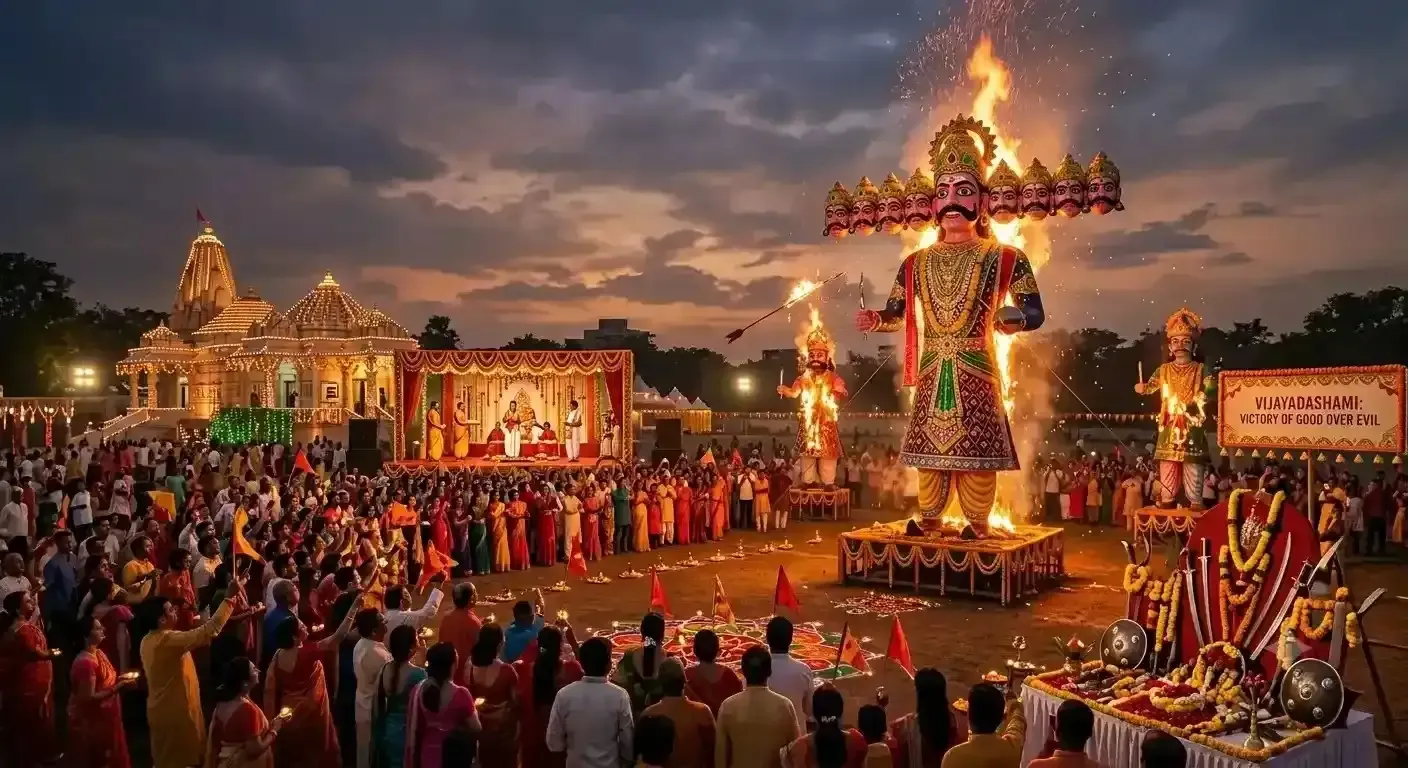
Dussehra (Vijayadashami) 2026 falls on Tuesday 20 October. Vijay Muhurat timings for Chandigarh, Amritsar and Ludhiana, Punjab's Ramlila and Ravan Dahan culture, Amritsar's Langur Mela, khetri and Kanjak puja, and ideas for Punjabi families abroad.
Quick answer: Dussehra (Vijayadashami) 2026 in Punjab is on Tuesday 20 October 2026. Vijay Muhurat: Chandigarh 2:00 to 2:45 PM, Amritsar 2:07 to 2:53 PM and Ludhiana 2:04 to 2:49 PM (Drik Panchang, local time). Navratre begin on Sunday 11 October, and Ashtami and Navami fall together on Monday 19 October 2026, so Kanjak puja for both is on that day.
In Punjab, Dussehra is a festival of the streets and the open grounds. For ten nights, Ramlila committees in almost every town and many city neighbourhoods stage the Ramayana, and on Vijayadashami evening towering effigies of Ravana, Kumbhakarna and Meghnad go up in flames to cheers and fireworks. Alongside the public spectacle are quieter household customs: sowing khetri at the start of Navratre, feeding young girls at Kanjak puja, and, in Amritsar, the remarkable Langur Mela at the Bada Hanuman Mandir.
Dussehra 2026 key dates (India)
| Observance | Date (2026) |
|---|---|
| Navratre begin (Ghatasthapana, khetri sowing) | Sunday 11 October |
| Durga Ashtami and Maha Navami (Kanjak puja) | Monday 19 October |
| Dussehra / Vijayadashami | Tuesday 20 October |
| Dashami tithi | 12:50 PM IST 20 Oct to 2:11 PM IST 21 Oct |
| Diwali and Bandi Chhor Divas | Sunday 8 November |
Dashami tithi begins shortly after midday on 20 October and covers the whole afternoon, including the Vijay Muhurat, which is why Vijayadashami is observed on Tuesday 20 October 2026. Diwali follows about three weeks later.
Vijay Muhurat 2026 for Punjab cities
The Vijay Muhurat is the most auspicious window of Vijayadashami afternoon. It is the traditional time for Shami puja, Aparajita puja, Shastra puja (worship of weapons and tools), starting new work, buying a vehicle or setting out on a journey. Timings for Tuesday 20 October 2026 from Drik Panchang, in local time:
| City | Vijay Muhurat (20 Oct 2026) |
|---|---|
| Chandigarh | 2:00 to 2:45 PM |
| Amritsar | 2:07 to 2:53 PM |
| Ludhiana | 2:04 to 2:49 PM |
The window shifts a few minutes later as you move west, so Amritsar's muhurat starts about seven minutes after Chandigarh's. For other towns such as Jalandhar, Patiala or Bathinda, check a panchang set for that town. Chandigarh, the shared capital of Punjab and Haryana, is a Union Territory, but it is included here because so many Punjabi families live and celebrate there.
How Punjab celebrates Navratre and Dussehra
Ramlila: ten nights of the Ramayana
Ramlila is the heart of Dussehra in Punjab. Local committees, many of them decades old, build stages in parks, school grounds and market squares and perform the story of Lord Rama night after night, from his birth and exile to the abduction of Sita, the alliance with Hanuman and Sugriva, and the final battle in Lanka. Actors are often local volunteers, and the dialogues mix Hindi and Punjabi with plenty of humour. For many Punjabi children, sitting up late at the neighbourhood Ramlila is one of the strongest memories of the festival. Schedules and venues are set by each committee, so check local announcements.
Ravan Dahan on Vijayadashami evening
On Dussehra evening the effigies of Ravana and his brothers, built from bamboo, paper and firecrackers over several weeks, are set alight after sunset, usually by an actor playing Rama who shoots a flaming arrow. Large grounds in Amritsar, Ludhiana, Jalandhar, Patiala and Chandigarh draw big crowds, while smaller effigies appear in mohallas and housing colonies. Safety matters: stand well back from the effigy, keep children close and follow the instructions of organisers and police.
The Langur Mela at Amritsar's Bada Hanuman Mandir
One of Punjab's most distinctive Navratre customs takes place at the Bada Hanuman Mandir near the Durgiana Temple in Amritsar. Children, many of them born after their parents made a vow (mannat) to Lord Hanuman, are dressed in red and silver costumes as langurs, the monkey warriors of Hanuman's army. Through the nine nights the children and their families keep strict observances, and they visit the temple each day with drums and dancing. The vow concludes around Dussehra. It is a moving example of how the Ramayana lives in family devotion, not only on the stage. Check the temple's official announcements for current arrangements and timings.
Khetri: barley sprouts for Dussehra
Many Punjabi Hindu households sow khetri, barley (jau) seeds in a small earthen pot or bed of soil, on the first day of Navratre alongside the kalash. The seeds are watered daily during the nine days and grow into bright green shoots. On Dussehra, the sprouts are offered to the Devi and then tucked behind the ears or into turbans and caps as a blessing, and some families share them with relatives. The custom links the festival to the agricultural year and to prayers for prosperity and a good harvest.
Kanjak puja on Ashtami and Navami
Kanjak puja (Kanya pujan) is central to Navratre in Punjab. Young girls, seen as forms of the Devi, are invited home, their feet are washed, a red thread is tied on their wrists, and they are served halwa, puri and kale chane, then given small gifts. A young boy, called langur or langoora, is often included to represent Hanuman or Bhairav. In 2026 Ashtami and Navami fall on the same day, so Kanjak puja for both traditions is on Monday 19 October.
Devi temples and Navratre melas
Navratre in Punjab are a time for visits to the Devi. The Durgiana Temple in Amritsar is a major focus for the city's Hindu community, and many Punjabi families travel to well-known shrines of the Goddess in the neighbouring hills, such as Chintpurni and Naina Devi in Himachal Pradesh and Mata Mansa Devi near Chandigarh in Panchkula, Haryana, as well as to Vaishno Devi in Jammu. These shrines see very heavy crowds during Navratri, so check each temple's official website for current timings and arrangements before travelling.
What to do on Vijayadashami
- Aparajita and Shami puja: worship the goddess of victory and the Shami tree in the afternoon, remembering that the Pandavas hid their weapons in a Shami tree during their year in disguise.
- Shastra puja: clean and worship tools, vehicles, account books and laptops during the Vijay Muhurat. Farmers in Punjab traditionally honour their implements and tractors.
- Offer the khetri: offer the barley sprouts to the Devi, then wear them behind your ears or in your turban as a blessing.
- Begin something new: Vijayadashami is one of the most auspicious days of the year for new ventures, purchases and starting studies.
- Seek blessings: visit elders, touch their feet, and share sweets with neighbours.
- Ravan Dahan: join the community effigy burning after sunset, a reminder that arrogance and adharma are finally defeated.
For Punjabi families abroad
Punjabi Hindu families are a large part of the diaspora in Canada (especially the Greater Toronto Area and the Lower Mainland of British Columbia), the UK, the USA, Australia and the Gulf. Some ideas for keeping the festival alive far from home:
- Use a panchang calculated for your own city. Do not convert Amritsar's or Chandigarh's Vijay Muhurat into your local time zone.
- Tuesday 20 October 2026 is a working day in most countries. Do a short Shastra puja of laptops and car keys in the evening, and join your mandir's Ramlila or Ravan Dahan, which is often held on the nearest weekend.
- Sow khetri in a small pot indoors on 11 October. Barley sprouts well on a sunny windowsill even in a Canadian autumn.
- Hold Kanjak puja on Monday 19 October, or on the weekend if that is more practical, and invite girls from friends' families.
- If open fires are not allowed where you live, make a small paper Ravana with children and tell the Ramayana story instead.
- Video-call grandparents in Punjab so children can see the local Ramlila or Ravan Dahan and seek blessings.
For Canada-specific dates and events, see Dussehra 2026 in Canada, province by province. For the meaning of Dussehra, the stories behind it and a full puja procedure, see our Dussehra / Vijayadashami 2026 pillar guide.
Frequently asked questions
When is Dussehra 2026 in Punjab?
Tuesday 20 October 2026. Navratri (Navratre) begins on Sunday 11 October, and Durga Ashtami and Maha Navami are both on Monday 19 October 2026, according to Drik Panchang for India.
What is the Vijay Muhurat in Amritsar on Dussehra 2026?
2:07 to 2:53 PM in Amritsar. Chandigarh is 2:00 to 2:45 PM and Ludhiana 2:04 to 2:49 PM, all local time on Tuesday 20 October 2026.
When should Kanjak puja be done in 2026?
Durga Ashtami and Maha Navami fall on the same day, Monday 19 October 2026, so families who do Kanjak puja on Ashtami or on Navami will both do it on 19 October. Follow your family custom and your local temple's guidance on the exact time.
What is the Langur Mela in Amritsar?
It is a Navratri tradition at the Bada Hanuman Mandir near the Durgiana Temple in Amritsar. Children, often born after their parents made a vow to Hanuman, are dressed as langurs (Hanuman's monkey army) and keep strict observances through the nine nights, ending around Dussehra. Check the temple's official announcements for 2026 arrangements.
Is Dussehra celebrated by Sikhs?
Dussehra is a Hindu festival, but in Punjab it is very much a shared public occasion, and people of all communities attend Ramlila and Ravan Dahan events. The Sikh observance of Bandi Chhor Divas coincides with Diwali, which is on Sunday 8 November 2026.
Can I use Punjab's Vijay Muhurat in Canada or the UK?
No. Muhurat windows depend on local sunrise and sunset, so they cannot be converted into another time zone. Use a panchang for your own city or follow your local mandir's calendar.
Editor's note
Editor's note (5 October 2026): This page has been restored at its original address after the earlier version was lost. Dates and Vijay Muhurat timings are from Drik Panchang for India. We have not listed Ramlila venues, Ravan Dahan times, mela schedules or ticket details because these are announced locally each year; please check official sources before you go. Temple timings change, so check the temple's official website.
Related guides
You might also like
Dussehra 2026 in Delhi: Date, Vijay Muhurat, Ramlila, Ravan Dahan and Durga Puja
Dussehra 2026 in Uttarakhand: Date, Vijay Muhurat for Dehradun and Haridwar, Almora Dussehra and Kumaoni Ramlila
Dussehra 2026 in Rajasthan: Date, Vijay Muhurat for Jaipur, Kota, Udaipur, Jodhpur and the Kota Dussehra Mela