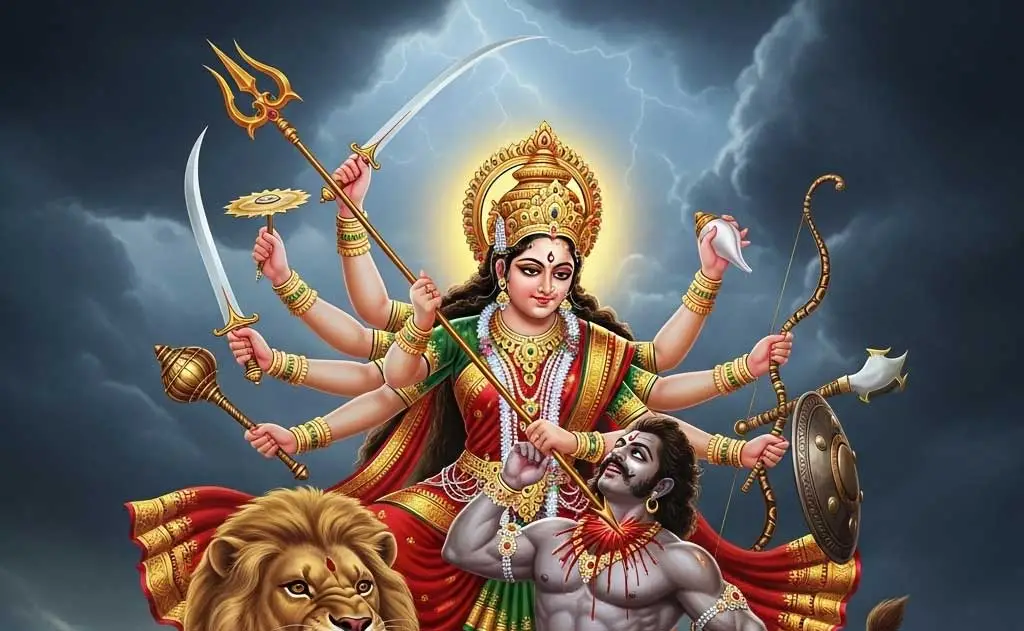
Navratri Daily Routine for Women 2026: Morning Puja, Evening Prayer and a 9-Day Plan
A practical Navratri 2026 day plan for women, from waking and lighting the diya to the evening Devi prayer, with a TIME, PRACTICE, PURPOSE table, the nine Devis with dates, colours and naam mantras, and variants for working women, mothers, students, apartments and women abroad.
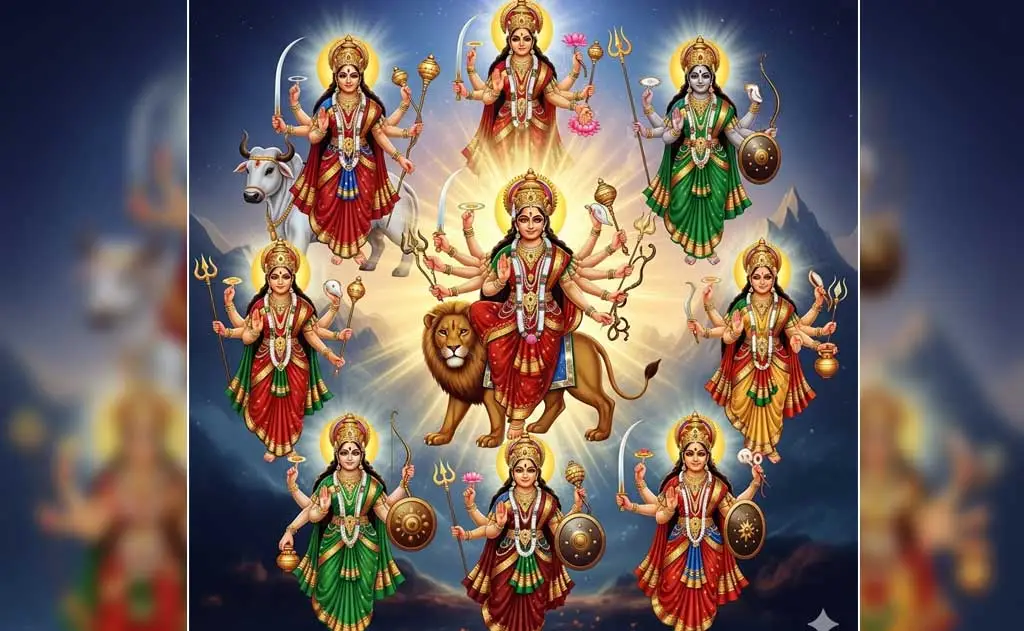
A practical Navratri 2026 day plan for women, from waking and lighting the diya to the evening Devi prayer, with a TIME, PRACTICE, PURPOSE table, the nine Devis with dates, colours and naam mantras, and variants for working women, mothers, students, apartments and women abroad.
Quick answer: a good Navratri daily routine for women in 2026 (Sunday 11 to Monday 19 October in India) is: bathe, clean the puja corner, light a diya, make a short sankalpa, chant the day's Devi mantra, offer flowers and naivedya, do aarti, then go about work and family. At dusk, light the diya again, say a Devi prayer and reflect for a few minutes.
Nine days is long enough to build a habit and short enough to keep one. This plan is designed to fit a real day, whether you start at 6 a.m. in Bengaluru or log on to a 9 a.m. meeting in Chicago. Rituals vary by sampradaya, family and region, so treat this as a framework to adapt, not a rule. For the bigger picture of Devi worship, colours, fasting and mantras, read our Navratri 2026 guide for women.
A full Navratri day plan: morning puja to evening prayer
Short answer: A typical Navratri day has two anchors: a morning puja of 15 to 40 minutes and an evening diya with prayer of 10 to 15 minutes. In between, carry on with work and family, perhaps with silent japa. The times below are examples; shift them to suit your household, health and time zone.
| TIME | PRACTICE | PURPOSE |
|---|---|---|
| Wake (e.g. 6:00) | Wake a little earlier than usual; a moment of gratitude before checking the phone | Begin the day facing the Devi, not the inbox |
| 6:10 | Bath and clean clothes, the day's colour if you like | Freshness of body as preparation |
| 6:30 | Clean the puja space; change the water, remove old flowers | Care for the place where you pray |
| 6:35 | Light the diya and incense | Invite light and the Devi's presence |
| 6:38 | Sankalpa: a short intention in your own words | Offer this day's worship to the Mother |
| 6:40 | Dhyana shloka and the day's naam mantra, 108 japa (or 11, 21 or 54) | Focus the mind on the form of the day |
| 6:55 | Flowers, kumkum, akshata | Offering with love |
| 6:58 | Naivedya: the day's bhog or fruit, milk, water | Share what you have with the Devi |
| 7:00 | Aarti and the day's stuti; take prasad | Celebration and gratitude |
| Day | Work, study, family; silent mantra in quiet moments | Bring the practice into ordinary life |
| Dusk | Wash, light the evening diya | Mark the turn of the day |
| Dusk + 5 | Devi prayer: naam mantra 11 or 21 times, the stuti or Sarva Mangala verse | Close the day with devotion |
| Before bed | Two to five minutes of reflection or journalling | Notice the day's quality in your own life |
Ghatasthapana on Day 1 adds a step at a specific muhurat that depends on your city. We do not list times here; check your local panchang or your family priest.
Morning puja in detail
- Space: a shelf, a low stool or a corner with a clean cloth and a picture or murti of Maa Durga or the Devi of the day is enough.
- Lamp: ghee or sesame oil in a brass or clay diya, on a metal plate. Families who keep an akhand jyoti for nine days tend it morning and night.
- Sankalpa: for example, "Mother, I offer today's prayer to you as Shailaputri. Please accept it with my mistakes." Any language is fine.
- Mantra: the naam mantra for the day from the table below. If you have time, add the dhyana shloka and stuti from the day post.
- Naivedya: the popular bhog of the day, or simply fruit, milk or a sweet. Bhog lists vary by tradition.
- Aarti: sing or play the Durga aarti your family knows, and bow.
Evening diya and Devi prayer
Short answer: At dusk, wash your hands and face, light a diya before the Devi, chant the day's naam mantra 11 or 21 times and recite her stuti or the Sarva Mangala verse. Then sit quietly for a few minutes and reflect on the day. It takes about 10 to 15 minutes and is a widely followed household custom.
A verse many women recite at the evening lamp:
सर्वमङ्गलमाङ्गल्ये शिवे सर्वार्थसाधिके। शरण्ये त्र्यम्बके गौरि नारायणि नमोऽस्तु ते॥
Sarva-mangala-mangalye shive sarvartha-sadhike, sharanye tryambake gauri narayani namostu te.
Meaning: "O Narayani, the auspiciousness in all that is auspicious, O gracious one who brings every worthy aim to fulfilment, O refuge of all, three-eyed Gauri, salutations to you." It comes from the Narayani Stuti of the Devi Mahatmya.
Reflection prompts: Where did I show patience today? Where did I need courage? What can I forgive or let go of before sleep? Matching the prompt to the day's quality, steadiness on Day 1 or fearlessness on Day 7, makes each evening feel different.
Navratri 2026 at a glance: date, Devi, colour and naam mantra
Short answer: Navratri 2026 runs from Sunday 11 October (Shailaputri, orange) to Monday 19 October (Siddhidatri) in India. Each day has its own Devi and naam mantra, such as "Om Devi Shailaputryai Namah". Colours follow a popular weekday custom, not scripture, and the colours for 18 and 19 October vary between lists.
| Day and date (India) | Devi | Popular colour | Naam mantra | Popular bhog |
|---|---|---|---|---|
| 1: Sun 11 Oct | Shailaputri | Orange | ॐ देवी शैलपुत्र्यै नमः॥ (Om Devi Shailaputryai Namah) | Cow ghee |
| 2: Mon 12 Oct | Brahmacharini | White | ॐ देवी ब्रह्मचारिण्यै नमः॥ (Om Devi Brahmacharinyai Namah) | Sugar or panchamrit |
| 3: Tue 13 Oct | Chandraghanta | Red | ॐ देवी चन्द्रघण्टायै नमः॥ (Om Devi Chandraghantayai Namah) | Milk or kheer |
| 4: Wed 14 Oct | Kushmanda | Royal blue | ॐ देवी कूष्माण्डायै नमः॥ (Om Devi Kushmandayai Namah) | Malpua |
| 5: Thu 15 Oct | Skandamata | Yellow | ॐ देवी स्कन्दमातायै नमः॥ (Om Devi Skandamatayai Namah) | Banana |
| 6: Fri 16 Oct | Katyayani | Green | ॐ देवी कात्यायन्यै नमः॥ (Om Devi Katyayanyai Namah) | Honey |
| 7: Sat 17 Oct | Kalaratri | Grey | ॐ देवी कालरात्र्यै नमः॥ (Om Devi Kalaratryai Namah) | Jaggery |
| 8: Sun 18 Oct | Mahagauri | Purple, pink or peacock green (lists differ) | ॐ देवी महागौर्यै नमः॥ (Om Devi Mahagauryai Namah) | Coconut |
| 9: Mon 19 Oct | Siddhidatri | Purple, pink or peacock green (lists differ) | ॐ देवी सिद्धिदात्र्यै नमः॥ (Om Devi Siddhidatryai Namah) | Sesame, or halwa-puri-chana |
Dates are from Drik Panchang for India. On 18 October Saptami still prevails at sunrise in India, and Durga Ashtami and Maha Navami are both on Monday 19 October, which is also Ayudha Puja in South India. Dussehra follows on Tuesday 20 October. Bhog lists vary by tradition. For the colour custom in detail, see Navratri 2026 colours for all 9 days.
Routine variants for different lives
The same core, lamp, mantra and a moment of prayer, can be shaped around very different days. Choose what fits; no version is more correct than another.
Working women
- Morning (15 minutes): lamp, naam mantra 21 times, stuti, a flower. Lay out the puja tray the night before.
- Commute or breaks: silent japa of the day's mantra; it needs no mala or setting.
- Wear the colour as an accent, such as a scarf or dupatta, if your workplace dress code is formal.
- Evening: the full 108 japa and aarti, when the day's pressure is over.
- Keep the longer puja for Saturday 17 and Sunday 18 October.
Mothers of young children
- Pray while the children sleep, or include them: a toddler can ring the bell or hold a flower.
- Five sincere minutes count. The Mother of the universe understands a mother's day.
- Keep the diya high and on a metal plate; use an LED diya if little hands are everywhere.
- Tell one short Devi story at bedtime, as commonly told, in place of the evening reflection.
Students
- Light a lamp or LED diya before studying and chant the naam mantra 11 times.
- Use the five-minute evening reflection as a study break and a reset.
- In a hostel or shared room, a picture of the Devi and a whispered mantra are enough. Respect your room-mates and fire rules.
Women abroad (time zones and office hours)
- Navratri begins on Sunday 11 October 2026 abroad too, but Drik Panchang lists Durga Ashtami on 18 October and Maha Navami on 19 October in the USA, Canada and the UK.
- Use local dates and look up local muhurats on Drik Panchang for your city; never use India's clock times abroad.
- Schedule a video aarti with family in India at a time that works across both time zones.
- Country guides: Navratri 2026 in the USA, in Canada, in the UK and for Indian women abroad.
Apartment living
- A wall shelf or a small table works as an altar; keep it away from curtains.
- Check smoke alarms and building rules; many families use an LED diya and a short incense stick by an open window.
- Use flowers sparingly and dispose of them respectfully, in a plant pot or garden bed if you have one.
- For a full nine-day plan, see the apartment-friendly Navratri 2026 puja vidhi.
Fasting within the routine
Fasting is optional. Practices vary by family, region and health: some women take fruit and milk, some one sattvic meal, some fast only on the first and last days, and many do not fast. If you are pregnant, diabetic, on medication, elderly or unwell, or if children are fasting, follow medical advice first. Drink enough water, and remember that a routine of prayer is complete without a fast. See Navratri fasting rules 2026 for food lists.
What to do if you miss a day
Short answer: If you miss a day of Navratri puja, simply continue the next day. Many women light the lamp and chant the missed Devi's naam mantra along with that day's mantra. Illness, travel, work and caring for others are part of life; the tradition values devotion, not a perfect record.
- Do not feel guilty; begin again with the next lamp.
- If you missed the evening diya, light it the next morning with a short prayer.
- If you are unwell, a silent mantra from bed is prayer. Rest is not a failing.
- Customs about certain days, including periods or a family bereavement, differ by family and tradition. Follow your family's practice.
Rituals vary: sampradaya, family and region
Fact: the dates above are from Drik Panchang. Tradition: lamp, sankalpa, japa, naivedya and aarti are common to most Devi worship at home. Regional custom: Garba in Gujarat, Golu in Tamil Nadu, Karnataka and Andhra Pradesh, Bathukamma in Telangana and Durga Puja in Bengal give the nine days very different shapes. Popular practice: the colours of the day. Devotional belief: that the Devi accepts what is offered with love. Your family's way is a valid way.
After Navratri comes Vijayadashami on Tuesday 20 October 2026 in India; see our Dussehra / Vijayadashami 2026 guide.
Frequently asked questions
What is the best daily routine for women during Navratri?
A simple one you can keep for nine days: bathe, clean the puja corner, light a diya, make a sankalpa, chant the day's naam mantra, offer flowers and naivedya, do aarti, then light the diya again in the evening and sit quietly. Adjust the length to your day; sincerity matters more than duration.
What time should I do Navratri puja in the morning?
Many families prefer early morning after bathing, but any calm time that suits your household is fine for daily puja. Ghatasthapana on Sunday 11 October 2026 has a specific muhurat that depends on your city, so check your local panchang or ask your family priest for that.
How many times should I chant the Navratri mantra each day?
108 times with a mala is traditional, but 11, 21 or 54 times is also common on busy days. Chant the naam mantra of the day's Devi, such as "Om Devi Brahmacharinyai Namah" on Day 2, slowly and with attention.
What should I do if I miss a day of Navratri puja?
Simply continue the next day. You may light the lamp and chant the missed Devi's naam mantra along with the current day's. Illness, travel, work and caring for others are part of life, and devotion is not cancelled by a missed day.
Can I do Navratri puja only in the evening?
Yes. Many working women and women abroad keep their main Navratri puja in the evening: lamp, naam mantra, stuti, aarti and prasad. Customs vary by family and region, so if your family has a fixed time for a particular ritual, follow that.
Is the evening diya necessary during Navratri?
It is a widely followed household custom rather than a strict rule. Many women light the lamp at dusk on all nine days. If an open flame is not safe or allowed where you live, an LED diya and a short prayer are a perfectly sincere alternative.
Editor's note
Editor's note (6 October 2026): This page has been restored at its original address. India dates are from Drik Panchang; Dussehra on 20 October is also on the Government of India holiday calendar. The clock times in the day plan are only examples, not muhurats; check your local panchang for Ghatasthapana and other timed rituals. Mantras are canonical texts as commonly recited. Colours, bhog and fasting describe popular practice that varies by family and region, and nothing here is a requirement or promises any worldly result.
Related guides
You might also like
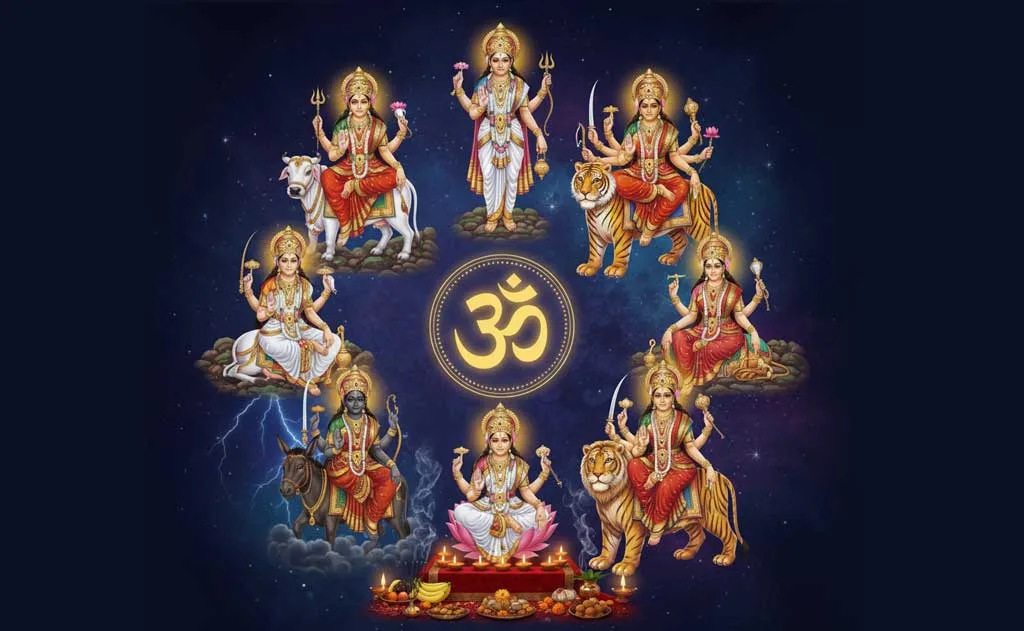
Navratri 2026 for Women: Devi Worship, Daily Rituals, Colours, Fasting and Mantras (11–19 October)
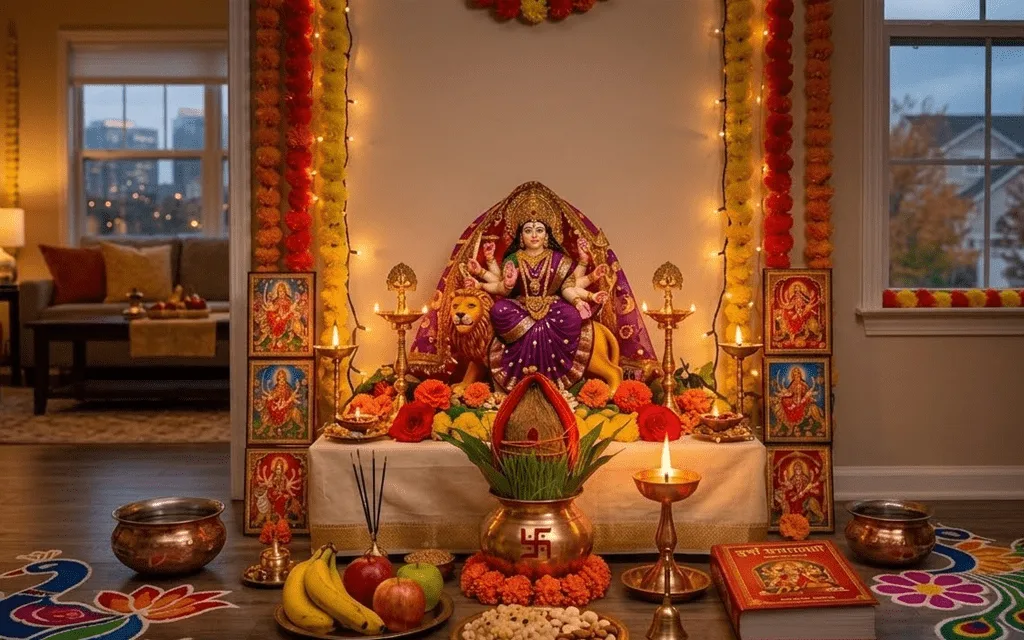
Navratri 2026 for Indian Women Abroad: A Practical Guide for the USA, Canada, UK and Australia
Navratri Fasting Rules 2026: Vrat Food List, What to Eat and What to Avoid (11 to 19 October)