Vijayadashami 2026 Mantras and Puja Vidhi: Aparajita Puja, Shami Puja, Rama Mantras and Vijay Muhurat (Tuesday 20 October)
Vijayadashami (Dussehra) is Tuesday 20 October 2026 in India. This guide gives the traditional mantras in Devanagari with transliteration and meaning: Aparajita naam mantra and stuti, the Shami shloka, Ramaya Ramabhadraya and Shri Ram Jaya Ram, and the Sarva Mangala and Jayanti Mangala verses for Durga visarjan, with a simple puja vidhi and the Vijay Muhurat for state capitals.
Vijayadashami (Dussehra) is Tuesday 20 October 2026 in India. This guide gives the traditional mantras in Devanagari with transliteration and meaning: Aparajita naam mantra and stuti, the Shami shloka, Ramaya Ramabhadraya and Shri Ram Jaya Ram, and the Sarva Mangala and Jayanti Mangala verses for Durga visarjan, with a simple puja vidhi and the Vijay Muhurat for state capitals.
Quick answer: the main Vijayadashami 2026 mantras for Tuesday 20 October 2026 (India, Drik Panchang) are the Aparajita naam mantra "Om Aparajitayai Namah" with the stuti "Ya Devi sarvabhuteshu shakti-rupena samsthita", the Shami shloka "Shami shamayate papam", the Rama mantra "Ramaya Ramabhadraya" and "Shri Ram Jaya Ram Jaya Jaya Ram". For Durga visarjan, families recite Sarva Mangala Mangalye and Jayanti Mangala. The Vijay Muhurat is in the early afternoon, for example 1:59–2:45 PM in New Delhi; see the state-capital table below.
After nine nights with the Mother, Vijayadashami is the day of victory. As commonly told, it marks Lord Rama's victory over Ravana and the Goddess's victory over Mahishasura, and it has long been seen as a blessed day to begin new learning, new work and new journeys. This guide brings together the traditional prayers for the day, exactly as they are recited, with simple meanings and a home puja you can follow in any apartment.
Vijayadashami 2026 at a glance
| Detail | India (Drik Panchang) |
|---|---|
| Date | Tuesday 20 October 2026 |
| Dashami tithi | 12:50 PM IST, 20 Oct to 2:11 PM IST, 21 Oct |
| Navratri | Sunday 11 to Monday 19 October 2026 |
| Durga Ashtami and Maha Navami | Both Monday 19 October 2026 |
| Bengal Bijoya Dashami (Kolkata, Drik) | Wednesday 21 October 2026 |
| Vijay Muhurat | Varies by city; see the table below |
Outside India, Drik Panchang lists Durga Ashtami on 18 October and Maha Navami on 19 October in the USA, Canada and the UK, with Dussehra on 20 October. For US city muhurats, see Dussehra 2026 USA: Vijayadashami muhurat and Ravana Dahan timings.
Vijayadashami 2026 mantras with meaning
Each text below is given exactly as traditionally recited, followed by a plain-English meaning. If Sanskrit is new to you, a single mantra said slowly and with love is enough. For more prayers for strength, see Dussehra mantras: chant for inner strength and protection.
Aparajita puja mantras
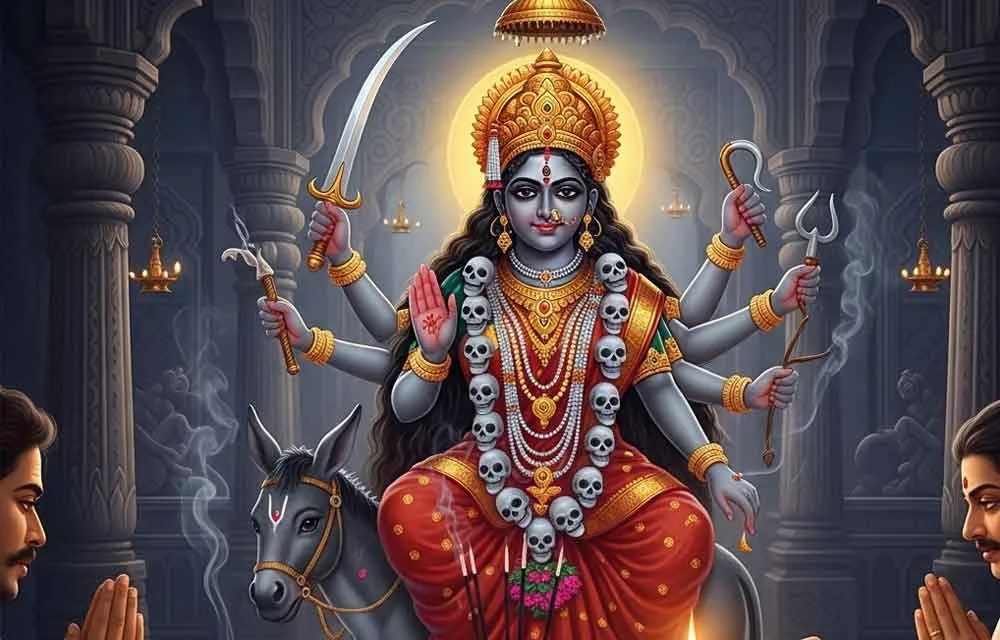
Aparajita, "the unconquered", is the Goddess worshipped on Vijayadashami for victory over every obstacle, outer and inner. As commonly practised, the Aparajita puja is done in the afternoon, before setting out for Shami puja or Seemollanghan.
Aparajita naam mantra
ॐ अपराजितायै नमः॥
Om Aparajitayai Namah
Meaning: Om, salutations to Aparajita, the unconquered Goddess.
How to chant: 108 times on a mala after lighting the lamp, or 11 or 21 times.
Stuti: Ya Devi Sarvabhuteshu Shakti-rupena
या देवी सर्वभूतेषु शक्तिरूपेण संस्थिता। नमस्तस्यै नमस्तस्यै नमस्तस्यै नमो नमः॥
Ya Devi sarvabhuteshu shakti-rupena samsthita, namastasyai namastasyai namastasyai namo namah.
Meaning: To the Goddess who abides in all beings as power (Shakti): salutations to her, salutations to her, salutations to her, again and again. This verse comes from the Aparajita Stuti of the Devi Mahatmya, which is why it is so fitting today.
How to chant: 3, 11 or 21 times with folded hands.
Shami (Jammi) puja shloka
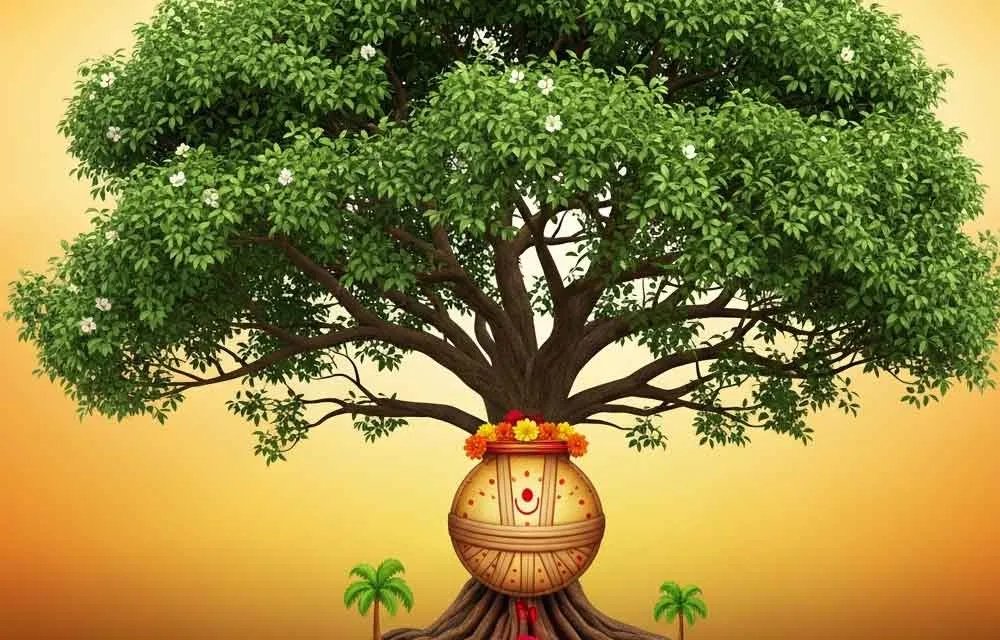
As commonly told, the Pandavas hid their weapons in a Shami tree during their year in disguise and recovered them on Vijayadashami, and Lord Rama is said to have worshipped the Shami before setting out for Lanka. In Telangana and Andhra Pradesh the leaves, called Jammi, are exchanged with elders and friends; see Jammi (Shami) leaf exchange on Dussehra.
Shami shloka
शमी शमयते पापं शमी शत्रुविनाशिनी। अर्जुनस्य धनुर्धारी रामस्य प्रियदर्शिनी॥
Shami shamayate papam shami shatru-vinashini, arjunasya dhanurdhari ramasya priyadarshini.
Meaning: The Shami quiets wrongdoing; the Shami destroys enemies. She held Arjuna's bow, and she was dear to Rama's sight.
How to chant: recite three times while offering water and kumkum to the tree, then walk around it.
Rama mantras
Ramaya Ramabhadraya
रामाय रामभद्राय रामचन्द्राय वेधसे। रघुनाथाय नाथाय सीतायाः पतये नमः॥
Ramaya ramabhadraya ramachandraya vedhase, raghunathaya nathaya sitayah pataye namah.
Meaning: Salutations to Rama, to Ramabhadra, to Ramachandra, to the wise Creator, to the Lord of the Raghus, to the Protector, to the husband of Sita.
How to chant: 11 or 108 times, especially before watching Ramlila or Ravan Dahan.
Shri Ram Jaya Ram
श्री राम जय राम जय जय राम॥
Shri Ram Jaya Ram Jaya Jaya Ram
Meaning: Glory to Shri Rama, victory to Rama, victory, victory to Rama.
How to chant: sing it together as a family kirtan; children pick it up quickly.
Durga visarjan prayers
When the kalash, the Navratri sprouts or the Goddess's image is bid farewell, families recite these two verses, asking the Mother to come again next year.
Sarva Mangala Mangalye
सर्वमङ्गलमाङ्गल्ये शिवे सर्वार्थसाधिके। शरण्ये त्र्यम्बके गौरि नारायणि नमोऽस्तु ते॥
Sarva-mangala-mangalye shive sarvartha-sadhike, sharanye tryambake gauri narayani namostu te.
Meaning: O auspiciousness of all that is auspicious, O gracious one who fulfils every good aim, O refuge of all, three-eyed Gauri, O Narayani, salutations to you. (Narayani Stuti, Devi Mahatmya.)
How to chant: three times while offering the final flowers.
Jayanti Mangala
जयन्ती मङ्गला काली भद्रकाली कपालिनी। दुर्गा क्षमा शिवा धात्री स्वाहा स्वधा नमोऽस्तु ते॥
Jayanti mangala kali bhadrakali kapalini, durga kshama shiva dhatri svaha svadha namostu te.
Meaning: Salutations to you who are Jayanti (the victorious), Mangala (the auspicious), Kali, Bhadrakali, Kapalini, Durga, Kshama (forbearance), Shiva (the gracious), Dhatri (the sustainer), Svaha and Svadha. (Opening verse of the Argala Stotram.)
How to chant: three times, then gently move the kalash as a sign of farewell.
Simple Vijayadashami puja vidhi at home
- Morning: bathe, wear clean or new clothes and light the lamp at the Navratri altar. Offer flowers and thank the Mother for the nine days.
- Ayudha and vahana puja (general): clean your tools, books, laptop, musical instruments and vehicle, place a tilak of kumkum and turmeric on them and offer a flower. Many South Indian families did Ayudha Puja on Navami (19 October) and take the items back into use today. See Ayudha Puja, Vahana Puja and Shami Puja.
- Saraswati visarjan (general): families who placed books before Saraswati take them back today with a short prayer, and many children begin new learning (Vidyarambham). See Saraswati Puja and Vidyarambham.
- Aparajita puja: in the afternoon, draw a simple lotus or eight-petal design with rice flour or kumkum, invoke Aparajita with her naam mantra and the Ya Devi stuti, and offer flowers and akshata.
- Shami puja: at a Shami tree or potted Shami plant, offer water, kumkum, turmeric and a lamp, recite the Shami shloka three times and walk around it. Take a few leaves home.
- Exchange of leaves: as commonly practised in Maharashtra, apta leaves are exchanged as symbolic gold (sone) with elders and friends; in Telangana, Jammi leaves. Touch elders' feet and receive their blessings.
- Rama remembrance: chant Ramaya Ramabhadraya or Shri Ram Jaya Ram, and if you attend Ravan Dahan, keep a safe distance.
- Visarjan: recite Sarva Mangala Mangalye and Jayanti Mangala, move the kalash, and immerse the sprouts respectfully, or plant them in a garden or pot rather than a public waterway.
For the full festival background, read our Dussehra / Vijayadashami 2026 guide and the Rama-Ravana and Durga-Mahishasura legends.
Vijay Muhurat on Vijayadashami 2026: state capitals
Vijay Muhurat is the short window in the afternoon that tradition considers especially auspicious for beginning new work and for Aparajita and Shami puja. Times below are for Tuesday 20 October 2026, local Indian time, from our state-by-state dataset. Gujarat (Gandhinagar) and Andhra Pradesh (Amaravati) are not listed because our dataset does not include those capitals; nearby Ahmedabad is 2:19–3:05 PM and Vijayawada 1:49–2:36 PM. For any other place, check Drik Panchang.
| State / UT | Capital | Vijay Muhurat (20 Oct 2026) |
|---|---|---|
| Delhi | New Delhi | 1:59–2:45 PM |
| Andaman and Nicobar | Sri Vijaya Puram (Port Blair) | 1:02–1:49 PM |
| Arunachal Pradesh | Itanagar | 12:54–1:40 PM |
| Assam | Guwahati (Dispur) | 1:02–1:48 PM |
| Bihar | Patna | 1:28–2:14 PM |
| Chandigarh, Punjab and Haryana | Chandigarh | 2:00–2:45 PM |
| Chhattisgarh | Raipur | 1:44–2:30 PM |
| Dadra and Nagar Haveli and Daman and Diu | Daman | 2:19–3:05 PM |
| Goa | Panaji | 2:16–3:03 PM |
| Himachal Pradesh | Shimla | 1:58–2:44 PM |
| Jammu and Kashmir | Srinagar / Jammu | 2:07–2:52 PM |
| Jharkhand | Ranchi | 1:28–2:14 PM |
| Karnataka | Bengaluru | 2:02–2:49 PM |
| Kerala | Thiruvananthapuram | 2:06–2:53 PM |
| Ladakh | Leh | 1:56–2:41 PM |
| Lakshadweep | Kavaratti | 2:22–3:10 PM |
| Madhya Pradesh | Bhopal | 2:00–2:46 PM |
| Maharashtra | Mumbai | 2:19–3:06 PM |
| Manipur | Imphal | 12:53–1:39 PM |
| Meghalaya | Shillong | 1:01–1:47 PM |
| Mizoram | Aizawl | 12:59–1:45 PM |
| Nagaland | Kohima | 12:52–1:38 PM |
| Odisha | Bhubaneswar | 1:27–2:14 PM |
| Puducherry | Puducherry | 1:53–2:41 PM |
| Rajasthan | Jaipur | 2:05–2:51 PM |
| Sikkim | Gangtok | 1:14–2:00 PM |
| Tamil Nadu | Chennai | 1:51–2:38 PM |
| Telangana | Hyderabad | 1:57–2:44 PM |
| Tripura | Agartala | 1:04–1:50 PM |
| Uttar Pradesh | Lucknow | 1:45–2:30 PM |
| Uttarakhand | Dehradun | 1:55–2:41 PM |
| West Bengal | Kolkata | 1:16–2:02 PM |
These are India times for Indian cities only. Do not convert them to other countries; muhurats are calculated from local sunrise and sunset. For state-specific traditions, see, for example, Dussehra 2026 in Maharashtra and Durga Puja and Bijoya Dashami in West Bengal.
NRI tips for Vijayadashami
- Tuesday 20 October is a working day abroad. Do the morning lamp and visarjan before work, and the Aparajita and Shami prayers in the evening if the afternoon is not possible.
- A small potted Shami plant from an Indian nursery or a friend's garden can stay with you year after year.
- Exchange of leaves can become a family custom by video call: show the leaves to grandparents and seek their blessings.
- Many temples abroad hold Ravan Dahan or Vijayadashami events on the nearest weekend; check your temple's website.
Previous and next
Frequently asked questions
When is Vijayadashami 2026?
Vijayadashami (Dussehra) is Tuesday 20 October 2026 in India, per Drik Panchang. The Dashami tithi runs from 12:50 PM IST on 20 October to 2:11 PM IST on 21 October.
What mantra is chanted on Vijayadashami?
Commonly chanted mantras include the Aparajita naam mantra "Om Aparajitayai Namah", the Shami shloka "Shami shamayate papam", the Rama mantra "Ramaya Ramabhadraya Ramachandraya vedhase" and the simple "Shri Ram Jaya Ram Jaya Jaya Ram". Durga visarjan is often accompanied by the Sarva Mangala Mangalye and Jayanti Mangala verses.
What is the Vijay Muhurat on Dussehra 2026?
It depends on your city. For example, it is 1:59–2:45 PM in New Delhi, 2:19–3:06 PM in Mumbai, 1:57–2:44 PM in Hyderabad and 2:02–2:49 PM in Bengaluru on 20 October 2026 (local Indian time). See the table of state capitals above, or check Drik Panchang for your city.
How is Shami puja done on Dussehra?
In the afternoon, families go to a Shami (Jammi) tree or a potted Shami plant, offer water, kumkum, turmeric, akshata and a lamp, recite the Shami shloka, walk around the tree and take a few leaves home. In Telangana and Andhra Pradesh the leaves are exchanged with elders and friends.
Why are apta leaves exchanged on Dussehra in Maharashtra?
As commonly practised in Maharashtra, apta leaves are exchanged as symbolic "gold" (sone) with greetings and blessings, in memory of the stories of wealth shared on this day. Many families also do Seemollanghan, a symbolic crossing of the village boundary.
Can I do Vijayadashami puja at home abroad?
Yes. A simple home puja with a lamp, the Aparajita and Rama mantras, and a potted Shami plant if you have one is enough. Abroad, check your local temple or Drik Panchang for your city's date and muhurat; do not use India's clock times.
Editor's note
Editor's note (6 October 2026): This guide has been restored at its original address. India dates and the Dashami tithi are from Drik Panchang; the Vijay Muhurat times come from our state-by-state dataset for 20 October 2026. The mantras are traditional texts as commonly recited, given without additions. Customs vary between families and regions; please follow your family priest or temple.
Related guides
You might also like
Navratri 2026 Day 3: Maa Chandraghanta Mantra, Colour, Bhog and Puja Vidhi (Tuesday 13 October)
Ravan Dahan 2026: Date, Time and City-Wise Vijay Muhurat for Dussehra
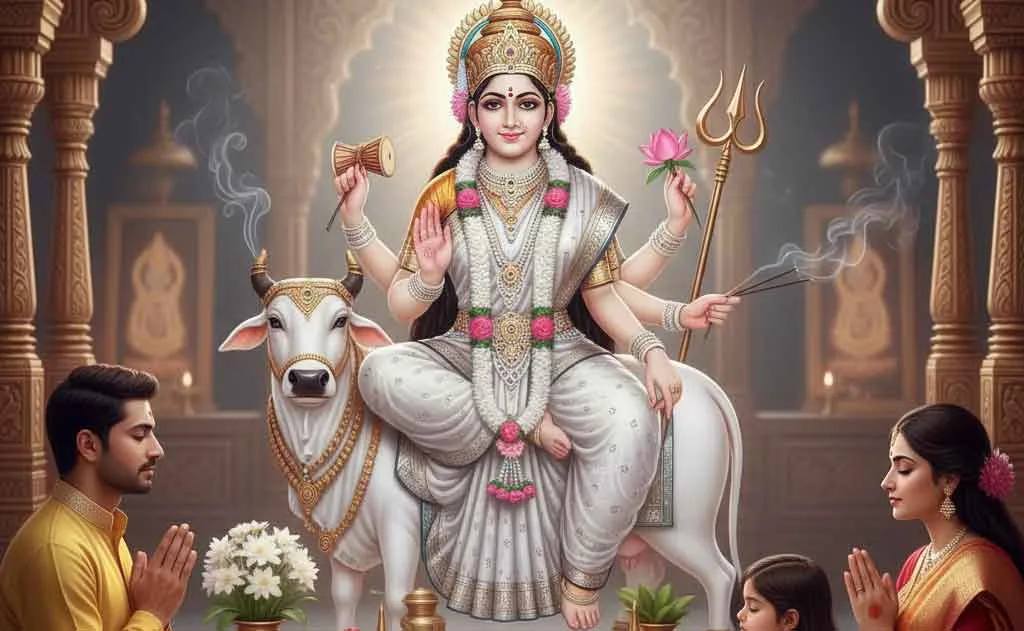
Navratri 2026 Day 8: Maa Mahagauri Mantra, Colour, Bhog and Puja Vidhi (Sunday 18 October)