
Diwali and Jainism: Lord Mahavira's Nirvana Day
While Diwali is celebrated across India as the festival of lights, its significance varies beautifully across different faiths.
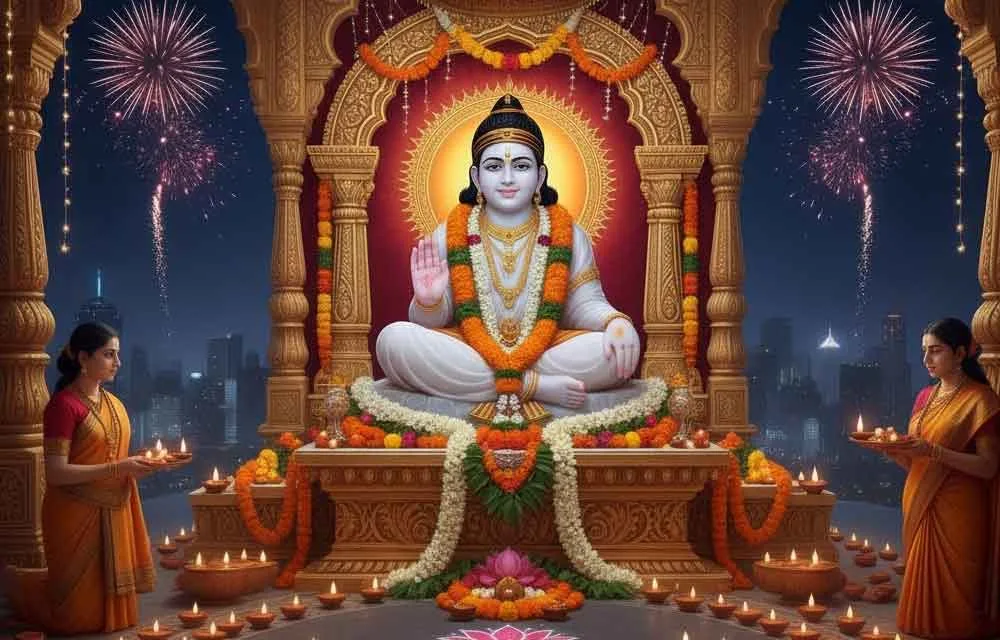
While Diwali is celebrated across India as the festival of lights, its significance varies beautifully across different faiths.
While Diwali is celebrated across India as the festival of lights, its significance varies beautifully across different faiths. For the Jain community, Diwali holds profound spiritual meaning as it commemorates one of the most significant events in their religious history—the Nirvana (spiritual liberation) of Lord Mahavira, the 24th and final Tirthankara.
The Sacred Event: Mahavira's Final Liberation
On the dark new moon night of Kartik Amavasya in 527 BCE, Lord Mahavira attained Nirvana at Pawapuri, a sacred place in present-day Bihar, India. At the age of seventy-two, Mahavir achieved liberation at Majjhima Pava (modern Pawapuri) in the Patna district.
According to Jain tradition, this momentous event occurred in the early hours before dawn. When Lord Mahavir's purified soul left his body, he achieved complete liberation, becoming a Siddha—a pure consciousness forever in a state of complete bliss. This marked the end of his cycle of birth and rebirth, representing the ultimate spiritual achievement in Jain philosophy.
The Life Journey of Lord Mahavira
Born as Prince Vardhaman into a royal family, Mahavira's path to enlightenment was one of extraordinary renunciation and self-discipline. At age thirty, he abandoned his royal life, home, and family to live as an ascetic in pursuit of spiritual awakening, undertaking severe fasts, bodily mortifications, and discarding his clothes.
After twelve years of intense penance and meditation, Mahavira achieved Kevala Jnana (omniscience or enlightenment) under a Sala tree at the age of 43 near the banks of River Rijupalika. Following his enlightenment, he spent the remaining years of his life traveling across India, teaching the principles of Jainism and guiding thousands of disciples.
The Festival of Lights: Dipalika
When Mahavira attained Nirvana, the event was so profound that it was commemorated with lights. The gods illuminated Pavanagari with lamps to mark the occasion, and since that time, the people of Bharat have celebrated the festival of "Dipalika" to worship the Jinendra on the occasion of his nirvana.
The festival symbolizes the victory of knowledge over ignorance, as the world was illuminated with countless lamps after Lord Mahavira attained Moksha. The term "Dipalikaya" translates to "light leaving the body," representing the soul's liberation from the physical form.
Jain Diwali Celebrations Today
Religious Observances
On Diwali morning, Nirvan Ladoo (a special sweet offering) is presented after praying to Lord Mahavira in all Jain temples across the world. The day is observed as Mahavira Nirvana Divas, marking both the liberation of the great Tirthankara and the enlightenment attained by his chief disciple, Gautama Swami, who achieved Kevala Jnana on the same night.
The Practice of Ahimsa
The Jain celebration of Diwali reflects the community's core values. The most important principle of Jains is Ahimsa (non-violence); therefore, they tend to avoid firecrackers during Diwali as they can harm living organisms. This adherence to non-violence extends to all aspects of the celebration, emphasizing spiritual illumination over external display.
Spiritual Significance
For Jains, Diwali is not merely a festival but a day of deep spiritual reflection. It serves as a reminder of the path to liberation that Lord Mahavira demonstrated through his life. The lighting of lamps represents the inner spiritual light that dispels the darkness of ignorance, attachment, and karma.
The festival encourages followers to:
- Reflect on Mahavira's teachings of non-violence, truth, and self-discipline
- Renew their commitment to the Jain path of spiritual purification
- Celebrate the possibility of liberation that exists for all souls
- Honor the wisdom and sacrifice of the Tirthankaras
Pawapuri: The Sacred Site
Pawapuri, where Lord Mahavira attained Nirvana, remains one of the most sacred pilgrimage sites for Jains. The location features the Jalmandir, a beautiful marble temple built in the middle of a lotus pond, marking the exact spot where Mahavira achieved liberation. Thousands of Jain pilgrims visit this holy site, especially during Diwali, to pay their respects and meditate on the path to spiritual freedom.
The Eternal Message
The Jain celebration of Diwali carries a timeless message that resonates beyond religious boundaries. It celebrates the triumph of spiritual discipline over worldly attachments, the power of non-violence, and the ultimate possibility of liberation from the cycle of suffering. Lord Mahavira's Nirvana represents not an end, but the fulfillment of the soul's journey toward eternal peace and enlightenment.
As lamps are lit on this sacred night, they illuminate not just homes and temples, but serve as beacons reminding humanity of the eternal light of wisdom that can dispel the darkness of ignorance and lead all beings toward liberation.
This Diwali, as we light our lamps, we honor not only the various traditions associated with this beautiful festival but also the profound spiritual achievement of Lord Mahavira, whose teachings continue to inspire millions on the path of peace, non-violence, and ultimate liberation.
Related 2026 guides
- Diwali 2026: dates, Lakshmi Puja muhurat & 5-day guide
- Lakshmi Puja muhurat 2026 in 30 Indian cities
- Lakshmi Puja vidhi 2026: step-by-step
- Dhanteras 2026
- Diwali 2026 5-day calendar at a glance
Share the Diwali 2026 blessing
For Jain families, Diwali marks the night Lord Mahavira attained Nirvana, when lamps were lit to honour the light of supreme knowledge. Across India, the same festival celebrates the victory of light over darkness and Maa Lakshmi's gentle grace. Whatever our tradition, each diya reminds us of the inner light that dispels ignorance and attachment. This Diwali 2026, share one of these peaceful, non-violent blessings with your family and let the light of wisdom reach every heart.
Deepa shloka: the lamp prayer
शुभं करोति कल्याणम् आरोग्यं धनसम्पदा। शत्रुबुद्धिविनाशाय दीपज्योतिर्नमोऽस्तु ते॥
Shubham karoti kalyanam arogyam dhana-sampada, shatru-buddhi-vinashaya deepa-jyotir namostu te.
Meaning: I bow to the light of the lamp, which brings what is auspicious and good, health and prosperity, and destroys ill-will. Many families recite it as they light the evening diya.
Lakshmi mantra for Diwali
ॐ श्रीं महालक्ष्म्यै नमः॥
Om Shreem Mahalakshmyai Namah.
Meaning: Salutations to Mahalakshmi. Shreem is the seed syllable traditionally associated with Lakshmi.
Diwali 2026 messages to share
🪔 Happy Diwali 2026 to my dear family! On this night of Lord Mahavira's Nirvana, may our home glow with peace, compassion and the light of right knowledge. ✨ Share on WhatsApp
🙏 To our respected parents and elders: your simple, kind lives light our way. May this Diwali bless you with health, peace and a calm, joyful heart. 🌸 Share on WhatsApp
✨ Dear friend, may this Diwali fill your life with gentle light, kindness toward all beings and the joy of true inner freedom. Celebrate safely! 🪔 Share on WhatsApp
🪔 Warm Diwali wishes to you and your team. May truth, honest effort and non-violence guide our work together in the year ahead. ✨ Share on WhatsApp
🌸 May Maa Lakshmi bless your home this Diwali with purity, contentment and gratitude, the wealth that never fades. 🪔🙏 Share on WhatsApp
🙏 May Lord Ganesha remove every obstacle from your path and bless each good beginning with wisdom and peace this Diwali 2026. 🪔 Share on WhatsApp
A short Diwali prayer
Maa Lakshmi and Lord Ganesha, on this holy night of light I bow before you in humility. Free my heart from anger, greed and attachment, and fill it with compassion for every living being. Bless my family with good health and harmony. Guide me toward truthful words, honest work and gratitude for all I have. May the lamp I light reflect the inner light of wisdom.
Use the share buttons on this page to send these blessings to your family and friends.
Frequently Asked Questions
When is Mahavira Nirvana Day in 2026?
Jains mark Lord Mahavira's Nirvana on Kartik Amavasya, the new moon night of Diwali. Diwali falls on November 8, 2026 per Drik Panchang in India and in the USA, UK, Canada and most other countries; check your local Jain temple's calendar for its observance.
Why do Jains celebrate Diwali?
For Jains, Diwali commemorates the Nirvana (final liberation) of Lord Mahavira, the 24th Tirthankara, at Pawapuri in present-day Bihar in 527 BCE. As commonly told, lamps were lit to mark the occasion, giving rise to the festival of Dipalika.
How do Jains celebrate Diwali?
On Diwali morning, devotees pray to Lord Mahavira and offer Nirvan Ladoo in Jain temples. The day is also observed for Gautama Swami, Mahavira's chief disciple, who attained Kevala Jnana the same night.
Why do Jains avoid firecrackers on Diwali?
Ahimsa (non-violence) is the central Jain principle, and firecrackers can harm living organisms. Jains therefore emphasise lamps, prayer and spiritual reflection over noisy display.
How can Jain families abroad observe Mahavira Nirvana Day?
Jain families outside India can visit a local Jain temple or derasar, offer Nirvan Ladoo after prayers to Lord Mahavira, light lamps at home and reflect on his teachings of non-violence, truth and self-discipline. Many also remember Pawapuri's Jalmandir, the sacred site of his Nirvana.
You might also like
Gita Jayanti 2026 Prasad Recipes — Tulsi-Honoring Sweets, Krishna's Favourites & December 20 Bhog Plate
Shani Deva Temples Worldwide & Must-Performed Rituals — Complete Devotee's Guide
Maha Shivratri 2026 Vrat Recipes — Sabudana Khichdi, Singhada Halwa, Phalahara Foods Complete Fasting Guide
