Diwali in Bali & Indonesia: Hindu Customs Abroad
The celebration of Hindu festivals takes on fascinating dimensions when practiced beyond the Indian subcontinent.
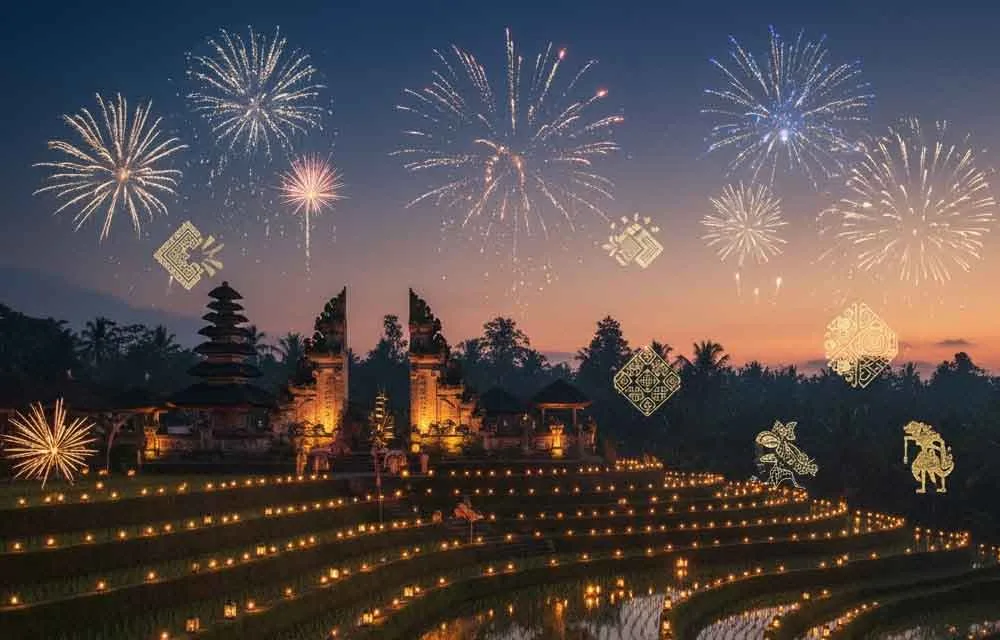
The celebration of Hindu festivals takes on fascinating dimensions when practiced beyond the Indian subcontinent.
The celebration of Hindu festivals takes on fascinating dimensions when practiced beyond the Indian subcontinent. Indonesia, particularly the island of Bali, presents an intriguing case study of how Hinduism has evolved uniquely in Southeast Asian soil, creating traditions that both honor and diverge from their Indian origins.
The Hindu Landscape of Indonesia
Indonesia, whose very name derives from the Greek words "Indos" (Indian) and "Nesos" (islands), carries within it the ancient imprint of Indian civilization. Despite being the world's largest Muslim-majority nation, approximately 1.7% of Indonesia's population practices Hinduism, totaling around 4.69 million adherents. The vast majority of these Hindu practitioners reside in Bali, where they constitute nearly 87% of the island's population.
This demographic reality creates a unique cultural phenomenon: an island where Hinduism isn't merely practiced but forms the very foundation of daily life, art, and social structure.
Diwali in Indonesia: A Festival with Limited Observance
Unlike in India where Diwali illuminates homes and hearts across the nation, the Festival of Lights maintains a relatively modest presence in Indonesia. Traditional Diwali celebrations, when they occur, are primarily observed by the Indian diaspora community and at Indian cultural centers, such as the Indian Consulate in Bali.
For those Indonesian Hindus who do observe Diwali, the celebrations mirror many traditional Indian customs. Families clean their homes in preparation for the festival, create intricate rangoli designs using colored powders on their floors, and prepare special offerings. Some communities conduct rituals honoring cows, adorning them with garlands and offering special foods as expressions of gratitude. The lighting of oil lamps, the sharing of sweets, and the purchasing of new items for good fortune remain central to these celebrations.
However, these Diwali observances represent a relatively small thread in the rich tapestry of Balinese Hindu practice.
The Balinese Hindu Distinction
Balinese Hinduism represents a unique synthesis that developed over centuries of geographical and cultural isolation from the Indian mainland. This tradition, known locally as "Agama Hindu Dharma," blends elements of Indian Hinduism with indigenous Austronesian animism, Buddhism, and ancestor worship, creating a religious practice distinctly adapted to Balinese culture and cosmology.
The historical roots of this divergence trace back to ancient trade routes and migrations, with significant influence from Java's Majapahit Kingdom. When Islam spread across the Indonesian archipelago, Bali became a refuge for Hindu-Javanese culture, allowing it to evolve independently from developments occurring in India.
This geographical and temporal distance explains why many festivals central to Indian Hindu practice, including Diwali, never took deep root in Balinese soil. The Balinese calendar system itself differs fundamentally from Indian calendars. The Pawukon calendar, a 210-day cycle unique to Bali, governs the timing of most religious ceremonies and festivals, creating an entirely different rhythm of religious observance.
Galungan and Kuningan: Bali's Festival of Light and Victory
If Diwali celebrates the victory of light over darkness and good over evil, Balinese Hinduism expresses these same fundamental themes through Galungan and Kuningan, celebrations that could be considered Bali's spiritual equivalent to Diwali, though distinct in their practices and meanings.
Galungan: The Descent of Ancestors
Galungan commemorates the triumph of dharma (virtue) over adharma (vice), celebrating the victory of good over evil much like Diwali. However, its unique characteristic lies in the belief that ancestral spirits descend to Earth for a ten-day visit. This belief shapes every aspect of the celebration.
The preparation for Galungan begins days before the festival. Villages transform as families erect penjor—tall, gracefully curved bamboo poles decorated with intricate woven palm leaf patterns, fruits, flowers, and offerings. These penjor line the streets, creating natural archways that welcome both human visitors and ancestral spirits. The lower portion of each penjor features a small shrine containing offerings, representing Mount Agung, Bali's sacred volcano and spiritual axis mundi.
In the days preceding Galungan, families engage in ritual slaughter of pigs, preparation of traditional rice cakes, and the creation of elaborate offerings. Women can be seen balancing towering baskets of offerings on their heads as they make their way to temples, dressed in traditional kebaya and sarongs.
The celebration itself involves families dressing in their finest traditional attire and making rounds to family temples, village temples, and the homes of relatives. The atmosphere pulses with joy and devotion as communities come together in prayer, feasting, and fellowship.
Central to Galungan is the Ngelawang ceremony, a ritual unique to Bali. Village troupes perform with the Barong, a divine protector manifested as a mythical beast, who makes his way through villages entering homes to expel evil spirits and negative energies. The Barong dance, accompanied by gamelan music, represents the eternal battle between good and evil, with the lion-like Barong facing off against the witch Rangda.
Kuningan: The Celestial Return
Ten days after Galungan comes Kuningan, marking the departure of ancestral spirits back to their heavenly realm. The name "Kuningan" derives from "kuning," meaning yellow, reflected in the special yellow rice offerings (nasi kuning) prepared for this day. Yellow symbolizes gratitude, purity, prosperity, and the radiance of divine grace.
Kuningan morning sees families making offerings before midday, as tradition holds that spirits depart around noon. Temples and homes are decorated with tamiang (circular decorations made from palm leaves) and endongan (hanging offerings). The atmosphere carries a quality of peaceful gratitude, a loving farewell to visiting ancestors and a renewal of commitment to living according to dharma.
Comparative Spiritual Themes
While Galungan and Diwali differ in their specific practices and mythological narratives, they share profound spiritual parallels:
Victory of Good Over Evil: Both festivals fundamentally celebrate the triumph of righteousness over wickedness. Where Diwali commemorates Lord Rama's return to Ayodhya after defeating Ravana, Galungan celebrates the general principle of dharma's victory over adharma.
Light and Illumination: Diwali's countless oil lamps find their echo in the bright penjor and temple offerings of Galungan. Both festivals emphasize illumination as a spiritual principle, dispelling darkness both literal and metaphorical.
Ancestral Connection: While Diwali includes ancestor remembrance particularly on certain days of the festival, Galungan places ancestral spirits at the very center of celebration, emphasizing the living connection between generations.
Renewal and Fresh Beginnings: Both festivals involve thorough home cleaning, new clothes, special foods, and the seeking of blessings for prosperity in the coming period.
Community and Family Bonds: Both celebrations strengthen social fabric through shared rituals, mutual visits, and collective feasting.
Other Major Balinese Hindu Festivals
Beyond Galungan and Kuningan, Balinese Hinduism features several other major festivals that further illustrate its distinctive character:
Nyepi: The Day of Silence stands as perhaps the most striking example of Balinese Hindu uniqueness. This New Year celebration, based on the Saka calendar, involves a complete day of silence across the entire island. No lights, no work, no travel, no entertainment—even the airport closes. The night before, massive ogoh-ogoh effigies representing negative spirits parade through villages before being burned or destroyed, purifying the environment before the new year.
Saraswati Day honors the goddess of knowledge, art, and wisdom. On this day, books and written materials receive offerings, and Balinese refrain from reading or writing, allowing knowledge itself to rest.
Pagerwesi focuses on spiritual fortification, with prayers and offerings directed toward strengthening one's inner spiritual defenses against negative influences.
The Indian Diaspora Connection
The small but vibrant Indian community in Bali and other parts of Indonesia maintains stronger connections to traditional Indian Hindu practices, including Diwali celebrations. These communities, consisting of business people, professionals, and expatriates, organize Diwali events that serve multiple purposes: religious observance, cultural preservation, and community building.
Indian restaurants and cultural centers sometimes host Diwali celebrations open to the broader public, creating opportunities for cultural exchange. These events feature traditional Diwali lamps, rangoli competitions, Indian classical music and dance performances, and the sharing of Indian sweets and savories. Such celebrations allow the Indian diaspora to maintain their cultural roots while introducing Balinese and other Indonesians to Indian Hindu traditions.
Religious Syncretism and Unique Practices
Balinese Hinduism demonstrates remarkable syncretism, incorporating elements that would be unfamiliar in most Indian Hindu contexts:
Tri Murti Temples: While Indian Hinduism recognizes the Trimurti of Brahma, Vishnu, and Shiva, Balinese temples often emphasize different divine configurations, with particular reverence for local manifestations of deities.
Ancestor Worship Integration: The veneration of ancestors occupies a more central position in Balinese practice than in most Indian Hindu traditions, reflecting indigenous Austronesian religious concepts.
Village Temple System: Every Balinese village maintains at least three temples—pura puseh (temple of origin), pura desa (village temple), and pura dalem (temple of the dead)—creating a complex sacred geography unique to Bali.
Cremation Ceremonies: Balinese cremations (ngaben) represent elaborate, joyous celebrations rather than somber occasions, with massive tower-like structures carrying the deceased in spectacular processions before cremation.
The Future of Hindu Practices in Indonesia
As globalization increases cultural exchange and younger generations navigate between tradition and modernity, Hindu practices in Indonesia face both challenges and opportunities. Tourism brings greater awareness of Balinese Hindu culture but also commercialization pressures. Education connects young Indonesians to global Hindu communities, potentially strengthening ties to Indian traditions while also highlighting the distinctive nature of Balinese practice.
Some cultural observers note increasing interest among younger Balinese Hindus in learning about Hindu practices from other regions, including India. This could lead to either a homogenization of practice or a renewed appreciation for Bali's unique traditions. The government of Indonesia officially recognizes Hinduism as one of the country's six official religions, providing institutional support for Hindu education and practice.
Lessons in Religious Adaptation
The story of Hinduism in Indonesia, particularly regarding festivals like Diwali and Galungan, offers profound insights into how religious traditions adapt and evolve across cultures and geography. It demonstrates that the essential spiritual principles of Hinduism—dharma, devotion, community, and the eternal struggle between good and evil—can find authentic expression in vastly different cultural forms.
Balinese Hinduism isn't "incomplete" because it doesn't celebrate Diwali in the traditional Indian manner. Rather, it represents Hinduism's remarkable capacity to take root in new soil, absorbing local elements while maintaining core spiritual truths. The magnificent penjor of Galungan and the countless diyas of Diwali ultimately serve the same purpose: creating sacred space, honoring the divine, and bringing communities together in celebration of light, goodness, and spiritual renewal.
Conclusion
While Diwali remains largely unfamiliar to most Balinese Hindus, the spirit of the festival—the celebration of light's victory over darkness, good's triumph over evil, and the renewal of spiritual commitment—finds full expression in Galungan, Kuningan, and other Balinese festivals. The Indonesian Hindu experience reminds us that religious traditions are living, breathing organisms that adapt to their environments while preserving essential truths.
For the global Hindu community, Bali represents both a fascinating divergence and a profound connection—proof that Sanatana Dharma can flourish in countless forms while remaining true to its eternal principles. The penjor and the diya, though different in form, both serve to welcome the divine and illuminate the path of dharma.
As we observe festivals whether in Mumbai or Denpasar, Toronto or Jakarta, we participate in humanity's timeless ritual of celebrating light, community, and the enduring hope that goodness will ultimately prevail. In this universal aspiration, all Hindu celebrations, whatever their specific form, find their deepest unity and meaning.
Related 2026 guides
- Diwali 2026: dates, Lakshmi Puja muhurat & 5-day guide
- Lakshmi Puja muhurat 2026 in 30 Indian cities
- Lakshmi Puja vidhi 2026: step-by-step
- Dhanteras 2026
- Diwali 2026 5-day calendar at a glance
Share the Diwali 2026 blessing
Whether Diwali lamps glow in an Indian home in Bali or Galungan's penjor line the village streets, the message is the same: dharma triumphs over adharma, and light over darkness. For Hindus in Bali and across Indonesia, Diwali 2026 is a chance to light the inner lamp, honour Maa Lakshmi's grace and feel close to family across the seas. Share one of these blessings with your loved ones and let the light travel from island to island.
Deepa shloka: the lamp prayer
शुभं करोति कल्याणम् आरोग्यं धनसम्पदा। शत्रुबुद्धिविनाशाय दीपज्योतिर्नमोऽस्तु ते॥
Shubham karoti kalyanam arogyam dhana-sampada, shatru-buddhi-vinashaya deepa-jyotir namostu te.
Meaning: I bow to the light of the lamp, which brings what is auspicious and good, health and prosperity, and destroys ill-will. Many families recite it as they light the evening diya.
Lakshmi mantra for Diwali
ॐ श्रीं महालक्ष्म्यै नमः॥
Om Shreem Mahalakshmyai Namah.
Meaning: Salutations to Mahalakshmi. Shreem is the seed syllable traditionally associated with Lakshmi.
Diwali 2026 messages to share
🪔 Happy Diwali to our family from the Island of the Gods! May the light of this festival keep our hearts close, however many seas lie between us. ✨ Share on WhatsApp
🙏 To our parents and elders: may your blessings guard our home like a lamp before the shrine. Wishing you health and peace this Diwali 2026. 🌸 Share on WhatsApp
✨ Dear friend in Bali, may your home be bright with diyas, flowers and offerings, and may dharma's victory fill your heart with joy. Happy Diwali! 🪔 Share on WhatsApp
🌸 Warm Diwali wishes to you and your family. May the Festival of Lights bring health, harmony and success built on honest work and trust. 🙏 Share on WhatsApp
🪔 Jai Maa Lakshmi! May the Mother of grace bless every Hindu home in Bali and Indonesia with peace, kindness and a lamp that never dims. ✨ Share on WhatsApp
🙏 As Lord Rama returned to Ayodhya amid rows of lamps, may his light reach Hindu families in Bali and across Indonesia. Happy Diwali! 🌸 Share on WhatsApp
A short Diwali prayer
Maa Lakshmi and Lord Ganesha, on these islands far from India, I bow before you with flowers and a lit lamp. Bless my family with health and harmony, and keep our hearts grateful for the beauty around us. Remove the obstacles of anger and pride from within me, and guide me to right effort in all I do. May dharma always triumph over darkness in my life.
Use the share buttons on this page to send these blessings to your family and friends.
Frequently Asked Questions
When is Diwali 2026?
Diwali (Lakshmi Puja) falls on Sunday, November 8, 2026 in India, and also on November 8 in nearby Singapore and Malaysia per Drik Panchang. In Indonesia, check with your local Indian community or temple for event dates.
Is Diwali celebrated in Bali?
Diwali has only a modest presence in Bali and Indonesia. It is mainly observed by the Indian diaspora and at Indian cultural centres such as the Indian Consulate in Bali, while most Balinese Hindus follow their own festival calendar.
What is the Balinese equivalent of Diwali?
Galungan and Kuningan are often seen as Bali's spiritual counterpart to Diwali, celebrating the victory of dharma over adharma. During Galungan, ancestral spirits are believed to visit for ten days, and Kuningan marks their return ten days later.
Why don't most Balinese Hindus celebrate Diwali?
Balinese Hinduism (Agama Hindu Dharma) developed in relative isolation from India, blending Hindu ideas with Austronesian animism, Buddhism and ancestor worship. Its festivals follow the 210-day Pawukon calendar, so many Indian festivals, including Diwali, never took deep root.
How can NRIs and Indian expats celebrate Diwali in Bali?
Indian diaspora groups, cultural centres and some Indian restaurants host Diwali events with lamps, rangoli, classical music and dance, and Indian sweets. At home, families can clean the house, light oil lamps, draw rangoli and share sweets as they would in India.
You might also like
Gita Jayanti 2026 Prasad Recipes — Tulsi-Honoring Sweets, Krishna's Favourites & December 20 Bhog Plate
Shani Deva Temples Worldwide & Must-Performed Rituals — Complete Devotee's Guide
Maha Shivratri 2026 Vrat Recipes — Sabudana Khichdi, Singhada Halwa, Phalahara Foods Complete Fasting Guide