Diwali in West Bengal 2026: The Power of Kali Puja
Diwali 2026 falls on Sunday, 8 November. While most of India worships Lakshmi, the goddess of wealth and prosperity, West Bengal observes this auspicious night with…
Diwali 2026 falls on Sunday, 8 November.
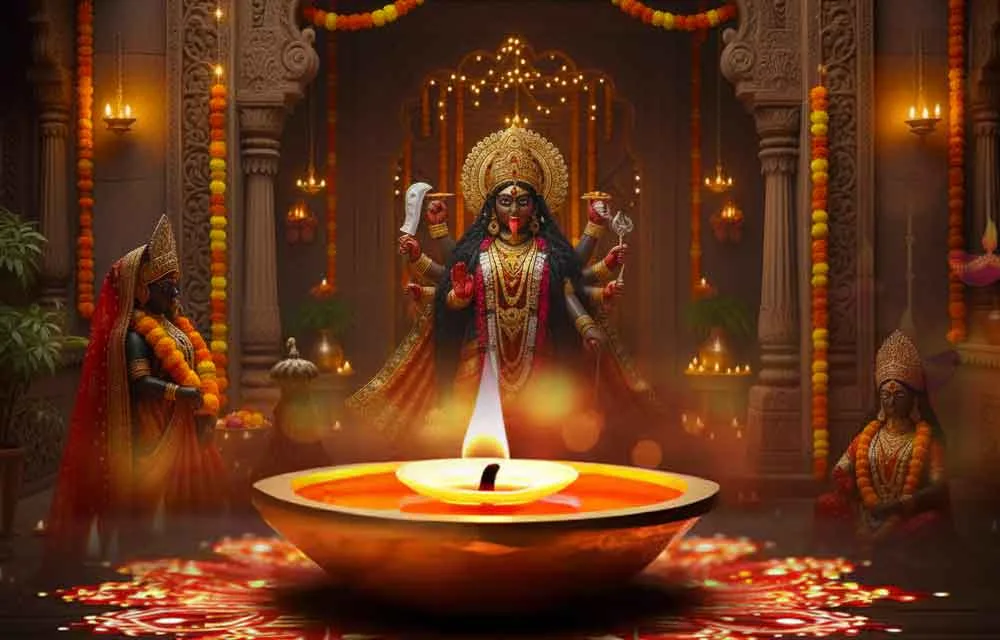
While most of India celebrates Diwali with the worship of Lakshmi, the goddess of wealth and prosperity, West Bengal observes this auspicious night with profound devotion to Maa Kali, the fierce embodiment of divine power and the destroyer of evil. This unique tradition transforms Diwali into Kali Puja, a night when the dark goddess is invoked to protect her devotees and vanquish all negativity.
The Divine Story of Maa Kali
The Birth of Kali: When Fury Became Divine
The story of Kali's manifestation is one of the most powerful narratives in Hindu mythology. Long ago, when demons threatened to destroy the cosmic order and terrorize the gods, the divine mother Durga was engaged in a fierce battle with the asura brothers Shumbha and Nishumbha, along with their vast demon army.
During this celestial war, two particularly fearsome demons—Chanda and Munda—proved nearly invincible. As the battle intensified, Durga's fury reached its zenith. From her forehead, darkened with righteous anger, emerged Kali—the embodiment of time, death, and ultimate power. She was born from Durga's rage, yet she represented the supreme reality that exists beyond all illusion.
Kali's form was terrifying yet magnificent: her skin dark as the night sky, her tongue lolling out, her eyes blazing with divine fire. She wore a garland of skulls and a skirt of severed arms, symbolizing the ego and attachments that bind souls to the cycle of birth and death. In her multiple hands, she wielded weapons of destruction—a sword, a trident, a severed head—yet also held the gesture of blessing and fearlessness.
The Slaying of Raktabija
The most celebrated episode in Kali's mythology involves the demon Raktabija, whose name means "blood-seed." This asura possessed a terrifying boon: every drop of his blood that touched the ground would spawn a new demon identical to himself. As the gods and Durga battled him, each wound only multiplied their enemies, threatening to overwhelm the universe with countless Raktabijas.
The gods despaired, but then Kali stepped forward. With her vast tongue, she licked up every drop of Raktabija's blood before it could touch the earth. She consumed the demon army, drinking the blood and devouring the duplicates, until finally, drained of his power, the original Raktabija fell. Kali then beheaded him, ending his reign of terror.
But the bloodlust of battle consumed her. Drunk on the blood of demons, Kali began her Tandava—the cosmic dance of destruction. The earth trembled beneath her feet, and the universe itself seemed on the verge of dissolution.
Shiva's Sacrifice: Love That Tames the Infinite
Seeing that Kali's dance would destroy all creation, Lord Shiva, her consort, devised a plan born of supreme love and sacrifice. He lay down among the corpses on the battlefield, placing himself directly in her path.
As Kali continued her frenzied dance, she stepped upon Shiva's chest. The moment she realized she had stepped on her beloved husband, she was jolted back to awareness. Shocked at her own actions, she bit her tongue in remorse—which is why she is often depicted with her tongue extended. Her fury dissolved into maternal compassion, and the universe was saved.
This powerful image of Kali standing upon Shiva represents profound spiritual truths: consciousness (Shiva) lies dormant beneath divine energy (Shakti/Kali), yet when combined, they create and sustain the cosmos. It also shows that even the most fearsome power can be transformed by love and awareness.
The Tradition of Kali Puja in Bengal
Why Kali on Diwali?
The worship of Kali on the new moon night of Kartik has ancient roots in Bengal. According to tradition, the practice was popularized in the 18th century by Raja Krishnachandra of Navadvipa, though worship of the dark goddess on this night dates back much earlier.
The new moon night—Amavasya—is considered the darkest night of the month, when negative forces are believed to be most active. Rather than lighting lamps merely for prosperity, Bengalis invoke Kali, the supreme power who dwells in darkness itself, who is darkness and light simultaneously, to protect them from all evil and ignorance.
The Sacred Rituals
Preparation and Purification Days before Kali Puja, devotees prepare their homes and hearts. Clay images of Kaa Kali are crafted by skilled artisans, depicting her in her various forms—Dakshina Kali (the benevolent form), Shamshan Kali (the cremation ground goddess), or Bhavatarini (the redeemer of the universe).
The Midnight Invocation Kali Puja reaches its zenith at midnight, the darkest hour. Priests and devotees perform elaborate rituals:
- Prana Pratishtha: The ritual invocation of the goddess into the clay image
- Shodashopachara: Sixteen forms of worship including offering flowers, incense, lamps, and food
- Mantra Japa: Recitation of powerful Kali mantras, especially the Kali Gayatri and Mahakali Dhyana
- Homa: Sacred fire ceremony with specific offerings
The Offerings Traditional offerings include:
- Red hibiscus flowers (Kali's favorite)
- Rice, lentils, and vegetables
- Sweets, especially those made with rice flour
- In some tantric traditions, symbolic animal sacrifice (increasingly replaced by vegetable substitutes like pumpkin)
Pushpanjali and Aarti The night culminates in collective flower offerings (pushpanjali) and the magnificent aarti, where hundreds of oil lamps illuminate the darkness, creating a breathtaking sight as the goddess is honored with devotional songs and the waving of lights.
The Spiritual Significance
Kali as the Ultimate Mother
Despite her fearsome appearance, Kali is worshipped as Ma—the Divine Mother. Her terror is directed only at ego, ignorance, and evil. For her true devotees, she is the most loving and protective of mothers, quick to respond to sincere prayer.
Ramakrishna Paramahamsa, the 19th-century saint, was perhaps Kali's most famous devotee. He would cry out to her like a child calling for its mother, and he experienced her as living presence, full of sweetness and maternal love. His devotion transformed the understanding of Kali worship, emphasizing the relationship of a child to the Divine Mother.
Beyond Form: The Philosophy
Kali represents profound spiritual truths:
- Time and Transformation: Her name comes from "Kala" (time)—she is the force that brings all things into being and dissolves them
- The Void Beyond Creation: Her dark form represents the infinite void from which all creation emerges and into which it returns
- Liberation: By destroying ego and illusion, she grants ultimate freedom (moksha)
- The Union of Opposites: She embodies creation and destruction, terror and love, darkness and enlightenment
Modern Relevance
In today's world, Kali's message resonates powerfully. She teaches that:
- True power lies in confronting our fears and shadows
- Destruction of the old is necessary for new growth
- Divine feminine energy (Shakti) is essential for balance
- The darkest moments can be gateways to enlightenment
Community Celebrations
Pandals and Public Worship
Like Durga Puja, Kali Puja in Bengal features elaborate community pandals (temporary structures) housing large clay images. These become centers of neighborhood celebration, with:
- Artistic installations depicting Kali and mythological scenes
- Cultural programs including music and dance
- Distribution of prasad (blessed food)
- Night-long festivities bringing communities together
Home Worship
Many Bengali families also perform Kali Puja at home, maintaining intimate family traditions. The goddess is welcomed as an honored guest, offered the best the family has, and bid farewell the next day with emotional visarjan (immersion ceremony).
Mantras and Prayers
Kali Gayatri Mantra:
ॐ महाकाल्यै च विद्महे श्मशानवासिन्यै च धीमहि।
तन्नो काली प्रचोदयात्॥

Om Mahakalyai Cha Vidmahe Smasana Vasinyai Cha Dhimahi
Tanno Kali Prachodayat
Simple Prayer:
ॐ क्रीं काल्यै नमः
Om Kreem Kalyai Namah
(Salutations to Kali)
The Message for Devotees
Kali Puja reminds us that divinity manifests in infinite forms. While some seek prosperity through Lakshmi, Bengalis seek protection, transformation, and liberation through Kali. Both paths lead to the divine.
The goddess teaches that we must embrace all aspects of existence—not just the beautiful and pleasant, but also the difficult and dark. True spirituality means accepting the full spectrum of life while remaining rooted in divine consciousness.
On this Kali Puja, may the Divine Mother destroy all ignorance, protect all beings, and guide everyone toward ultimate truth and freedom.
Conclusion: Two Celebrations, One Truth
Whether you light lamps for Lakshmi or offer red hibiscus to Kali, Diwali remains a celebration of light over darkness, good over evil, and consciousness over ignorance. West Bengal's unique tradition enriches the tapestry of Hindu culture, showing that the divine feminine—whether as gentle Lakshmi or fierce Kali—is the source of all power, protection, and grace.
Jai Ma Kali! Jai Maa Lakshmi!
May this Diwali bring light, prosperity, and divine blessings to all.
Related 2026 guides
- Diwali 2026: dates, Lakshmi Puja muhurat & 5-day guide
- Lakshmi Puja muhurat 2026 in 30 Indian cities
- Lakshmi Puja vidhi 2026: step-by-step
- Dhanteras 2026
- Diwali 2026 5-day calendar at a glance
Share the Diwali 2026 blessing
On the darkest new moon night, Bengal turns to Maa Kali, the Divine Mother who dwells in darkness and dispels it. Across India, homes welcome Maa Lakshmi's grace, and both are the same Shakti caring for her children. The lamp we light is the inner light that fear cannot touch, the victory of light over darkness, as commonly told. This Kali Puja and Diwali 2026, share a blessing of the Mother's protection and love with your family.
Deepa shloka: the lamp prayer
शुभं करोति कल्याणम् आरोग्यं धनसम्पदा। शत्रुबुद्धिविनाशाय दीपज्योतिर्नमोऽस्तु ते॥
Shubham karoti kalyanam arogyam dhana-sampada, shatru-buddhi-vinashaya deepa-jyotir namostu te.
Meaning: I bow to the light of the lamp, which brings what is auspicious and good, health and prosperity, and destroys ill-will. Many families recite it as they light the evening diya.
Lakshmi mantra for Diwali
ॐ श्रीं महालक्ष्म्यै नमः॥
Om Shreem Mahalakshmyai Namah.
Meaning: Salutations to Mahalakshmi. Shreem is the seed syllable traditionally associated with Lakshmi.
Diwali 2026 messages to share
🪔 Shubho Kali Puja and Happy Diwali to our dear family! May Maa Kali protect our home from every darkness and fill it with courage, love and peace. 🙏 Share on WhatsApp
🙏 To my beloved parents and elders: may the Divine Mother hold you close, keep you healthy and grant you fearless peace this Kali Puja and Diwali. 🪔🌸 Share on WhatsApp
✨ Shubho Deepabali, my friend! May Maa Kali burn away your fears and doubts, and may your path shine bright with the lamp of her grace. 🪔 Share on WhatsApp
🪔 Warm Kali Puja and Diwali wishes to you and your team. May the Mother bless our work with courage, clarity and honest effort in the year ahead. ✨ Share on WhatsApp
🌸 Jai Maa Lakshmi, Jai Maa Kali! May the Divine Mother in all her forms bless your home with grace, harmony and the light that conquers darkness. 🪔🙏 Share on WhatsApp
🙏 May Lord Ganesha remove every obstacle and Maa Kali guard your family on this holy Amavasya night. Wishing you a blessed Kali Puja and Diwali! 🪔✨ Share on WhatsApp
A short Diwali prayer
Maa Kali, Divine Mother, on this dark night I bow to you, and to Maa Lakshmi and Lord Ganesha. Burn away the ego, fear and anger within me. Remove the obstacles on my path and keep my family healthy and protected. Let our home be filled with harmony and gratitude. Give me the courage to do what is right with honest effort, and let your light guide me through every darkness.
Use the share buttons on this page to send these blessings to your family and friends.
Frequently Asked Questions
When is Kali Puja in West Bengal in 2026?
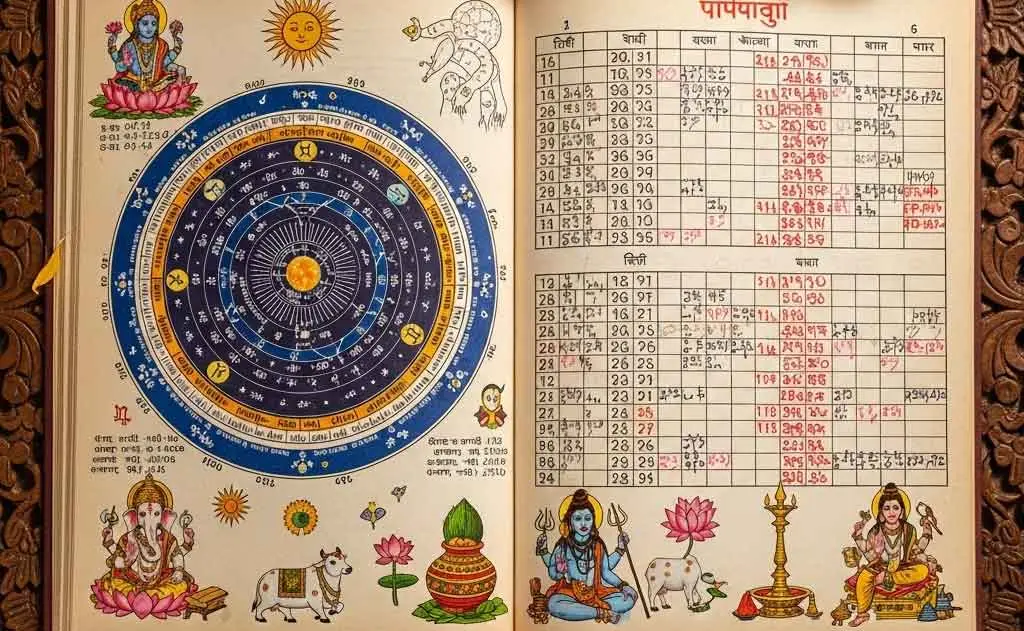
Diwali 2026 falls on Sunday, 8 November, and in West Bengal the night is observed as Kali Puja on Kartik Amavasya. Check a Bengali panjika for the exact tithi and the midnight puja timing in your area.
Why does West Bengal worship Kali instead of Lakshmi on Diwali?
On the new moon night of Kartik, considered the darkest of the month, Bengalis invoke Maa Kali for protection from evil and ignorance. The practice was popularised in the 18th century by Raja Krishnachandra of Navadvipa, though worship of the goddess on this night is older.
How is Kali Puja performed?
The main worship takes place at midnight with Prana Pratishtha, the sixteen-step Shodashopachara, Kali mantra japa and a homa. The night ends with pushpanjali (flower offerings) and aarti with oil lamps.
What is offered to Maa Kali on Kali Puja?
Traditional offerings include red hibiscus flowers, rice, lentils, vegetables and sweets, especially those made with rice flour. In some tantric traditions a symbolic sacrifice is made, increasingly with substitutes such as pumpkin.
What is the story behind Kali's tongue sticking out?
As commonly told, Kali slew the demon Raktabija and then began a fierce dance that threatened creation. Shiva lay in her path, and when she stepped on his chest she bit her tongue in remorse and her fury turned to compassion.
You might also like
Gita Jayanti 2026 Prasad Recipes — Tulsi-Honoring Sweets, Krishna's Favourites & December 20 Bhog Plate
Maha Shivratri 2026 Vrat Recipes — Sabudana Khichdi, Singhada Halwa, Phalahara Foods Complete Fasting Guide
Gayatri Jayanti 2026: Date, Gayatri Mantra, Puja Vidhi & Significance