Why We Exchange Sweets and Gifts During Diwali
The tradition of exchanging sweets and gifts during Diwali is deeply rooted in Hindu mythology and spiritual significance.
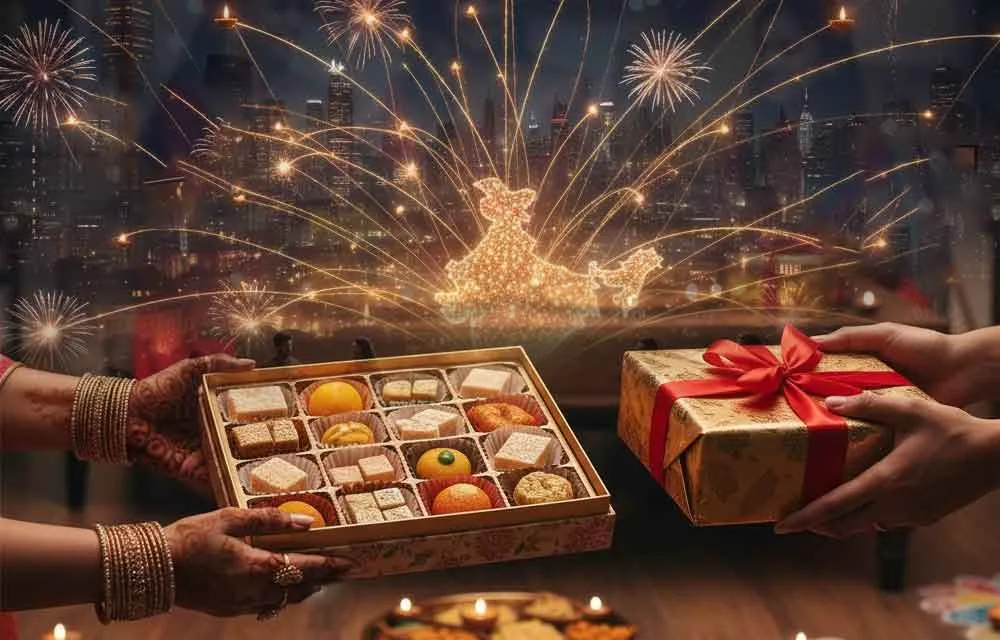
The tradition of exchanging sweets and gifts during Diwali is deeply rooted in Hindu mythology and spiritual significance.
The tradition of exchanging sweets and gifts during Diwali is deeply rooted in Hindu mythology and spiritual significance. This beloved custom connects us to ancient stories of divine blessings, prosperity, and the triumph of good over evil.
The Divine Origins
Goddess Lakshmi's Blessings
The most prominent story behind this tradition centers on Goddess Lakshmi, the deity of wealth, prosperity, and abundance. According to Hindu scriptures, Diwali marks the day when Lakshmi emerged from the cosmic ocean during the great churning (Samudra Manthan). On this auspicious night, she visits every home that is clean, well-lit, and welcomes her with open hearts.
The tradition of sharing sweets represents the sweetness and prosperity that Lakshmi brings into our lives. When we exchange mithai (sweets) with loved ones, we are essentially sharing the blessings of the goddess, spreading her grace from one household to another. It is believed that those who give generously during Diwali invite more abundance into their own lives.
Lord Rama's Victorious Return
Another beautiful narrative comes from the Ramayana. When Lord Rama returned to Ayodhya after 14 years of exile and his victory over the demon king Ravana, the entire kingdom celebrated with great joy. The people of Ayodhya lit thousands of diyas (oil lamps), decorated their homes, and distributed sweets to commemorate this glorious homecoming.
The citizens exchanged gifts and sweets as expressions of their collective happiness and relief. This celebration of good triumphing over evil became the foundation of our Diwali festivities. When we share sweets today, we recreate that ancient joy and remind ourselves that light always conquers darkness.
The Spiritual Significance
Symbol of Sweet Relations
In Hindu philosophy, sharing sweets during Diwali symbolizes the sweetening of relationships and the dissolution of bitterness. Just as sugar removes the bitterness from milk, exchanging sweets is believed to remove any grudges, misunderstandings, or negative feelings between people.
This is why Diwali is considered an ideal time to mend broken relationships, forgive past grievances, and start afresh. The act of offering sweets to someone, even to those we may have had conflicts with, is a gesture of peace and goodwill.
The Principle of Abundance
Hindu scriptures teach us the concept of "Vasudhaiva Kutumbakam" - the world is one family. During Diwali, this principle manifests through the exchange of gifts and sweets. By giving to others, we acknowledge that prosperity is meant to be circulated, not hoarded.
The Bhagavad Gita emphasizes that those who enjoy divine gifts without sharing them with others are indeed thieves. Diwali gift-giving embodies this teaching, reminding us that true wealth lies in generosity and sharing our blessings with our extended family, friends, neighbors, and even strangers.
Traditional Customs
Types of Sweets and Their Meanings
Different sweets carry different spiritual significance:
Ladoos (round sweets) represent completeness and the cyclical nature of life. Their round shape symbolizes the sun and the continuous cycle of seasons.
Barfi and Kaju Katli symbolize prosperity and the fruits of hard work, as they are made with expensive ingredients like silver leaf, nuts, and saffron.
Jalebi, with its intricate circular patterns, represents the complexity of life and the sweetness that can be found even in life's twists and turns.
The Ritual of Exchange
In traditional Hindu households, sweets are first offered to the deities during Diwali puja (worship). This consecration transforms the sweets into prasad (blessed food), which is then distributed among family members and shared with neighbors and friends.
This practice ensures that the first taste of Diwali celebration is blessed by the divine, and every person who receives these sweets partakes in the sacred energy of the festival.
Modern Relevance
Today, while the tradition continues, it has evolved to include a wider variety of gifts - from dry fruits and chocolates to household items and gift vouchers. However, the essence remains the same: expressing love, gratitude, and goodwill toward others.
The exchange of gifts during Diwali also serves as a practical reminder of our social responsibilities. Many families use this occasion to donate to the less fortunate, extending the blessings of Lakshmi to those who need them most.
The Message for Today
The Diwali tradition of exchanging sweets and gifts teaches us profound life lessons:
- Generosity attracts abundance - The more we give, the more blessings flow into our lives
- Relationships need sweetness - Regular gestures of love and appreciation strengthen our bonds
- Joy multiplies when shared - True happiness comes from making others happy
- Community matters - We are all interconnected, and our prosperity is linked to the wellbeing of others
As we celebrate Diwali this year, let us remember that each sweet we share carries with it centuries of devotion, each gift we give echoes the generosity of the gods, and each smile we create reflects the divine light within us all.
May this Diwali bring sweetness to your life and prosperity to your home. May Goddess Lakshmi bless you abundantly, and may Lord Rama's victory inspire you to overcome all obstacles.
Shubh Deepavali!
This article is a devotional exploration of Hindu traditions. May it inspire you to celebrate Diwali with deeper spiritual awareness and joyful generosity.
Related 2026 guides
- Diwali 2026: dates, Lakshmi Puja muhurat & 5-day guide
- Lakshmi Puja muhurat 2026 in 30 Indian cities
- Lakshmi Puja vidhi 2026: step-by-step
- Dhanteras 2026
- Diwali 2026 5-day calendar at a glance
Share the Diwali 2026 blessing
Every box of mithai shared at Diwali carries more than sugar; it carries Maa Lakshmi's grace from one home to another. As we light our lamps, the small flame reminds us of the inner light that melts bitterness and opens the heart to forgiveness. Light over darkness, sweetness over bitterness. This Diwali, let a sweet and a kind word travel together. Share one of these blessings with your family, friends and neighbours along with your mithai.
Deepa shloka: the lamp prayer
शुभं करोति कल्याणम् आरोग्यं धनसम्पदा। शत्रुबुद्धिविनाशाय दीपज्योतिर्नमोऽस्तु ते॥
Shubham karoti kalyanam arogyam dhana-sampada, shatru-buddhi-vinashaya deepa-jyotir namostu te.
Meaning: I bow to the light of the lamp, which brings what is auspicious and good, health and prosperity, and destroys ill-will. Many families recite it as they light the evening diya.
Lakshmi mantra for Diwali
ॐ श्रीं महालक्ष्म्यै नमः॥
Om Shreem Mahalakshmyai Namah.
Meaning: Salutations to Mahalakshmi. Shreem is the seed syllable traditionally associated with Lakshmi.
Diwali 2026 messages to share
🪔 Happy Diwali to our dear family! As we share ladoos and laughter, may every bitterness melt away and our home stay sweet with love all year long. ✨ Share on WhatsApp
🙏 Dear elders, this box of sweets carries our love and gratitude. May this Diwali bless you with good health, peace and the joy of family around you. 🌸 Share on WhatsApp
✨ Happy Diwali, my friend! Sending you sweets and a simple wish: may our friendship stay as warm as a diya and as sweet as kaju katli. 🪔 Share on WhatsApp
🪔 Warm Diwali wishes to you and your team, with a small sweet token of our thanks. May this festival bring good health, goodwill and continued success. 🙏 Share on WhatsApp
🌸 Jai Maa Lakshmi! As we share the prasad of this Diwali, may the Mother's sweetness flow from our home to every home and fill all hearts with generosity. 🪔✨ Share on WhatsApp
🙏 Just as Ayodhya shared sweets to welcome Lord Rama home, may your home be filled with joy, forgiveness and togetherness this Diwali. Jai Shri Ram! 🪔 Share on WhatsApp
A short Diwali prayer
Maa Lakshmi and Lord Ganesha, I offer you these sweets before I share them with anyone else. Bless them, and bless every hand that receives them. Melt the bitterness in my heart and help me forgive. Grant my family good health and harmony, and give me a generous spirit and the will to make right effort. Let me always remember that joy grows when it is shared.
Use the share buttons on this page to send these blessings to your family and friends.
Frequently Asked Questions
When is Diwali in 2026?
Diwali (Lakshmi Puja) falls on Sunday, November 8, 2026, in India and in the USA, Canada, UK, UAE, Singapore and Australia. It is the main day for sharing sweets and gifts with family, friends and neighbours.
Why do Hindus exchange sweets and gifts during Diwali?
As commonly told, sweets represent the sweetness and prosperity Goddess Lakshmi brings, and sharing them spreads her blessings from home to home. The custom also recalls the people of Ayodhya distributing sweets when Lord Rama returned after defeating Ravana.
What do Diwali sweets like ladoos, barfi and jalebi symbolise?
Round ladoos represent completeness and the cycle of life, barfi and kaju katli symbolise prosperity and the fruits of hard work, and jalebi's spirals stand for the sweetness found in life's twists and turns.
Should Diwali sweets be offered to God before sharing?
In traditional households, sweets are first offered to the deities during Diwali puja, which turns them into prasad. The prasad is then shared with family, neighbours and friends so everyone partakes of the festival's blessings.
What gifts can NRI families exchange for Diwali abroad?
Alongside mithai, families today give dry fruits, chocolates, household items and gift vouchers, and many also donate to the less fortunate. The essence is the same anywhere: expressing love, gratitude and goodwill, and mending relationships.
You might also like
Gita Jayanti 2026 Prasad Recipes — Tulsi-Honoring Sweets, Krishna's Favourites & December 20 Bhog Plate
Shani Deva Temples Worldwide & Must-Performed Rituals — Complete Devotee's Guide
Maha Shivratri 2026 Vrat Recipes — Sabudana Khichdi, Singhada Halwa, Phalahara Foods Complete Fasting Guide