
Why 21 Durva Grass Blades Are Offered to Lord Ganesha
Durva grass is Lord Ganesha's favourite offering. This guide explains the Analasura legend as it is commonly told, what the number 21 symbolises, how to offer durva in pairs (durva yugma) during Chaturthi and Sankashti puja, and how families in the USA, UK, Canada and Australia can grow or buy fresh durva.
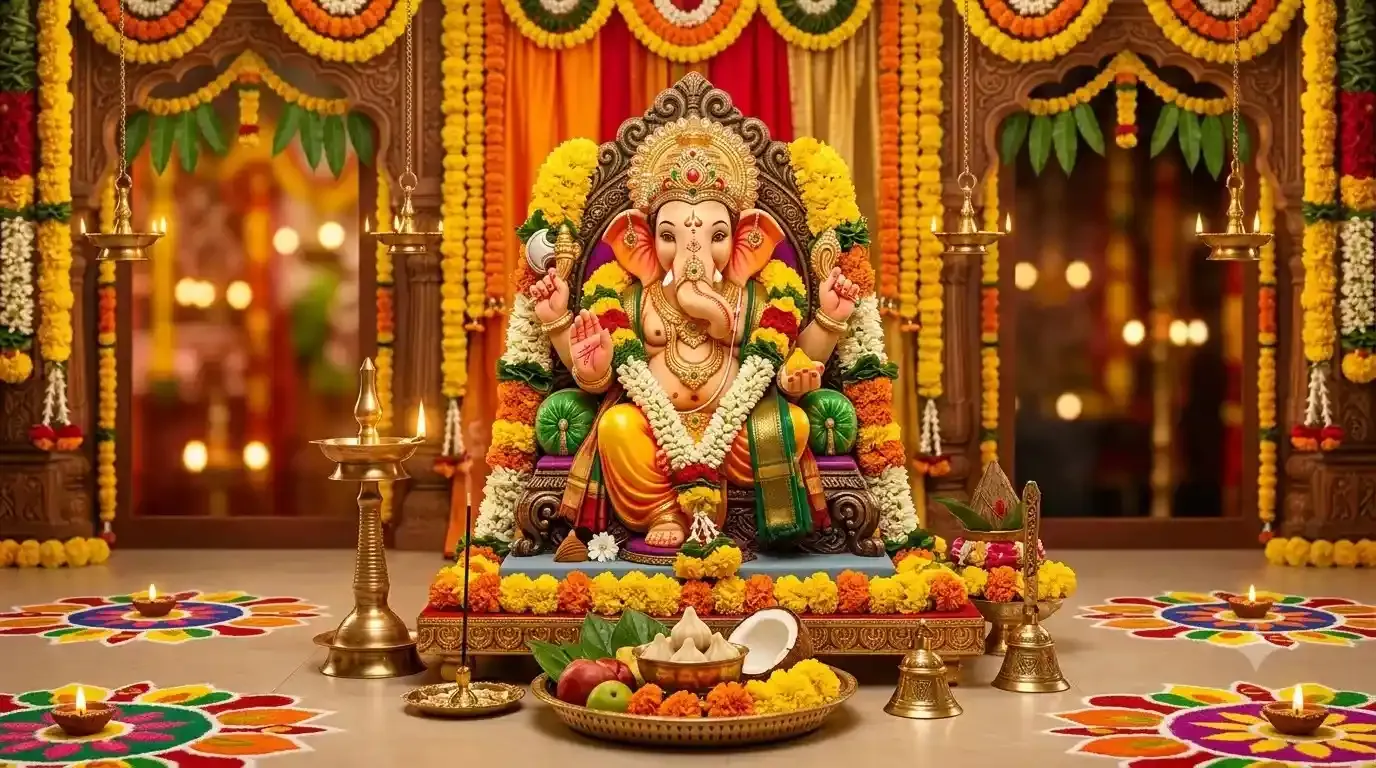
Durva grass is Lord Ganesha's favourite offering. This guide explains the Analasura legend as it is commonly told, what the number 21 symbolises, how to offer durva in pairs (durva yugma) during Chaturthi and Sankashti puja, and how families in the USA, UK, Canada and Australia can grow or buy fresh durva.
Quick answer: Durva grass (dūrvā, called garike in Kannada, garika in Telugu, arugampul in Tamil and doob in Hindi) is offered to Lord Ganesha because, as commonly told, it cooled the burning in his stomach after he swallowed the fire-demon Analasura. Devotees offer 21 sprigs, often as pairs (durva yugma), because 21 is Ganesha's special number in puja. It is offered on Ganesh Chaturthi, on every Sankashti and Vinayaka Chaturthi, and in daily worship. Abroad, durva is the same plant as Bermuda grass, so it is easy to grow in a pot at home.
This guide has been restored at its original hindutone.com address. It explains the story, the symbolism and the practical method, with notes for families outside India. Ganesh Chaturthi 2027 falls on Saturday 4 September 2027 (India date, per Drik Panchang).
What is durva grass?
Durva is a low, creeping perennial grass, Cynodon dactylon in botanical terms. It spreads by runners, survives drought and trampling, and springs back after being cut. Each sprig ends in a tender shoot with usually three or five slender blades, and these tender tips are what devotees pick for puja.
Durva appears in Vedic prayers as a symbol of life that keeps spreading and renewing itself, and it is used in many rituals, from weddings to ancestral rites. But above all it is linked with Ganesha. Hardly any Ganesha puja, at home or in a temple, is done without it.
The Analasura legend, as commonly told
The best-known explanation is a story associated with the Ganesha Purana tradition and retold widely in Maharashtra, Karnataka, Andhra Pradesh and Telangana. Versions differ in detail; this is the outline as it is commonly told.
- A demon named Analasura (anala means fire) terrorised the three worlds. He burned whatever he touched and spat fire from his eyes, and even the gods could not stand before him.
- The gods and sages appealed to Ganesha. He took on a huge form and swallowed Analasura whole, ending the threat.
- The fire demon kept burning inside Ganesha's belly. The gods tried to cool him: some offered water, Chandra offered his cool light, and Shiva is said to have placed a serpent around Ganesha's waist.
- Nothing worked until a group of sages (in many versions led by the sage Kashyapa) offered Ganesha 21 blades of durva grass. The burning subsided at once.
- Pleased, Ganesha declared that anyone who offered him durva with devotion would please him more than with costly offerings.
Some tellings add that this is why Ganesha is pictured with a snake as a belt. Like all Puranic stories, the legend is told for its meaning: Ganesha takes the world's destructive fire into himself, and the simplest, humblest offering is the one that soothes him. For more stories, see our guide to Ganesha stories and Puranic legends.
Why 21? The symbolism of the number
Twenty-one runs through Ganesha worship. On Ganesh Chaturthi devotees offer 21 durva, 21 modakas and 21 kinds of sacred leaves, the Ekavimshati patri described in our Ganesh Chaturthi 21 patri guide. Several explanations are commonly given:
- The whole person: 5 organs of action + 5 senses + 5 pranas (vital breaths) + 5 elements + 1 mind = 21. Offering 21 durva is read as offering one's entire self to Ganesha.
- Completeness: Twenty-one is treated in many Hindu rituals as a full, auspicious count, larger than the everyday 11.
- The legend itself: The sages offered 21 blades to cool Ganesha, so devotees repeat the number.
These are traditional explanations rather than a single fixed doctrine. What matters more than the count is the devotion; a family with only a few sprigs is not doing anything wrong.
How to offer durva to Ganesha
Family traditions and regional puja manuals differ, so follow your elders or priest where they give guidance. A simple, widely followed method:
- Pick fresh, green, tender sprigs, ideally each with three or five blades at the tip. Avoid dry, yellow or torn grass.
- Wash them gently in clean water and pat them dry.
- Sort them into pairs (yugma). Ten pairs plus one single sprig make 21. Some families instead tie 21 sprigs together with a soft thread.
- After the main offerings of the puja (water, sandal paste, kumkum, flowers), offer the durva at Ganesha's feet or on his head. Many devotees place the tender tips facing the deity.
- Chant a name of Ganesha with each pair, or simply 'Om Gam Ganapataye Namah'.
- Offer the final sprig, then continue with incense, lamp, naivedyam (modaka or laddu) and aarti.
Durva yugma puja: ten names
In a widely used Vinayaka Chaturthi puja-vidhi, the ten pairs of durva are offered with the following ten names, each ending in 'namah, durva-yugmam pujayami' (I worship you with a pair of durva). Printed manuals vary slightly, so treat your family's book as the authority.
| Name | Meaning |
|---|---|
| Om Ganadhipaya namah | To the lord of the ganas (Shiva's hosts) |
| Om Umaputraya namah | To the son of Uma (Parvati) |
| Om Aghanashanaya namah | To the destroyer of sin |
| Om Vinayakaya namah | To the supreme leader |
| Om Ishaputraya namah | To the son of Isha (Shiva) |
| Om Sarvasiddhipradaya namah | To the giver of all accomplishments |
| Om Ekadantaya namah | To the one-tusked one |
| Om Ibhavaktraya namah | To the elephant-faced one |
| Om Mushakavahanaya namah | To the one who rides the mouse |
| Om Kumaragurave namah | To the elder of Kumara (Skanda) |
For the complete step-by-step Chaturthi worship, see our Vinayaka vrata vidhanam.
Durva on Sankashti and Vinayaka Chaturthi
Durva is not only for the big festival. Many devotees offer it throughout the year:
- Sankashti Chaturthi: the fourth lunar day after the full moon, every month. Devotees often fast until moonrise, then offer durva, modaka and arghya to the moon. Rules on the fast and moon sighting are explained in our Sankashti Chaturthi moon rules guide.
- Vinayaka Chaturthi: the fourth lunar day after the new moon, every month.
- Wednesdays: the weekday many families associate with Ganesha.
- Daily puja: even a single sprig on the home altar is a complete offering.
Sankashti and Vinayaka Chaturthi dates depend on the lunar calendar and on your location, and moonrise times differ from city to city. Check Drik Panchang for your own city rather than relying on India's dates or times.
A related tradition commonly observed: tulasi is not offered to Ganesha in ordinary worship, while durva is always welcome. Many families make an exception for tulasi on Ganesh Chaturthi itself; follow your own family custom.
Growing or buying durva abroad: tips for NRIs
For families in the USA, UK, Canada, Australia and elsewhere, durva is easier to find than many people expect, because it is the same species as Bermuda grass.
- Grow a pot at home: Bermuda grass seed or sprigs are sold at many garden centres and online in warm regions. Sow in a wide pot with good drainage, keep it in full sun, and water when the top of the soil is dry. Indoors, a sunny south-facing window or a grow light works. Trim the tips regularly for puja and the plant will keep producing.
- Ask friends and family: A small clump of runners from another devotee's pot roots readily in damp soil.
- Indian grocery stores: Some stores stock fresh durva bundles before Ganesh Chaturthi and occasionally year-round. Stock varies, so ask in advance.
- Temples: Many temples keep durva for archanas around Chaturthi; ask your temple office.
- Avoid treated lawns: Lawns, parks and golf courses are often sprayed with herbicides, pesticides or fertilisers. Do not pick grass for puja from places where you do not know what has been applied.
- Keep it contained: Bermuda grass spreads aggressively and can invade flower beds. Growing it in a pot keeps both your garden and your neighbours happy.
- Cold winters: In Canada, the northern USA and the UK, Bermuda grass goes dormant or struggles outdoors in winter. Bring the pot indoors before the first frost.
After puja, used durva and flowers are nirmalya. Abroad, the most respectful place for them is usually a compost bin or garden bed, not the trash, a lake or a beach.
Frequently asked questions
Why is durva grass offered to Lord Ganesha?
As commonly told, Ganesha swallowed the fire-demon Analasura to protect the world, and the burning in his stomach was soothed only when sages offered him blades of durva grass. Since then durva has been considered his most beloved offering. Durva is also valued as a humble, hardy, cooling grass that keeps growing back, which devotees see as a sign of steady devotion and renewal.
Why exactly 21 durva blades?
Twenty-one is Ganesha's special number in puja: 21 durva, 21 modakas and 21 kinds of leaves (Ekavimshati patri) on Ganesh Chaturthi. One commonly given explanation is that 21 stands for the five organs of action, five senses, five pranas, five elements and the mind, all offered to Ganesha. Families who cannot gather 21 still offer what they have with devotion.
What is durva yugma?
Durva yugma means a pair of durva sprigs. In a widely used Chaturthi puja-vidhi, pairs of durva are offered with ten names of Ganesha, and a final single sprig completes the count of 21. Many families simply tie 21 tender sprigs into a small bundle and place it at Ganesha's feet or on his head.
Can I use Bermuda grass from my lawn in the USA?
Durva is the same species botanists call Cynodon dactylon, known in the USA and Australia as Bermuda grass. Only use grass you know has not been treated with weedkillers, fertilisers or pesticides, which are common on lawns. The safest option is to grow a small pot of it yourself.
Is durva offered only on Ganesh Chaturthi?
No. Many devotees offer durva on every Sankashti Chaturthi and Vinayaka Chaturthi, on Wednesdays, and in daily puja. Sankashti dates change every month and differ by location, so check Drik Panchang for your city.
When is Ganesh Chaturthi 2027?
Saturday 4 September 2027, according to Drik Panchang (India date). Your local temple will announce its own puja schedule, so check its official website.
Editor's note
Editor's note (6 October 2026): This guide has been restored at its original address after the earlier version was lost. The Analasura story is presented as commonly told; it appears in several versions and we have avoided details that vary widely. Puja methods and the durva yugma names differ between regional manuals and families, so follow your own tradition or priest. The only date given is Ganesh Chaturthi 2027, Saturday 4 September 2027 (India, per Drik Panchang); for monthly Sankashti dates, check Drik Panchang for your city.
Related guides
You might also like
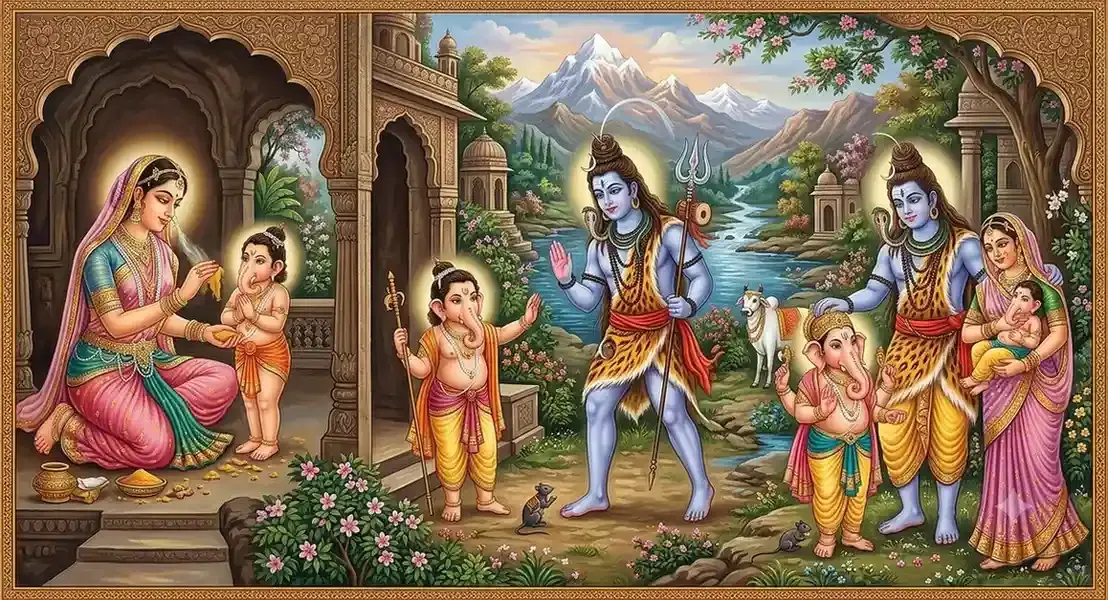
Why Is Ganesha Worshipped First? The Stories, Scriptures and Meaning
Ganesh Mandapam Rules in Canada: Permits, Fire, Noise & Visarjan
Ganesh Visarjan in the USA: Permits, Rules & Eco-Friendly Options