
Ganesh Sthapana 2026: Muhurat, Vidhi & Rules
The 2026 Ganesh Sthapana record (Monday 14 September 2026, Madhyahna muhurat 11:02 AM to 1:31 PM in New Delhi, with a 12-city table) plus a complete planning guide for next year: clay idol, placement, samagri, step-by-step vidhi, naivedyam, daily aarti, visarjan options and tips for families abroad. Ganesh Chaturthi 2027 is Saturday 4 September 2027.
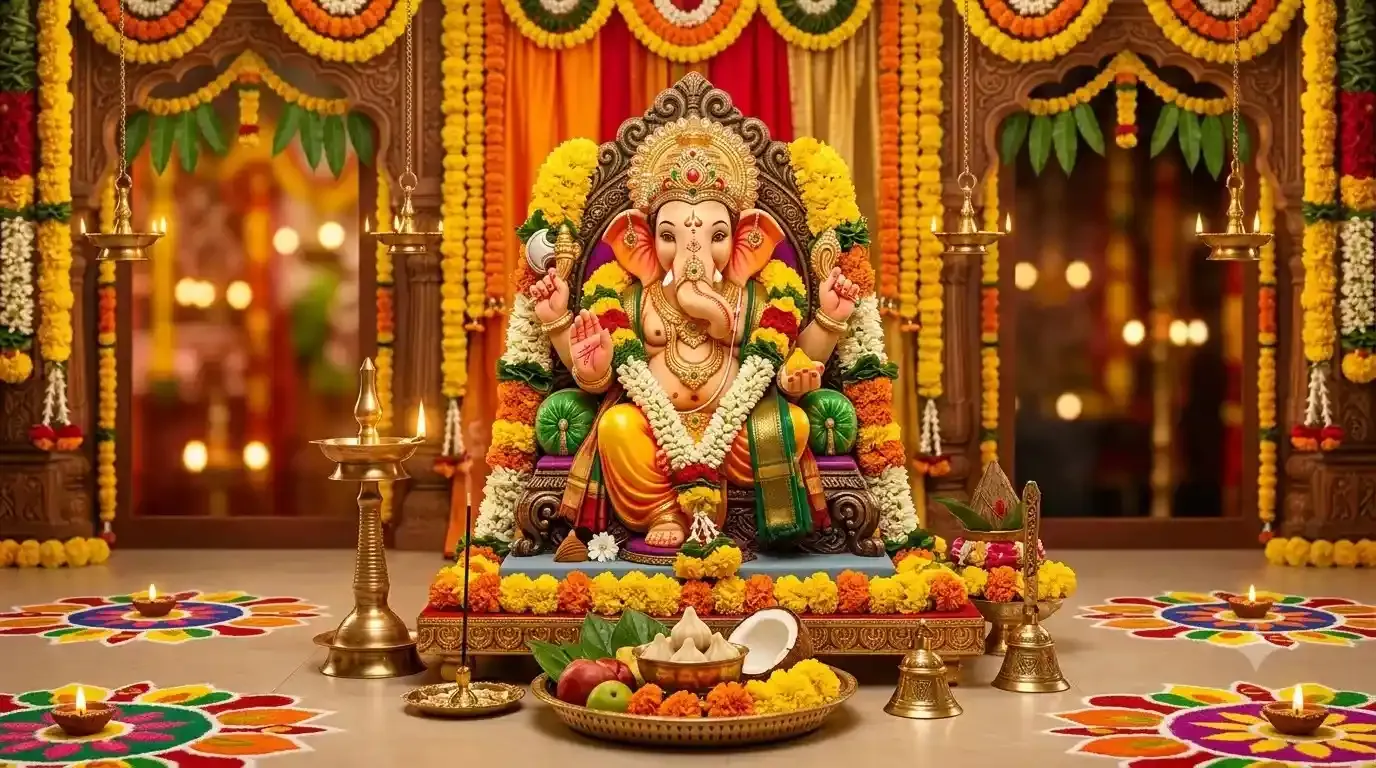
The 2026 Ganesh Sthapana record (Monday 14 September 2026, Madhyahna muhurat 11:02 AM to 1:31 PM in New Delhi, with a 12-city table) plus a complete planning guide for next year: clay idol, placement, samagri, step-by-step vidhi, naivedyam, daily aarti, visarjan options and tips for families abroad. Ganesh Chaturthi 2027 is Saturday 4 September 2027.
Quick answer: Ganesh Chaturthi 2026 was observed on Monday 14 September 2026. According to Drik Panchang, the Madhyahna Ganesha Puja (sthapana) muhurat in New Delhi was 11:02 AM to 1:31 PM, and Anant Chaturdashi visarjan was Friday 25 September 2026. The next Ganesh Chaturthi is Saturday 4 September 2027; muhurat times for 2027 will be published closer to the date.
Ganesh Sthapana is the moment the festival truly begins: the idol is brought home or into the mandapam, placed on its seat, and Ganesha is invited to dwell in it as an honoured guest. The 2026 festival has now passed, so this page does two jobs. It records the 2026 timings and serves as a planning guide for performing sthapana at home next year, in India or abroad.
What "sthapana" means
Sthapana (also spelled sthapna) means "establishing" or "installing". In Ganesh Chaturthi worship it refers to installing the idol in a prepared, sanctified place and performing prana pratishtha, the invocation by which the clay image is treated as the living presence of Ganesha for the days of the festival. Details vary by region, but the shape is the same: purify, resolve, invite, honour, offer, and later bid farewell.
Ganesh Sthapana 2026: the record
| Event | Date and time (Drik Panchang) |
|---|---|
| Ganesh Chaturthi | Monday 14 September 2026 |
| Madhyahna Ganesha Puja (sthapana) muhurat, New Delhi | 11:02 AM to 1:31 PM |
| Chaturthi tithi | 7:06 AM 14 Sep to 7:44 AM 15 Sep 2026 (IST) |
| Time to avoid moon sighting, New Delhi | 9:06 AM to 8:04 PM |
| Visarjan (Anant Chaturdashi) | Friday 25 September 2026 |
Because the Madhyahna window depends on local sunrise and sunset, it shifted from city to city across India. These were the 2026 sthapana windows:
| City | Madhyahna Ganesha Puja muhurat, 14 Sep 2026 |
|---|---|
| Pune | 11:16 AM to 1:44 PM |
| New Delhi | 11:02 AM to 1:31 PM |
| Chennai | 10:51 AM to 1:18 PM |
| Jaipur | 11:08 AM to 1:36 PM |
| Hyderabad | 10:58 AM to 1:25 PM |
| Gurgaon | 11:03 AM to 1:31 PM |
| Chandigarh | 11:04 AM to 1:33 PM |
| Kolkata | 10:18 AM to 12:46 PM |
| Mumbai | 11:20 AM to 1:48 PM |
| Bengaluru | 11:02 AM to 1:28 PM |
| Ahmedabad | 11:21 AM to 1:49 PM |
| Noida | 11:02 AM to 1:30 PM |
For the wider 2026 festival guide, see Vinayaka Chavithi / Ganesh Chaturthi 2026, and for how Mumbai celebrated, our Ganesh Chaturthi 2026 Mumbai page.
Planning for 2027
Ganesh Chaturthi 2027 falls on Saturday 4 September 2027 (Drik Panchang). City-wise muhurat times for 2027 will be published closer to the date; we will add them then rather than estimate. For the full calendar, see Vinayaka Chavithi 2027 dates.
Choosing a clay, eco-friendly idol
The traditional idol is made of natural, unbaked clay. This follows the ideal of the Parthiva (earthen) Ganapati: Ganesha is shaped from earth, worshipped, and returned to earth and water at visarjan. Clay dissolves fully; Plaster of Paris and chemical paints pollute water.
- Choose natural clay (shadu or river clay), unpainted or coloured with natural, non-toxic colours.
- Pick a size you can lift and immerse at home.
- Many families prefer an idol with the trunk curving to Ganesha's left, which is widely considered suitable for home worship; follow family custom if it differs.
Read more in Parthiva Ganapati significance and, for families in America, eco-friendly Ganesh idols in the USA.
Direction and placement
Traditional guidance on placement is general and varies by region and family, so treat the following as common practice rather than strict rules:
- The north-east corner of the home, or the existing pooja room, is often preferred.
- Many families seat the idol so that it faces east or north.
- Place the idol on a raised wooden peetham or chowki covered with a clean red or yellow cloth, never directly on the floor.
- Keep the area clean, away from bathrooms and shoes, with room for lamps to burn safely.
Sthapana samagri (what to keep ready)
| Item | Notes |
|---|---|
| Clay Ganesha idol | Natural clay; cover until puja begins |
| Peetham / chowki and cloth | Clean red or yellow cloth |
| Kalasham | Water, mango leaves, coconut |
| Turmeric, kumkum, sandalwood paste | For tilak, the turmeric Ganapati and offerings |
| Akshata | Unbroken rice mixed with turmeric |
| Durva grass | Essential; 21 blades or 21 bunches are traditional |
| Red flowers and garlands | Hibiscus (japa) is a favourite |
| Patri (leaves) | For the 21-leaf patra puja in South Indian traditions |
| Lamp, ghee or oil, camphor, incense | For deepam, dhupam and aarti |
| Naivedyam | Modak, undrallu, fruits, jaggery, coconut |
| Puja book | Your family's vrata kalpam or puja vidhi |
Step-by-step sthapana vidhi
This is a general outline of the common structure. Your family book, sampradaya or priest may add, omit or reorder steps; follow them for the exact mantras. For the fuller Telugu procedure see Vinayaka vrata vidhanam.
- Preparation: bathe, wear clean clothes, clean the space, draw rangoli, set up the peetham and kalasham.
- Achamana: sip water three times from the right palm with the names Keshava, Narayana, Madhava, the standard opening purification.
- Dhyana: meditate on Ganesha, for example with "Shuklambaradharam Vishnum shashivarnam chaturbhujam, prasanna vadanam dhyayet sarva vighnopashantaye."
- Sankalpa: state who is performing the puja, where, on which day and for what purpose. Abroad, state your city and country.
- Kalasha puja: worship the water in the kalasham and sprinkle it over the puja items to purify them.
- Avahana and prana pratishtha: uncover the idol, and touching it with durva or a flower, invite Ganesha to dwell in the image.
- Shodashopachara: the sixteen offerings of hospitality: dhyana, avahana, asana, padya, arghya, achamaniya, snana, vastra, yajnopavita, gandha, pushpa, dhupa, deepa, naivedya, tamboola, and nirajana with pradakshina and namaskara.
- Durva and patra puja: offer durva, red flowers and, in many South Indian homes, 21 kinds of leaves. See our Ganesh Chaturthi 21 patri guide.
- Katha and aarti: read the vrata katha if it is your custom, then perform aarti and close with a prayer asking forgiveness for any mistakes.
Naivedyam: modak and undrallu
Modak, the sweet dumpling of rice flour filled with coconut and jaggery, is Ganesha's best-known favourite, especially in Maharashtra. In Telugu homes, undrallu (steamed rice balls), kudumulu, vadapappu and panakam are traditional; Tamil homes offer kozhukattai. Recipes adapted for kitchens abroad are in Ganesh Chaturthi naivedyam recipes for NRIs.
Daily puja and aarti
Once Ganesha is installed, he is treated as a guest for every day of his stay. A simple routine is enough: lamp, incense, fresh durva and flowers, naivedyam and aarti, morning and evening. "Sukhakarta Dukhaharta" and "Jai Ganesh Deva" are the most widely sung aartis. Never leave lamps burning unattended.
Visarjan options: 1.5, 3, 5, 7 or 10 days
| Duration | Who commonly chooses it |
|---|---|
| 1.5 days | Day after Chaturthi; common in Maharashtrian homes |
| 3 days | Popular in many households |
| 5 days | Often linked with Gauri-Ganpati customs |
| 7 days | A common family choice |
| 10 days | Until Anant Chaturdashi; typical of public mandapams |
Before visarjan, perform a short puja, aarti and uttarpuja (udvasana), asking Ganesha to return next year. See the Ganesh visarjan mantra guide.
Rules to remember
- Avoid looking at the moon on Chaturthi; in 2026 the avoidance window in New Delhi was 9:06 AM to 8:04 PM.
- Do not offer tulasi to Ganesha on ordinary days; many traditions include it only on Chaturthi.
- Keep the idol covered while bringing it home, and do not move it once prana pratishtha is done until udvasana.
For the moon story and remedy, read Ganesh Chaturthi moon (Chandra darshan) rules.
Tips for NRI families
- Use your own city's Madhyahna. Never convert India's muhurat to your local clock. Madhyahna is the middle portion of your local day, worked out from your local sunrise and sunset, so use a panchang set to your city or ask your local temple priest.
- Remember that the Chaturthi date can shift by a day in some places abroad depending on local tithi timings; follow your local temple's calendar.
- Order a clay idol early, as stores abroad often sell out.
- If the festival falls on a working day, perform a short sthapana within your local Madhyahna and the full katha in the evening.
- Immerse at home in a bucket or tub; once the clay dissolves, the water and soil can go to your garden. Check local rules before using any lake, river or beach.
Frequently asked questions
What was the Ganesh Sthapana muhurat in 2026?
According to Drik Panchang, Ganesh Chaturthi 2026 was on Monday 14 September 2026, and the Madhyahna Ganesha Puja (sthapana) muhurat for New Delhi was 11:02 AM to 1:31 PM. Times differed slightly for other Indian cities; see the city table above.
When is Ganesh Chaturthi 2027?
Ganesh Chaturthi 2027 falls on Saturday 4 September 2027 according to Drik Panchang. City-wise sthapana muhurat times for 2027 will be published closer to the date; we will not guess them in advance.
Why is Ganesh Sthapana done at midday?
Tradition holds that Ganesha was born during the Madhyahna, the midday portion of the day. The Madhyahna on Bhadrapada Shukla Chaturthi is therefore considered the most auspicious window for installing and worshipping the idol. If that is not possible, ask your priest for the next suitable time.
Which direction should the Ganesha idol face?
Traditional guidance commonly prefers placing the idol in the north-east part of the home, or facing east or north, on a clean, raised spot. Customs differ, so follow family practice or your priest.
How many days should Ganesha be kept at home?
Families keep the idol for 1.5, 3, 5, 7 or 10 days, the last ending on Anant Chaturdashi. Follow family custom. In 2026, Anant Chaturdashi fell on Friday 25 September.
We live abroad. Should we use the Indian muhurat time?
No. Do not convert India's muhurat into your local time. Madhyahna is calculated from local sunrise and sunset, so use a panchang set to your own city or ask your local temple priest for the correct window where you live.
Editor's note (5 October 2026)
This page restores a lost hindutone.com guide. The 2026 dates and all muhurat times are from Drik Panchang for the Indian cities named; we have not converted them to any other time zone. The vidhi is a general outline; follow your family puja book or priest for exact mantras. Ganesh Chaturthi 2027 falls on Saturday 4 September 2027; we will add 2027 muhurat times once they are published.
Related guides
You might also like
Ganesh Visarjan in the USA: Permits, Rules & Eco-Friendly Options
Ganesh Visarjan 2026 in North India: Delhi, Lucknow and Beyond, a Complete Guide
Ganesh Chaturthi 2026 in Mumbai: Lalbaugcha Raja, Siddhivinayak, Famous Mandals, Visarjan and Planning for 2027