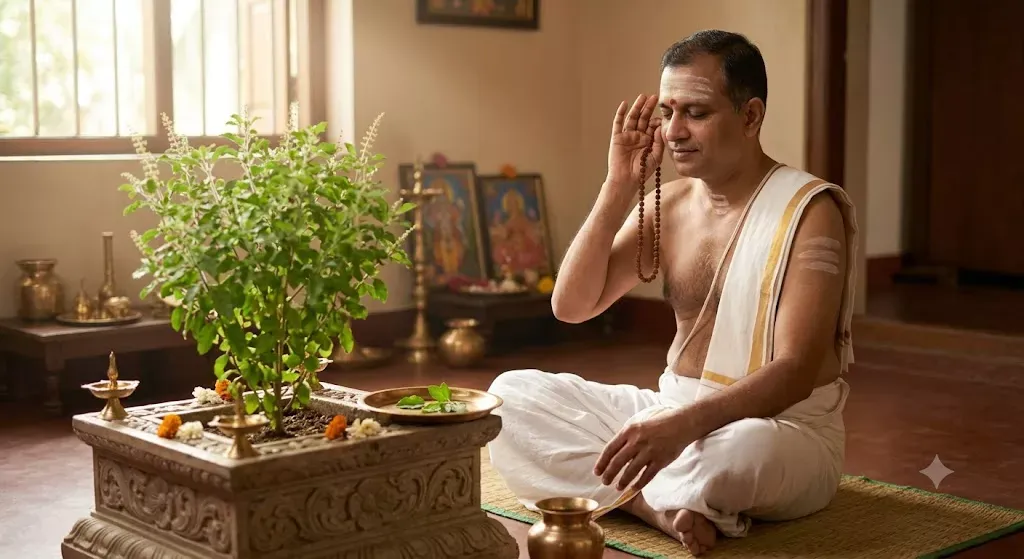
Ganesha Gayatri Mantra: Text, Meaning, Source and How to Chant
The Ganesha Gayatri mantra, 'Om Ekadantaya Vidmahe, Vakratundaya Dhimahi, Tanno Danti Prachodayat', in Devanagari and transliteration with a word-by-word meaning. Learn where it comes from, how and when to chant it, how many times, and how NRI families can fit it into a short daily practice.
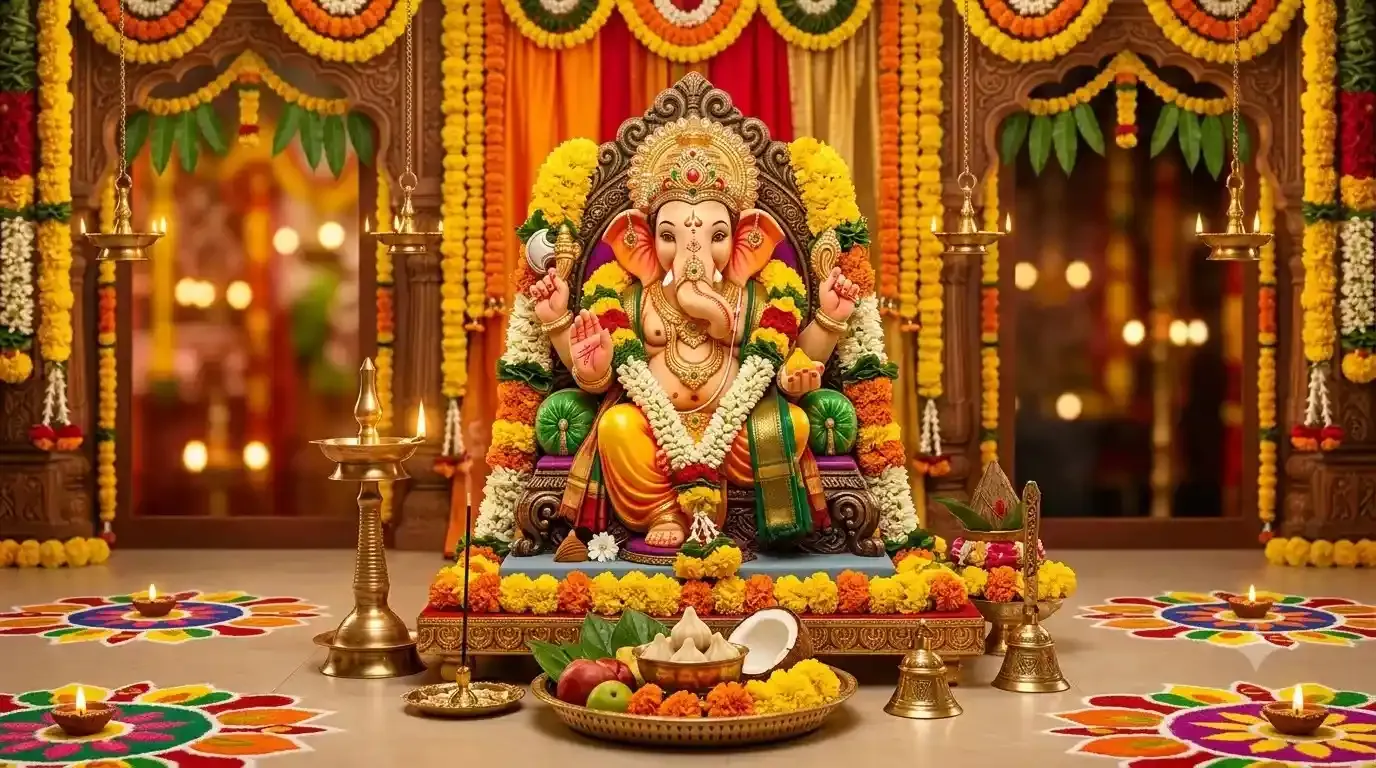
The Ganesha Gayatri mantra, 'Om Ekadantaya Vidmahe, Vakratundaya Dhimahi, Tanno Danti Prachodayat', in Devanagari and transliteration with a word-by-word meaning. Learn where it comes from, how and when to chant it, how many times, and how NRI families can fit it into a short daily practice.
Quick answer: The Ganesha Gayatri mantra is "Om Ekadantaya Vidmahe, Vakratundaya Dhimahi, Tanno Danti Prachodayat". It means: "We come to know the one-tusked Lord; we meditate on the one with the curved trunk; may that tusked one inspire and guide us." This form is found in the Ganapati Atharvashirsha (Ganapati Upanishad). It is usually chanted in the morning or evening, 11, 21 or 108 times, especially on Wednesdays and on Chaturthi days.
This guide has been restored at its original hindutone.com address. Below you will find the full text in Devanagari and transliteration, a word-by-word meaning, its source, and a simple routine that works for busy families in India and abroad.
Ganesha Gayatri mantra: full text
Devanagari
ॐ एकदन्ताय विद्महे वक्रतुण्डाय धीमहि ।
तन्नो दन्ती प्रचोदयात् ॥
Transliteration
Om Ekadantāya Vidmahe, Vakratuṇḍāya Dhīmahi,
Tanno Dantī Prachodayāt.
Simple English pronunciation
Om ay-ka-DUN-taa-ya vid-MAH-hay, vuk-ra-TOON-daa-ya DHEE-ma-hee, TUN-no DUN-tee pra-cho-DAA-yaat.
Meaning
"Om. May we know the One with a single tusk. May we meditate on the One with the curved trunk. May that Tusked One inspire and illumine our understanding."
Word-by-word meaning
| Word | Meaning |
|---|---|
| Om (ॐ) | The sacred syllable, the sound of the Absolute |
| Ekadantāya (एकदन्ताय) | To the one with a single tusk (eka = one, danta = tooth or tusk) |
| Vidmahe (विद्महे) | We know; may we come to know |
| Vakratuṇḍāya (वक्रतुण्डाय) | To the one with the curved trunk (vakra = curved, tuṇḍa = trunk or face) |
| Dhīmahi (धीमहि) | We meditate upon |
| Tat (तत्), joined as Tanno | That (the deity just described) |
| Naḥ (नः) | Us, our |
| Dantī (दन्ती) | The tusked one, Ganesha |
| Prachodayāt (प्रचोदयात्) | May he inspire, impel, illumine |
The mantra follows the classic three-part Gayatri pattern used for many deities: first we seek to know the deity (vidmahe), then we meditate on a second aspect (dhimahi), and finally we pray that the deity awaken our intellect (prachodayat). The original Gayatri addresses Savitr, the sun; deity Gayatris such as this one apply the same structure to Ganesha, Shiva, Vishnu, Devi and others.
Source: where the Ganesha Gayatri comes from
- Ganapati Atharvashirsha: The exact words 'Ekadantaya vidmahe, vakratundaya dhimahi, tanno danti prachodayat' appear in the Ganapati Atharvashirsha, also called the Ganapati Upanishad. This hymn is recited widely, especially in Maharashtra, and is the most common source quoted for the mantra.
- Older Yajurveda parallels, as commonly cited: Gayatri verses ending 'tanno danti prachodayat' are commonly traced to Krishna Yajurveda literature, including the Maitrayani Samhita and the Mahanarayana Upanishad. These older forms address the tusked deity with a different first line, so scholars treat them as earlier relatives of the Atharvashirsha version rather than the identical text.
For everyday devotion the important point is that this is a long-established, widely chanted mantra with roots in Vedic-style literature, not a modern composition.
The symbolism: one tusk and a curved trunk
Each name in the mantra points to a well-known image of Ganesha:
- Ekadanta, the single tusk: Ganesha is shown with one broken tusk. As commonly told, he broke it to use as a pen while writing down the Mahabharata as Vyasa dictated it, and other stories give other reasons. Devotees read it as a sign of sacrifice for knowledge and of holding on to what is good while letting go of the rest.
- Vakratunda, the curved trunk: The trunk is strong enough to uproot a tree and delicate enough to pick up a blade of grass. It is taken as a symbol of an intellect that is both powerful and discerning. Vakratunda is also one of Ganesha's famous forms; the popular verse 'Vakratunda mahakaya' begins with this name.
- Danti, the tusked one: In the final line Ganesha is addressed simply as the tusked one, the protector who removes obstacles from the path.
For why Ganesha's name comes first in almost every Hindu ritual, see our guide on why Ganesha is worshipped first.
How to chant the Ganesha Gayatri
Traditions vary, and if your family follows a teacher, follow that guidance. A simple and widely used method:
- Bathe or at least wash your hands, feet and face. Wear clean clothes.
- Sit facing east or north, in front of a picture or murti of Ganesha if you have one. Light a lamp or incense if your home allows it.
- Offer a flower, a little akshata (rice) or a sprig of durva grass.
- Close your eyes, breathe slowly for a minute and picture Ganesha with his single tusk and curved trunk.
- Chant the mantra clearly, aloud or softly. If using a mala, move one bead per repetition with the thumb and middle finger, and do not cross the larger 'meru' bead; turn the mala around to continue.
- End by sitting quietly for a moment and offering your work of the day to Ganesha.
How many times?
| Practice | Count | Time needed (approx.) |
|---|---|---|
| Quick daily prayer | 3 or 11 | 1 to 2 minutes |
| Regular japa | 21 | About 3 to 5 minutes |
| Full mala | 108 | About 12 to 20 minutes |
Consistency matters more than numbers. Eleven repetitions every day is a better practice than 108 once a month.
When to chant
- Daily: early morning after bathing, or at the evening lamp-lighting time.
- Wednesdays: the weekday many families associate with Ganesha. See our guide on the importance of Wednesday in Hinduism.
- Sankashti and Vinayaka Chaturthi: the monthly fourth lunar days sacred to Ganesha. Dates and moonrise times differ by location, so check Drik Panchang for your city; see also our Sankashti Chaturthi moon rules.
- Ganesh Chaturthi: the annual festival; in 2027 it falls on Saturday 4 September (India date, per Drik Panchang).
- Before beginnings: starting a course, a new job, a journey, a house-warming or any important task.
A 5-minute daily routine for NRI families
Families in the USA, UK, Canada, Australia and the Gulf often tell us that mornings are rushed. A short routine that fits around school runs and commutes:
- Keep a small Ganesha picture or murti on a shelf, with a lamp (or an LED diya where open flames are not allowed in rented homes or dorms).
- Each morning, offer a flower or a sprig of durva and chant the Ganesha Gayatri 11 times together as a family.
- Let children take turns leading. Explain one word of the mantra each week, using the table above.
- On Wednesdays or Chaturthi days, extend to 21 or 108 repetitions, or chant along with a recording.
- If you travel, chant it silently on the train or before a meeting; a mantra needs no special equipment.
Pair it with a Ganesha aarti on weekends; see our Ganesh aarti lyrics and meaning. For the longer worship of the thousand names, see our Ganesha Sahasranama guide.
Frequently asked questions
What is the Ganesha Gayatri mantra?
Om Ekadantaya Vidmahe, Vakratundaya Dhimahi, Tanno Danti Prachodayat. It means: we come to know the one-tusked Lord and meditate on the one with the curved trunk; may that tusked one inspire and guide us.
Where does the Ganesha Gayatri come from?
This exact form appears in the Ganapati Atharvashirsha (Ganapati Upanishad), the best-known Vedic-style hymn to Ganesha. Closely related verses addressed to 'danti', the tusked one, are commonly cited from older Yajurveda literature, including the Maitrayani Samhita and the Mahanarayana Upanishad, though the wording of their first lines differs.
How many times should I chant the Ganesha Gayatri?
There is no single fixed rule. 108 times on a mala is the most common count for japa; 11 or 21 times is a popular shorter practice, and even 3 times with attention is meaningful. Choose a number you can keep up every day.
Can anyone chant the Ganesha Gayatri, including children and women?
In most households today, yes; children, women and men chant it at home. Some orthodox lineages hold that Vedic mantras should be learned from a teacher with proper initiation. If your family follows a particular tradition or guru, follow that guidance.
What is the best time to chant it?
Early morning after bathing is traditional, and evening lamp-lighting time is also common. Many devotees chant it especially on Wednesdays, on Sankashti and Vinayaka Chaturthi, and before starting something new. Sankashti dates vary by location, so check Drik Panchang for your city.
Will chanting the Ganesha Gayatri remove all obstacles or guarantee success?
No mantra comes with a guarantee. Devotees chant it to focus the mind, to seek Ganesha's blessing and to begin work with humility and clarity. It sits alongside effort, good conduct and practical steps, not in place of them.
Editor's note
Editor's note (6 October 2026): This guide has been restored at its original address after the earlier version was lost. The mantra text given here is the standard form found in the Ganapati Atharvashirsha. Older Yajurveda parallels are described as commonly cited, because their wording differs. Chanting methods and counts vary by family and lineage; follow your own teacher where you have one. The mantra is presented as a devotional practice, with no promise of particular results. The only date given is Ganesh Chaturthi 2027, Saturday 4 September 2027 (India, per Drik Panchang).
Related guides
You might also like
Ganesha Sahasranama: The Thousand Names of Ganesha Explained
Nirvana Shatakam (Atma Shatakam): Full Sanskrit Text, Transliteration and Meaning
🌺 What is Shatkukshi? Understanding Its Meaning in the Gayatri Mantra