Navagraha Stotram (Japakusuma Sankasham): Lyrics, Meaning and Benefits
Navagraha Stotram, the hymn that begins 'Japakusuma sankasham', salutes the nine grahas from Surya to Ketu and is traditionally attributed to Sage Vyasa. Here is the full text with a simple English meaning of every verse, a graha-day table, how to chant it daily or for one graha, and a devotional note on career worries linked to Shani and Surya.
Navagraha Stotram, the hymn that begins 'Japakusuma sankasham', salutes the nine grahas from Surya to Ketu and is traditionally attributed to Sage Vyasa. Here is the full text with a simple English meaning of every verse, a graha-day table, how to chant it daily or for one graha, and a devotional note on career worries linked to Shani and Surya.
Quick answer: Navagraha Stotram is a short Sanskrit hymn to the nine grahas that begins "Japakusuma sankasham". It is traditionally attributed to Sage Veda Vyasa. Nine verses salute Surya, Chandra, Mangala, Budha, Guru, Shukra, Shani, Rahu and Ketu in turn, followed by closing verses on its benefits. Devotees chant it every morning, or chant one graha's verse on its own day. It takes about three minutes.
This guide has been restored at its original hindutone.com address. It gives the full text in Devanagari and IAST, a plain-English meaning after each verse, a table of the grahas and their days, and simple guidance on chanting.
Navagraha Stotram: full text with meaning
The text below follows the edition on sanskritdocuments.org. Each verse is given in Devanagari, then in IAST transliteration, then in simple English. The meanings are faithful but not word-for-word.
Verse 1: Surya (the Sun)
जपाकुसुमसंकाशं काश्यपेयं महाद्युतिम् ।
तमोऽरिं सर्वपापघ्नं प्रणतोऽस्मि दिवाकरम् ॥ १॥
japākusumasaṃkāśaṃ kāśyapeyaṃ mahādyutim |
tamo'riṃ sarvapāpaghnaṃ praṇato'smi divākaram || 1||
Meaning: I bow to Divakara, the maker of day, who glows red like the hibiscus flower, the son of Sage Kashyapa, of great brilliance, the enemy of darkness and the destroyer of all sins.
Verse 2: Chandra (the Moon)
दधिशङ्खतुषाराभं क्षीरोदार्णवसंभवम् ।
नमामि शशिनं सोमं शम्भोर्मुकुटभूषणम् ॥ २॥
dadhiśaṅkhatuṣārābhaṃ kṣīrodārṇavasaṃbhavam |
namāmi śaśinaṃ somaṃ śambhormukuṭabhūṣaṇam || 2||
Meaning: I salute Shashi, the Moon, also called Soma, who is white like curd, the conch and snow, who was born from the ocean of milk and who shines as the ornament on Shambhu's (Shiva's) crown.
Verse 3: Mangala (Mars)
धरणीगर्भसंभूतं विद्युत्कान्तिसमप्रभम् ।
कुमारं शक्तिहस्तं तं मङ्गलं प्रणमाम्यहम् ॥ ३॥
dharaṇīgarbhasaṃbhūtaṃ vidyutkāntisamaprabham |
kumāraṃ śaktihastaṃ taṃ maṅgalaṃ praṇamāmyaham || 3||
Meaning: I bow to Mangala, born from the womb of the Earth, shining with the splendour of lightning, the youthful one who holds a spear in his hand.
Verse 4: Budha (Mercury)
प्रियङ्गुकलिकाश्यामं रूपेणाप्रतिमं बुधम् ।
सौम्यं सौम्यगुणोपेतं तं बुधं प्रणमाम्यहम् ॥ ४॥
priyaṅgukalikāśyāmaṃ rūpeṇāpratimaṃ budham |
saumyaṃ saumyaguṇopetaṃ taṃ budhaṃ praṇamāmyaham || 4||
Meaning: I bow to Budha, dark like the bud of the priyangu flower, matchless in form, gentle and endowed with gentle qualities.
Verse 5: Guru or Brihaspati (Jupiter)
देवानां च ऋषीणां च गुरुं काञ्चनसंनिभम् ।
बुद्धिभूतं त्रिलोकेशं तं नमामि बृहस्पतिम् ॥ ५॥
devānāṃ ca ṛṣīṇāṃ ca guruṃ kāñcanasaṃnibham |
buddhibhūtaṃ trilokeśaṃ taṃ namāmi bṛhaspatim || 5||
Meaning: I salute Brihaspati, teacher of the gods and the sages, golden in hue, the very embodiment of wisdom, lord of the three worlds.
Verse 6: Shukra (Venus)
हिमकुन्दमृणालाभं दैत्यानां परमं गुरुम् ।
सर्वशास्त्रप्रवक्तारं भार्गवं प्रणमाम्यहम् ॥ ६॥
himakundamṛṇālābhaṃ daityānāṃ paramaṃ gurum |
sarvaśāstrapravaktāraṃ bhārgavaṃ praṇamāmyaham || 6||
Meaning: I bow to Bhargava (Shukra), white like snow, the jasmine flower and the lotus stalk, the great teacher of the daityas, who expounds all the scriptures.
Verse 7: Shani (Saturn)
नीलांजनसमाभासं रविपुत्रं यमाग्रजम् ।
छायामार्तण्डसंभूतं तं नमामि शनैश्चरम् ॥ ७॥
nīlāṃjanasamābhāsaṃ raviputraṃ yamāgrajam |
chāyāmārtaṇḍasaṃbhūtaṃ taṃ namāmi śanaiścaram || 7||
Meaning: I salute Shanaishchara (Shani), who shines like blue-black kohl, the son of the Sun and the elder brother of Yama, born of Chhaya and Martanda, the Sun.
Verse 8: Rahu
अर्धकायं महावीर्यं चन्द्रादित्यविमर्दनम् ।
सिंहिकागर्भसंभूतं तं राहुं प्रणमाम्यहम् ॥ ८॥
ardhakāyaṃ mahāvīryaṃ candrādityavimardanam |
siṃhikāgarbhasaṃbhūtaṃ taṃ rāhuṃ praṇamāmyaham || 8||
Meaning: I bow to Rahu, who has only half a body, who is of great might, who eclipses the Moon and the Sun, and who was born of Simhika.
Verse 9: Ketu
पलाशपुष्पसंकाशं तारकाग्रहमस्तकम् ।
रौद्रं रौद्रात्मकं घोरं तं केतुं प्रणमाम्यहम् ॥ ९॥
palāśapuṣpasaṃkāśaṃ tārakāgrahamastakam |
raudraṃ raudrātmakaṃ ghoraṃ taṃ ketuṃ praṇamāmyaham || 9||
Meaning: I bow to Ketu, who glows like the palasha flower, the head among stars and planets, fierce, of fierce nature and awe-inspiring.
Verse 10: Phalashruti
इति व्यासमुखोद्गीतं यः पठेत्सुसमाहितः ।
दिवा वा यदि वा रात्रौ विघ्नशान्तिर्भविष्यति ॥ १०॥
iti vyāsamukhodgītaṃ yaḥ paṭhetsusamāhitaḥ |
divā vā yadi vā rātrau vighnaśāntirbhaviṣyati || 10||
Meaning: Whoever recites, with a well-collected mind, this hymn that came from the mouth of Vyasa, whether by day or by night, will find their obstacles pacified.
Closing verses (phalashruti)
नरनारीनृपाणां च भवेद्दुःस्वप्ननाशनम् ।
ऐश्वर्यमतुलं तेषामारोग्यं पुष्टिवर्धनम् ॥
ग्रहनक्षत्रजाः पीडास्तस्कराग्निसमुद्भवाः ।
ताः सर्वाः प्रशमं यान्ति व्यासो ब्रूते न संशयः ॥
॥ इति श्रीव्यासविरचितं नवग्रहस्तोत्रं सम्पूर्णम् ॥
naranārīnṛpāṇāṃ ca bhavedduḥsvapnanāśanam |
aiśvaryamatulaṃ teṣāmārogyaṃ puṣṭivardhanam ||
grahanakṣatrajāḥ pīḍāstaskarāgnisamudbhavāḥ |
tāḥ sarvāḥ praśamaṃ yānti vyāso brūte na saṃśayaḥ ||
|| iti śrīvyāsaviracitaṃ navagrahastotraṃ sampūrṇam ||
Meaning: For men, women and kings alike, it destroys bad dreams. They gain incomparable prosperity, good health and growing strength. Troubles said to arise from the planets and stars, and from thieves and fire, are all calmed. Vyasa says so; there is no doubt. Thus ends the Navagraha Stotram composed by Sri Vyasa.
The phalashruti is the traditional statement of the hymn's merit, in the style of the Puranas. Read it as an expression of faith, not as a promise of particular results.
The nine grahas, their days and traditional associations
| Graha | Day | Colour | Grain (navadhanya) | Deity many families also pray to |
|---|---|---|---|---|
| Surya (Sun) | Sunday | Red | Wheat | Surya himself; Aditya Hridayam |
| Chandra (Moon) | Monday | White | Rice | Shiva, on whose crown the Moon rests |
| Mangala (Mars) | Tuesday | Red | Toor dal | Subrahmanya (Kartikeya); Hanuman |
| Budha (Mercury) | Wednesday | Green | Green gram (moong) | Vishnu |
| Guru (Jupiter) | Thursday | Yellow | Bengal gram (chana) | Dakshinamurthy; one's Guru |
| Shukra (Venus) | Friday | White | Field beans | Lakshmi |
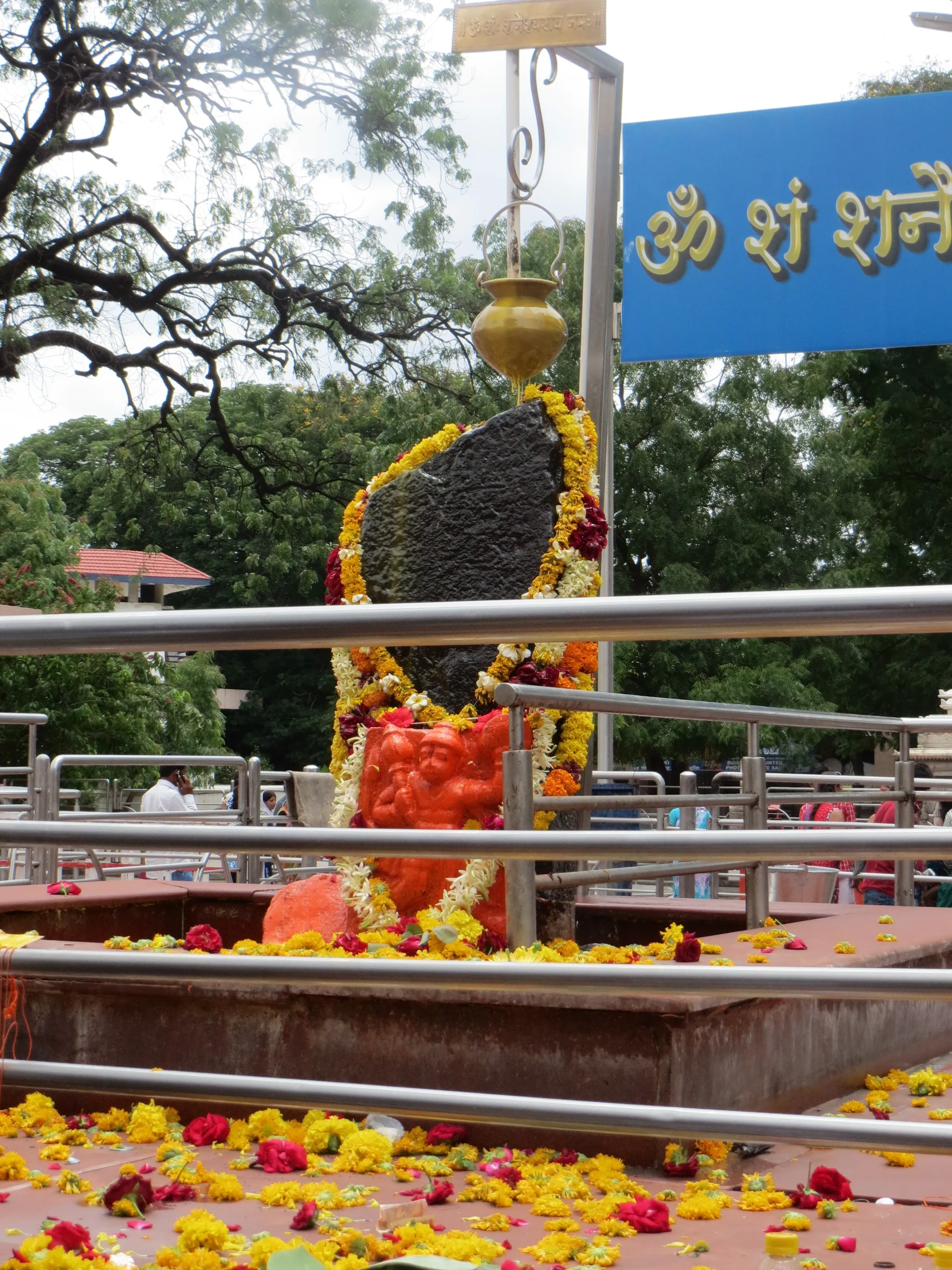
| Shani (Saturn) | Saturday | Black or dark blue | Black sesame | Hanuman; Shani Deva |
| Rahu | No weekday of its own | Smoky or dark | Black gram (urad) | Durga |
| Ketu | No weekday of its own | Mixed colours | Horse gram | Ganesha |
The days, colours and grains are widely shared across Indian traditions. The deity associations are popular devotional customs and vary from region to region and family to family, so follow your own family or temple practice where it differs.
How and when to chant Navagraha Stotram
Daily or graha-specific chanting
- Daily: the whole hymn in the morning after a bath, facing east toward the rising Sun, is the most common practice. Many people chant it right after Surya Namaskar; see our Surya Namaskar mantras guide.
- One graha on its day: chant that graha's verse 9, 11 or 108 times on its weekday, for example Chandra's verse on Monday or Guru's verse on Thursday. Rahu and Ketu are often remembered on Saturdays or during Rahu Kalam.
- At the temple: many South Indian Shiva temples have a Navagraha shrine. Devotees walk around it, usually nine times, quietly reciting the stotram.
- As part of a puja: the hymn is often included in a Navagraha Shanti puja. Our Navagraha Shanti Puja guide explains the rituals.
How many times
Once a day is a good beginning. Some devotees chant it 9 times, once for each graha, or 108 times on special days, counting on a mala; our article on the sacred number 108 explains why that number is special.
A simple way to chant at home
- Bathe or wash your hands and face, and sit facing east, toward the rising Sun, if you can.
- Light a lamp. If you wish, keep a small plate of the nine grains, or offer a flower to a picture of the Navagrahas or to your family deity.
- Make a simple sankalpa in your own words, for example: "I bow to the nine grahas and to the Lord who guides them. May I meet whatever comes with patience, courage and clarity."
- Recite the nine verses and the closing verses slowly.
- End with a few moments of silence and a prayer to your Ishta Devata, your chosen form of God.
Pronunciation tips in plain English
- In the IAST lines, a line over a vowel means it is held longer: 'nam-AA-mi', 'pra-NA-maa-myaham'.
- Letters written with a dot or accent as 's' sound like 'sh', as in Shani, Shashi and Shukra.
- Each verse has two halves. Pause briefly at the vertical line in the middle and chant at an even pace.
- Many verses end with 'pranamamyaham', 'I bow down'. Saying it slowly and meaning it is the heart of the hymn.
Significance and traditional benefits
In Hindu thought the grahas are not simply planets in the sky. They are seen as divine beings who carry out the laws of karma, each with a particular colour, temperament and role. Shani is the strict teacher of patience, Guru the giver of wisdom, Surya the light of the self. The Navagraha Stotram bows to all of them with respect, which is itself a lesson in humility.
Traditionally, devotees believe that chanting the stotram with devotion brings peace of mind, steadiness in testing times and freedom from fear, and that it calms troubles they associate with the grahas. The phalashruti speaks of relief from bad dreams, health and prosperity. These are traditional beliefs. The hymn does not promise any astrological or material outcome, and it is not a substitute for medical, legal or financial advice. Many teachers say the best remedy for a difficult period is the same as always: honest effort, kindness and steady prayer.
Career and job obstacles: a devotional note on Shani and Surya
Many people turn to the Navagraha Stotram when work feels stuck: a job search that drags on, delays in promotion, or friction with a boss. In popular tradition two grahas are most often linked to work. Surya is associated with authority, recognition and confidence. Shani is associated with discipline, hard work, delays that test patience, and the fruits of long effort.
- Sunday morning with Surya: offer water to the rising Sun and chant verse 1, 'Japakusuma sankasham', a few times, praying for clarity and the confidence to do your work well.
- Saturday with Shani: chant verse 7, 'Nilanjana samabhasam', and many families also light a sesame-oil lamp and pray to Hanuman, who in popular tradition is said to protect devotees from Shani's harshness. See our Hanuman mantras for daily chanting.
- Serve, as Shani teaches: Shani is traditionally linked with workers, the elderly and the poor. Helping them, and being fair to those who work for you, is considered the truest Shani worship.
Chant as a way to steady the mind and keep going, not as a promise that a particular job or result will follow. Our guides to mantras for career success and job growth and which god to pray to for job, marriage, health, money and studies offer more gentle, traditional suggestions.
The story and context of the hymn, as commonly told
The stotram is traditionally attributed to Veda Vyasa, the sage who is said to have arranged the Vedas and composed the Mahabharata. Each verse packs in a little of each graha's story. Surya is the son of Sage Kashyapa. Chandra rose from the ocean of milk and rests on Shiva's crown. Mangala is the son of the Earth. Brihaspati is the guru of the gods and Shukra the guru of the asuras. Shani is the son of the Sun and Chhaya, and the brother of Yama.
The verse on Rahu calls him 'half-bodied' and 'born of Simhika'. As the story is commonly told, during the churning of the ocean an asura disguised himself to drink the nectar of immortality. Surya and Chandra noticed and told Vishnu, who cut off his head with the Sudarshana discus. Having tasted the nectar, he did not die: the head became Rahu and the body Ketu, and they are said to chase the Sun and Moon ever since, which is the traditional story behind eclipses.
In South India, the Navagraha shrine in a Shiva temple often places the nine grahas facing different directions, a reminder that they serve under the one Lord. Visiting it with this hymn on your lips is a lovely way to remember that every season of life, easy or hard, passes under God's care.
Also read: Shani Chalisa.
Frequently asked questions
What is the meaning of Navagraha Stotram lyrics?
Navagraha Stotram is a hymn of salutation to the nine grahas. One verse each describes Surya, Chandra, Mangala, Budha, Guru (Brihaspati), Shukra, Shani, Rahu and Ketu by their colour, birth and qualities, and ends with 'I bow to him'. The closing verses say that whoever recites it with a steady mind, by day or night, finds obstacles pacified.
Who wrote Navagraha Stotram?
The hymn is traditionally attributed to Sage Veda Vyasa. The text itself calls itself 'sung from the mouth of Vyasa' and its closing line says it was composed by Sri Vyasa.
What are the benefits of chanting Navagraha Stotram daily?
Devotees believe daily chanting brings peace of mind, steadiness in difficult periods and relief from troubles they associate with the grahas. The phalashruti speaks of freedom from bad dreams, health, prosperity and the calming of afflictions. These are traditional statements of faith, not astrological or material guarantees.
What is the best day and time to chant Navagraha Stotram?
Any day is suitable for the full hymn, and early morning after a bath is traditional. If you wish to honour one graha, you can chant its verse on its own day, for example Surya's verse on Sunday or Shani's verse on Saturday.
Can women and children chant Navagraha Stotram?
Yes. It is a short, simple household stotra that anyone can chant with devotion. Children can learn one verse a week and know the whole hymn in a few months.
How many times should Navagraha Stotram be chanted?
Once a day is the common practice. Some devotees chant it 9 times, once for each graha, or 108 times on special days. Regular, attentive chanting matters more than the count.
Editor's note
Editor's note (7 October 2026): This guide has been restored at its original address after the earlier version was lost. The Sanskrit text in Devanagari and IAST follows the edition on sanskritdocuments.org, and minor variants in wording and recitation exist between editions and family traditions; if your family or temple follows a particular book, follow that book. The English meanings are our own plain translations. The attribution to Vyasa is given as traditionally accepted, the deity associations as popular custom, and the stories as commonly told. The hymn is presented as an act of devotion, with no astrological or material guarantee.
Related guides
You might also like
Annapurna Stotram (Nityanandakari): Lyrics, Meaning and Benefits
Bhairav Chalisa: Lyrics in Hindi with Meaning, Bhairav Aarti and How to Recite
Shani Chalisa Lyrics in Hindi with Meaning and Shani Dev Aarti