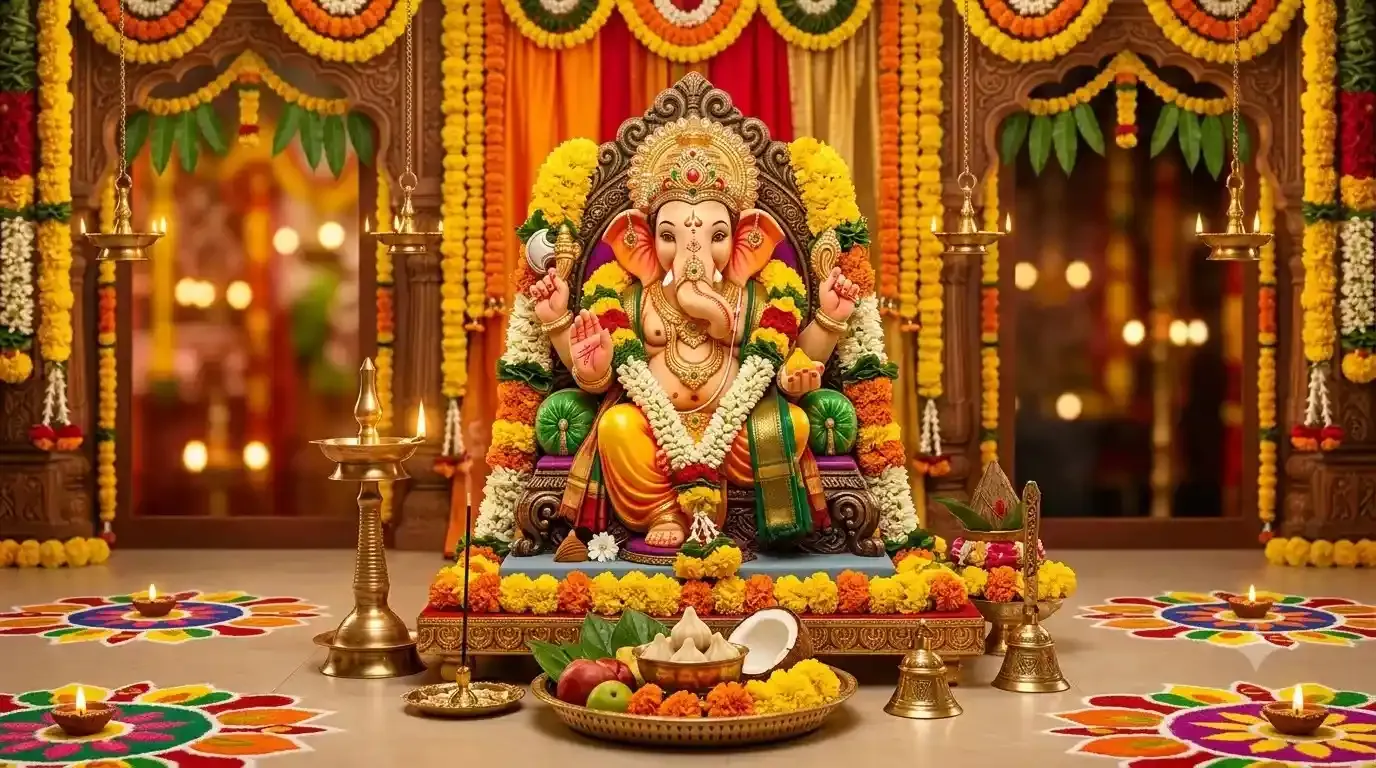
Shani Chalisa Lyrics in Hindi with Meaning and Shani Dev Aarti
The Shani Chalisa is a forty-verse Hindi hymn to Shani Dev, the son of Surya and Chhaya. Here is the complete text with a one-line meaning of every chaupai, the opening and closing dohas, the Shani Dev aarti 'Jai Jai Shri Shanidev', and gentle guidance on reciting it on Saturdays and Shani Jayanti.
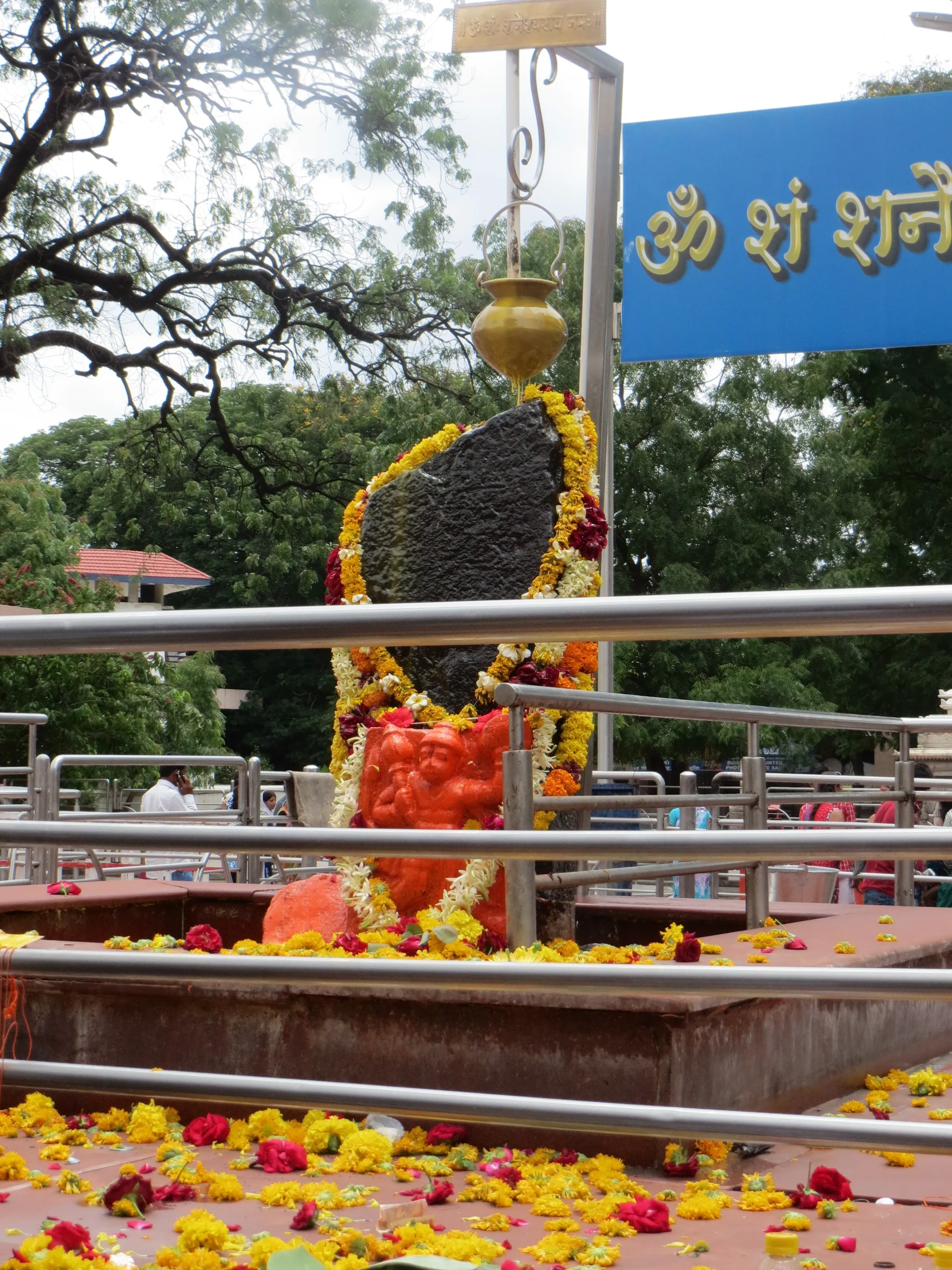
The Shani Chalisa is a forty-verse Hindi hymn to Shani Dev, the son of Surya and Chhaya. Here is the complete text with a one-line meaning of every chaupai, the opening and closing dohas, the Shani Dev aarti 'Jai Jai Shri Shanidev', and gentle guidance on reciting it on Saturdays and Shani Jayanti.
Quick answer: The Shani Chalisa is a forty-verse devotional hymn in simple Hindi to Shani Dev, the son of Surya (the Sun) and Chhaya. It begins with a prayer to Ganesha, "Jai Ganesh Girija Suvan, mangal karan kripal", describes Shani's form and ten names, retells stories of kings and gods who passed through hard times, and ends with the poet's signature, traditionally attributed to Ram Sundar. Devotees recite it on Saturdays, on Shani Jayanti and in periods they associate with Sade Sati, followed by the aarti "Jai Jai Shri Shanidev". It takes about ten minutes.
Shani Chalisa lyrics in Hindi with meaning
The text follows the Hindi edition on sanskritdocuments.org: an opening doha, the chaupais, and a closing doha. Each unit appears in Devanagari, then in transliteration, then with a one-line English meaning that stays close to the Hindi words. Some lines continue into the next, so a few meanings run on across two chaupais.
Opening doha
जय गणेश गिरिजा सुवन मंगल करण कृपाल ।
दीनन के दुख दूर करि कीजै नाथ निहाल ॥
jaya gaṇeśa girijā suvana maṃgala karaṇa kṛpāla |
dīnana ke dukha dūra kari kījai nātha nihāla ||
Meaning: Victory to Ganesha, son of Girija, who brings auspiciousness and is full of compassion. O Lord, remove the sorrows of the humble and fill them with joy.
Chaupais
Chaupai 1
जय जय श्री शनिदेव प्रभु सुनहु विनय महाराज ।
करहु कृपा हे रवि तनय राखहु जनकी लाज ॥
jaya jaya śrī śanideva prabhu sunahu vinaya mahārāja |
karahu kṛpā he ravi tanaya rākhahu janakī lāja ||
Meaning: Victory, victory to Shri Shani Dev, O Lord and great King, hear my humble plea; O son of the Sun, be gracious and protect the honour of your devotee. (This second invocation is a doha-style couplet, printed in the source as the first line of the chaupais.)
Chaupai 2
जयति जयति शनिदेव दयाला । करत सदा भक्तन प्रतिपाला ॥
jayati jayati śanideva dayālā | karata sadā bhaktana pratipālā ||
Meaning: Glory, glory to compassionate Shani Dev, who always protects his devotees.
Chaupai 3
चारि भुजा तनु श्याम विराजै । माथे रतन मुकुट छबि छाजै ॥
cāri bhujā tanu śyāma virājai | māthe ratana mukuṭa chabi chājai ||
Meaning: Your dark form with four arms is radiant, and a jewelled crown shines on your head.
Chaupai 4
परम विशाल मनोहर भाला । टेढ़ी दृष्टि भृकुटि विकराला ॥
parama viśāla manohara bhālā | ṭer̤hī dṛṣṭi bhṛkuṭi vikarālā ||
Meaning: Your forehead is broad and handsome, your gaze is sidelong and your brows are fearsome.
Chaupai 5
कुण्डल श्रवण चमाचम चमके । हिये माल मुक्तन मणि दमकै ॥
kuṇḍala śravaṇa camācama camake | hiye māla muktana maṇi damakai ||
Meaning: Earrings glitter in your ears, and a necklace of pearls and gems gleams on your chest.
Chaupai 6
कर में गदा त्रिशूल कुठारा । पल बिच करैं अरिहिं संहारा ॥
kara meṃ gadā triśūla kuṭhārā | pala bica karaiṃ arihiṃ saṃhārā ||
Meaning: In your hands are the mace, the trident and the axe, with which you destroy foes in a moment.
Chaupai 7
पिंगल कृष्णो छाया नन्दन । यम कोणस्थ रौद्र दुख भंजन ॥
piṃgala kṛṣṇo chāyā nandana | yama koṇastha raudra dukha bhaṃjana ||
Meaning: Pingala, Krishna, son of Chhaya, Yama, Konastha, Raudra, the breaker of sorrow,
Chaupai 8
सौरी मन्द शनी दश नामा । भानु पुत्र पूजहिं सब कामा ॥
saurī manda śanī daśa nāmā | bhānu putra pūjahiṃ saba kāmā ||
Meaning: Sauri, Manda and Shani: these are your ten names, and worshipping the son of the Sun fulfils every task.
Chaupai 9
जापर प्रभु प्रसन्न हवैं जाहीं । रंकहुँ राव करैं क्शण माहीं ॥
jāpara prabhu prasanna havaiṃ jāhīṃ | raṃkahu~ rāva karaiṃ kśaṇa māhīṃ ||
Meaning: When the Lord is pleased with someone, he turns a pauper into a king in a moment.
Chaupai 10
पर्वतहू तृण होइ निहारत । तृणहू को पर्वत करि डारत ॥
parvatahū tṛṇa hoi nihārata | tṛṇahū ko parvata kari ḍārata ||
Meaning: By his glance a mountain becomes a blade of grass, and a blade of grass becomes a mountain.
Chaupai 11
राज मिलत बन रामहिं दीन्हयो । कैकेइहुँ की मति हरि लीन्हयो ॥
rāja milata bana rāmahiṃ dīnhayo | kaikeihu~ kī mati hari līnhayo ||
Meaning: When Rama was about to receive the kingdom, you gave him the forest instead, and you turned Kaikeyi's mind.
Chaupai 12
बनहूँ में मृग कपट दिखाई । मातु जानकी गई चुराई ॥
banahū~ meṃ mṛga kapaṭa dikhāī | mātu jānakī gaī curāī ||
Meaning: In the forest you showed the deceptive golden deer, and Mother Janaki was stolen away.
Chaupai 13
लषणहिं शक्ति विकल करिडारा । मचिगा दल में हाहाकारा ॥
laṣaṇahiṃ śakti vikala kariḍārā | macigā dala meṃ hāhākārā ||
Meaning: You struck Lakshmana down with the Shakti weapon, and an uproar spread through the army.
Chaupai 14
रावण की गति-मति बौराई । रामचन्द्र सों बैर बढ़ाई ॥
rāvaṇa kī gati-mati baurāī | rāmacandra soṃ baira bar̤hāī ||
Meaning: You sent Ravana's course and mind astray, and he deepened his enmity with Ramachandra.
Chaupai 15
दियो कीट करि कंचन लंका । बजि बजरंग बीर की डंका ॥
diyo kīṭa kari kaṃcana laṃkā | baji bajaraṃga bīra kī ḍaṃkā ||
Meaning: You reduced golden Lanka to nothing, and the drum of victory of the hero Bajrangbali sounded.
Chaupai 16
नृप विक्रम पर तुहिं पगु धारा । चित्र मयूर निगलि गै हारा ॥
nṛpa vikrama para tuhiṃ pagu dhārā | citra mayūra nigali gai hārā ||
Meaning: When you set foot upon King Vikram, a painted peacock swallowed a necklace.
Chaupai 17
हार नौंलखा लाग्यो चोरी । हाथ पैर डरवायो तोरी ॥
hāra nauṃlakhā lāgyo corī | hātha paira ḍaravāyo torī ||
Meaning: He was accused of stealing the precious nine-lakh necklace, and his hands and feet were broken.
Chaupai 18
भारी दशा निकृष्ट दिखायो । तेलहिं घर कोल्हू चलवायो ॥
bhārī daśā nikṛṣṭa dikhāyo | telahiṃ ghara kolhū calavāyo ||
Meaning: You showed him a hard and lowly time, making him turn the oil-press in an oil-seller's house.
Chaupai 19
विनय राग दीपक महँ कीन्हयों । तब प्रसन्न प्रभु ह्वै सुख दीन्हयों ॥
vinaya rāga dīpaka maha~ kīnhayoṃ | taba prasanna prabhu hvai sukha dīnhayoṃ ||
Meaning: When he prayed to you through the Deepak raga, you were pleased and gave him happiness again.
Chaupai 20
हरिश्चंद्र नृप नारि बिकानी । आपहुं भरें डोम घर पानी ॥
hariścaṃdra nṛpa nāri bikānī | āpahuṃ bhareṃ ḍoma ghara pānī ||
Meaning: King Harishchandra's wife was sold, and he himself carried water in the house of a Dom (keeper of the cremation ground).
Chaupai 21
तैसे नल पर दशा सिरानी । भूंजी-मीन कूद गई पानी ॥
taise nala para daśā sirānī | bhūṃjī-mīna kūda gaī pānī ||
Meaning: So too the hard time came upon King Nala, when even the roasted fish leapt back into the water.
Chaupai 22
श्री शंकरहिं गह्यो जब जाई । पारवती को सती कराई ॥
śrī śaṃkarahiṃ gahyo jaba jāī | pāravatī ko satī karāī ||
Meaning: When your influence came upon Lord Shankara himself, Parvati was led to the ordeal of Sati, as the Chalisa tells it.
Chaupai 23
तनिक वोलोकत ही करि रीसा । नभ उड़ि गयो गौरिसुत सीसा ॥
tanika volokata hī kari rīsā | nabha ur̤i gayo gaurisuta sīsā ||
Meaning: At the slightest glance from you, made in anger, the head of Gauri's son flew off into the sky.
Chaupai 24
पाण्डव पर भै दशा तुम्हारी । बची द्रौपदी होति उघारी ॥
pāṇḍava para bhai daśā tumhārī | bacī draupadī hoti ughārī ||
Meaning: When your hard period fell upon the Pandavas, Draupadi was barely saved from being disrobed.
Chaupai 25
कौरव के भी गति मति मारयो । युद्ध महाभारत करि डारयो ॥
kaurava ke bhī gati mati mārayo | yuddha mahābhārata kari ḍārayo ||
Meaning: You confounded the course and mind of the Kauravas too, and brought about the Mahabharata war.
Chaupai 26
रवि कहँ मुख महँ धरि तत्काला । लेकर कूदि परयो पाताला ॥
ravi kaha~ mukha maha~ dhari tatkālā | lekara kūdi parayo pātālā ||
Meaning: In your sway, the Sun was at once seized in a mouth and carried leaping down to the netherworld,
Chaupai 27
शेष देव-लखि विनति लाई । रवि को मुख ते दियो छुड़ाई ॥
śeṣa deva-lakhi vinati lāī | ravi ko mukha te diyo chur̤āī ||
Meaning: and when Shesha saw this and pleaded, the Sun was released from the mouth.
Chaupai 28
वाहन प्रभु के सात सुजाना । जग दिग्गज गर्दभ मृग स्वाना ॥
vāhana prabhu ke sāta sujānā | jaga diggaja gardabha mṛga svānā ||
Meaning: The Lord has many wise vehicles: the mighty elephant, the donkey, the deer, the dog,
Chaupai 29
जम्बुक सिंह आदि नख धारी । सो फल ज्योतिष कहत पुकारी ॥
jambuka siṃha ādi nakha dhārī | so phala jyotiṣa kahata pukārī ||
Meaning: the jackal, the lion and other clawed creatures, and astrology declares the fruit of each.
Chaupai 30
गज वाहन लक्श्मी गृह आवैं । हय ते सुख सम्पत्ति उपजावैं ॥
gaja vāhana lakśmī gṛha āvaiṃ | haya te sukha sampatti upajāvaiṃ ||
Meaning: Coming on the elephant, he brings Lakshmi into the home; on the horse, he brings happiness and wealth.
Chaupai 31
गर्दभ हानि करै बहु काजा । सिंह सिद्धकर राज समाजा ॥
gardabha hāni karai bahu kājā | siṃha siddhakara rāja samājā ||
Meaning: On the donkey he spoils many tasks; on the lion he brings success and standing in society.
Chaupai 32
जम्बुक बुद्धि नष्ट कर डारै । मृग दे कष्ट प्राण संहारै ॥
jambuka buddhi naṣṭa kara ḍārai | mṛga de kaṣṭa prāṇa saṃhārai ||
Meaning: On the jackal he unsettles the mind; on the deer he brings hardship that weighs on life itself.
Chaupai 33
जब आवहिं प्रभु स्वान सवारी । चोरी आदि होय डर भारी ॥
jaba āvahiṃ prabhu svāna savārī | corī ādi hoya ḍara bhārī ||
Meaning: When the Lord comes riding the dog, there is great fear of theft and similar troubles.
Chaupai 34
तैसहि चारी चरण यह नामा । स्वर्ण लौह चाँदि अरु तामा ॥
taisahi cārī caraṇa yaha nāmā | svarṇa lauha cā~di aru tāmā ||
Meaning: Likewise there are four 'feet' by name: gold, iron, silver and copper.
Chaupai 35
लौह चरण पर जब प्रभु आवैं । धन जन सम्पत्ति नष्ट करावैं ॥
lauha caraṇa para jaba prabhu āvaiṃ | dhana jana sampatti naṣṭa karāvaiṃ ||
Meaning: When the Lord comes on the iron foot, wealth, people and property are said to be lost.
Chaupai 36
समता ताम्र रजत शुभकारी । स्वर्ण सर्व सुख मंगल भारी ॥
samatā tāmra rajata śubhakārī | svarṇa sarva sukha maṃgala bhārī ||
Meaning: Copper and silver bring balance and auspiciousness, and gold brings every joy and great blessing.
Chaupai 37
जो यह शनि चरित्र नित गावै । कबहुं न दशा निकृष्ट सतावै ॥
jo yaha śani caritra nita gāvai | kabahuṃ na daśā nikṛṣṭa satāvai ||
Meaning: Whoever sings this story of Shani every day is never troubled by a hard period.
Chaupai 38
अद्भूत नाथ दिखावैं लीला । करैं शत्रु के नशिब बलि ढीला ॥
adbhūta nātha dikhāvaiṃ līlā | karaiṃ śatru ke naśiba bali ḍhīlā ||
Meaning: The Lord shows wonderful play, and loosens the fortune and strength of one's enemies.
Chaupai 39
जो पण्डित सुयोग्य बुलवाई । विधिवत शनि ग्रह शांति कराई ॥
jo paṇḍita suyogya bulavāī | vidhivata śani graha śāṃti karāī ||
Meaning: Whoever invites a worthy pandit and has the Shani graha shanti performed according to rule,
Chaupai 40
पीपल जल शनि दिवस चढ़ावत । दीप दान दै बहु सुख पावत ॥
pīpala jala śani divasa car̤hāvata | dīpa dāna dai bahu sukha pāvata ||
Meaning: and on Saturdays offers water to the peepal tree and gives lamps in charity, receives much happiness.
Chaupai 41
कहत राम सुन्दर प्रभु दासा । शनि सुमिरत सुख होत प्रकाशा ॥
kahata rāma sundara prabhu dāsā | śani sumirata sukha hota prakāśā ||
Meaning: Ram Sundar, the Lord's servant, says: remembering Shani, joy dawns like light.
Closing doha
करत पाठ चालीस दिन हो भवसागर पार ॥
karata pāṭha cālīsa dina ho bhavasāgara pāra ||
Meaning: Whoever recites this for forty days crosses the ocean of worldly existence. (Many editions print a first line before this one, inviting devotees to be ready to recite Shani's text; the source gives only this closing line.)
Shani Dev Aarti: Jai Jai Shri Shanidev with meaning
In the source, the Chalisa is followed by the Shani Dev aarti. Its two introductory lines say that it retells, in simple words, the praise King Dasharatha offered to Shani. The refrain is sung again after every stanza while the lamp is waved.
Introduction and refrain
जो स्तुति दशरथ जी कियो सम्मुख शनि निहार ।
सरस सुभाष में वही ललिता लिखें सुधार ।
श्री शनिदेव जी की आरती
जय जय श्री शनिदेव भक्तन हितकारी ।
सूरज के पुत्र प्रभू छाया महतारी ॥ जय॥
jo stuti daśaratha jī kiyo sammukha śani nihāra |
sarasa subhāṣa meṃ vahī lalitā likheṃ sudhāra |
śrī śanideva jī kī āratī
jaya jaya śrī śanideva bhaktana hitakārī |
sūraja ke putra prabhū chāyā mahatārī || jaya||
Meaning: The praise that King Dasharatha offered while facing Shani, Lalita has written anew in sweet and simple words. Here is the aarti of Shri Shani Dev: Victory, victory to Shri Shani Dev, benefactor of devotees; you are the son of the Sun, and Chhaya is your mother. (Refrain.)
Stanza 1
श्याम अंक वक्र दृष्ट चतुर्भुजा धारी ।
नीलाम्बर धार नाथ गज की असवारी ॥ जय॥
śyāma aṃka vakra dṛṣṭa caturbhujā dhārī |
nīlāmbara dhāra nātha gaja kī asavārī || jaya||
Meaning: Dark of body, with a sidelong gaze and four arms, clad in blue, O Lord, you ride upon an elephant.
Stanza 2
किरिट मुकुट शीश रजित दिपत है लिलारी ।
मुक्तन की माला गले शोभित बलिहारी ॥ जय॥
kiriṭa mukuṭa śīśa rajita dipata hai lilārī |
muktana kī mālā gale śobhita balihārī || jaya||
Meaning: A crown shines on your head and your forehead glows; a garland of pearls graces your neck, and we offer ourselves to you.
Stanza 3
मोदक मिष्ठान पान चढ़त हैं सुपारी ।
लोहा तिल तेल उड़द महिषी अति प्यारी ॥ जय॥
modaka miṣṭhāna pāna car̤hata haiṃ supārī |
lohā tila tela ur̤ada mahiṣī ati pyārī || jaya||
Meaning: Modaks, sweets, betel leaf and areca nut are offered to you; iron, sesame, oil, black gram and the buffalo are very dear to you.
Stanza 4
देव दनुज ऋषी मुनी सुमरिन नर नारी ।
विश्वनाथ धरत ध्यान शरण हैं तुम्हारी ॥ जय॥
deva danuja ṛṣī munī sumarina nara nārī |
viśvanātha dharata dhyāna śaraṇa haiṃ tumhārī || jaya||
Meaning: Gods, demons, rishis, sages, men and women all remember you; Vishwanath holds you in meditation, and we take refuge in you.
Understanding the Chalisa: a quick guide
| Verses | Theme |
|---|---|
| Opening doha and chaupai 1 | Prayer to Ganesha, then to Shani Dev, son of the Sun |
| Chaupais 2 to 10 | Shani's form, his ten names, and his power to raise up or humble |
| Chaupais 11 to 27 | Stories of hard times: Rama, Sita, Lakshmana, Ravana, King Vikram, Harishchandra, Nala, the Pandavas |
| Chaupais 28 to 36 | Traditional astrological lore of Shani's vehicles and 'feet' |
| Chaupais 37 to 41 | The fruit of recitation, peepal worship on Saturdays, and the poet's signature |
| Closing doha | Forty days of recitation and crossing the ocean of worldly life |
Reading the stories as a whole, a clear message emerges. Shani's hard periods touched Rama, Harishchandra, Nala and the Pandavas, the most righteous figures of the epics, and each of them came through with their dharma intact. King Vikram's story ends with Shani pleased by his humble prayer. The Chalisa does not say good people escape difficulty; it says that patience, honesty and devotion carry them through it.
The verses on vehicles and 'feet' (chaupais 28 to 36) reflect traditional astrological lore. Read them as part of the hymn's devotional heritage, not as predictions about your own life.
How and when to recite the Shani Chalisa
Best days and occasions
- Saturdays: Shanivar is Shani Dev's day. Many devotees read the Chalisa on Saturday evening, after sunset.
- Shani Jayanti: the appearance day of Shani Dev, observed on the Amavasya of Jyeshtha in the North Indian calendar.
- Shani Amavasya: a new-moon day that falls on a Saturday, considered especially suited to Shani worship.
- Difficult periods: many people read it during periods they associate with Sade Sati or Shani dasha, as a prayer for patience and strength.
How many times
Once every Saturday is a good, steady practice. The closing doha speaks of forty days, so some devotees take a vow to read it daily for forty days. Others read it once daily, along with the Hanuman Chalisa or the Sankat Mochan Hanuman Ashtak, since Hanuman worship on Saturdays is a widely loved tradition linked to Shani.
A simple Saturday setup
- Bathe, wear clean clothes (many choose dark blue or black on Saturdays), and sit before a picture of Shani Dev, or simply facing west.
- Light a lamp with sesame (til) oil. Many devotees offer black sesame, black gram (urad) or a few flowers, as the aarti mentions.
- If there is a peepal tree near you, offering water at its root on Saturday is a traditional practice mentioned in the Chalisa itself.
- Recite the Chalisa slowly, then sing the aarti while waving the lamp.
- Give something in charity if you can: food, oil, a blanket or help to someone in need. Service and honesty are traditionally seen as the truest offerings to Shani.
Significance: Shani Dev and the Chalisa
Shani Dev is one of the Navagrahas, the nine celestial influences of Hindu tradition, and is often called the god of karma and justice. He is not a god of punishment for its own sake: in the tradition, he gives back the fruit of our own actions and teaches discipline, patience and humility. That is why his worship centres on honesty, hard work and service to the poor and the elderly.
Traditionally, devotees believe that reciting the Shani Chalisa with devotion brings patience in hard times, freedom from fear, and the grace of Shani Dev. These are expressions of faith, not astrological promises. No prayer guarantees a particular outcome, and the Chalisa is best offered with humility, alongside right action and sensible practical decisions.
For a wider planetary prayer, see the Navagraha Stotram with meaning and our guide to Navagraha Shanti Puja. If you are unsure which deity to turn to for a particular need, our guide on which god to pray to for job, marriage, health, money and studies offers gentle, traditional suggestions.
Tips for NRI families
- Saturday evening, ten minutes. A sesame-oil lamp and one reading of the Chalisa fits into even a busy weekend abroad.
- Make it about service. Pair the Saturday reading with an act of service, such as volunteering at a food bank or helping an elderly neighbour, which reflects Shani's values.
- Navagraha shrines. Many Hindu temples abroad have a Navagraha shrine where devotees offer sesame oil on Saturdays; check your temple's official website for current timings.
Frequently asked questions
Where can I read Shani Chalisa lyrics in Hindi with meaning?
The complete Shani Chalisa is given above in Hindi (Devanagari) with transliteration, and every doha and chaupai is followed by a plain-English meaning. It begins 'Jai Ganesh Girija Suvan, mangal karan kripal', and the Shani Dev aarti 'Jai Jai Shri Shanidev' follows it.
What are the benefits of Shani Chalisa?
Devotees believe that reciting the Shani Chalisa with humility brings patience, steadiness and the grace of Shani Dev in hard times, and helps them accept life's lessons without bitterness. The Chalisa itself speaks of relief from difficult periods. These are traditional expressions of faith, not astrological guarantees or promises of particular results.
Who wrote Shani Chalisa?
The poet names himself in the last chaupai as Ram Sundar, a servant of the Lord, and the Chalisa is traditionally attributed to him. The aarti that follows says it puts Dasharatha's praise of Shani into simple language, and names Lalita as its writer.
How many times should Shani Chalisa be read?
Once every Saturday is the most common practice. The closing doha speaks of reciting it for forty days, so some devotees take up a forty-day reading, often beginning on a Saturday. Regular, sincere reading matters more than the count.
Can Shani Chalisa be read during Sade Sati?
Yes. Many devotees turn to the Shani Chalisa during periods they associate with Sade Sati or Shani dasha, as a way of praying for patience and strength. It is a prayer, not a remedy with a guaranteed outcome; for personal astrological questions, consult a qualified, trusted astrologer, and keep making sensible practical decisions.
What is the best time to read Shani Chalisa?
Saturday (Shanivar) is Shani Dev's day. Many devotees read the Chalisa on Saturday evening after sunset, after lighting a sesame-oil lamp, while others read it in the morning. Shani Jayanti and Shani Amavasya are also special occasions.
Editor's note
Editor's note (7 October 2026): This guide has been restored at its original address after the earlier version was lost. The Devanagari text and transliteration of the Shani Chalisa and Shani Dev aarti follow the Hindi edition on sanskritdocuments.org. Minor variants in wording, verse order and recitation exist between printed editions and family traditions; if your family or temple follows a particular book, follow that book. The English meanings are our own plain renderings. Authorship is given as traditionally attributed. The hymn is presented as an act of devotion, with no promise of particular results and no astrological guarantee.
Related guides
You might also like
Bhairav Chalisa: Lyrics in Hindi with Meaning, Bhairav Aarti and How to Recite
Ram Chalisa: Lyrics in Hindi with Meaning, Ram Stuti Aarti and How to Recite
Lakshmi Chalisa Lyrics in Hindi with Meaning, and Om Jai Lakshmi Mata Aarti