
Ganesh Chaturthi Conversations with NRI Kids: Answering Their Big Questions
Kids growing up abroad ask wonderful questions about Ganesha. Here are honest, age-appropriate ways to answer them, conversation starters for school and friends, and activities that make Ganesh Chaturthi theirs.
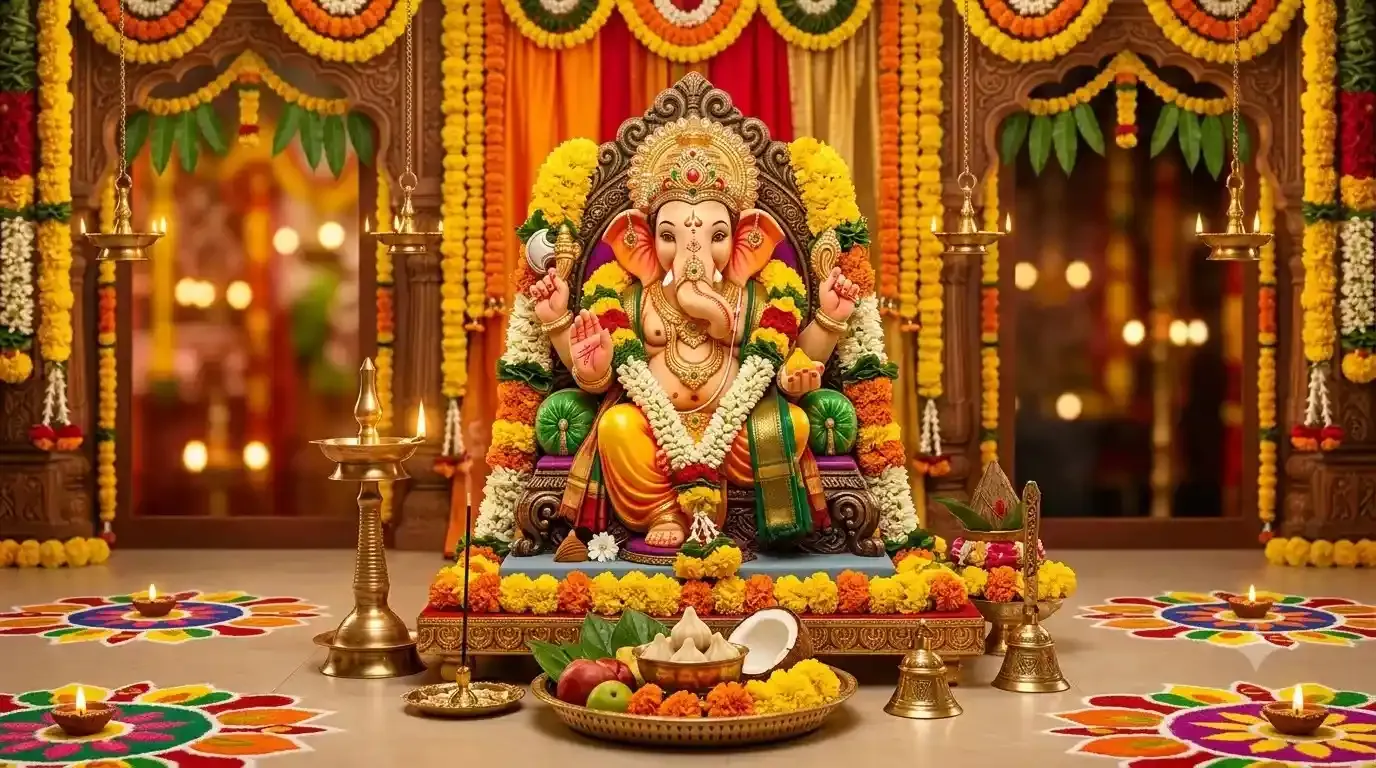
Kids growing up abroad ask wonderful questions about Ganesha. Here are honest, age-appropriate ways to answer them, conversation starters for school and friends, and activities that make Ganesh Chaturthi theirs.
Quick answer: When NRI kids ask about Ganesh Chaturthi, keep answers short, honest and story-led. Ganesha is the god of wisdom and new beginnings; his elephant head stands for a big mind and big ears for listening; his mouse shows that even the smallest friend matters; modaks are his favourite sweet; and visarjan teaches that we can let go of things we love and welcome them back. Invite children to take part, not just watch. The next Ganesh Chaturthi falls on Saturday, 4 September 2027.
Children growing up in the USA, UK, Canada, Australia or Singapore experience Ganesh Chaturthi very differently from their parents. There is no neighbourhood pandal, no school holiday and no streets full of dhol. What they do have is curiosity. A seven-year-old in Seattle might ask why Ganesha has an elephant head, and a teenager in London might ask whether any of it is real. These conversations are a gift. Here are ways to have them well.
Ground rules for festival conversations
- Answer the question that was asked. A four-year-old asking about the mouse does not need a lecture on Puranas.
- Stories first, meanings second. Children remember a story long after they forget an explanation.
- It is fine to say "I don't know, let's find out together." Look it up with them or ask a grandparent on a video call.
- Welcome doubt. Questions are a sign of engagement, not disrespect.
- Let them participate: ringing the bell, arranging flowers, shaping modaks, reading part of the katha.
"Why does Ganesha have an elephant head?"
For young children: Goddess Parvati made a little boy and asked him to guard the door while she bathed. When Lord Shiva came home, the boy did not know him and would not let him in. There was a big fight and the boy lost his head. Parvati was very sad, so Shiva promised to bring him back. He gave the boy the head of an elephant, and the boy came alive again. Shiva made him the leader of all his helpers and said everyone would pray to him first. That boy is Ganesha.
For older children: Talk about what the story might mean. Anger leads to actions we regret; making amends matters; and Ganesha's new form became a symbol of wisdom. The large head suggests big thinking, the big ears suggest listening more, the small eyes suggest focus and the small mouth suggests speaking less. Different scriptures tell versions of the story, and that is part of the richness of Hindu tradition.
"Why does Ganesha ride a mouse?"
A big god on a tiny mouse is funny, and children love that. Explain that the mouse can go anywhere, through the smallest holes, just as wisdom can find a way through any problem. Some teachers also say the mouse represents our restless desires, which Ganesha keeps under control. For little ones, the simplest version works: "Even the smallest friend can carry you far."
"Why does Ganesha have a broken tusk?"
There are many stories. A favourite one is that when the sage Vyasa needed someone to write down the Mahabharata as he recited it, Ganesha agreed, and when his pen broke he snapped off his own tusk to keep writing. Children enjoy this because it makes Ganesha the patron of writers and students. The lesson: finish what you start, even if it costs you something.
"Why do we give him modaks?"
Modak is Ganesha's favourite sweet, so offering it is like baking a cake for someone you love. You can add that the sweet filling hidden inside the plain outer shell is like the goodness inside every person. Then make modaks together. Rice-flour modaks are tricky, so start with simple shapes or use a mould.
"Why can't we look at the moon tonight?"
Children love this story. Ganesha was riding his mouse after a big feast when he fell, and the moon laughed at him. Ganesha said that anyone who looked at the moon on his festival day would get into trouble. The moon apologised, and Ganesha softened the curse so it only applies on this one night. That is why, on Ganesh Chaturthi, we try not to look at the moon. The deeper message: never laugh at someone who stumbles.
"Why do we put Ganesha in water? Isn't that sad?"
This is often the most emotional question. Explain that we invite Ganesha as a guest, take care of him with love, and then say goodbye so he can return to his home, promising to come back next year. The clay goes back to the earth it came from. Letting go is part of life, and the joy of welcoming Ganesha again next year depends on saying goodbye now. If you immerse at home in a bucket, let children pour the water on a plant afterwards. They see that nothing is lost.
"Why don't my friends celebrate this?"
Help children see their culture as something to share, not hide. Many families around the world celebrate different festivals, and each of them is special. Encourage them to bring a friend to the pooja or share modaks at school. Kids often find their friends are fascinated, not judgmental.
"Is Ganesha real?"
Teenagers especially may ask this, often after a conversation at school. Avoid defensiveness. You might say that Hindus understand the divine in many ways, and Ganesha is one form through which people connect with the qualities of wisdom, patience and new beginnings. Share your own experience honestly. Some families also talk about how rituals connect us to our grandparents and to millions of people who have prayed the same prayers for centuries.
Activities by age
| Age | Ideas |
|---|---|
| 3 to 5 | Ring the bell, place flowers, colour a Ganesha picture, learn "Ganpati Bappa Morya" |
| 6 to 9 | Shape a small clay Ganesha, learn "Vakratunda Mahakaya", help make modaks, draw the moon story as a comic |
| 10 to 13 | Read part of the katha aloud, help arrange the 21 leaves, research one Ganesha story and present it to the family |
| Teens | Lead the aarti, plan an eco-friendly celebration, help organise a temple youth programme, interview grandparents about Ganesh Chaturthi in their childhood |
Talking to teachers and classmates
A simple script helps children explain the festival confidently:
"Ganesh Chaturthi is a Hindu festival for Ganesha, the elephant-headed god of wisdom and new beginnings. We bring home a clay statue, pray, eat sweets called modaks, and then put the statue in water to say goodbye until next year."
If your child's school allows cultural sharing, a short presentation with pictures, a story and modaks is usually a big hit. Check food policies first, as many schools have allergy rules.
Making it theirs
- Let kids choose a decoration theme for the mandapam each year.
- Take a family photo with Ganesha every year and make a growing album.
- Ask them to write a short wish or prayer to Ganesha and place it at his feet.
- Celebrate with friends from other backgrounds. Teaching others builds pride.
- Connect with grandparents for the aarti over a video call.
Frequently asked questions
At what age can children start joining the Ganesh pooja?
Even toddlers can join by ringing the bell, placing flowers or folding their hands. By five or six, most children can learn a short shloka like "Vakratunda Mahakaya", and older children can help read the katha or lead the aarti.
How do I explain the elephant head without scaring young children?
Focus on the happy ending: Shiva wanted to make things right, gave Ganesha a new head, and blessed him to be worshipped first by everyone. For older children you can tell the full story and talk about anger, regret and making amends.
My child says Ganesha is "not real". How should I respond?
Stay calm and curious. Ask what they mean and share what Ganesha means to you: a way of remembering wisdom, kindness and courage before starting anything new. Children respect honesty more than pressure.
How can I explain Ganesh Chaturthi to my child's teacher or class?
Keep it short and visual: Ganesh Chaturthi is a Hindu festival celebrating Ganesha, the elephant-headed god of wisdom and new beginnings. Families bring home a clay statue, pray, share sweets called modaks and then return the statue to water. Bringing modaks or a colouring sheet works well.
When is Ganesh Chaturthi in 2027?
Ganesh Chaturthi falls on Saturday, 4 September 2027 (Indian panchang), a weekend, which makes it easier for school-going children to take part fully.
Editor's note (5 October 2026)
This guide restores a lost hindutone.com page, rewritten for parents raising children outside India. The stories are simplified retellings of traditional Ganesha legends; versions differ between Puranas and regions. Ganesh Chaturthi 2026 was Monday, 14 September, and Ganesh Chaturthi 2027 falls on Saturday, 4 September 2027 per the Indian panchang.
Related guides
You might also like
Ganesh Chaturthi Wishes and Quotes: Messages, Shlokas and Captions
Ganesh Chaturthi & Vinayaka Chavithi Wishes for NRIs in the USA
Who Started Public Ganesh Chaturthi? Lokmanya Tilak and the Story of 1893