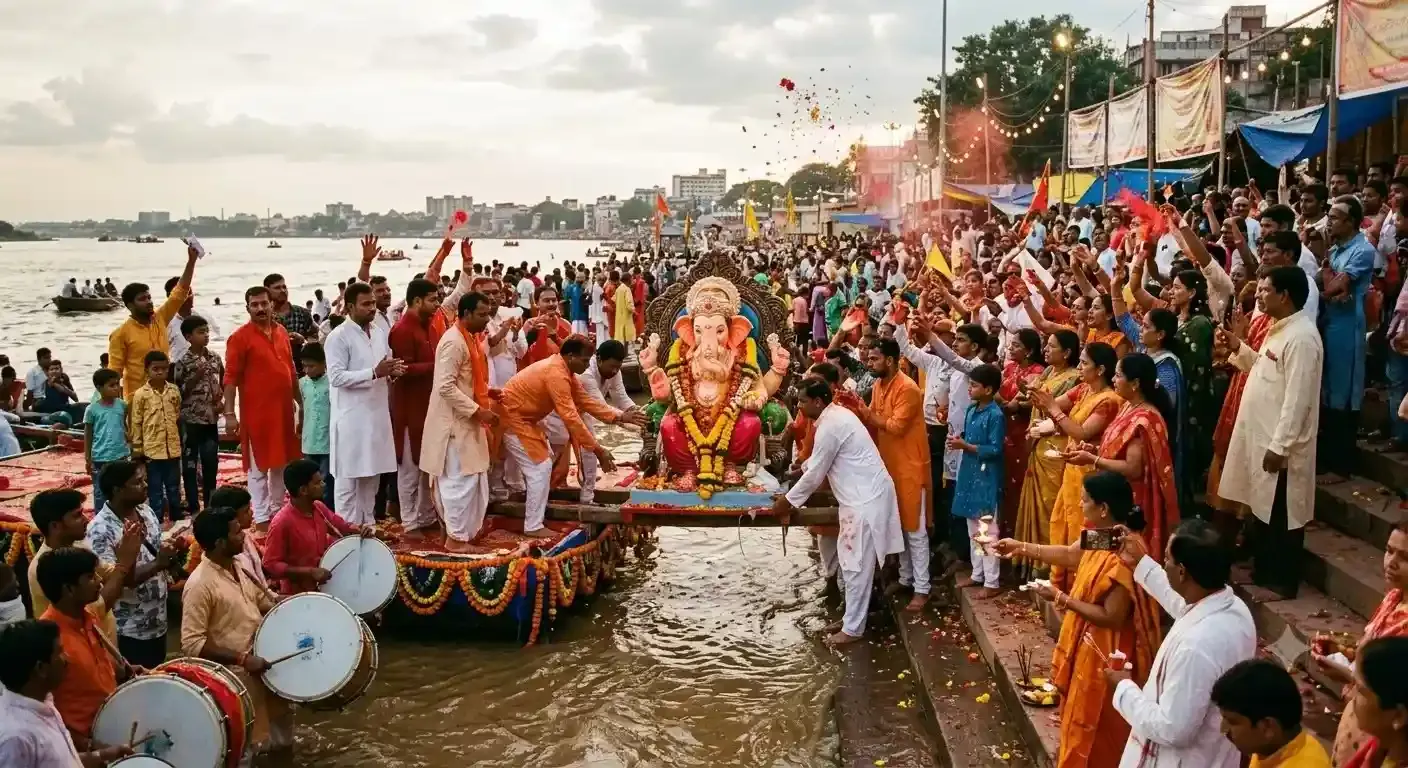
Ganesh Aarti Lyrics and Meaning: Jai Ganesh Deva, Sukhkarta Dukhharta and More
The complete Jai Ganesh Deva aarti in Devanagari, transliteration and English meaning, an introduction to the Marathi Sukhkarta Dukhharta, and a simple step-by-step guide to performing Ganesh aarti at home.
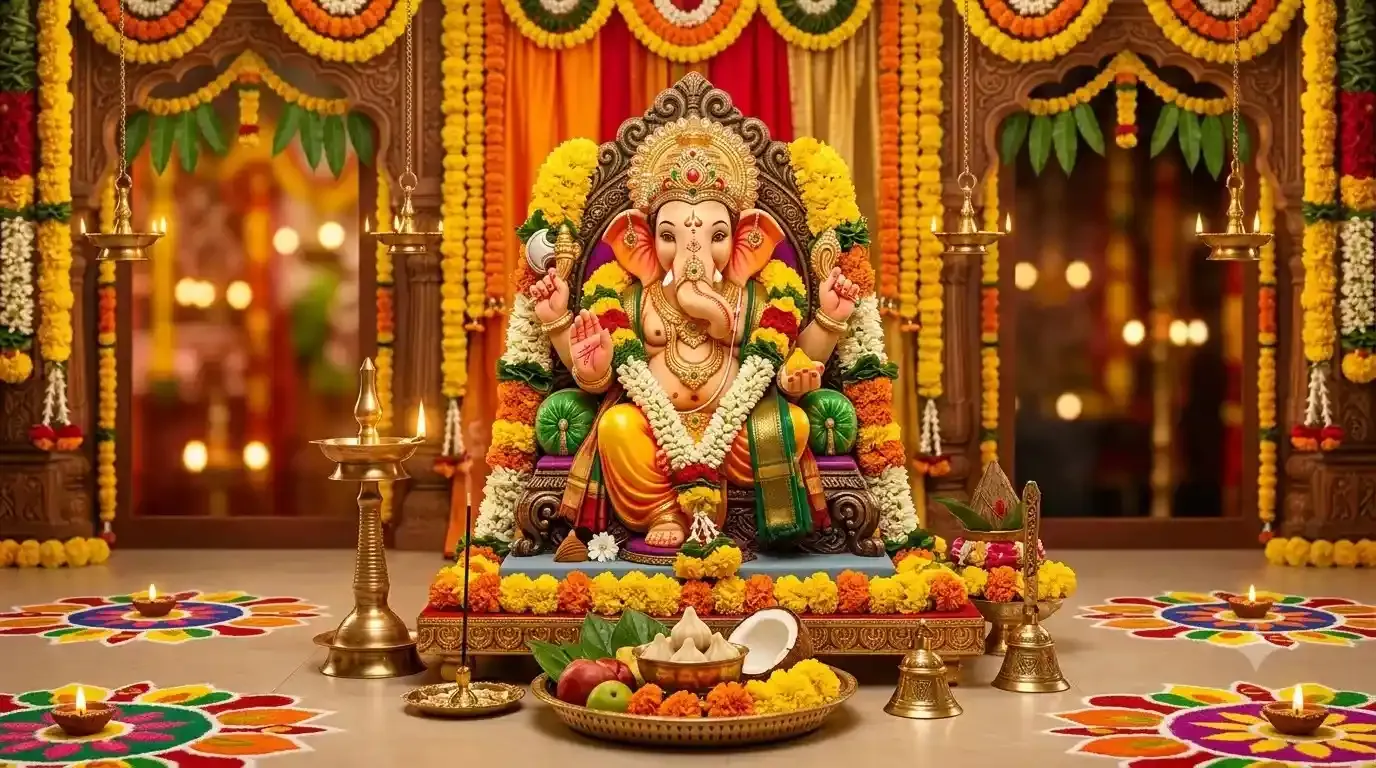
The complete Jai Ganesh Deva aarti in Devanagari, transliteration and English meaning, an introduction to the Marathi Sukhkarta Dukhharta, and a simple step-by-step guide to performing Ganesh aarti at home.
Quick answer: The most widely sung Ganesh aarti is "Jai Ganesh Jai Ganesh Jai Ganesh Deva, Mata jaki Parvati, pita Mahadeva" in Hindi. It praises Ganesha as the son of Parvati and Shiva, the one-tusked, four-armed lord who rides a mouse and blesses the blind, the sick, the childless and the poor. In Marathi homes the favourite is "Sukhkarta Dukhharta", traditionally attributed to Samarth Ramdas. Full lyrics, transliteration and meaning are below.
Aarti is the moment at the end of a pooja when the lamp is waved before the deity and everyone sings together. During Ganesh Chaturthi it happens every morning and evening while Ganpati is at home, and it is often the first prayer children learn by heart. Knowing what the words mean makes the singing far more meaningful, especially for families raising children outside India.
Jai Ganesh Deva aarti: full lyrics in Hindi
This is the version sung in most North Indian homes and temples. Small variations exist between families and recordings.
जय गणेश जय गणेश जय गणेश देवा।
माता जाकी पार्वती पिता महादेवा॥
एक दंत दयावंत चार भुजा धारी।
माथे सिंदूर सोहे मूसे की सवारी॥
पान चढ़े फूल चढ़े और चढ़े मेवा।
लड्डुअन का भोग लगे संत करें सेवा॥
अंधन को आंख देत कोढ़िन को काया।
बांझन को पुत्र देत निर्धन को माया॥
सूर श्याम शरण आए सफल कीजे सेवा।
माता जाकी पार्वती पिता महादेवा॥
Transliteration
Jai Ganesh, Jai Ganesh, Jai Ganesh Deva,
Mata jaki Parvati, pita Mahadeva.
Ek dant dayavant, char bhuja dhari,
Mathe sindoor sohe, moose ki savari.
Paan chadhe, phool chadhe, aur chadhe meva,
Ladduan ka bhog lage, sant karein seva.
Andhan ko aankh det, kodhin ko kaya,
Banjhan ko putra det, nirdhan ko maya.
Soor Shyam sharan aaye, saphal kije seva,
Mata jaki Parvati, pita Mahadeva.
Meaning, verse by verse
| Line | Meaning |
|---|---|
| Jai Ganesh Deva / Mata jaki Parvati, pita Mahadeva | Victory to Lord Ganesha, whose mother is Parvati and whose father is Mahadeva (Shiva). |
| Ek dant dayavant, char bhuja dhari | The one-tusked, compassionate lord who has four arms. |
| Mathe sindoor sohe, moose ki savari | Vermilion shines on his forehead, and he rides a mouse. |
| Paan chadhe, phool chadhe, aur chadhe meva | Betel leaves, flowers and dry fruits are offered to him. |
| Ladduan ka bhog lage, sant karein seva | Laddus are offered as food, and saints serve him. |
| Andhan ko aankh det, kodhin ko kaya | He gives sight to the blind and a healthy body to those afflicted by disease. |
| Banjhan ko putra det, nirdhan ko maya | He blesses the childless with children and the poor with wealth. |
| Soor Shyam sharan aaye, saphal kije seva | Soor Shyam has come to your refuge; make this service fruitful. |
The aarti is simple, but it holds the whole picture of Ganesha: his family (Parvati and Shiva), his form (one tusk, four arms, vermilion, the mouse), the offerings he loves (laddus, modaks, betel, flowers) and his nature as a compassionate giver who turns no one away. The "Ek dant" (single tusk) recalls the legend in which Ganesha broke his tusk, often told in connection with his writing down the Mahabharata as Vyasa dictated it.
Some families sing additional verses, such as "Deenan ki laaj rakho, Shambhu sutkari, kamana ko poorna karo, jaun balihari" (protect the honour of the humble, O son of Shambhu; fulfil our wishes, I offer myself to you). If your family sings extra lines, keep them. There is no single authoritative text.
Sukhkarta Dukhharta: the Marathi Ganesh aarti
In Maharashtra, Goa and among Marathi families worldwide, Ganeshotsav aarti almost always begins with "Sukhkarta Dukhharta". It is traditionally attributed to the 17th-century saint Samarth Ramdas, whose signature "Das Ramacha" (servant of Rama) appears in the final verse. The opening verse and refrain are:
सुखकर्ता दुःखहर्ता वार्ता विघ्नाची।
नुरवी पुरवी प्रेम कृपा जयाची।
सर्वांगी सुंदर उटी शेंदुराची।
कंठी झळके माळ मुक्ताफळांची॥
जय देव जय देव जय मंगलमूर्ती।
दर्शनमात्रे मनकामना पुरती॥
Sukhkarta dukhharta varta vighnachi, nurvi purvi prem krupa jayachi. Sarvangi sundar uti shendurachi, kanthi jhalke mal muktaphalanchi. Jai Dev Jai Dev Jai Mangalmurti, darshanmatre mankamana purti.
Meaning: He who gives happiness and takes away sorrow, who leaves no trace of obstacles and showers love and grace. His whole body is beautifully anointed with vermilion paste, and a necklace of pearls shines at his throat. Victory, victory to the auspicious one; merely seeing you fulfils the wishes of the heart.
For all three verses with a line-by-line explanation, read our dedicated guide to Sukhkarta Dukhharta aarti meaning.
Other Ganesh aartis you may hear
- Shendur Lal Chadhayo: a popular Hindi-Marathi aarti sung in Maharashtra, especially during Ganeshotsav, praising the vermilion-smeared Ganesha.
- Ganesha Pancharatnam: not an aarti but a five-verse hymn attributed to Adi Shankaracharya, beginning "Mudakaratta modakam", often recited before aarti in South Indian homes.
- Om Jai Jagdish Hare: a general aarti to Vishnu that many North Indian families sing at the end of every pooja, including on Ganesh Chaturthi.
In Telugu, Tamil and Kannada homes, the Vinayaka Chavithi pooja is usually closed with mangala harati and the chanting of shlokas rather than a Hindi or Marathi aarti song. Both traditions are equally valid.
How to perform Ganesh aarti at home
- Prepare a plate (thali) with a ghee or oil lamp, camphor if you use it, kumkum, rice grains (akshata), flowers and a small bell.
- Finish the pooja and naivedyam (food offering) first. Aarti is traditionally the closing act of worship.
- Light the lamp. Stand facing the deity, with family gathered around.
- Ring the bell with the left hand and move the lamp in clockwise circles with the right hand while everyone sings.
- After the aarti, offer flowers and akshata, then pass the lamp so each person can take its warmth with their palms and touch their eyes.
- Distribute prasadam: modaks, laddus or whatever was offered.
Living in an apartment abroad? Use a small diya rather than a large camphor flame, keep it away from curtains and smoke detectors, and never leave it unattended. Many families use an electric diya in dorms or offices. Singing together is the heart of the aarti, not the size of the flame.
Tips for teaching the aarti to children
- Start with just the refrain, "Jai Ganesh Deva, Mata jaki Parvati, pita Mahadeva". Children pick up the verses naturally after a few days.
- Explain one line each evening during the festival: who Parvati and Mahadeva are, why Ganesha rides a mouse, why he has one tusk.
- Let children ring the bell or hold the plate with an adult. Participation helps them remember.
- Print the transliteration and keep it next to the altar for guests who do not read Devanagari.
Frequently asked questions
Which is the most popular Ganesh aarti?
In North India and across Hindi-speaking homes, "Jai Ganesh Jai Ganesh Jai Ganesh Deva" is the most widely sung Ganesh aarti. In Maharashtra and among Marathi families, "Sukhkarta Dukhharta", traditionally attributed to Samarth Ramdas, is sung at almost every Ganeshotsav.
Who wrote Jai Ganesh Deva aarti?
The author is not known with certainty. The final verse in many versions carries the signature "Soor Shyam" (Surdas), so it is often associated with Surdas, but the aarti as sung today is a popular devotional composition and the attribution should be treated as traditional rather than proven.
Can I do Ganesh aarti without a ghee lamp?
Yes. If your apartment, dorm or office does not allow open flames, you can sing the aarti with folded hands, ring a bell and offer flowers. Devotion matters more than the lamp. Many families abroad use a small ghee diya under supervision and keep it away from smoke detectors.
How many times should the aarti plate be circled?
A common household practice is to circle the lamp four times at the feet, twice at the navel, once at the face and then seven times around the whole form. Practices vary by family and region, so follow your family custom if you have one.
When should Ganesh aarti be done during Ganesh Chaturthi?
Families usually perform aarti in the morning after the pooja and again in the evening, every day the idol is at home, and a final aarti before visarjan. Ganesh Chaturthi 2027 falls on Saturday, 4 September 2027.
Editor's note (5 October 2026)
This guide restores a page that was lost from hindutone.com and has been rewritten. Aarti texts are given in their widely sung forms; minor differences in wording exist between families, regions and printed collections. The authorship of Jai Ganesh Deva is traditional and not historically established. Ganesh Chaturthi 2027 falls on Saturday, 4 September 2027 per the Indian panchang.
Related guides
You might also like
Sukhkarta Dukhharta Ganesh Aarti: Lyrics and Meaning, Verse by Verse
Jai Ganesh Deva Aarti: Lyrics in Hindi and English, Meaning and How to Sing It
Top Bollywood Songs for Ganesh Mandapams and Ganpati Processions