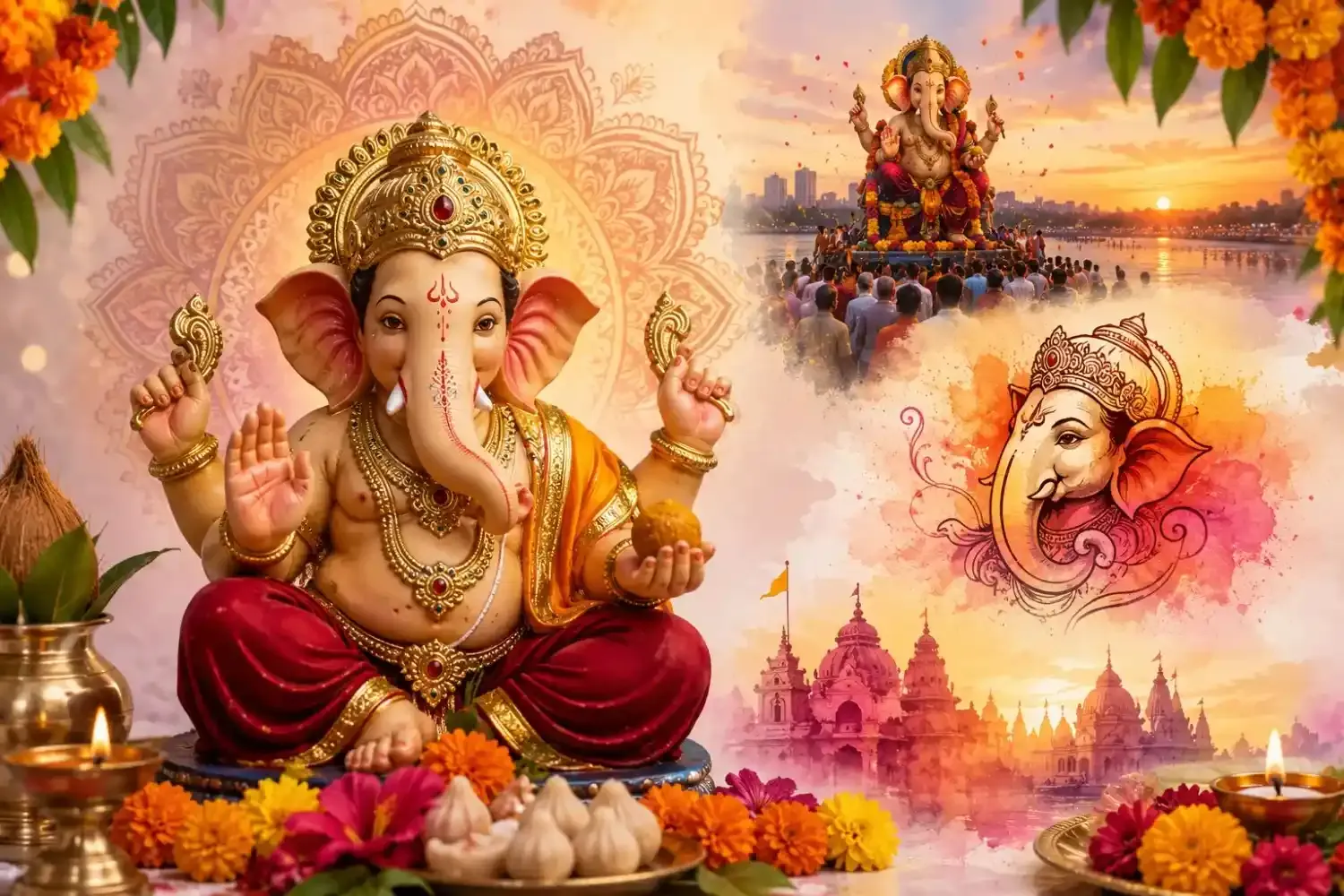
Top Bollywood Songs for Ganesh Mandapams and Ganpati Processions
The Bollywood Ganesha songs that fill mandapams and visarjan processions every year, why they work, how to build a playlist that respects the pooja, and what NRI organisers abroad should know about volume and music licensing.
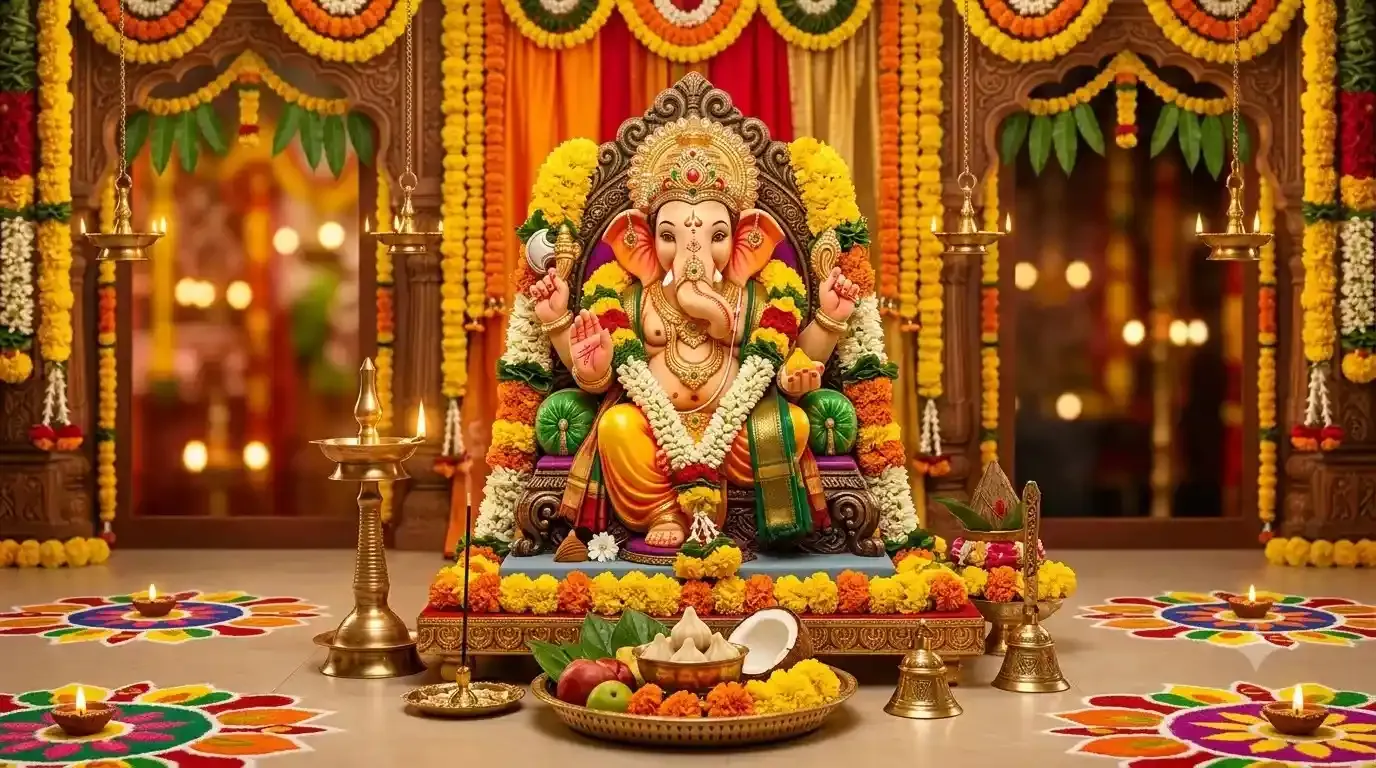
The Bollywood Ganesha songs that fill mandapams and visarjan processions every year, why they work, how to build a playlist that respects the pooja, and what NRI organisers abroad should know about volume and music licensing.
Quick answer: The Bollywood songs you will hear in almost every Ganesh mandapam are "Deva Shree Ganesha" (Agneepath, 2012), "Morya Re" (Don, 2006), "Gajanana" (Bajirao Mastani, 2015), "Bappa" (Banjo, 2016), the "Shendur Lal Chadhayo" aarti sequence from Vaastav (1999) and the classic "Deva Ho Deva Ganpati Deva" (Hum Se Badhkar Kaun, 1981). Use them for festive hours and processions, and keep traditional aartis for pooja time.
Ganeshotsav has always been a festival of sound: dhol-tasha, bells, chants and, since the age of loudspeakers, film music. From Mumbai's pandals to community halls in New Jersey, Leicester and Singapore, certain songs have become part of the celebration itself. This guide lists the songs that have stood the test of time, explains what makes each one work, and offers practical playlist advice for mandapam organisers, especially NRI committees abroad.
The essential Bollywood Ganpati songs
| Song | Film (year) | Best for |
|---|---|---|
| Deva Shree Ganesha | Agneepath (2012) | Arrival of the idol, processions, evening crowds |
| Morya Re | Don (2006) | Processions, visarjan |
| Gajanana | Bajirao Mastani (2015) | Grand entry, dance performances |
| Bappa | Banjo (2016) | Dhol-heavy processions |
| Sadda Dil Vi Tu (Ga Ga Ga Ganpati) | ABCD: Any Body Can Dance (2013) | Youth dance programmes |
| Shendur Lal Chadhayo (aarti sequence) | Vaastav (1999) | Devotional evening set |
| Deva Ho Deva Ganpati Deva | Hum Se Badhkar Kaun (1981) | Nostalgic evening set, elders' favourite |
Deva Shree Ganesha (Agneepath, 2012)
Composed by the duo Ajay-Atul and sung by Ajay Gogavale, "Deva Shree Ganesha" opens slowly with a prayer and builds into a thundering, dhol-driven celebration. That slow-to-explosive structure makes it perfect for the moment the idol is unveiled or carried in. Its lyrics are genuinely devotional, praising Ganesha as the remover of obstacles, so it sits comfortably even in more traditional mandapams.
Morya Re (Don, 2006)
Sung by Shankar Mahadevan, with music by Shankar-Ehsaan-Loy, "Morya Re" was picturised on Shah Rukh Khan dancing in a visarjan procession, and it has been a procession anthem ever since. The refrain "Ganpati Bappa Morya" invites everyone to shout along, which is exactly what a crowd on the move needs.
Gajanana (Bajirao Mastani, 2015)
Sung by Sukhwinder Singh, with music by Sanjay Leela Bhansali, "Gajanana" recreates a grand Peshwa-era Ganeshotsav, a fitting echo of the Peshwas' historic devotion to Ganesha in Pune. Its rich orchestration and chanting make it a favourite for stage performances and grand openings.
Bappa (Banjo, 2016)
"Bappa", composed by Vishal-Shekhar for the Riteish Deshmukh film Banjo, celebrates the street bands that play at Mumbai's Ganeshotsav. It is built for live energy and pairs well with a dhol-tasha group.
Sadda Dil Vi Tu (ABCD, 2013)
From the dance film ABCD: Any Body Can Dance, composed by Sachin-Jigar, this upbeat track with its "Ga Ga Ga Ganpati" hook is popular with teenagers and dance groups. It works best in a cultural programme slot rather than near pooja time.
Shendur Lal Chadhayo (Vaastav, 1999)
Vaastav, starring Sanjay Dutt, features a Ganpati celebration set to the traditional aarti "Shendur Lal Chadhayo". Because it is essentially a real aarti, many mandapams play it in the evening devotional set. If your committee prefers, have devotees sing the aarti live instead.
Deva Ho Deva Ganpati Deva (Hum Se Badhkar Kaun, 1981)
A classic from the early 1980s, this song still draws elders to the front of the mandapam. Its gentle, celebratory mood bridges generations, and it is a lovely choice for a "golden oldies" hour.
How to build a respectful mandapam playlist
A good mandapam playlist follows the rhythm of the day. Film songs bring energy, but the mandapam is first a place of worship.
| Time of day | What to play |
|---|---|
| Early morning | Suprabhatam, Ganesha shlokas, Atharvashirsha recitation, soft instrumental |
| Pooja and aarti | No recorded music; live aarti and chanting only |
| Late morning to afternoon | Devotional bhajans, classical renditions, regional Ganesha songs |
| Evening (after aarti) | Bollywood Ganpati songs, cultural programmes, dance |
| Procession / visarjan | High-energy songs, dhol-tasha, collective chanting |
- Prefer songs whose lyrics are about Ganesha. Generic party songs, however catchy, change the mood of a sacred space.
- Include regional devotional music for your community: Marathi abhangs, Telugu and Kannada Ganesha bhajans, Tamil Vinayagar songs and Carnatic krithis such as "Vatapi Ganapatim".
- Leave silence around the aarti. A few minutes without speakers makes the bell and voices stand out.
- Ask children and youth for suggestions. A mandapam that welcomes their music keeps them coming back.
For NRI organisers: volume, venues and licensing
Abroad, mandapams are usually set up in temples, community halls, school gyms or homes, and the rules are stricter than on a Mumbai street.
- Noise rules: most cities in the USA, UK, Canada and Australia have noise ordinances, especially at night. Agree on volume limits with the venue, and keep outdoor processions to permitted times and routes.
- Music licensing: playing recorded music at a public event usually needs a licence from music rights organisations. Many halls and temples already hold one; ask before the event rather than assuming.
- Live music: a dhol-tasha group or bhajan mandali often creates more atmosphere than speakers, and many temples welcome it.
- Neighbours: for home celebrations, a friendly note to neighbours with a box of sweets goes a long way.
Beyond Bollywood: devotional classics to include
- "Jai Ganesh Deva" aarti, sung live.
- "Sukhkarta Dukhharta", the Marathi aarti attributed to Samarth Ramdas.
- "Vatapi Ganapatim Bhaje", the Muthuswami Dikshitar krithi in raga Hamsadhwani, a staple of Carnatic concerts.
- Ganapati Atharvashirsha recitation, ideally by a group in the morning.
- Regional Ganesha songs your community grew up with.
A balanced playlist honours both the joy and the devotion of the festival, and gives children growing up abroad a feel for both.
Frequently asked questions
What is the most popular Bollywood Ganpati song?
"Deva Shree Ganesha" from Agneepath (2012), composed by Ajay-Atul and sung by Ajay Gogavale, is probably the most played Ganpati song in mandapams and processions today, closely followed by "Morya Re" from Don (2006).
Is it appropriate to play film songs in a Ganesh mandapam?
Most communities are comfortable with devotional film songs during festive hours and processions. Keep traditional aartis and bhajans for pooja times, avoid songs with lyrics unrelated to the festival, and lower the volume during the actual worship.
Do we need a licence to play Bollywood songs at a public Ganesh event abroad?
Often, yes. In many countries, playing recorded music at a public event requires a licence from music rights organisations, which venues frequently hold already. Check with your venue or local council before the event.
Which songs are best for a Ganesh visarjan procession?
High-energy songs such as "Deva Shree Ganesha", "Morya Re", "Gajanana" and "Bappa" suit processions, along with live dhol-tasha if allowed. Finish with the chant "Ganpati Bappa Morya, pudhchya varshi lavkar ya".
What should be played during the aarti?
Sing the traditional aarti live rather than playing a film song. "Jai Ganesh Deva" in Hindi or "Sukhkarta Dukhharta" in Marathi are the usual choices.
Editor's note (5 October 2026)
This page restores a lost hindutone.com article and has been rewritten. Film names, years and composers are given for songs we are confident about; we have deliberately left out songs whose details we could not confirm. Music licensing rules differ by country and venue, so check locally. Ganesh Chaturthi 2027 falls on Saturday, 4 September 2027 per the Indian panchang.
Related guides
You might also like
Sukhkarta Dukhharta Ganesh Aarti: Lyrics and Meaning, Verse by Verse
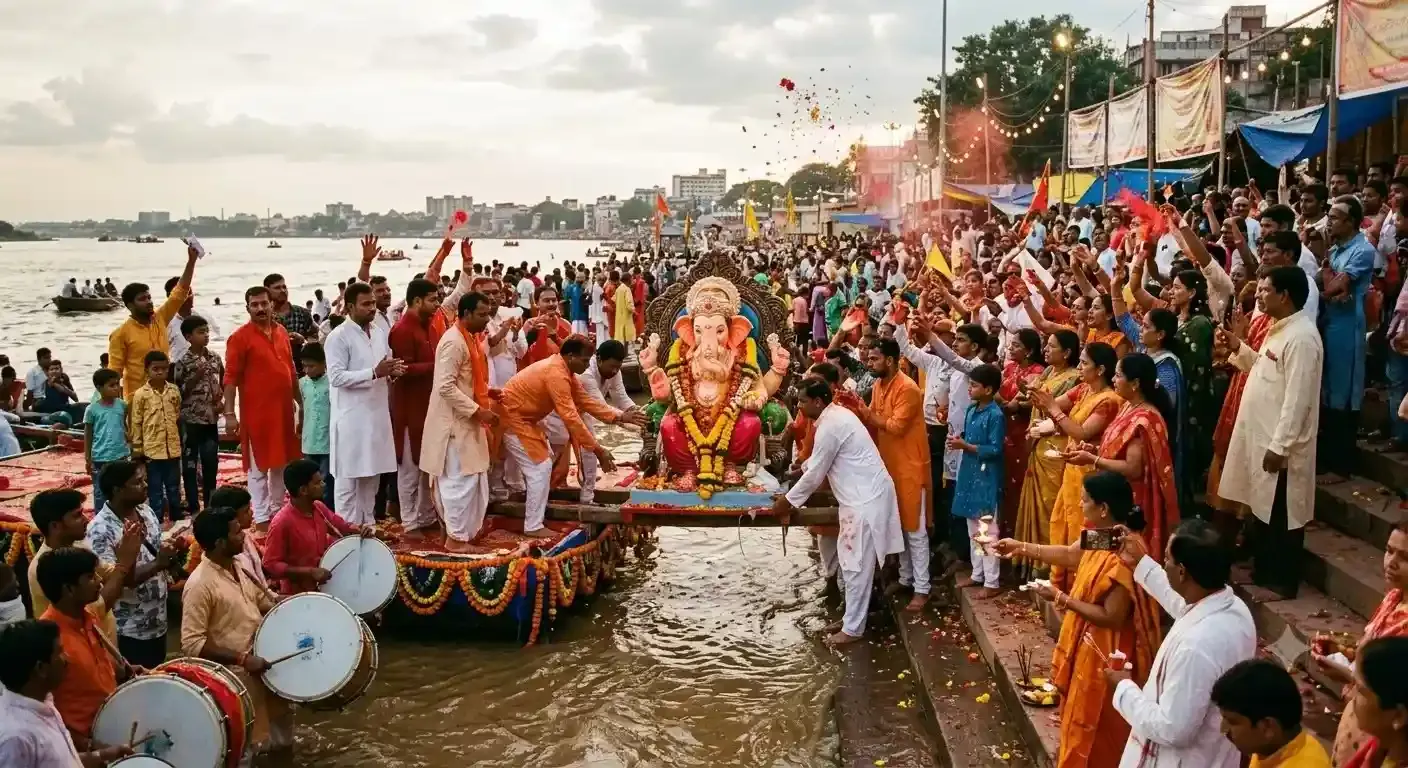
Ganesh Visarjan Mantra: Sanskrit Text, Meaning and Step-by-Step Visarjan Vidhi
Ganpati Navaratri: Upasana and Samskara Through the Days of Ganeshotsav