
Top Tamil Vinayagar Songs for Ganesh Mandapams and Home Puja
The Tamil Vinayagar songs, hymns and Carnatic kritis that fill mandapams and homes at Vinayagar Chathurthi, how to arrange them by time of day, and practical advice on volume, licensing, children and lyrics.
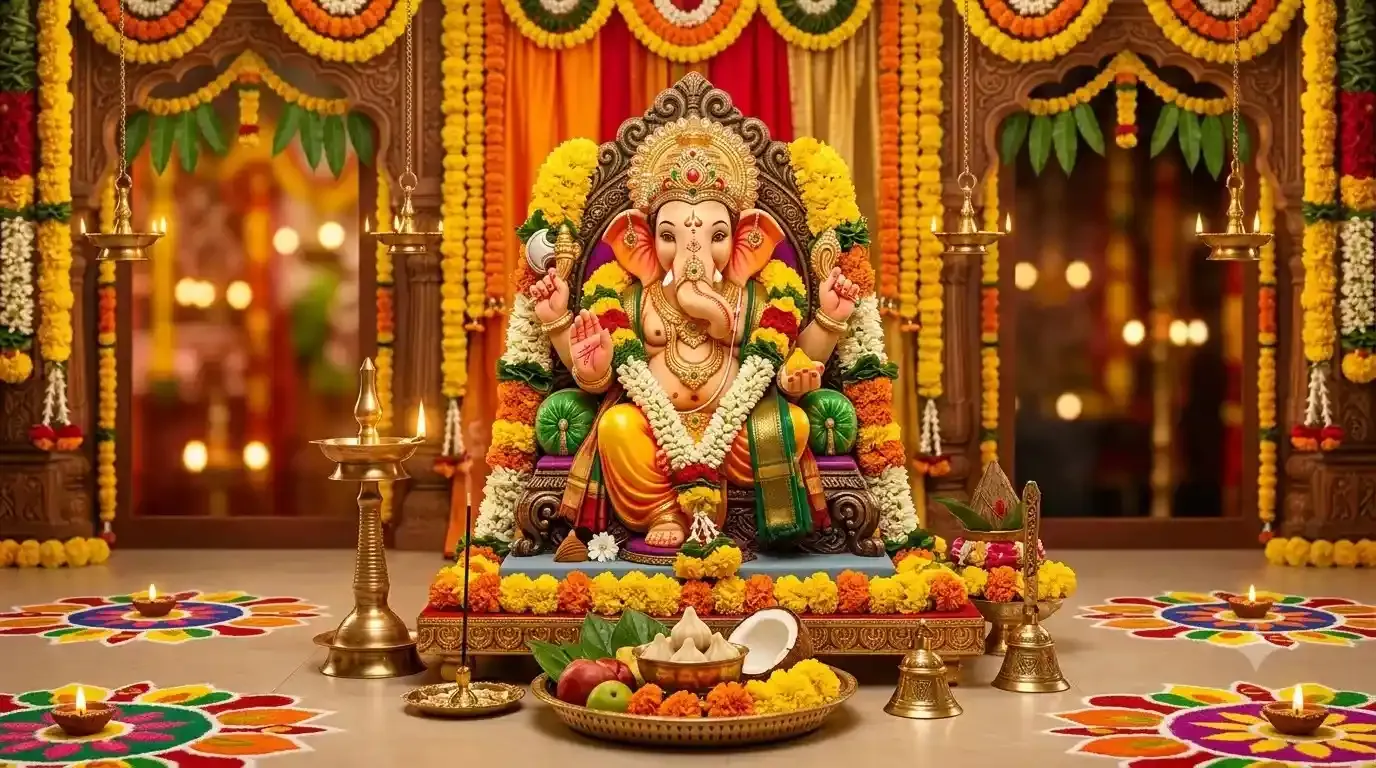
The Tamil Vinayagar songs, hymns and Carnatic kritis that fill mandapams and homes at Vinayagar Chathurthi, how to arrange them by time of day, and practical advice on volume, licensing, children and lyrics.
Quick answer: A good Tamil Vinayagar playlist mixes four kinds of music: Sirkazhi S. Govindarajan's devotional classics such as "Vinayagane Vinai Theerpavane"; traditional Tamil hymns like Avvaiyar's Vinayagar Agaval and her short invocation verses; Carnatic Ganapati kritis sung in every Tamil temple, especially Muthuswami Dikshitar's "Vatapi Ganapatim" (Hamsadhwani) and Tyagaraja's "Sri Ganapathini" (Saurashtram); and nadaswaram or bhajan renditions for the evening and the procession. Keep live chanting for the puja and aarti, and use recordings around them.
In Tamil Nadu, Vinayagar is everywhere: under the peepal tree at the street corner, at the entrance of every big temple, and at the top of every letter in the form of the Pillaiyar Suzhi. Vinayagar Chathurthi brings that everyday devotion into song. Whether you run a street mandapam in Chennai, a community celebration in Singapore or Toronto, or a home puja with a clay Pillaiyar, this guide gathers the Tamil and Carnatic Vinayagar music that has stood the test of time, and shows how to use it respectfully.
Vinayagar Chathurthi 2026 was observed on Monday, 14 September 2026. If you are already planning for next year, Vinayagar Chathurthi 2027 falls on Saturday, 4 September 2027 per the Indian panchang, a weekend that will suit many diaspora committees.
The essential Tamil Vinayagar playlist
| Song or hymn | Language and source | Best time |
|---|---|---|
| Vinayagane Vinai Theerpavane | Tamil devotional song, Sirkazhi S. Govindarajan | Morning, before the puja |
| Vinayagar Agaval | Tamil hymn traditionally attributed to Avvaiyar | Morning recitation, quiet hours |
| Vaakkundaam / Paalum Theli Thaenum | Short Tamil invocation verses attributed to Avvaiyar | Start of puja, children's recitation |
| Vatapi Ganapatim | Sanskrit kriti, Muthuswami Dikshitar, raga Hamsadhwani | Evening concert or bhajan hour |
| Sri Ganapathini | Telugu kriti, Tyagaraja, raga Saurashtram | Evening concert or bhajan hour |
| Mahaganapatim Manasa Smarami | Sanskrit kriti, Muthuswami Dikshitar, raga Nattai | Opening of a music programme |
| Nadaswaram and thavil renditions | Instrumental temple tradition | Arrival of the idol, procession |
Sirkazhi S. Govindarajan: the voice of Tamil devotion
For generations of Tamil families, Vinayagar Chathurthi morning sounds like Sirkazhi S. Govindarajan. His powerful, clear voice and precise Tamil diction made his devotional records a fixture of temple loudspeakers and home radios. "Vinayagane Vinai Theerpavane", a prayer to Vinayagar as the one who removes the effects of our deeds (vinai), is the song most people associate with him and the festival. Play it early, as the household wakes and the kolam is drawn, or as devotees gather before the mandapam puja.
Many mandapams follow it with other devotional records from the same era, including the Tamil devotional songs of T.M. Soundararajan, whose voice is equally beloved for Murugan and Vinayagar songs. Ask elders which records they grew up with; their memories are the best guide to an authentic morning set.
Traditional Tamil hymns: Avvaiyar and Tirumular
Before film and gramophone, Tamil devotion to Vinayagar was carried by poetry. These texts are ideal for recitation rather than playback.
- Vinayagar Agaval: a longer devotional poem traditionally attributed to Avvaiyar, beginning "Seetha kalaba senthamarai poompatham". It describes Vinayagar's form and asks for his grace on the spiritual path. Many families recite it every morning during the festival days; a group recitation at the mandapam is especially moving.
- Vaakkundaam: the four-line invocation of Avvaiyar's Moothurai, which says that those who worship the feet of the elephant-trunked Lord with flowers will gain eloquence, a good mind and the grace of Lakshmi. It is often the first Tamil verse a child learns.
- Paalum Theli Thaenum: the invocation of Avvaiyar's Nalvazhi, in which the poet offers milk, clear honey, jaggery and lentils to Vinayagar and asks in return for the three branches of Tamil (iyal, isai and natakam). A charming verse to teach alongside the naivedyam.
- Aindhu Karathanai: the invocation verse to Vinayagar at the opening of Tirumular's Tirumanthiram, describing the five-handed, elephant-faced Lord.
The Pillaiyar Suzhi, the small curved mark written at the top of a page before anything else, belongs to the same spirit: Vinayagar first, then everything else. A nice touch for a mandapam is a board where children write their own Pillaiyar Suzhi and a line of a verse.
Sanskrit invocations such as "Shuklambaradharam Vishnum" and "Vakratunda Mahakaya", and "Gajamukha"-style invocations to the elephant-faced Lord, are chanted in Tamil homes just as widely and can open any session.
Carnatic Ganapati kritis sung in Tamil temples
Carnatic music has always begun with Ganapati, and the classic kritis are as much a part of Tamil temple life as Tamil songs, even though they are composed in Sanskrit or Telugu.
- Vatapi Ganapatim Bhaje (Muthuswami Dikshitar, raga Hamsadhwani): probably the most famous Ganapati kriti of all, sung in Sanskrit. Concerts frequently open with it, and nadaswaram players love its bright, five-note raga.
- Sri Ganapathini (Tyagaraja, raga Saurashtram): a Telugu kriti by Tyagaraja, often sung at the start of group bhajans and music school programmes.
- Mahaganapatim Manasa Smarami (Muthuswami Dikshitar, raga Nattai): a short, stately Sanskrit kriti that is a good choice to open a children's music performance.
Building a mandapam playlist by time of day
| Time | What to play or sing |
|---|---|
| Early morning | Suprabhatam-style recordings, Sirkazhi Govindarajan's "Vinayagane Vinai Theerpavane", soft nadaswaram |
| Puja and aarti | No recordings; live chanting of Vinayagar Agaval, shlokas and the aarti with bells |
| Late morning and afternoon | Tamil devotional records, low volume; recitation by children and elders |
| Evening | Live bhajans, Carnatic Ganapati kritis, cultural programme |
| Visarjan procession | Nadaswaram and thavil or melam if permitted, group chanting, devotional songs |
Leave a few minutes of silence before the aarti so the bell, the camphor and the voices of devotees can take centre stage. Keep film-based or upbeat songs, if your committee uses them, to the evening programme and the procession, and choose only songs whose lyrics are about Vinayagar.
Volume, noise courtesy and local rules
- In India: loudspeaker use is regulated, with limits on volume and on late-night hours. Mandapam committees usually need permission from local authorities or the police; follow the conditions given and keep speakers away from hospitals, schools and homes with elderly residents.
- Abroad: most cities in Singapore, Malaysia, the USA, Canada, the UK and Australia have strict noise rules. Agree on volume and timing with the temple or hall, and get any permits needed for outdoor processions.
- Home puja: a small Bluetooth speaker is plenty. In apartments, a friendly word with neighbours and a share of the kozhukattai keeps everyone happy.
A note on licensing for public playback
Playing recorded music at a public event can require a licence, and the rules vary by country, state and venue. Many temples and community halls already hold the licences they need, but do not assume. Check with your local authorities and the venue before the festival. Live singing of traditional hymns and kritis by your own members is usually the simplest and most meaningful option.
Getting children involved
- Teach one short verse, such as "Vaakkundaam", in the weeks before the festival and let children recite it at the morning puja.
- Invite music students to sing "Vatapi Ganapatim" or "Sri Ganapathini" in the evening programme.
- Ask older children to help curate the playlist from family favourites, with an elder approving the final list.
- For diaspora children, print the verses in Tamil script with a simple transliteration and a one-line meaning.
Lyrics etiquette
- Use lyrics from reliable printed books or temple publications rather than unverified websites; small errors change meanings.
- When printing lyrics, credit the poet or composer (Avvaiyar, Tirumular, Dikshitar, Tyagaraja) and avoid altering the words.
- Treat printed hymn sheets with respect: do not leave them on the floor, and collect them after the programme.
- If you do not know a verse fully, chant "Om Gam Ganapataye Namah" or the Vinayagar name together instead of guessing words.
Frequently asked questions
What is the most popular Tamil Vinayagar song?
"Vinayagane Vinai Theerpavane", sung by Sirkazhi S. Govindarajan, is among the best known Tamil Vinayagar devotional songs and is still played in temples, homes and mandapams across Tamil Nadu and the diaspora on Vinayagar Chathurthi morning.
Is Vatapi Ganapatim a Tamil song?
No. "Vatapi Ganapatim" is a Sanskrit kriti by Muthuswami Dikshitar in raga Hamsadhwani. Dikshitar was born in Tiruvarur in Tamil Nadu, and the kriti is so widely sung in Tamil temples and concerts that many families think of it as part of their Tamil Vinayagar repertoire.
Which Tamil hymn should children learn for Vinayagar Chathurthi?
Short Avvaiyar verses such as "Vaakkundaam" (from Moothurai) and "Paalum Theli Thaenum" (from Nalvazhi) are ideal. They are only four lines each, easy to memorise and traditionally recited before study or any new task.
Can we play recorded Tamil devotional songs during the puja itself?
It is better not to. During the main puja and aarti, let the priest or family chant and sing live. Recorded songs suit the time before and after the puja, the evening bhajan hour and the visarjan procession.
Do we need permission to play music at a public Vinayagar mandapam?
Usually, yes. Public loudspeaker use and recorded music at public events are regulated in most places. Check with your local authorities, police or the venue well in advance, and ask the venue whether it already holds any music licence you need.
When is Vinayagar Chathurthi 2027?
Vinayagar Chathurthi (Ganesh Chaturthi) 2027 falls on Saturday, 4 September 2027 per the Indian panchang. In 2026 it was observed on Monday, 14 September.
Editor's note (5 October 2026)
This page restores a lost hindutone.com article and has been rewritten. We have named only songs, hymns and composers we are confident about, and have deliberately left out film songs whose film, year or singer we could not confirm. Traditional hymns are given with their customary attributions. Noise and licensing rules vary by place, so check locally. Vinayagar Chathurthi 2026 was on Monday, 14 September 2026, and Vinayagar Chathurthi 2027 is on Saturday, 4 September 2027 per the Indian panchang.
Related guides
You might also like
Top Bollywood Songs for Ganesh Mandapams and Ganpati Processions
Vinayaka Vrata Vidhanam: Step-by-Step Vinayaka Chavithi Pooja at Home
Sukhkarta Dukhharta Ganesh Aarti: Lyrics and Meaning, Verse by Verse