
Ganesh Visarjan 2026 in North India: Delhi, Lucknow and Beyond, a Complete Guide
Ganesh Chaturthi 2026 fell on Monday 14 September and Anant Chaturdashi visarjan on Friday 25 September. How Delhi, Lucknow, Noida, Gurugram, Jaipur, Kanpur and Varanasi bid farewell to Ganpati, the 1.5, 3, 5, 7 and 10-day customs, eco-friendly visarjan at home, and how to plan for 2027.
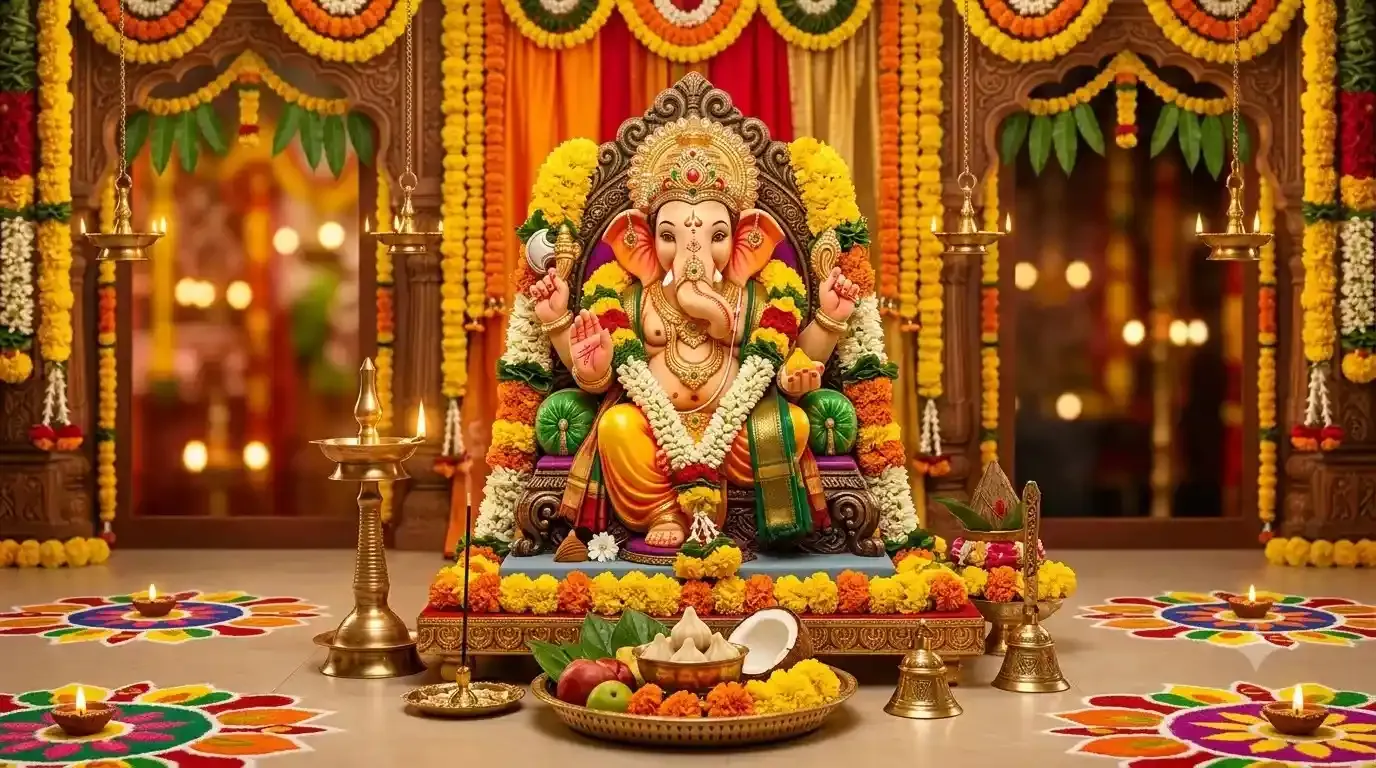
Ganesh Chaturthi 2026 fell on Monday 14 September and Anant Chaturdashi visarjan on Friday 25 September. How Delhi, Lucknow, Noida, Gurugram, Jaipur, Kanpur and Varanasi bid farewell to Ganpati, the 1.
Quick answer: Ganesh Chaturthi 2026 fell on Monday 14 September 2026 and the main Ganesh Visarjan on Anant Chaturdashi was on Friday 25 September 2026 (Drik Panchang, India). In Delhi, Lucknow and other North Indian cities, many families now immerse Ganpati after one and a half, three, five or seven days, and a growing number do it at home or in artificial ponds because rivers such as the Yamuna and Gomti have immersion restrictions. Ganesh Chaturthi 2027 falls on Saturday 4 September 2027.
Ganesh Chaturthi was once seen as mainly a Maharashtrian and South Indian festival, but over the past few decades it has become a big celebration across North India too. Housing societies in Noida and Gurugram, Marathi and Telugu associations in Delhi, neighbourhood committees in Lucknow and Kanpur, and families in Jaipur and Varanasi now welcome Ganpati home every year. This guide records how this year's festival ran and helps you plan the farewell, the visarjan, better next time.
Ganesh Chaturthi and Visarjan 2026: key dates
| Observance | Date |
|---|---|
| Ganesh Chaturthi (sthapana) | Monday 14 September 2026 |
| Anant Chaturdashi (10-day visarjan) | Friday 25 September 2026 |
| Ganesh Chaturthi 2027 | Saturday 4 September 2027 |
Dates are from Drik Panchang for India. Shorter visarjans are counted from the day the idol is installed, and the exact day depends on the tithi and on family custom, so confirm with your family priest or panchang. We have not listed muhurat times; they vary by city and should be taken from a panchang set for your own location.
What Ganesh Visarjan means
Visarjan literally means letting go or giving leave. Having invited Ganesha into the home with avahana and prana pratishtha, devotees worship him as an honoured guest and then, with the uttara puja, ask him to return to his own abode. The idol, made from the earth, returns to water and earth. Many teachers see in this a gentle lesson in non-attachment: we love the form deeply, and we let it go with gratitude, trusting that the Lord himself never leaves.
The traditional visarjan prayer is "Yantu devaganah sarve pujam adaya mamakim, ishtakama prasiddhyartham punaragamanaya cha", asking the deity to accept the worship, fulfil good wishes and come again. For the full text, meaning and step-by-step uttara puja, see our Ganesh Visarjan mantra guide.
1.5, 3, 5, 7 and 10-day visarjan customs
- One and a half days (Dedh din): very common in homes. Ganpati is installed on Chaturthi and immersed the next day after the midday or evening puja. It suits working families in Delhi and the NCR who cannot take a long break.
- Three days: some families keep the idol for three days, giving time for relatives to visit and for a fuller cycle of morning and evening aarti.
- Five days: popular in many communities; in some households the visarjan is aligned with the farewell of Gauri where Gauri is also worshipped.
- Seven days: followed by some families and smaller community pandals.
- Ten days, up to Anant Chaturdashi: the full festival, followed by most large public pandals and many devoted households. Anant Chaturdashi also marks the worship of Lord Vishnu as Ananta, and some families tie the Anant sutra on this day.
None of these is more correct than the others. What matters is to keep the idol with care for the days chosen, offer worship morning and evening, never leave Ganpati alone without a lamp or attention for long, and bid him farewell with love.
How North Indian cities celebrate visarjan
Delhi, Noida and Gurugram
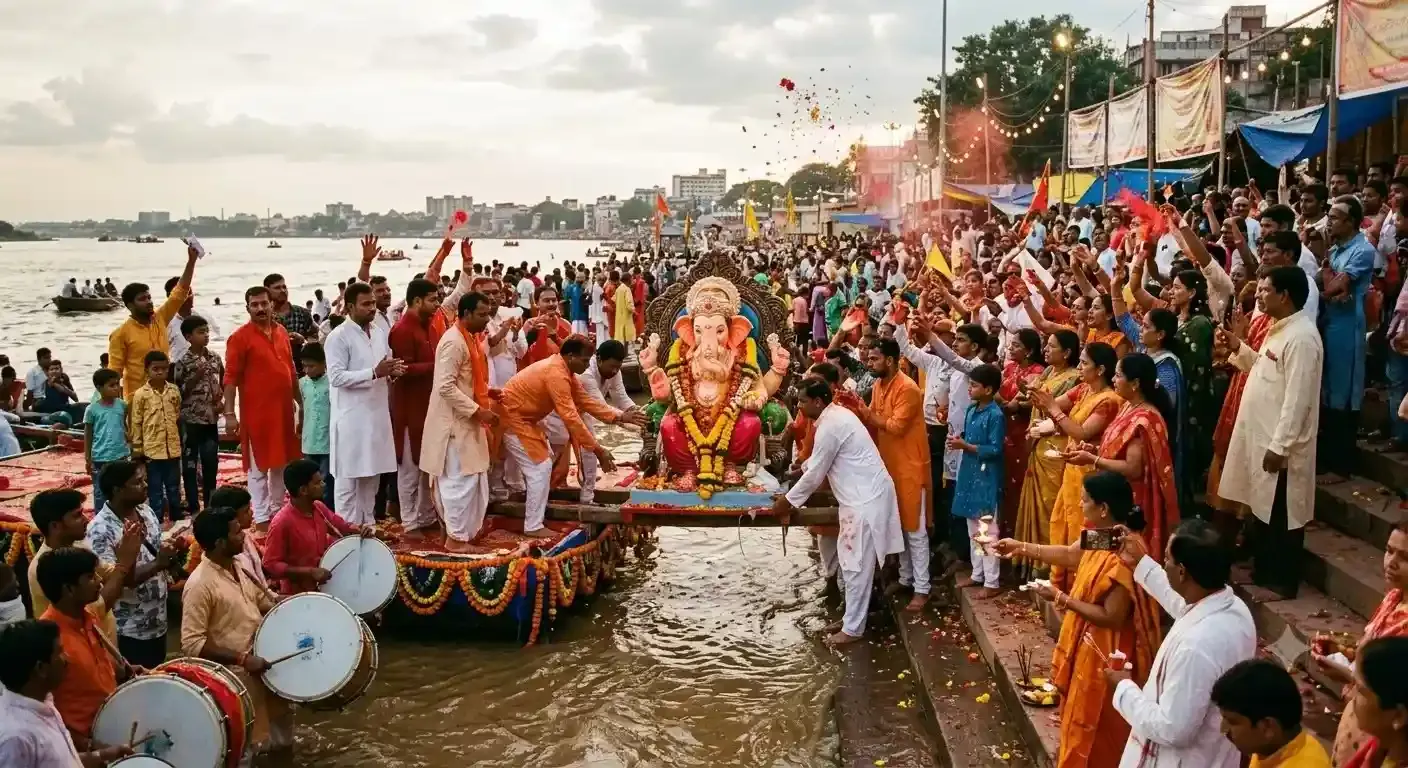
In the capital region, celebrations are spread across community pandals run by Marathi, Telugu, Kannada and Tamil associations, resident welfare associations and housing societies. Large gated societies in Noida, Greater Noida and Gurugram often hold their own ten-day festival with aarti, children's events and a shared bhandara, ending in an in-house visarjan. Processions with dhol, gulal and chants of "Ganpati Bappa Morya" are common on visarjan days. Because the Yamuna has immersion restrictions, many societies and families use artificial ponds, portable tanks or home visarjan; check the current orders of the Delhi government, your municipal body and the police before planning any procession or river immersion.
Lucknow and Kanpur
In Uttar Pradesh's capital and in Kanpur, neighbourhood committees and families have embraced Ganesh Chaturthi with growing enthusiasm, combining North Indian bhajans with Maharashtrian aartis such as Sukhkarta Dukhharta. The Gomti in Lucknow and the Ganga in Kanpur also come under immersion restrictions, so follow current district administration orders and use the arrangements the authorities announce.
Jaipur and Varanasi
In Jaipur, Ganesha has long held a special place in the city's devotion, and Ganesh Chaturthi is widely celebrated in homes and temples. In Varanasi, devotees combine Ganpati worship with the city's ancient river culture, but the same caution applies: rules for immersion in the Ganga are set by the authorities, so check before you go. Wherever you are, the safest and most respectful choice is often a clay idol immersed at home or in an official artificial tank.
Eco-friendly visarjan: the better way
Idols made of plaster of Paris, painted with synthetic colours, do not dissolve properly and can pollute rivers and lakes. North Indian cities have seen growing awareness of this, and eco-friendly visarjan is now an act of devotion in itself: honouring Ganesha also means honouring the rivers and the earth he is made from.
- Choose an unbaked clay idol (shadu or natural clay) with natural or no colours. Smaller idols dissolve faster and are easier to immerse at home. See our guide to Parthiva Ganapati for the tradition of worshipping a clay Ganesha.
- Home visarjan in a bucket or tub: after the final aarti, place the idol in clean water and let it dissolve over a few hours or a day. Stir gently if needed.
- Return it to the earth: once the clay has settled, pour the water and soil into potted plants or your garden. Many families plant a tulsi or flowering plant in the same soil.
- Artificial ponds and tanks: where municipal bodies or housing societies set up artificial immersion tanks, use them rather than a river or lake.
- Separate the offerings: flowers, durva and leaves can be composted; plastic, thermocol and decorations should be removed before visarjan and disposed of properly.
- Avoid loud and late processions that disturb neighbours, and follow local noise rules.
Step-by-step home visarjan
- Perform the final puja (uttara puja) with flowers, durva, modak or ladoo and aarti.
- Offer the kshama prarthana, asking forgiveness for any shortcomings in the worship.
- Gently move the idol slightly with the visarjan mantra, as a sign that Ganpati has been given leave.
- Carry the idol with the family, chanting "Ganpati Bappa Morya", to the bucket or tub prepared for immersion.
- Immerse the idol slowly, with folded hands, and let it dissolve.
- Distribute prasad and pour the clay water into plants once settled.
Planning ahead for Ganesh Chaturthi 2027
Ganesh Chaturthi 2027 falls on Saturday 4 September 2027. A weekend start makes a one-and-a-half-day festival especially easy for working families. A few lessons from this year:
- Book or order a clay idol early; eco-friendly idols often sell out first.
- Decide on the number of days as a family in advance and plan leave accordingly.
- Ask your housing society or community committee early whether they plan an artificial tank, and offer to help.
- Check municipal and state orders on immersion closer to the date, as they can change.
- See our Vinayaka Chavithi 2027 dates guide for the full 2027 calendar.
Frequently asked questions
When was Ganesh Visarjan 2026?
Ganesh Chaturthi 2026 was on Monday 14 September and Anant Chaturdashi, the day of the main ten-day visarjan, was on Friday 25 September 2026, according to Drik Panchang for India. Families who keep Ganpati for fewer days immerse the idol earlier, counting from the day of sthapana.
When is Ganesh Chaturthi 2027?
Ganesh Chaturthi 2027 falls on Saturday 4 September 2027, according to Drik Panchang. Check a panchang closer to the time for the Anant Chaturdashi date and the muhurat for your city.
Can I immerse my Ganesh idol in the Yamuna or Gomti?
Rivers in North India, including the Yamuna and the Gomti, have restrictions on idol immersion set by the authorities and the courts, and these can change from year to year. Check the current orders of your municipal corporation or state government before planning any immersion in a river or lake.
How do I do Ganesh Visarjan at home?
Use an unbaked clay idol. After the uttara puja and aarti, place the idol in a clean bucket or tub of water, chant the visarjan mantra and let it dissolve. Once the clay has settled, the water and soil can be poured into plants or the garden.
Is it wrong to do visarjan on the 1.5th or 3rd day?
No. Keeping Ganpati for one and a half, three, five, seven or ten days are all accepted traditions. Follow your family custom or the vow you have taken, and make the farewell with the same devotion whatever the day.
Why do people say 'Ganpati Bappa Morya, pudhchya varshi lavkar ya'?
The Marathi chant means 'Ganpati Bappa Morya, come back soon next year'. It spread from Maharashtra and is now heard at visarjan processions across North India too, where people also say 'agle baras tu jaldi aa' in Hindi.
Editor's note
Editor's note (5 October 2026): This page has been restored at its original address after the earlier version was lost. Dates are from Drik Panchang for India. We have deliberately not listed pandals, immersion sites, procession routes or muhurat times, because these are announced each year by organisers and authorities, and rules on immersion in the Yamuna, Gomti, Ganga and other water bodies are set by the authorities and courts and can change. Please check current official orders before you plan a visarjan.
Related guides
You might also like
Ganesh Visarjan Mantra: Sanskrit Text, Meaning and Step-by-Step Visarjan Vidhi
Hyderabad Ganesh Nimajjanam: Khairatabad, Balapur and the Hussain Sagar Shobha Yatra, a Complete Guide
Top Tamil Vinayagar Songs for Ganesh Mandapams and Home Puja