
Parthiva Ganapati: The Significance of Worshipping a Clay Ganesha, and How to Make One at Home
Parthiva Ganapati is a Ganesha idol made of earth (prithvi). Why tradition prefers clay, the link to the story of Ganesha's birth, the deep symbolism of creating, worshipping and dissolving the idol, a step-by-step guide to making one at home and visarjan tips for families abroad.
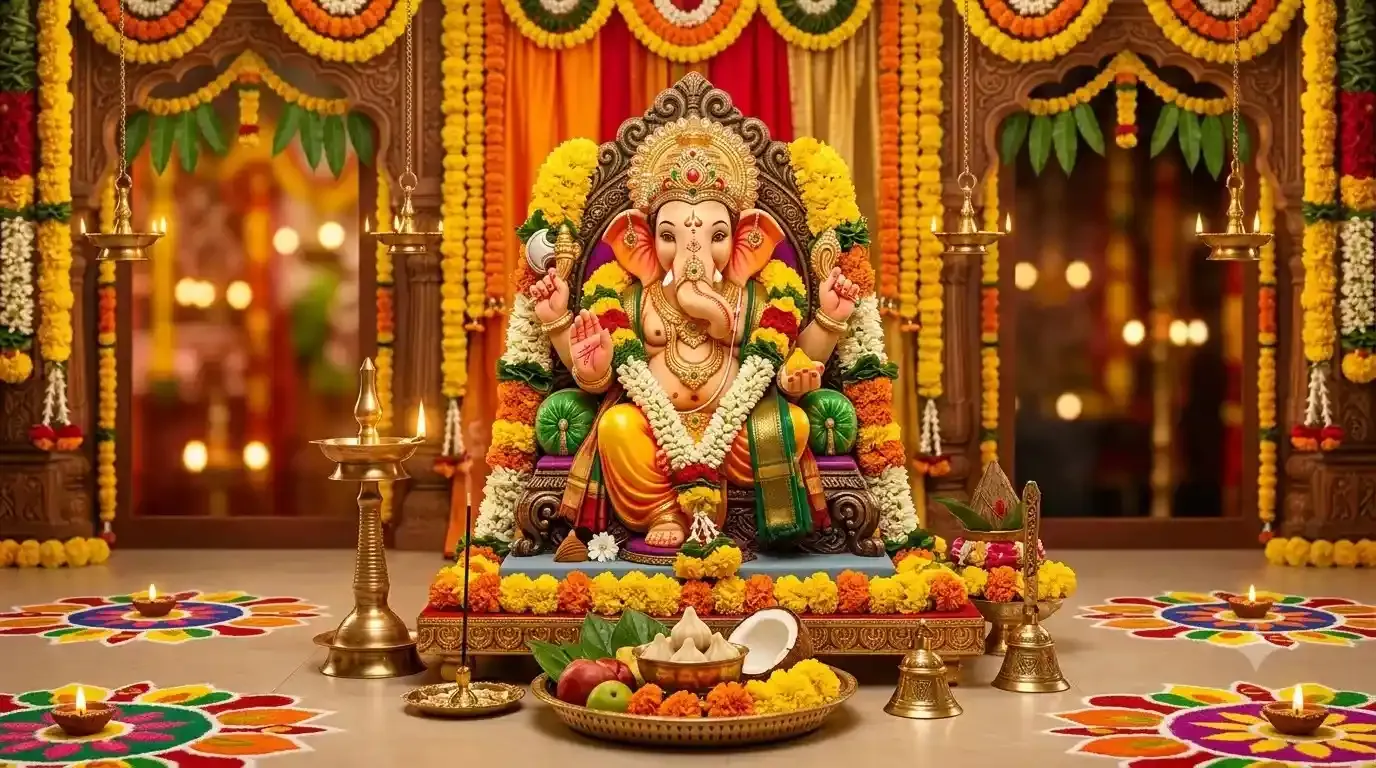
Parthiva Ganapati is a Ganesha idol made of earth (prithvi). Why tradition prefers clay, the link to the story of Ganesha's birth, the deep symbolism of creating, worshipping and dissolving the idol, a step-by-step guide to making one at home and visarjan tips for families abroad.
Quick answer: A Parthiva Ganapati is a Ganesha idol made of earth ('parthiva' comes from Prithvi, the earth). Tradition prefers clay for Ganesh Chaturthi because the idol is temporary: Ganesha is invoked into the clay through prana pratishtha, worshipped for one and a half to ten days, and then returned to water and earth through visarjan. The practice echoes the story of Parvati shaping Ganesha with her own hands, and it teaches that every form arises from the earth and returns to it. The next Ganesh Chaturthi is Saturday 4 September 2027.
Long before factory-made idols, families across Maharashtra, Karnataka, Andhra Pradesh, Telangana, Goa and Tamil Nadu brought home a lump of river clay, shaped a simple Ganesha, worshipped him with love and returned him to the water. That humble clay figure is the Parthiva Ganapati, and it carries some of the deepest symbolism in Hindu practice. As more families, in India and abroad, return to clay idols for environmental reasons, it is worth understanding why the tradition chose earth in the first place.
What 'Parthiva' means
Parthiva is the Sanskrit adjective from Prithvi, the earth element. Anything 'parthiva' is earthen. In puja tradition the word is used for temporary forms of the deity made from earth for a specific worship, most famously the Parthiva Ganapati for Chaturthi and the Parthiva Shivalinga, a small clay lingam made, worshipped and dissolved in a single puja. Of the five elements (pancha bhuta), earth is the most tangible, and Ganesha, who sits at the base of all undertakings, is closely associated with stability and the earth in many traditional interpretations.
The story behind a clay Ganesha
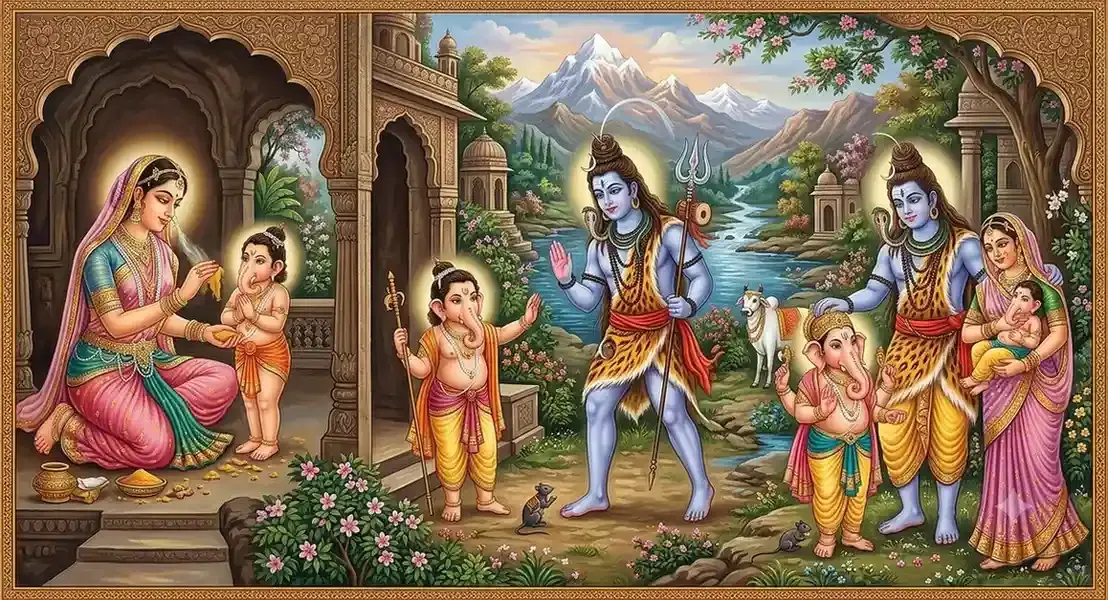
The best-known account of Ganesha's birth, found in the Shiva Purana and retold across India, describes Goddess Parvati shaping a child from the turmeric paste and unguents she used while bathing and breathing life into him to guard her door. When Shiva, not knowing the boy, was refused entry, a battle followed, the child was beheaded and later restored with an elephant's head, and Shiva made him leader of his ganas and the deity to be worshipped first. Read more in our guide to Ganesha stories and Puranic legends.
When a family shapes a Ganesha from earth with their own hands, they are, in a sense, repeating Parvati's act of loving creation. The idol is not a decoration but a vessel prepared with devotion, into which the deity is invited.
The deeper significance of Parthiva Ganapati
1. The cycle of creation and dissolution
A Parthiva Ganapati moves through the whole cycle of existence in a few days. It is formed from earth (srishti), worshipped and cherished (sthiti) and finally dissolved back into water and earth (laya). Visarjan is not a farewell to Ganesha himself, who is eternal, but the release of the form we gave him. It is a gentle, family-sized lesson in impermanence and non-attachment.
2. Invoking the formless into form
Through avahana and prana pratishtha at the start of the puja, the devotee invites Ganesha to dwell in the clay. At the end, through the uttara puja, the deity is respectfully requested to return to his own abode, and only then is the idol immersed. The ritual teaches that the divine is beyond form, yet graciously accepts the forms our love creates.
3. Simplicity and accessibility
Clay is available to everyone, rich or poor. A Parthiva Ganapati can be as small as a palm and as plain as a few rounded shapes, and it is no less sacred for that. Tradition values the bhava (feeling) of the devotee over the grandeur of the idol.
4. Harmony with nature
Natural clay dissolves in water and enriches the soil, so the festival leaves no lasting harm. Many traditional households use clay from a riverbank or a field, and some use the dissolved clay for a tulsi plant afterwards. Plaster of Paris and chemical paints break this harmony, which is why environmentally minded devotees and civic authorities in India encourage a return to natural clay.
5. Ganesha as the lord of the earth element
In many traditional explanations, Ganesha is associated with the Muladhara, the root energy centre linked with the earth element, stability and foundations. Worshipping him in earth is seen as especially fitting for a deity who is invoked at the foundation of every venture.
Parthiva Ganapati in the Chaturthi puja
In the Vinayaka Chavithi vrata practised in Andhra Pradesh and Telangana, and in the Ganeshotsav traditions of Maharashtra, Karnataka and Goa, the clay idol is the centre of the puja. A typical sequence includes:
- Installing the idol on a clean raised platform, often on a bed of rice or a decorated plank, with a kalash beside it.
- Sankalpa, avahana and prana pratishtha to invoke Ganesha into the clay.
- Shodashopachara puja: the sixteen traditional offerings, including water, cloth, sacred thread, sandal paste, flowers, incense, lamp and naivedya.
- Offering durva grass, and in Telugu tradition the ekavimshati patra puja with 21 kinds of leaves.
- Naivedyam of modak, undrallu, kudumulu or laddoos, depending on the region.
- Reading the vrata katha, including the Syamantaka story in Telugu households, and aarti.
- Uttara puja and visarjan after one and a half, three, five, seven or ten days, or on Anant Chaturdashi.
For details see Vinayaka vrata vidhanam, the 21 patri guide and the Ganesh visarjan mantra.
How to make a Parthiva Ganapati at home
You do not need to be an artist. A simple, sincere idol is entirely traditional.
- Get natural clay: use unbaked natural clay, such as shadu mati in Maharashtra or river clay, or buy natural modelling clay from a craft shop. Avoid air-dry clays with polymers or plastic, and avoid PoP.
- Prepare: knead the clay with a little water until smooth and free of cracks. Keep a bowl of water and a damp cloth nearby.
- Base and body: shape a flat round base (the seat), then a large ball for the belly placed on it.
- Legs and arms: roll four thin cylinders: two folded as legs in front of the belly, two as arms. One hand can hold a small modak, the other raised in blessing.
- Head and trunk: make a smaller ball for the head, then pull or attach a tapering trunk curving to one side. Many families curve it to Ganesha's left, the most common form for home worship.
- Ears and details: flatten two discs for the large ears, add a small tusk and a simple crown.
- Mouse (mushika): a small teardrop shape with tiny ears placed by the base.
- Dry and decorate: let it dry naturally in the shade for a day or two. Leave it unpainted, or use turmeric, kumkum or natural food-based colours.
Children love this activity, and it makes a wonderful way to introduce them to the festival. See our ideas for Ganesh Chaturthi conversations with NRI kids.
Parthiva Ganapati for families abroad
- Most countries do not allow idols to be immersed in lakes, rivers or the sea. Home visarjan in a bucket or tub of clean water is the respectful, legal choice.
- Natural clay dissolves within a day or two. Pour the clay water into your garden or potted plants, never down the drain where it can clog pipes.
- Remove flowers, cloth and decorations before immersion and compost what you can.
- Many Indian grocery shops and some temples abroad sell natural clay idols before the festival; ask specifically for unbaked natural clay, not PoP.
- A small, palm-sized Parthiva Ganapati is perfect for apartments.
See our full guide to an eco-friendly Ganesh idol in the USA.
Key dates
| Observance | Date |
|---|---|
| Ganesh Chaturthi 2026 (passed) | Monday 14 September 2026 |
| Anant Chaturdashi 2026 (passed) | Friday 25 September 2026 |
| Ganesh Chaturthi 2027 | Saturday 4 September 2027 |
Dates are from Drik Panchang for India. For puja muhurats, use a panchang set for your own city. See Vinayak Chavithi 2027 dates.
Frequently asked questions
What does Parthiva Ganapati mean?
'Parthiva' comes from Prithvi, the earth, and means 'made of earth'. A Parthiva Ganapati is a Ganesha idol shaped from natural clay or soil, worshipped for the festival and then returned to water and earth through visarjan.
Why is Ganesha worshipped in clay rather than metal or stone for Chaturthi?
A permanent metal or stone murti is worshipped daily in the home shrine. For Ganesh Chaturthi, tradition calls for a temporary idol that is invoked, worshipped and then dissolved. Clay suits this perfectly: it comes from the earth, dissolves naturally in water and returns to the earth, expressing the cycle of creation, sustenance and dissolution.
Is a Plaster of Paris Ganesha a Parthiva Ganapati?
No. Plaster of Paris is a manufactured material that does not dissolve easily and can pollute water bodies, and synthetic paints add to the harm. Pollution control authorities in India have issued guidelines discouraging PoP idols. A true Parthiva Ganapati is made of natural clay, ideally unpainted or coloured with natural colours.
When is Ganesh Chaturthi 2027?
Ganesh Chaturthi 2027 is on Saturday 4 September 2027, according to Drik Panchang. In 2026 it was on Monday 14 September, with Anant Chaturdashi on Friday 25 September.
How do I do visarjan of a clay Ganesha at home abroad?
Immerse the idol in a clean bucket or tub of water at home after the uttara puja. Natural clay dissolves within a day or two. Use the clay water for your garden or potted plants. This respects both tradition and local rules, which in many countries prohibit immersion in lakes, rivers or the sea.
Editor's note
Editor's note (5 October 2026): This page has been restored at its original address after the earlier version was lost. The account of Ganesha's birth follows the widely known Shiva Purana version; other Puranas tell it differently. Puja steps and the number of days before visarjan vary by region and family custom, so follow your own tradition or your family priest's guidance.
Related guides
You might also like
Why Is Ganesha Worshipped First? The Stories, Scriptures and Meaning
Vinayaka Vrata Vidhanam: Step-by-Step Vinayaka Chavithi Pooja at Home
Ganesha Stories: 10 Puranic Legends Every Family Should Know