
Navratri vs Durga Puja vs Dussehra vs Dasara vs Vijayadashami: The Differences Explained (2026)
Are Navratri, Durga Puja, Dussehra, Dasara and Vijayadashami the same festival? Not quite. Here is what each name means, how Bengal, Gujarat, the North, the South and Telangana celebrate the same season differently, why the dates move every year, and a side-by-side table with 2026 dates.
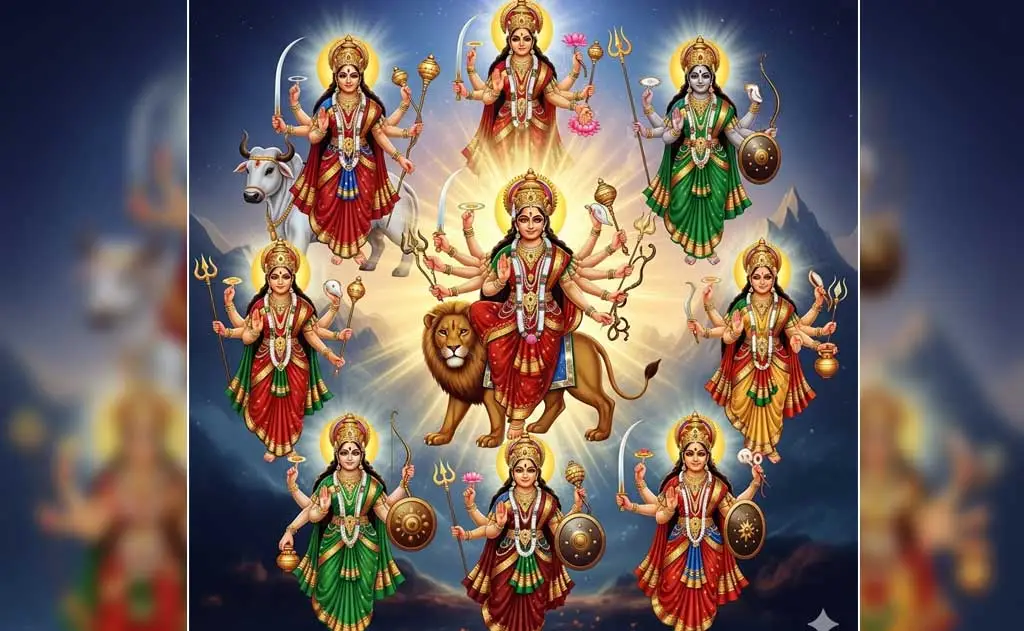
Are Navratri, Durga Puja, Dussehra, Dasara and Vijayadashami the same festival? Not quite.
Quick answer: They are all part of one autumn festival season, seen from different angles. Navratri is the nine nights of Goddess worship (Sunday 11 to Monday 19 October 2026 in India). Durga Puja is how Bengal, Odisha and Assam celebrate the last five of those days. Dussehra, Dasara and Vijayadashami are regional names for the tenth day of victory, Tuesday 20 October 2026 (Drik Panchang).
Each name in one paragraph
What is Navratri?
Navratri means "nine nights". It is the festival of the Goddess (Devi) observed in the bright half of the lunar month Ashvin, when devotees worship the nine forms of Durga, one on each day, with fasting, puja, Garba, Golu or Bathukamma depending on the region. In 2026, Sharad Navratri runs from Sunday 11 to Monday 19 October in India.
What is Durga Puja?
Durga Puja is the eastern Indian celebration of the same season, centred on Bengal, Odisha, Assam and Tripura. Clay images of Durga with Lakshmi, Saraswati, Ganesha and Kartikeya are worshipped in pandals from Shashthi to Dashami, ending with immersion and Sindoor Khela. In Kolkata in 2026, that is Saturday 17 to Wednesday 21 October.
What is Dussehra?
Dussehra is the North and West Indian name for the day after Navratri, best known for celebrating Lord Rama's victory over Ravana. It is marked with Ramlila plays and the burning of Ravana effigies (Ravan Dahan) at dusk. The name is traditionally explained as dasha-hara, the defeat of the ten-headed one. In 2026, Dussehra is Tuesday 20 October.
What is Dasara?
Dasara is the same festival under its Kannada and Telugu name, used in Karnataka, Andhra Pradesh and Telangana. Karnataka's state festival, Mysuru Dasara, honours Goddess Chamundeshwari, who killed Mahishasura in local tradition. In Telangana, Dasara follows the nine days of Bathukamma and is celebrated with the exchange of Jammi (Shami) leaves. In 2026 Dasara falls on Tuesday 20 October.
What is Vijayadashami?
Vijayadashami means "the tenth day of victory". It is the Sanskrit name for the day after Navratri and covers both traditional legends: Durga's victory over Mahishasura and Rama's victory over Ravana. Families perform Shami Puja and Aparajita Puja, worship tools and weapons, and in the South children begin learning (Vidyarambham). In 2026 it is Tuesday 20 October.
Navratri: what it is and why nine nights
Navratri is first and foremost a festival of Shakti, the divine feminine. As traditionally explained, the nine nights honour the nine forms of Durga (the Navadurga): Shailaputri, Brahmacharini, Chandraghanta, Kushmanda, Skandamata, Katyayani, Kalaratri, Mahagauri and Siddhidatri. In 2026, Day 1 (Shailaputri) is Sunday 11 October and Day 9 (Siddhidatri) is Monday 19 October.
A second explanation, told in many traditions, is that Goddess Durga fought the buffalo demon Mahishasura for nine nights and defeated him on the tenth day, which is why the tenth day is called Vijayadashami. Many families also divide the nine nights into three groups of three, dedicated to Durga, Lakshmi and Saraswati; this is a common devotional interpretation rather than a single fixed rule.
Each day has its own page with the mantra, colour and puja steps:
- Day 1: Maa Shailaputri (Sun 11 Oct)
- Day 2: Maa Brahmacharini (Mon 12 Oct)
- Day 3: Maa Chandraghanta (Tue 13 Oct)
- Day 4: Maa Kushmanda (Wed 14 Oct)
- Day 5: Maa Skandamata (Thu 15 Oct)
- Day 6: Maa Katyayani (Fri 16 Oct)
- Day 7: Maa Kalaratri (Sat 17 Oct)
- Day 8: Maa Mahagauri (Sun 18 Oct)
- Day 9: Maa Siddhidatri (Mon 19 Oct, Durga Ashtami and Maha Navami in India)
Sharad vs Chaitra Navratri (and the two Gupt Navratris)
The Navratri most people mean in October is Sharad Navratri, the autumn Navratri of the month Ashvin, which leads straight into Vijayadashami. The second widely celebrated one is Chaitra Navratri in spring (March or April), which begins the Hindu lunar new year in much of North India and ends with Ram Navami, the birthday of Lord Rama, on the ninth day. See our Chaitra Navratri guide for that festival.
There are also two Gupt (secret) Navratris, in the months of Magha (around January to February) and Ashadha (around June to July). These are observed quietly, mainly by devotees following particular sadhana traditions, and do not have public celebrations.
Why the dates move every year
Hindu festivals follow the lunar calendar. Navratri begins on Pratipada, the first lunar day (tithi) of the bright half of Ashvin, and Vijayadashami falls on Dashami, the tenth. Because lunar months do not match the solar calendar, the dates move by up to a few weeks each year, usually landing between late September and late October.
Tithis also do not line up neatly with days. A tithi can span two sunrises or be skipped altogether, which is why a "nine-night" festival is sometimes eight or ten calendar days long, and why two observances can fall on the same day. In 2026, Saptami prevails at sunrise on both 17 and 18 October in New Delhi, so Durga Ashtami and Maha Navami both fall on Monday 19 October in India. Outside India, Drik Panchang lists Durga Ashtami on 18 October and Maha Navami on 19 October in the USA, Canada and the UK. For the Ashtami and Navami rituals, see our Kanya Pujan 2026 guide.
One season, many regional celebrations
Durga Puja in Bengal, Odisha and Assam
In the east, the season begins with Mahalaya (Saturday 10 October 2026), when the Goddess is invoked. The main festival runs from Maha Shashthi (Saturday 17 October, with Akal Bodhon) through Saptami (Sunday 18, with Nabapatrika), Ashtami (Monday 19, with Kumari Puja and Sandhi Puja) and Navami (Tuesday 20), to Bijoya Dashami (Wednesday 21 October), per Drik Panchang for Kolkata. Communities build elaborate pandals, and on the last day married women smear vermilion on the Goddess and on each other in Sindoor Khela before the images are immersed. Odisha (notably Cuttack) and Assam (including Kamakhya) have their own rich Durga Puja traditions. Full schedule: Durga Puja 2026 in Kolkata: Mahalaya to Sindoor Khela.
Navratri fasting and Garba in the West and North
In Gujarat, Navratri means nine nights of Garba and Dandiya Raas, danced in circles around a lamp or an image of the Goddess. Read the meaning of Garba for why it is a form of worship. Across North India, families install a kalash (Ghatasthapana), sow barley, fast or follow vrat food rules, and honour young girls as the Goddess in Kanya Pujan on Ashtami or Navami. Ramlila performances run through the nights, building to Dussehra.
Golu (Bommala Koluvu) in the South
In Tamil Nadu, Andhra Pradesh and Karnataka, many homes set up Golu (Bommai Golu, Bommala Koluvu or Bombe Habba), an odd-numbered set of steps displaying dolls of deities, saints and everyday life. Neighbours are invited in the evenings for songs and prasadam. The last days bring Saraswati Puja and Ayudha Puja (Monday 19 October 2026). See our Golu setup guide.
Bathukamma in Telangana
Telangana celebrates Bathukamma, a floral festival of the Goddess in which women stack seasonal flowers into a conical tower, sing and dance around it in circles, and immerse it in a lake or tank. It begins with Engili Pula Bathukamma on Mahalaya Amavasya (Saturday 10 October 2026) and ends with Saddula Bathukamma, just before Dasara. See Bathukamma 2026 dates: Engili Pula to Saddula.
Mysuru Dasara in Karnataka
Mysuru Dasara is Karnataka's state festival (Nada Habba), with the Mysore Palace lit up every evening, cultural programmes and, at the end, the famous Jamboo Savari procession, in which the idol of Goddess Chamundeshwari is carried on a decorated elephant. For the 2026 schedule, see the Mysore Dasara 2026 guide and the day-by-day Mysore Dasara schedule.
Dussehra vs Vijayadashami: one day, two legends
The tenth day carries two victory stories, as traditionally told. In the Ramayana tradition, Rama defeated Ravana and rescued Sita; North India re-enacts the story in Ramlila and burns effigies of Ravana, Meghnad and Kumbhakarna at dusk. Read why we burn Ravana. In the Devi Mahatmya tradition, the day marks Durga's victory over Mahishasura. Both are explained in Rama vs Ravana and Durga vs Mahishasura.
Vijayadashami rituals that go beyond Ravan Dahan include:
- Shami Puja: worship of the Shami tree, linked with the Mahabharata story of the Pandavas hiding their weapons in a Shami tree during their year in disguise. In Telangana, people exchange Jammi leaves as "gold".
- Ayudha Puja: worship of tools, weapons, vehicles, books and instruments of one's work, done on Navami or Vijayadashami depending on the region.
- Aparajita Puja and Seemollanghan: prayers to the unconquerable Goddess and the symbolic crossing of the village boundary, especially in Maharashtra and the Deccan.
- Vidyarambham: in Kerala and other parts of the South, young children are initiated into letters, often by writing on rice or sand.
Step-by-step vidhi: Ayudha Puja, Vahana Puja and Shami Puja and Saraswati Puja and Vidyarambham. Two distinctive traditions begin rather than end on Vijayadashami: Kullu Dussehra in Himachal Pradesh, and the wider Dashain festival in Nepal, where elders give tika and blessings over several days.
Comparison table: Navratri, Durga Puja, Dussehra, Dasara, Vijayadashami
| Name | Where mainly | What is celebrated | Key rituals | 2026 dates (India, Drik) |
|---|---|---|---|---|
| Navratri | All India; especially Gujarat, North India | Nine nights of the Goddess; the nine forms of Durga | Ghatasthapana, fasting, Garba, Kanya Pujan | Sun 11 to Mon 19 Oct |
| Durga Puja | West Bengal, Odisha, Assam, Tripura | Durga's homecoming and victory over Mahishasura | Pandals, Akal Bodhon, Sandhi Puja, Sindoor Khela, immersion | Shashthi Sat 17 to Bijoya Dashami Wed 21 Oct (Kolkata) |
| Dussehra | North and West India | Rama's victory over Ravana | Ramlila, Ravan Dahan, fairs | Tue 20 Oct |
| Dasara | Karnataka, Andhra Pradesh, Telangana | Victory of Chamundeshwari / Durga; Rama's victory | Mysuru Dasara, Golu, Bathukamma, Jammi leaf exchange | Tue 20 Oct |
| Vijayadashami | All India (Sanskrit name; common in the South) | Tenth day of victory: both legends | Shami Puja, Ayudha Puja, Aparajita Puja, Vidyarambham | Tue 20 Oct |
Other 2026 dates: Mahalaya Saturday 10 October; Durga Ashtami and Maha Navami Monday 19 October in India; Diwali Sunday 8 November. For the Vijay Muhurat, Ravan Dahan timing and celebrations worldwide, see the Dussehra / Vijayadashami 2026 guide.
For NRI families: explaining it simply
If a colleague or your child's teacher asks, a one-line answer works well: "Navratri is nine nights of worshipping the Mother Goddess, Durga Puja is how Bengalis celebrate it, and Dussehra is the tenth day, when good wins over evil." Abroad, many temples combine traditions under one roof, with Garba nights, a Durga Puja pandal and a Golu display in the same fortnight, and often shift public events to weekends. For festivals by country, see the Navratri 2026 NRI guide.
Frequently asked questions
Are Dussehra and Vijayadashami the same day?
Yes. Dussehra and Vijayadashami are two names for the same day, the tenth day (Dashami) of the bright half of Ashvin, right after Navratri. In 2026 it falls on Tuesday 20 October in India (Drik Panchang). North India tends to say Dussehra, the South often says Vijayadashami, and Karnataka and the Telugu states say Dasara.
Is Durga Puja the same as Navratri?
They overlap but are not the same. Navratri is the nine-night worship of the Goddess observed across India. Durga Puja is the Bengali, Odia and Assamese way of celebrating the same season, focused on the last five days (Shashthi to Dashami) with clay images of Durga in pandals. In Kolkata in 2026, that is Saturday 17 to Wednesday 21 October.
Why is Bijoya Dashami on 21 October when Dussehra is on 20 October 2026?
Drik Panchang's Kolkata Durga Puja calendar lists Maha Navami on Tuesday 20 October and Bijoya Dashami, visarjan and Sindoor Khela on Wednesday 21 October, while the all-India Vijayadashami is Tuesday 20 October. Bengali almanacs apply their own rules to the tithis, so a one-day difference is normal. Follow your local puja committee or temple.
How many Navratris are there in a year?
Traditionally four: Chaitra Navratri (spring, ending with Ram Navami) and Sharad Navratri (autumn, leading to Vijayadashami) are the widely celebrated ones, while Magha and Ashadha Gupt Navratri are quieter, mainly observed by devotees following specific sadhana traditions.
What is the difference between Dussehra and Diwali?
Dussehra celebrates the victory of good over evil, Rama over Ravana and Durga over Mahishasura, and comes right after Navratri. Diwali, the festival of lights, comes about three weeks later; in 2026 it is on Sunday 8 November. Many families link the two, saying Diwali lamps welcomed Rama home to Ayodhya after his victory.
Are the 2026 dates the same outside India?
Not always. Tithis are calculated for local sunrise, so dates can shift by a day. For example, Drik Panchang lists Durga Ashtami on Sunday 18 October and Maha Navami on Monday 19 October in the USA, Canada and the UK, while both fall on Monday 19 October in India. Check your local temple calendar.
Editor's note (8 October 2026)
This explainer was written in October 2026. Dates are from Drik Panchang for India (Navratri 11 to 19 October, Durga Ashtami and Maha Navami 19 October, Vijayadashami 20 October) and from its Kolkata Durga Puja calendar for Bengal. The legends are given as traditionally told, and explanations such as the meaning of Dussehra's name or the three-by-three division of Navratri are labelled as traditional interpretations. Regional customs vary widely; follow your family, temple or puja committee.
Related guides
You might also like
Garba vs Dandiya Raas: The Difference Explained for Navratri 2026
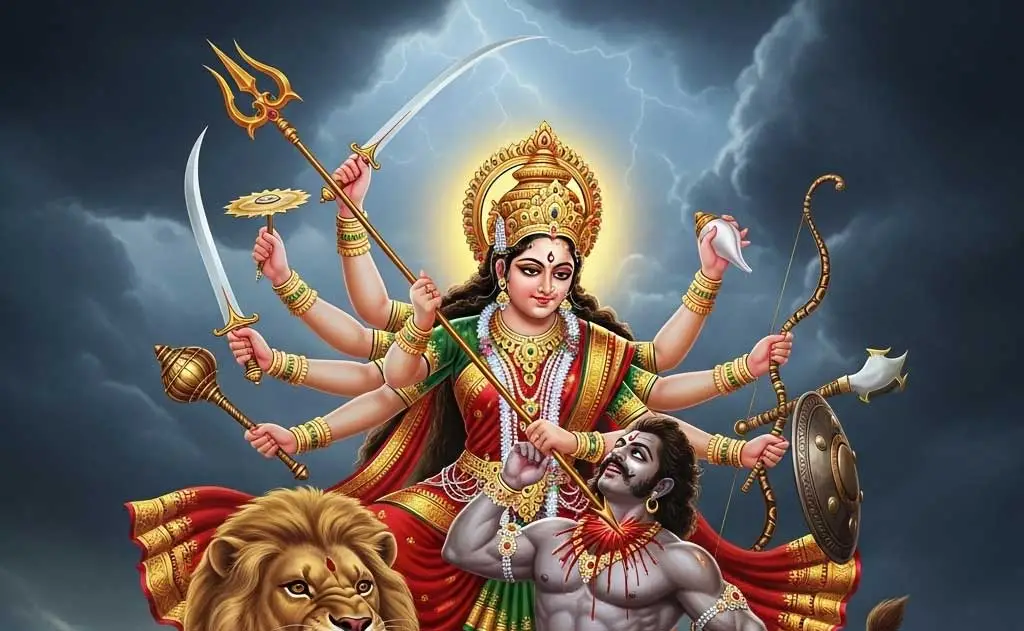
Dussehra 2026 for Women: Shakti Puja, Prayers and New Beginnings on Vijayadashami (Tuesday 20 October)
Navratri Without Fasting: A 9-Day Devotional Routine for Beginners (2026)