
R-1 Visa Documentation Guide for Hindu Temple Priests Coming to the USA
A plain-language documentation checklist for Hindu temple priests (archakas and pujaris) coming to the USA on the R-1 religious worker visa: what the petitioning temple files on Form I-129, the evidence usually involved, the consular interview, site inspections and the 30-month and five-year limits. General information only, not legal advice.
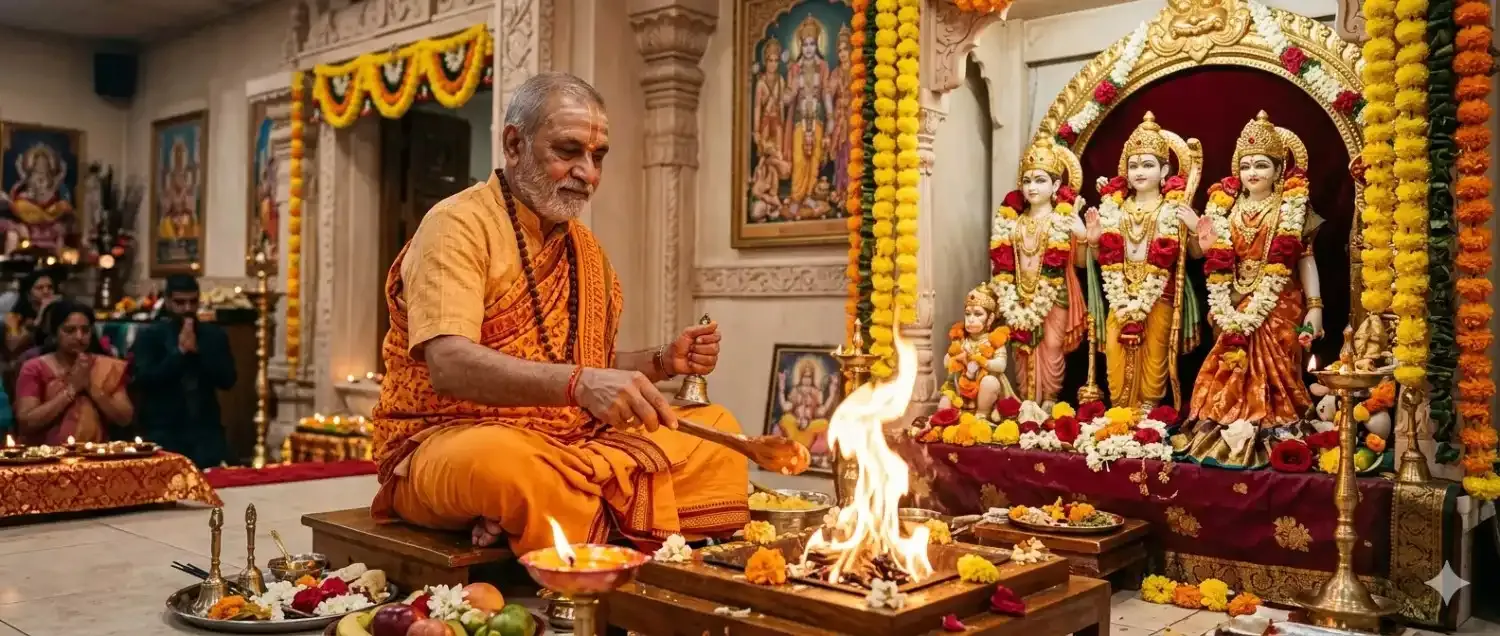
A plain-language documentation checklist for Hindu temple priests (archakas and pujaris) coming to the USA on the R-1 religious worker visa: what the petitioning temple files on Form I-129, the evidence usually involved, the consular interview, site inspections and the 30-month and five-year limits. General information only, not legal advice.
Quick answer: To bring a Hindu priest to the USA on an R-1 religious worker visa, the temple files Form I-129 with USCIS, including the R-1 classification supplement. The petition is typically supported by evidence of the temple's tax-exempt status, the priest's membership of the same denomination for at least two years immediately before filing, the job offer and compensation plan for work of at least 20 hours a week, and the priest's qualifications and training. USCIS may inspect the temple. Initial admission is up to 30 months, with a five-year total. Check uscis.gov and travel.state.gov and work with an immigration attorney.
This guide has been restored at its original hindutone.com address. It is written for temple boards and for priests (archakas, pujaris and purohits) preparing an R-1 case, and covers only long-established features of the category. It is general information, not legal advice, and it makes no promise of any outcome.
How the R-1 process works
- 1. The temple petitions: A bona fide non-profit religious organisation in the USA files Form I-129 with USCIS on the priest's behalf, with the R-1 classification supplement completed and signed by an authorised official of the temple.
- 2. USCIS reviews: USCIS examines the evidence and may verify it, including by visiting the temple.
- 3. Visa application: After approval, a priest outside the USA applies for the R-1 visa at a US embassy or consulate, following the instructions on travel.state.gov, and attends an interview.
- 4. Admission: At the port of entry, US Customs and Border Protection decides on admission. Initial admission is for up to 30 months.
- 5. Extension: Before the period ends, the temple may file again to extend, within the overall five-year limit.
The priest's spouse and unmarried children under 21 may accompany him in R-2 status; see our R-2 visa guide for priests' families.
Core eligibility rules
| Requirement | What it means in practice |
|---|---|
| Religious organisation in the USA | The temple must be a bona fide non-profit religious organisation, or affiliated with one, and tax-exempt |
| Two years' membership | The priest must have belonged to the same religious denomination for at least two years immediately before the petition is filed |
| Religious occupation or minister | The priest comes to work as a minister or in a religious vocation or occupation, such as performing worship and rituals |
| At least 20 hours a week | The job must be at least part time, averaging at least 20 hours per week |
| Work only for the petitioner | The priest may work only for the temple that petitioned, within the approved terms |
| Time limits | Up to 30 months at first; total time in R-1 status generally capped at five years |
Documentation checklist: what the temple prepares
The exact evidence depends on the case and on current USCIS instructions, so treat this as a planning list to discuss with your attorney, not a substitute for the official form instructions.
- Proof of tax-exempt status: typically the temple's IRS determination letter recognising it as tax-exempt, or evidence of coverage under a group exemption, as the instructions require.
- Organisation details: the temple's governing documents, a description of its religious activities, worship schedule and congregation, and information about where the priest will work.
- Attestation: the signed statements in the R-1 classification supplement from an authorised official, covering the organisation, the job and the priest's membership.
- Job offer and duties: a clear description of the position: daily puja and archana, abhishekam, festival worship and samskaras such as weddings, upanayanam and griha pravesham, with hours of at least 20 per week.
- Compensation plan: how the priest will be paid or supported, for example salary and any housing, food or other benefits, and evidence of how the temple has paid or will pay for it, such as budgets or records for current and past religious workers.
- Site information: photographs or descriptions of the temple premises and the location where the priest will serve, which also helps prepare for a site inspection.
Documentation checklist: what the priest gathers
- Passport: valid, with enough remaining validity for travel.
- Proof of two years' membership: letters and records showing the priest's membership of the same denomination or tradition during the two years immediately before filing; the attorney will advise what best fits the temple's tradition, for example Vaishnava, Shaiva or Smarta practice.
- Training and qualifications: certificates from a Veda pathashala, Agama school or Sanskrit institution, letters from the guru or acharya who trained him, and evidence of his authority to perform worship in that tradition.
- Work history: letters from temples where he has served, describing the duties and period of service.
- Civil documents: birth certificate, and for accompanying family, marriage and children's birth certificates, with translations if needed.
- Photographs and forms: as required by the consulate's visa application instructions.
Consistency matters. Names, dates, addresses and job details should match across every document. Inconsistencies are a common reason for questions.
The consular interview
After petition approval, the priest completes the online visa application and schedules an interview at a US embassy or consulate, as explained on travel.state.gov. He should bring the approval notice, his passport and the documents his attorney recommends, and be ready to explain, simply and truthfully:
- which temple he will serve and where it is,
- what his duties will be, such as the pujas and rituals he will perform,
- his training and where he learned it,
- his religious background and service over the past years, and
- how he will be paid or supported.
Answer in your own words. If you are more comfortable in another language, ask about interpretation arrangements in advance. Never memorise scripted answers or present documents you cannot explain.
Site inspections and compliance
USCIS may conduct on-site inspections to confirm that the temple exists, operates as described, and that the priest works as stated in the petition. An officer may visit the premises, speak with temple officials and the priest, and review records. To stay ready:
- Keep the priest's duties, hours, pay and work location consistent with the approved petition.
- Keep payroll and other records up to date and easy to find.
- Tell the attorney promptly about any change, such as a new location, duties or pay, or the priest leaving.
- Make sure the priest works only for the petitioning temple; occasional paid pujas for other organisations or households may raise questions, so get advice first.
Common mistakes to avoid
- Starting late: Build in time for gathering documents from India, translations and attestation.
- Vague job descriptions: Describe the actual religious work in specific terms.
- Unclear compensation: Show how the temple will genuinely support the priest.
- Using unlicensed agents: Work with a qualified immigration attorney or accredited representative. Beware of anyone who guarantees a visa.
- Ignoring the five-year limit: Plan well in advance for what happens when the priest's R-1 time ends.
Where to get reliable information
- USCIS (uscis.gov): official pages on R-1 religious workers, Form I-129 and its instructions, and case status.
- U.S. Department of State (travel.state.gov): visa applications and interviews at US embassies and consulates.
- A qualified immigration attorney: for the petition, evidence strategy, extensions and any change in circumstances.
Frequently asked questions
Who files the R-1 petition, the priest or the temple?
The temple does. A US religious organisation that wants to employ the priest files Form I-129 with USCIS, including the R-1 classification supplement. The priest cannot petition for himself. Once USCIS approves the petition, a priest outside the USA applies for the R-1 visa at a US embassy or consulate.
Does the priest need to belong to the same denomination?
Yes. A long-standing requirement is that the religious worker must have been a member of the same religious denomination as the petitioning organisation for at least two years immediately before the petition is filed. The temple and the attorney decide how to document this for a Hindu priest.
How long can a priest stay on an R-1 visa?
Initial admission is for up to 30 months. Extensions may be granted, but the total time in R-1 status is generally limited to five years. After that, the worker usually has to spend time outside the USA before qualifying for R-1 status again.
Will USCIS visit the temple?
It may. USCIS can verify the information in an R-1 petition, including through on-site inspections of the petitioning organisation, before or after approval. The temple should keep its records accurate and be ready to show where the priest will work.
Can an R-1 priest serve at a different temple?
An R-1 worker may work only for the organisation that petitioned for him, within the terms of the approved petition. Moving to another temple generally requires a new petition from the new temple. Ask an immigration attorney before any change.
Where can I find the current forms and fees?
On the official USCIS website (uscis.gov) for petitions, and travel.state.gov for visa applications and interviews. We do not list fees or processing times because they change. Always consult a qualified immigration attorney.
Editor's note
Editor's note (6 October 2026): This guide has been restored at its original address after the earlier version was lost. It covers only long-established features of the R-1 religious worker category and is general information, not legal advice. We have deliberately not given fees, processing times or form edition details, and we make no guarantee of any outcome. Rules and procedures change; check uscis.gov and travel.state.gov and consult a qualified immigration attorney before acting.
Related guides
You might also like
R-2 Visa for Families of R-1 Hindu Temple Priests in the USA
Hindus in USA 2026 — Complete Country Guide: Temples, Community, Festivals, Cities, Statistics & Diaspora State of the Nation

Hindu Events in GCC Countries 2026: Country-Wise Guide to Temple Festivals & Community Programs