
Ashtavinayak Yatra: Complete Guide to the Eight Ganesha Temples of Maharashtra
A complete guide to the Ashtavinayak yatra in Maharashtra: the eight self-manifested (Swayambhu) Ganesha temples at Morgaon, Siddhatek, Pali, Mahad, Theur, Lenyadri, Ozar and Ranjangaon, the traditional order of visiting them, their districts and legends, and practical route planning from Pune or Mumbai for pilgrims and NRIs.
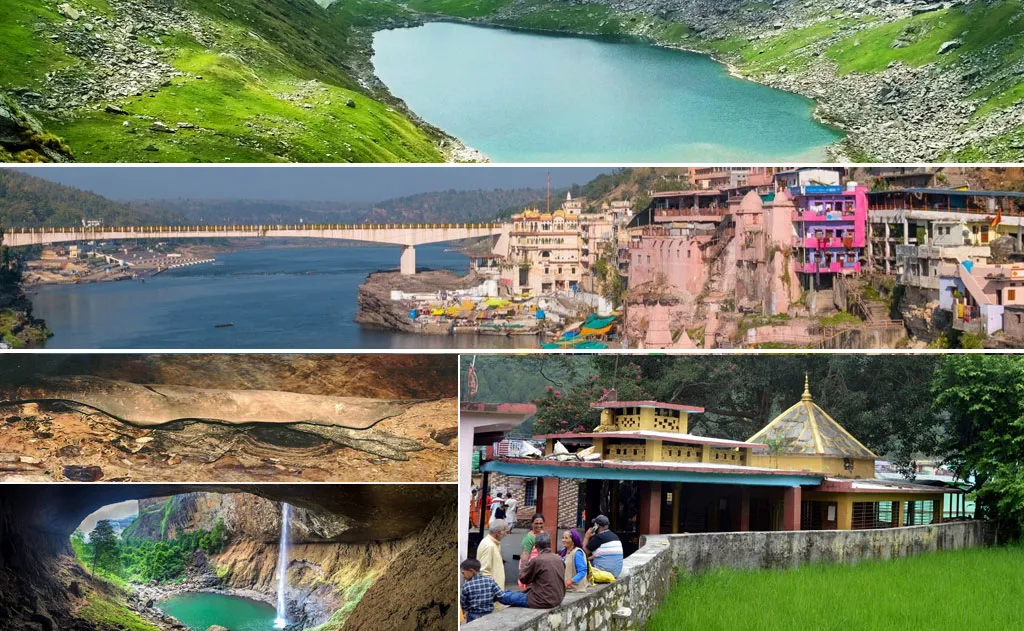
A complete guide to the Ashtavinayak yatra in Maharashtra: the eight self-manifested (Swayambhu) Ganesha temples at Morgaon, Siddhatek, Pali, Mahad, Theur, Lenyadri, Ozar and Ranjangaon, the traditional order of visiting them, their districts and legends, and practical route planning from Pune or Mumbai for pilgrims and NRIs.
Quick answer: The Ashtavinayak yatra is a pilgrimage to eight ancient Ganesha temples in Maharashtra, each housing a murti revered as Swayambhu (self-manifested). The traditional order is Morgaon (Mayureshwar), Siddhatek (Siddhivinayak), Pali (Ballaleshwar), Mahad (Varadvinayak), Theur (Chintamani), Lenyadri (Girijatmaj), Ozar (Vighnahar) and Ranjangaon (Mahaganapati), returning to Morgaon at the end. Five temples are in Pune district, two in Raigad district and one in Ahilyanagar (formerly Ahmednagar) district. Most pilgrims complete the circuit by road from Pune or Mumbai in two to three days.
This guide has been restored at its original hindutone.com address. It covers the eight temples, their legends as commonly told, and general route planning. We do not list darshan timings, fees or bus fares, which change; check each temple's official website or trust office before you travel.
What makes the Ashtavinayak special
"Ashta" means eight and "Vinayaka" is a name of Lord Ganesha, the remover of obstacles who is worshipped first in every Hindu ritual. The eight shrines are linked to episodes in the Ganesha Purana and the Mudgala Purana, in which Ganesha takes different forms to defeat demons, bless devotees or grant boons to the gods themselves.
Each murti is believed to have emerged naturally rather than being carved by human hands, which is why devotees speak of them as Swayambhu. Many of the murtis are coated in vermilion (sindoor), so their features are not always easy to make out. Several temples were renovated or patronised in the eighteenth century under the Peshwas and their associates, and the yatra remains one of the most loved pilgrimages in Maharashtra.
The eight temples at a glance
| Order | Temple (form of Ganesha) | Place | District |
|---|---|---|---|
| 1 | Mayureshwar (Moreshwar) | Morgaon | Pune |
| 2 | Siddhivinayak | Siddhatek | Ahilyanagar (formerly Ahmednagar) |
| 3 | Ballaleshwar | Pali | Raigad |
| 4 | Varadvinayak | Mahad (near Khopoli) | Raigad |
| 5 | Chintamani | Theur | Pune |
| 6 | Girijatmaj | Lenyadri (near Junnar) | Pune |
| 7 | Vighnahar (Vighneshwar) | Ozar | Pune |
| 8 | Mahaganapati | Ranjangaon | Pune |
Note that the Varadvinayak temple at Mahad is in Khalapur taluka of Raigad district, near Khopoli; it is a different place from the town of Mahad further south in the same district.
The temples and their legends
1. Mayureshwar, Morgaon
Morgaon in Baramati taluka is regarded as the foremost of the eight and the traditional start and end point of the yatra. Here Ganesha is worshipped as Mayureshwar, the one who rides the peacock (mayura). The legend tells how he took this form to destroy the demon Sindhu, who was troubling the gods. The temple has a fortress-like stone enclosure, and a large Nandi faces the shrine, an unusual feature for a Ganesha temple.
2. Siddhivinayak, Siddhatek
Siddhatek lies on the bank of the Bhima river. According to the legend, Lord Vishnu worshipped Ganesha here and gained the siddhi, or spiritual power, to defeat the demons Madhu and Kaitabha. The murti's trunk turns to the right, a form traditionally considered powerful and calling for careful observance. Do not confuse this temple with the well-known Siddhivinayak temple in Mumbai, which is not one of the Ashtavinayak.
3. Ballaleshwar, Pali
Pali, in Sudhagad taluka, is linked to the boy devotee Ballal, whose deep devotion angered his family. Ganesha appeared to him and agreed to remain at the spot, and so he is known by his devotee's name, Ballaleshwar. This is often described as the only Ashtavinayak named after a devotee. The temple stands in a scenic setting beneath the Sarasgad hill fort.
4. Varadvinayak, Mahad
Varadvinayak, the giver of boons, is associated with the story of Prince Rukmangada and the birth of the sage Gritsamada, a great devotee of Ganesha. The temple is known for an oil lamp that devotees say has been kept burning continuously for more than a century. Traditionally, devotees here have been able to approach the murti closely.
5. Chintamani, Theur
Theur in Haveli taluka, close to Pune, is where Ganesha is said to have recovered the wish-fulfilling Chintamani jewel for the sage Kapila from the greedy prince Guna. The temple is closely associated with Madhavrao I, the Peshwa, who was a devoted worshipper of Chintamani and spent his last days at Theur.
6. Girijatmaj, Lenyadri
Lenyadri, in Junnar taluka, is the only Ashtavinayak temple set inside a cave and on a hill. The shrine occupies one of the caves in a rock-cut complex generally identified as Buddhist in origin. The name Girijatmaj means "son of Girija (Parvati)", and the legend says that Parvati performed penance here to have Ganesha as her son. Pilgrims climb several hundred steps to reach it, so allow time and carry water.
7. Vighnahar, Ozar
Ozar lies on the bank of the Kukadi river, also in Junnar taluka. Here Ganesha defeated the demon Vighnasura, who had been obstructing sacred rituals. The defeated demon asked that Ganesha take his name, and so he is worshipped as Vighneshwar or Vighnahar, the remover of obstacles. The temple has a notable gold-coloured dome and a fortified enclosure.
8. Mahaganapati, Ranjangaon
Ranjangaon in Shirur taluka, on the Pune to Ahilyanagar road, completes the eight. The legend tells that Lord Shiva worshipped Ganesha here before defeating the demon Tripurasura, and Ganesha is worshipped as Mahaganapati, the mighty Ganapati. Devotees traditionally return to Morgaon after Ranjangaon to close the circuit.
Planning the route from Pune or Mumbai
The temples are spread across the Pune plateau and the Konkan foothills of Raigad, so the yatra is usually done by car, by hired taxi or with a tour operator. Here is how pilgrims commonly approach it, in general terms:
- From Pune: Theur, Morgaon, Siddhatek and Ranjangaon are within reach of the city, while Ozar and Lenyadri lie to the north near Junnar. Pali and Mahad (Khopoli) are reached by crossing the Sahyadri ghats towards the Mumbai–Pune corridor.
- From Mumbai: Many pilgrims begin with Mahad (near Khopoli) and Pali in Raigad, then climb the ghats towards Pune and continue to the remaining temples. Others start from Pune to keep the traditional Morgaon-first order.
- Traditional versus practical order: Keeping the traditional sequence involves some back-tracking. If that is not possible, many families begin and end at Morgaon and visit the others in a convenient order.
- Time needed: Two to three days is typical by road. Plan night halts in towns near the temples and avoid driving through the ghats late at night.
- Season: The winter months are generally the most comfortable. The monsoon brings green landscapes but heavy rain in the ghats; summer afternoons can be very hot.
Because road conditions, tour packages and temple arrangements change, check current details locally, and confirm timings on each temple's official website or with its trust office before setting out.
Tips for NRIs and first-time pilgrims
- Dress modestly: Wear traditional or conservative clothing. Some temples have rules on photography inside the sanctum; follow local instructions.
- Festival crowds: Ganeshotsav, Angarki and Sankashti Chaturthi days and Maghi Ganesh Jayanti draw very large crowds. Ordinary weekdays are calmer.
- Elders and children: Plan rest stops and allow extra time for the steps at Lenyadri.
- Offerings: Modaks, durva grass and red flowers are traditional offerings to Ganesha. Buy prasad only from the temple counters or reputable shops.
- Combine wisely: Bhimashankar Jyotirlinga lies in the same broad region of the Sahyadris and some pilgrims add it, but do not overload your schedule.
For families abroad who cannot travel this year, many keep the spirit of the yatra by reading the Ashtavinayak stories with children and offering puja at home or at a local temple on Sankashti Chaturthi.
Frequently asked questions
What are the eight Ashtavinayak temples?
Mayureshwar at Morgaon, Siddhivinayak at Siddhatek, Ballaleshwar at Pali, Varadvinayak at Mahad, Chintamani at Theur, Girijatmaj at Lenyadri, Vighnahar (Vighneshwar) at Ozar and Mahaganapati at Ranjangaon. All eight are in Maharashtra, and each murti is revered as Swayambhu, or self-manifested.
What is the traditional order of the Ashtavinayak yatra?
The order usually given is Morgaon, Siddhatek, Pali, Mahad, Theur, Lenyadri, Ozar, Ranjangaon, and then a return to Morgaon to complete the circuit. Many pilgrims follow a route that suits their starting point instead; devotion matters more than strict sequence, though families who keep the traditional order find it meaningful.
How many days does the Ashtavinayak yatra take?
Most pilgrims travelling by road from Pune or Mumbai plan the circuit over two to three days, depending on pace, traffic and how long they wish to spend at each temple. Older travellers and families with children often allow extra time, especially for the climb at Lenyadri.
Which Ashtavinayak temple requires climbing steps?
Girijatmaj at Lenyadri is set inside a rock-cut cave complex on a hillside near Junnar, and reaching it involves climbing several hundred steps. The other seven temples are at or near road level.
Can I do the Ashtavinayak yatra during Ganesh Chaturthi?
Yes, but expect very large crowds at all eight temples during Ganeshotsav, on Sankashti and Angarki Chaturthi days and on Maghi Ganesh Jayanti. If you prefer a quieter darshan, choose ordinary weekdays outside festival periods. Check each temple's official website for current timings and arrangements.
Editor's note
Editor's note (6 October 2026): This guide has been restored at its original address after the earlier version was lost. It covers well-established facts about the eight Ashtavinayak temples and their legends as commonly told. We have deliberately not given darshan timings, fees, exact distances or transport fares, which change. Please check each temple's official website or trust office for current information before you travel.
Related guides
You might also like
Amarnath Yatra 2026 — Registration Open, Dates, Route, Safety & Complete NRI Pilgrimage Guide
Char Dham Yatra 2026 — Complete Pilgrimage Planning Guide for NRIs (USA, UK, Canada, Australia, GCC)
Kedarnath Helicopter Service 2026 — Booking Guide, Operators, Safety Updates & Complete NRI Pilgrim Manual