
Ganpati Navaratri: Upasana and Samskara Through the Days of Ganeshotsav
Ganeshotsav is more than a party. Treated as a nine-day Ganpati Navaratri, it becomes a period of upasana (close worship) and samskara (shaping character). Here is what the terms mean, a practical day-by-day plan and how NRI families can adapt it.
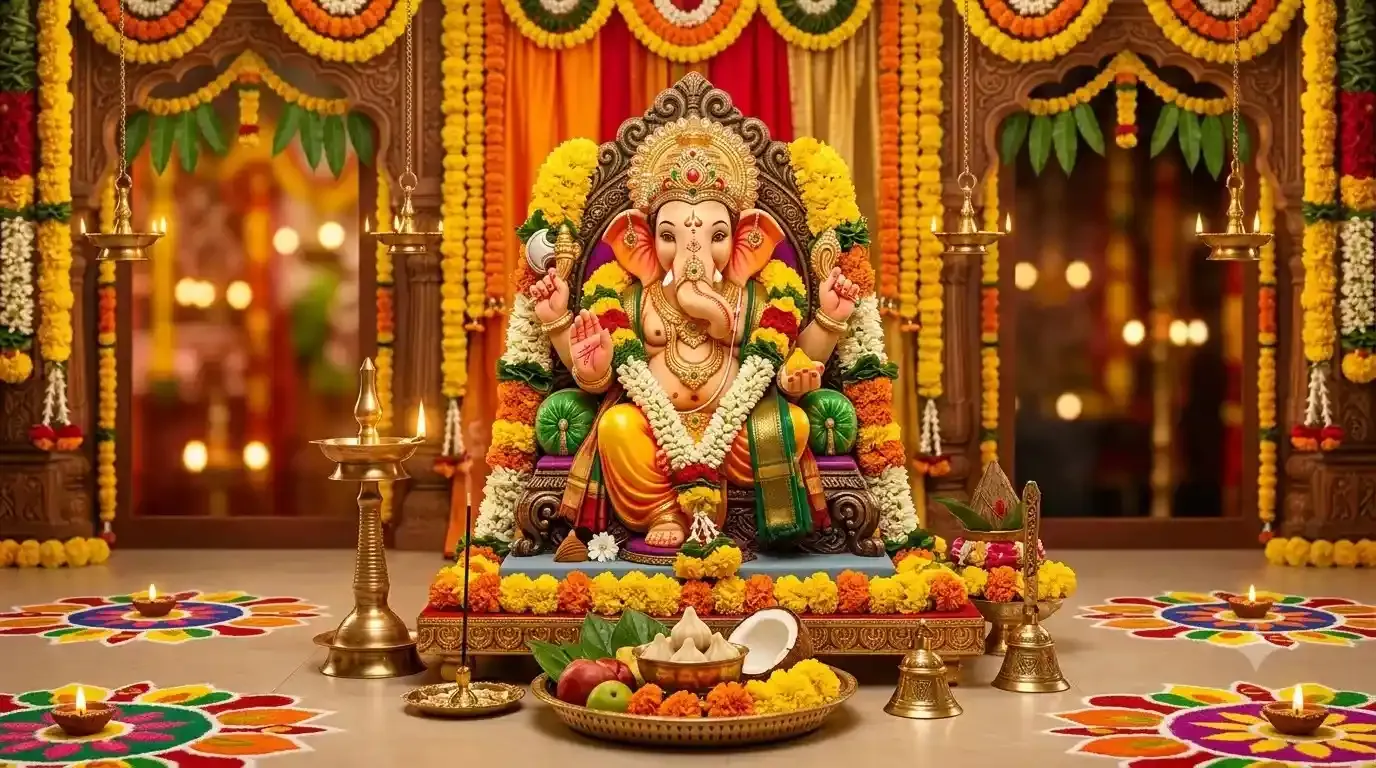
Ganeshotsav is more than a party. Treated as a nine-day Ganpati Navaratri, it becomes a period of upasana (close worship) and samskara (shaping character).
Quick answer: "Ganpati Navaratri" is a way of observing the days of Ganeshotsav as a focused period of upasana (close, regular worship) and samskara (cultivating good impressions and habits), much as Devi Navaratri is observed for the Goddess. It is not one fixed pan-Indian ritual: the festival runs from Ganesh Chaturthi to Anant Chaturdashi, and families keep Ganesha for different lengths of time. Whatever your duration, a daily rhythm of pooja, japa, study, seva and family values turns the festival into lasting practice. The next Ganesh Chaturthi is on Saturday, 4 September 2027.
Most of us remember Ganeshotsav for its sounds and sweets: aartis, modaks, crowded pandals and processions. Those are precious. But the days Ganesha spends in our home also offer something quieter: a chance to build a habit of worship and to pass on values to children. This guide explains the two ideas at the heart of that approach and gives a practical day-by-day plan.
Understanding the terms
Upasana: sitting near
The Sanskrit word upasana combines "upa" (near) and "asana" (sitting). It means drawing close to the divine through steady, devoted attention. In practice it includes pooja, japa (repetition of a mantra), stotra recitation, meditation and study of sacred texts. The key quality is regularity. One day of grand worship is beautiful; nine days of steady, attentive worship changes the person doing it.
Samskara: shaping impressions
Samskara means refinement, and also the impressions left on the mind by our actions. Hindu tradition speaks of the sixteen samskaras, rites of passage from birth to death. More broadly, every repeated action leaves a samskara. When children help prepare naivedyam each day, hear a story each evening and sing aarti together, those impressions become part of who they are.
Why Ganesha?
Ganesha is the lord of beginnings, invoked first in every ritual, and the embodiment of buddhi (intellect) and wisdom. The Ganapatya tradition, which worships Ganesha as the supreme deity, has its own scriptures, notably the Ganesha Purana and the Mudgala Purana. A season dedicated to him is a natural time to begin or renew a spiritual practice.
How long is the festival?
| Duration | Common practice |
|---|---|
| 1.5 days | Visarjan the day after Chaturthi; common in many Maharashtrian homes |
| 3 or 5 days | Common in households and some community mandals |
| 7 days | Followed by some families and mandals |
| 9 to 11 days | Until Anant Chaturdashi, the traditional end of public Ganeshotsav |
The idea of a "Ganpati Navaratri" fits naturally with keeping Ganesha for nine or more days, but the plan below can be compressed to fit any duration. In 2026, Ganesh Chaturthi fell on Monday, 14 September and Anant Chaturdashi on Friday, 25 September.
The daily rhythm
Each day can follow a simple four-part pattern that a working family can manage.
- Morning pooja (15 to 30 minutes): light the lamp, offer flowers and durva, offer naivedyam, recite a shloka and perform aarti.
- Japa: repeat "Om Gam Ganapataye Namah" 108 times on a mala, or as many times as you can with attention.
- Evening aarti and story: the whole family gathers for aarti, followed by a short Ganesha story or a reading.
- One act of seva: a small service each day: feeding someone, helping a neighbour, volunteering at the temple, donating to a cause.
The Ganapati Atharvashirsha, an Upanishadic hymn to Ganesha, is widely recited during Ganeshotsav. It begins "ॐ नमस्ते गणपतये। त्वमेव प्रत्यक्षं तत्त्वमसि।" (Om namaste Ganapataye, tvameva pratyaksham tattvamasi: salutations to Ganapati; you alone are the visible form of the truth "That thou art"). Learning it gradually over the festival is a rewarding goal for older children and adults.
A nine-day plan: one quality each day
Ganesha's form and stories offer a value for each day. Focus the evening story and family conversation on that quality.
| Day | Theme | Story or symbol | Family practice |
|---|---|---|---|
| 1 | Beginnings | Ganesha invoked first in every ritual | Each person names one good habit to start |
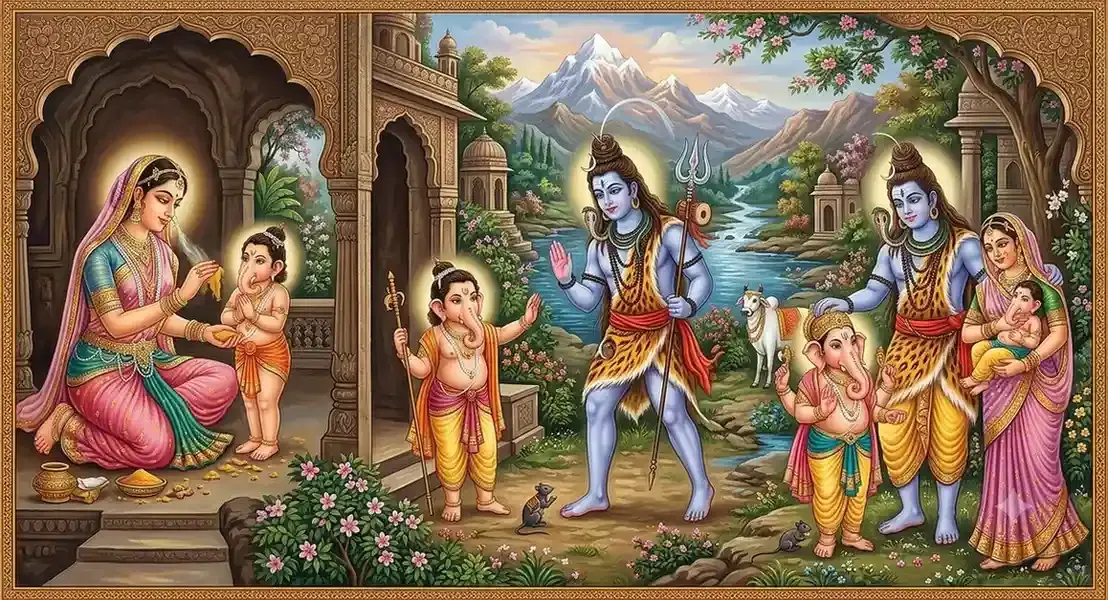
| 2 | Duty | Ganesha guarding Parvati's door | Everyone takes one household responsibility for the festival |
| 3 | Listening | His large ears | A "listening dinner": each person speaks while others only listen |
| 4 | Humility | The mouse as his vehicle | Thank someone usually overlooked |
| 5 | Perseverance | The broken tusk used to write the Mahabharata | Finish a task you have been postponing |
| 6 | Respect for parents | Circling Shiva and Parvati instead of the world | Children do something special for parents or grandparents |
| 7 | Contentment | Modak: sweetness within | Share sweets with neighbours or colleagues |
| 8 | Not judging by appearance | The moon laughing at Ganesha | Talk about teasing and kindness |
| 9 | Letting go | Visarjan | Each person writes one thing to release and one thing to carry forward |
For the stories behind these themes, read our collection of Ganesha stories and Puranic legends and the explanation of why Ganesha is worshipped first.
Samskaras for children
Children learn far more from rhythm than from instruction. A few habits, repeated every day of the festival, leave deep impressions.
- Folding hands and saying a shloka before eating prasadam.
- Touching the feet of elders after aarti.
- Helping clean the altar and arrange flowers each morning.
- Lighting the lamp with a parent and learning to do it safely.
- Listening to one story each night, and retelling it the next morning.
Many families find that a child who learns "Vakratunda Mahakaya" during one Ganeshotsav still says it before exams years later. That is a samskara at work.
Adapting for NRI families
- Weekdays: keep morning pooja to ten minutes and do the full aarti and story in the evening.
- Weekends: visit a local temple, join a community mandapam or invite friends for aarti.
- Short stays: if you keep Ganesha for only 1.5 or 3 days, continue the nightly story and value theme for the remaining days even after visarjan.
- Grandparents abroad or in India: invite them to lead the aarti or tell the story over a video call.
- Eco-conscious practice: use a clay idol and immerse at home, so the festival itself teaches care for the earth.
Closing the festival with intention
On the last day, perform the uttara pooja and aarti, ask forgiveness for any mistakes in worship, and bid Ganesha farewell with "Ganpati Bappa Morya, pudhchya varshi lavkar ya" (come back soon next year). Before visarjan, sit together as a family and share what each person learned or changed. That conversation is the true conclusion of upasana: the practice continues even after the idol has gone.
Frequently asked questions
What is Ganpati Navaratri?
It is a name some families and communities use for a nine-night period of Ganesha worship during Ganeshotsav, by analogy with Devi Navaratri. It is not a single fixed observance across India; the main festival runs from Ganesh Chaturthi to Anant Chaturdashi, and families keep Ganesha at home for 1.5, 3, 5, 7, 9 or more days according to custom.
What does upasana mean?
Upasana literally means "sitting near". It refers to devoted, regular worship and meditation through which the devotee draws close to the deity. It can include pooja, japa, recitation, study and service.
What does samskara mean in this context?
Samskara means refinement or impression. It refers both to the traditional life-cycle rites and, more broadly, to the good impressions and habits that shape character. A festival practised with attention leaves samskaras in children and adults alike.
Which mantra is best for daily Ganesha upasana?
"Om Gam Ganapataye Namah" is the most widely used Ganesha mantra for daily japa. Many families also recite the Ganapati Atharvashirsha, the Sankata Nashana Ganesha Stotram or the 108 names. Choose what your family tradition follows.
When does the next Ganeshotsav begin?
Ganesh Chaturthi 2027 falls on Saturday, 4 September 2027 according to the Indian panchang. In 2026, Ganesh Chaturthi was on Monday, 14 September and Anant Chaturdashi on Friday, 25 September.
Editor's note (5 October 2026)
This page restores a lost hindutone.com article, rewritten. "Ganpati Navaratri" is used here as a practice framework rather than a single standard observance; customs on festival length differ by family and region. The nine-day value plan is an editorial suggestion drawing on well-known Ganesha stories. Dates are from the Indian panchang.
Related guides
You might also like
Top Bollywood Songs for Ganesh Mandapams and Ganpati Processions
Ganesh Mandapam Dos and Don'ts: A Practical and Devotional Guide for Organisers and Visitors
Why Is Ganesha Worshipped First? The Stories, Scriptures and Meaning