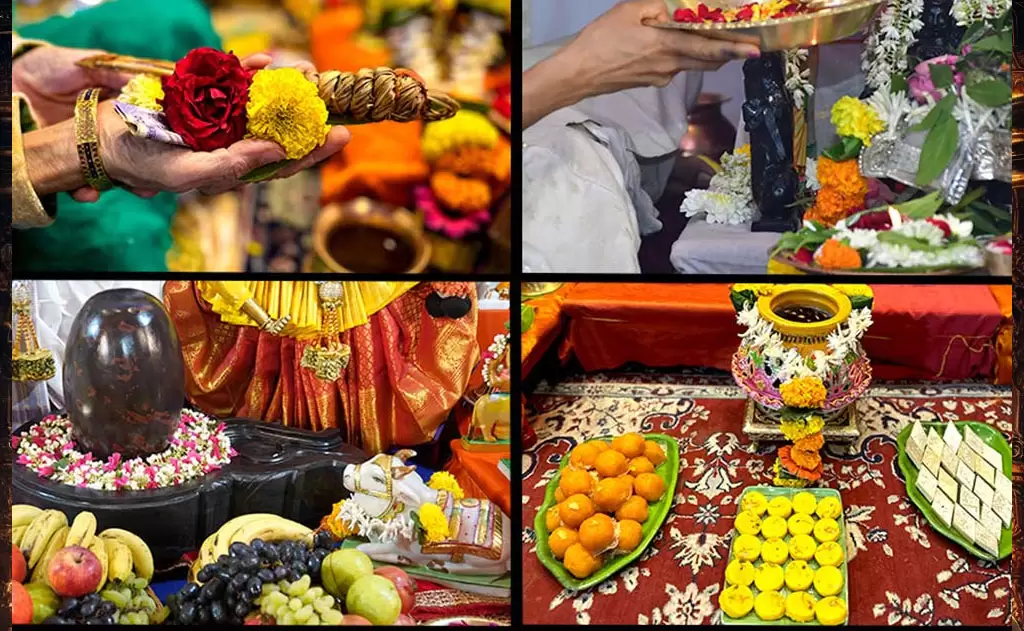
Achyutashtakam (Achyutam Keshavam): Lyrics with Meaning, How to Chant and Significance
Achyutashtakam, the hymn that opens 'Achyutam Keshavam Rama Narayanam', is traditionally attributed to Adi Shankaracharya and is loved as a bhajan across India and the diaspora. Here is the full text in Devanagari and IAST, a simple English meaning of every verse, how and when to chant it, and what the hymn means to devotees.
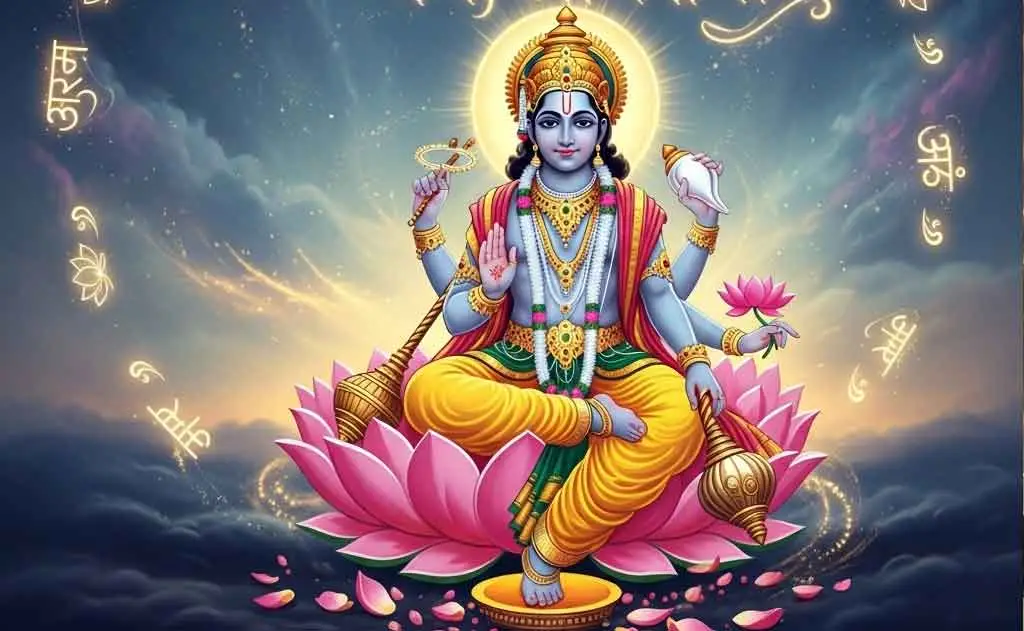
Achyutashtakam, the hymn that opens 'Achyutam Keshavam Rama Narayanam', is traditionally attributed to Adi Shankaracharya and is loved as a bhajan across India and the diaspora. Here is the full text in Devanagari and IAST, a simple English meaning of every verse, how and when to chant it, and what the hymn means to devotees.
Quick answer: Achyutashtakam is a short Sanskrit hymn to Lord Vishnu in his forms as Rama and Krishna. It begins with the much-loved line 'Achyutam Keshavam Rama Narayanam' and is traditionally attributed to Adi Shankaracharya. It has eight verses of praise and a ninth verse describing the fruit of recitation. Devotees chant it in the morning or evening, on Thursdays and Ekadashis, and at Krishna and Rama festivals, but it can be sung at any time with love.
Few Sanskrit hymns have travelled as far as this one. The bhajan 'Achyutam Keshavam Krishna Damodaram' is sung in temples in India, in satsangs in the United States, Canada, the UK and Australia, and by children at their first music lessons. The bhajan form rearranges and repeats some of the names, while the stotra below keeps the traditional verse order. Both are offerings of the same love.
Below you will find every verse in Devanagari and IAST transliteration, each followed by a plain-English meaning. If you also love hymns to Krishna's sweetness, see our guide to Madhurashtakam, and for another Shankara hymn on Krishna, read Govindashtakam with meaning.
Achyutashtakam: full stotram with meaning
The text follows sanskritdocuments.org. The meanings are our own devotional renderings, faithful to the words but not word-for-word. Names of the Lord are kept as names, because chanting the names is the heart of this hymn.
Verse 1
अच्युतं केशवं रामनारायणं कृष्णदामोदरं वासुदेवं हरिम् ।
श्रीधरं माधवं गोपिकावल्लभं जानकीनायकं रामचन्द्रं भजे ॥ १॥
acyutaṃ keśavaṃ rāmanārāyaṇaṃ kṛṣṇadāmodaraṃ vāsudevaṃ harim |
śrīdharaṃ mādhavaṃ gopikāvallabhaṃ jānakīnāyakaṃ rāmacandraṃ bhaje || 1||
I worship the Lord who is Achyuta, the one who never slips; Keshava; Rama and Narayana; Krishna and Damodara; Vasudeva and Hari. I worship Shridhara and Madhava, the beloved of the gopis, the Lord of Janaki, Ramachandra.
Verse 2
अच्युतं केशवं सत्यभामाधवं माधवं श्रीधरं राधिकाराधितम् ।
इन्दिरामन्दिरं चेतसा सुन्दरं देवकीनन्दनं नन्दनं सन्दधे ॥ २॥
acyutaṃ keśavaṃ satyabhāmādhavaṃ mādhavaṃ śrīdharaṃ rādhikārādhitam |
indirāmandiraṃ cetasā sundaraṃ devakīnandanaṃ nandanaṃ sandadhe || 2||
In my heart I hold Achyuta and Keshava, the beloved of Satyabhama, Madhava and Shridhara, the one adored by Radhika. He is the dwelling place of Lakshmi, beautiful to the mind, the dear son of Devaki and the joy of all.
Verse 3
विष्णवे जिष्णवे शङ्खिने चक्रिणे रुक्मिणिऱागिणे जानकीजानये ।
वल्लवीवल्लभायाऽर्चितायात्मने कंसविध्वंसिने वंशिने ते नमः ॥ ३॥
viṣṇave jiṣṇave śaṅkhine cakriṇe rukmiṇiṟāgiṇe jānakījānaye |
vallavīvallabhāyā'rcitāyātmane kaṃsavidhvaṃsine vaṃśine te namaḥ || 3||
Salutations to you: to Vishnu the all-pervading, to the ever-victorious one, to the bearer of the conch and the discus. Salutations to the one who delights in Rukmini, the husband of Janaki, the beloved of the cowherd women, the worshipped inner Self, the destroyer of Kamsa and the player of the flute.
Verse 4
कृष्ण गोविन्द हे राम नारायण श्रीपते वासुदेवाजित श्रीनिधे ।
अच्युतानन्त हे माधवाधोक्षज द्वारकानायक द्रौपदीरक्षक ॥ ४॥
kṛṣṇa govinda he rāma nārāyaṇa śrīpate vāsudevājita śrīnidhe |
acyutānanta he mādhavādhokṣaja dvārakānāyaka draupadīrakṣaka || 4||
O Krishna, Govinda, O Rama, Narayana! O Lord of Shri, Vasudeva, unconquered one, treasure of Lakshmi! O Achyuta, endless one, O Madhava, Adhokshaja, Lord of Dvaraka and protector of Draupadi! This verse is a heartfelt calling out of names, as a child calls a parent.
Verse 5
राक्षसक्षोभितः सीतया शोभितो दण्डकारण्यभूपुण्यताकारणः ।
लक्ष्मणेनान्वितो वानरैः सेवितोऽगस्त्यसम्पूजितो राघवः पातु माम् ॥ ५॥
rākṣasakṣobhitaḥ sītayā śobhito daṇḍakāraṇyabhūpuṇyatākāraṇaḥ |
lakṣmaṇenānvito vānaraiḥ sevito'gastyasampūjito rāghavaḥ pātu mām || 5||
May Raghava protect me: he who was roused to action by the troubling rakshasas, who shone beside Sita, and whose presence made the land of the Dandaka forest holy. Accompanied by Lakshmana, served by the vanaras and honoured with worship by the sage Agastya, may Rama guard me.
Verse 6
धेनुकारिष्टकोऽनिष्टकृद्द्वेषिणां केशिहा कंसहृद्वंशिकावादकः ।
पूतनाकोपकः सूरजाखेलनो बालगोपालकः पातु माम् सर्वदा ॥ ६॥
dhenukāriṣṭako'niṣṭakṛddveṣiṇāṃ keśihā kaṃsahṛdvaṃśikāvādakaḥ |
pūtanākopakaḥ sūrajākhelano bālagopālakaḥ pātu mām sarvadā || 6||
He brought ruin to hostile demons such as Dhenuka and Arishta; he slew Keshi, destroyed Kamsa and plays the flute. May that child cowherd, Bala Gopala, who stirred the wrath of the demoness Putana and played in the Yamuna, the daughter of the Sun, protect me always.
Verse 7
विद्युदुद्योतवत्प्रस्फुरद्वाससं प्रावृडम्भोदवत्प्रोल्लसद्विग्रहम् ।
वन्यया मालया शोभितोरःस्थलं लोहिताङ्घ्रिद्वयं वारिजाक्षं भजे ॥ ७॥
vidyududyotavatprasphuradvāsasaṃ prāvṛḍambhodavatprollasadvigraham |
vanyayā mālayā śobhitoraḥsthalaṃ lohitāṅghridvayaṃ vārijākṣaṃ bhaje || 7||
I worship the lotus-eyed Lord whose garments flash like lightning and whose form glows like a dark monsoon rain-cloud, whose chest is adorned with a garland of forest flowers and whose two feet are a tender reddish hue.
Verse 8
कुञ्चितैः कुन्तलैर्भ्राजमानाननं रत्नमौलिं लसत्कुण्डलं गण्डयोः ।
हारकेयूरकं कङ्कणप्रोज्ज्वलं किङ्किणीमञ्जुलं श्यामलं तं भजे ॥ ८॥
kuñcitaiḥ kuntalairbhrājamānānanaṃ ratnamauliṃ lasatkuṇḍalaṃ gaṇḍayoḥ |
hārakeyūrakaṃ kaṅkaṇaprojjvalaṃ kiṅkiṇīmañjulaṃ śyāmalaṃ taṃ bhaje || 8||
I worship that dark and lovely Lord whose face shines, framed by curling locks of hair, who wears a jewelled crown and earrings that glitter against his cheeks. He is radiant with necklace, armlets and bracelets, and charming with the tinkle of the little bells at his waist.
Verse 9
अच्युतस्याष्टकं यः पठेदिष्टदं प्रेमतः प्रत्यहं पूरुषः सस्पृहम् ।
वृत्ततः सुन्दरं कर्तृ विश्वम्भरस्तस्य वश्यो हरिर्जायते सत्वरम् ॥ ९॥
acyutasyāṣṭakaṃ yaḥ paṭhediṣṭadaṃ premataḥ pratyahaṃ pūruṣaḥ saspṛham |
vṛttataḥ sundaraṃ kartṛ viśvambharastasya vaśyo harirjāyate satvaram || 9||
Whoever reads this Achyutashtakam, beautiful in its metre and granting what is dear, every day with love and longing, finds that Hari, the sustainer of the universe, soon becomes bound to that person by love. This is the traditional phala, the fruit of recitation, spoken in the language of devotion.
Closing colophon
॥ इति श्रीशङ्कराचार्यविरचितमच्युताष्टकं सम्पूर्णम् ॥
|| iti śrīśaṅkarācāryaviracitamacyutāṣṭakaṃ sampūrṇam ||
Thus ends the Achyutashtakam composed by Sri Shankaracharya. Reciters traditionally close with this line, which records the hymn's attribution.
How and when to chant Achyutashtakam
Best time and setting
Traditionally, devotional hymns are chanted after a bath, facing a picture or murti of the Lord, with a lamp lit. Morning (especially the quiet hour before sunrise) and evening lamp-lighting time are the most common. Thursday, considered sacred to Vishnu in many families, and Ekadashi are favoured days. For families abroad, any regular slot that fits work and school, such as just before dinner, is perfectly fine.
How many times
- Once daily with attention is a complete practice.
- Three times is common when chanting as part of evening puja.
- Eleven or more times is sometimes chosen on Ekadashi or a Krishna or Rama festival.
- As a bhajan, the refrain may be repeated freely; there is no fixed count.
A simple sankalpa
Sit quietly, take a little water in your right palm and say in your own words: 'For the love of Lord Achyuta, and for peace in my heart and my home, I chant the Achyutashtakam today.' Then let the water fall and begin. A sankalpa is an intention, not a bargain; keep it simple and sincere.
Pronunciation tips in plain English
- The hymn has a steady, bouncing rhythm: long, short, long, repeated four times in each quarter. Tap it out gently and the words fall into place.
- The 'c' in the transliteration of Achyuta sounds like 'ch' in 'church', not like 'k'.
- Letters with a dot below, such as the 'n' in Krishna, are said with the tongue curled back slightly.
- A line over a vowel means it is held twice as long, as in the 'a' sounds of Narayana.
- Learn one verse a week. Children usually master the first verse in a few days by singing it with a parent.
Significance and traditional benefits
Achyutashtakam is a hymn of names. Hindu tradition holds that the names of the Lord are not mere labels but carry his presence, and that remembering them with love purifies the heart. In this hymn Vishnu, Rama and Krishna flow into one another in a single breath: Keshava and Narayana stand beside Janaki's Lord and the beloved of the gopis. Devotees understand this as a reminder that all these forms are one Lord.
Traditionally, devotees believe that regular chanting:
- brings calm and steadiness to a restless mind;
- deepens love and trust in the Lord as Achyuta, the one who never lets his devotee fall;
- invites his protection, as the verses praying 'may he protect me' ask;
- and, as the final verse says, draws Hari close to the devotee in loving relationship.
These are expressions of faith passed down through generations, not promises of particular worldly results. The hymn is best approached as an offering of love, and its gifts are understood to come by grace.
Story and context: a hymn for every heart
As commonly told, Adi Shankaracharya, the great teacher of Advaita Vedanta, also composed many simple devotional hymns so that ordinary people could reach the highest truth through love. Achyutashtakam is one such hymn, traditionally attributed to him. Its metre, a lilting rhythm that rises and falls in groups of three syllables, makes it easy to sing, and that may be why it became one of India's most widely sung bhajans.
Look closely and the hymn tells a story in pictures: Devaki's darling son, the child who plays on the Yamuna's banks, the flute-player of Vrindavan, the Lord of Dvaraka who protected Draupadi, and Rama walking through the Dandaka forest with Sita and Lakshmana, honoured by the sage Agastya. In a few minutes of singing the devotee walks through both great epics, the Ramayana and the life of Krishna told in the Bhagavata and Mahabharata.
For NRI families, Achyutashtakam is often the first Sanskrit hymn children sing in a temple bhajan group. Its message is simple enough for a five-year-old: God has many beautiful names, and he never lets go of us. To go deeper into Krishna's teaching, see our Bhagavad Gita guide to all 18 chapters.
Also read: Krishna Chalisa.
Frequently asked questions
What is the meaning of Achyutam Keshavam?
Achyuta means 'the one who never falls or slips', the Lord who never abandons his devotees. Keshava is a name of Vishnu and Krishna, often explained as 'the one with beautiful hair' or 'the slayer of the demon Keshi'. The opening line is a garland of names of Vishnu, Rama and Krishna, ending with 'I worship Ramachandra'.
Who wrote Achyutashtakam?
Achyutashtakam is traditionally attributed to Adi Shankaracharya, and the closing colophon in the standard text names him as its composer. As with many hymns linked to Shankara, scholars debate the attribution, but devotees have sung it under his name for centuries.
What are the benefits of chanting Achyutashtakam?
Devotees believe that chanting it with love draws the heart closer to Vishnu and brings peace and steadiness of mind. The final verse says Hari quickly comes under the loving sway of one who recites it daily. These are traditional beliefs about devotion, not guaranteed results.
What is the best day and time to chant Achyutashtakam?
There is no strict rule. Many families sing it in the morning after a bath or in the evening after lighting the lamp. Thursdays, Ekadashi days and Krishna festivals are popular occasions, but any calm moment of the day is suitable.
Can women and children chant Achyutashtakam?
Yes. Achyutashtakam is a devotional stotra, not a restricted Vedic mantra, and it is sung by men, women and children in homes and temples everywhere. Its rhythm makes it one of the easiest Sanskrit hymns for children to learn.
How many times should Achyutashtakam be chanted?
Once a day with attention is a good practice. Some devotees chant it three times, or eleven times on special days. The final verse stresses daily recitation with love, so regularity matters more than the count.
Editor's note
Editor's note (7 October 2026): This page has been restored at its original address after the earlier version was lost. The Sanskrit text in Devanagari and IAST follows sanskritdocuments.org. Minor recitation variants exist between printed editions and bhajan versions. English meanings are our own devotional renderings. Authorship is given as traditionally attributed. Traditional benefits are described as beliefs, not guarantees.
Related guides
You might also like
Annapurna Stotram (Nityanandakari): Lyrics, Meaning and Benefits
Bhairav Chalisa: Lyrics in Hindi with Meaning, Bhairav Aarti and How to Recite
Shani Chalisa Lyrics in Hindi with Meaning and Shani Dev Aarti